Behavioral health organizations need a consistent way to document coaching conversations, corrective actions, and follow-up requirements without creating confusion across programs or supervisors. When disciplinary records live in email threads, shared drives, and paper folders, HR teams lose visibility into what happened, what was communicated, and whether the next step was completed on time. That creates unnecessary risk for employee relations, compliance reviews, and leadership decision-making.
Disciplinary action tracking software gives behavioral health providers a structured process for recording incidents, documenting manager responses, collecting required acknowledgments, and monitoring follow-up deadlines. For organizations balancing clinical operations, community programs, and multiple locations, a standardized workflow helps reduce inconsistency while protecting the integrity of the employee record.
Key Takeaways
What Is Disciplinary Action Tracking Software?
Disciplinary action tracking software is a workflow-driven system for managing employee conduct and performance documentation from the first coaching note through final resolution. It gives HR teams and supervisors a consistent place to record the issue, note the policy or expectation involved, document conversations, attach supporting files, and assign next steps.
In behavioral health settings, this matters because employee relations issues often touch sensitive operational concerns such as attendance, documentation quality, boundary violations, missed trainings, incomplete credentials, supervisor directives, or repeated policy exceptions. A formal tracking process helps organizations show that concerns were handled consistently, documented clearly, and reviewed by the right people.
Why It Matters for Behavioral Health Providers
Behavioral health providers operate in environments where workforce reliability and documentation discipline directly affect client care, program quality, and organizational risk. If one supervisor keeps detailed notes while another relies on memory, HR may struggle to support fair decisions across teams. If a warning is issued but no one tracks the follow-up date, the organization may miss the chance to confirm improvement or escalate appropriately.
Structured disciplinary workflows are also important when organizations need to respond to grievances, unemployment claims, internal audits, accreditation reviews, or legal questions about how an issue was handled. A clean timeline of events, actions, and employee acknowledgments is much easier to defend than a fragmented record assembled after the fact.
What a Strong Workflow Should Include
The best disciplinary action tracking software does more than store a PDF. It should help HR teams standardize the process from intake through closure.
Best Practices for Standardizing Documentation
Software works best when paired with a disciplined internal process. Behavioral health HR teams should define when documentation begins, which issues require HR review, how managers escalate concerns, and who approves each stage. That avoids the common problem of supervisors handling similar cases in different ways.
It is also smart to use structured templates that guide managers to document observable facts, prior coaching, expected improvement, deadlines, and employee response. That produces clearer records and reduces emotionally charged language that can weaken the documentation later. When possible, corrective action records should also link to the relevant policy, training requirement, or job expectation so the organization can show exactly what standard applied.
Finally, follow-up matters. A disciplinary record should not disappear after the initial conversation. HR teams need reminders for review dates, space to record improvement outcomes, and a clear status showing whether the matter is open, resolved, extended, or escalated.
Common Gaps That Create HR Risk
Many organizations already document employee issues, but the process breaks down when records are scattered. A manager may save a warning on a desktop, send a summary by email, and tell HR verbally that the conversation happened. Weeks later, no one can quickly confirm whether the notice was signed, whether training was assigned, or whether a required follow-up meeting took place.
Other risks appear when access is too broad or too informal. Employee relations records often contain sensitive details, so they should not sit in general folders available to unrelated staff. A system built for HR file management makes it easier to protect confidentiality while still giving authorized leaders the visibility they need.
How BUAMS HR Helps
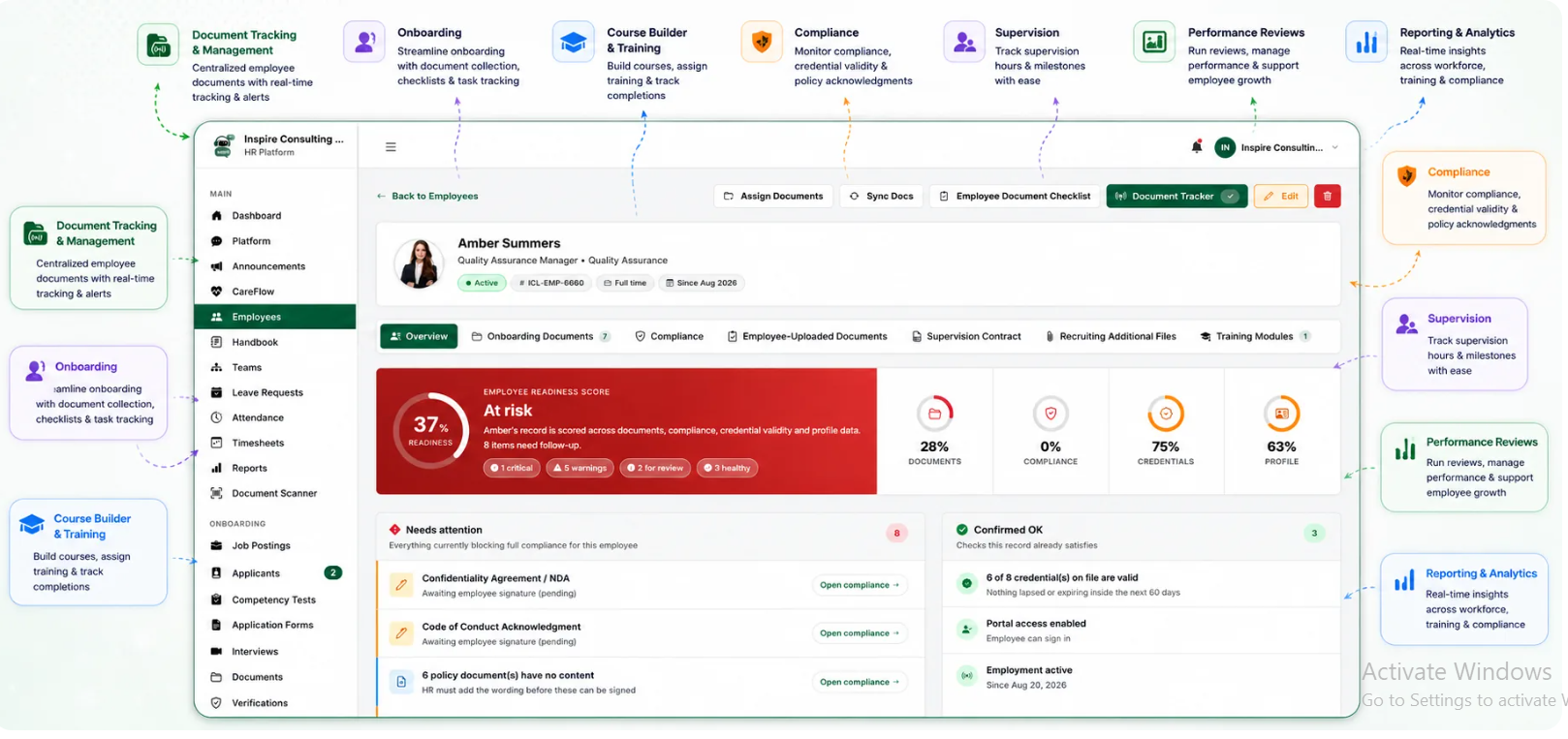
BUAMS HR gives behavioral health providers a centralized way to organize employee records, documentation workflows, and compliance-related follow-up in one platform. Instead of separating corrective action notes from the rest of the employee file, HR teams can keep related records connected to the staff member's profile and maintain cleaner documentation over time.
With BUAMS HR, organizations can support a more disciplined process by storing disciplinary documents alongside onboarding records, policy acknowledgments, trainings, credentials, and other core HR data. That makes it easier to confirm whether the issue is part of a larger pattern, whether required follow-up actions were completed, and whether leadership has the documentation needed for consistent decision-making.
For growing providers managing multiple programs or sites, BUAMS HR also helps reduce administrative drift. A standardized platform creates better visibility into deadlines, status changes, and document completeness, which supports stronger HR operations without forcing teams back into spreadsheets.
Final Thoughts
Disciplinary action tracking software is not just about recording write-ups. For behavioral health providers, it is a practical way to improve consistency, reduce documentation gaps, and support fair employee relations decisions across the organization. When HR teams can see the full timeline of actions, acknowledgments, and follow-up steps in one place, they are better equipped to protect both operational standards and organizational trust.
BUAMS HR helps behavioral health organizations build that structure with centralized employee records, workflow visibility, and compliance-aware documentation management designed for real-world HR operations.