Behavioral health providers do not always think of respirator readiness as an HR workflow until something breaks. A new hire is ready for orientation but cannot start on a crisis unit because fit testing documentation is missing. A residential program needs coverage, but a supervisor is unsure which employees are cleared for a specific mask model. An audit request arrives, and the organization has to piece together medical clearance records, fit test dates, and assignment decisions from email threads and paper binders. Mask fit testing tracking software helps bring those moving parts into one dependable process before delays create staffing or compliance risk.
For behavioral health organizations with inpatient, residential, detox, crisis, and community-based programs, staff health requirements are part of workforce readiness. Respirator fit testing is often connected to onboarding, annual renewals, job role changes, and unit assignment decisions. When that work is tracked manually, teams lose time chasing proof and leaders lose confidence in whether the right employees are cleared for the right settings. A stronger system makes fit testing easier to schedule, easier to verify, and easier to defend during reviews.
Key Takeaways
What Is Mask Fit Testing Tracking Software?
Mask fit testing tracking software is a system used to organize employee respirator readiness from initial clearance through recurring retesting and documentation retention. Instead of treating fit testing as a stand-alone occupational health event, the software ties it to the employee record and the operational decisions that depend on it.
That means HR and compliance teams can see who has completed medical clearance, who has passed fit testing, which respirator model was used, when the next test is due, and whether any exceptions or restrictions were documented. In behavioral health settings, that visibility matters because assignment decisions often need to happen quickly across multiple programs, shifts, and coverage scenarios.
Why It Matters for Behavioral Health Providers
Behavioral health providers operate in settings where staff may move between outpatient clinics, crisis units, residential environments, and community services. Not every role has the same exposure profile, and not every employee needs the same respiratory protection workflow. Some teams need annual fit testing. Some positions may need additional documentation before working in a particular environment. Some programs may use different equipment or require proof before a staff member can be scheduled independently.
When the organization cannot quickly confirm that readiness, delays spread. Hiring slows down because new employees cannot be cleared on time. Supervisors make last-minute coverage decisions with incomplete information. HR staff spend hours hunting for medical forms, scheduling notes, or test results that should already be tied to the employee file. Even if the underlying work was completed, poor recordkeeping makes the organization look less prepared than it actually is.
There is also a compliance and risk management issue. Safety documentation needs to be accurate, current, and easy to retrieve. If proof is stored in separate departmental folders or local spreadsheets, it becomes harder to demonstrate consistent oversight. A reliable system helps organizations show that fit testing is assigned appropriately, completed on time, and retained in a way that supports internal review and external scrutiny.
Where Manual Tracking Breaks Down
Most organizations do not struggle because they forgot fit testing matters. They struggle because the process depends on too many disconnected handoffs.
These gaps are expensive in quiet ways. They create avoidable start-date delays, inconsistent coverage decisions, and extra manual follow-up for HR. Over time, the process becomes dependent on specific people remembering where everything lives. That is not a strong control for a growing behavioral health organization.
What to Look For in Mask Fit Testing Tracking Software
The best system should support more than a completed date. It should help behavioral health providers manage respiratory readiness as part of broader workforce operations.
Centralized employee health documentation
Fit testing records, medical clearance status, respirator model details, and supporting documentation should live in a single organized record. That reduces the need to search across inboxes and shared drives when someone asks for proof.
Renewal and expiration visibility
HR teams need clear views of upcoming due dates, overdue retests, and employees whose clearance status could affect site coverage. Good visibility is most valuable before a staffing gap appears.
Role and program-specific requirements
Different programs may require different readiness steps. Strong software should let organizations apply rules by role, program, location, or employment type so the right employees receive the right follow-up.
Assignment-aware status checks
Supervisors should be able to confirm whether an employee is cleared for a relevant work setting without relying on back-and-forth emails. Readiness should be visible at the moment scheduling and assignment decisions are made.
Audit-ready history
Organizations need a usable record of when fit testing was completed, when it was renewed, what documentation was attached, and who reviewed any exceptions. That history matters for internal accountability as much as external audits.
How Better Tracking Supports Daily Operations
When mask fit testing tracking software is part of the HR workflow, new hires move faster. The organization can see whether medical clearance is complete, whether the fit test is scheduled, and whether all required proof is already attached before the employee reaches a critical start-date checkpoint. That keeps onboarding from stalling at the last minute.
It also improves ongoing workforce coordination. If a residential program needs coverage for an evening shift, supervisors can work from a more reliable picture of who is ready for that environment. If an employee transfers to a different program, HR can confirm whether additional fit testing steps are required before the move is finalized. Instead of rebuilding the answer every time, the organization manages readiness in one visible process.
Better tracking also makes reviews less disruptive. When leadership, accreditation teams, or safety reviewers ask for documentation, the records are already organized. HR can show deadlines, completion dates, supporting files, and status trends without pausing normal operations to reconstruct the story from scratch.
How BUAMS HR Helps
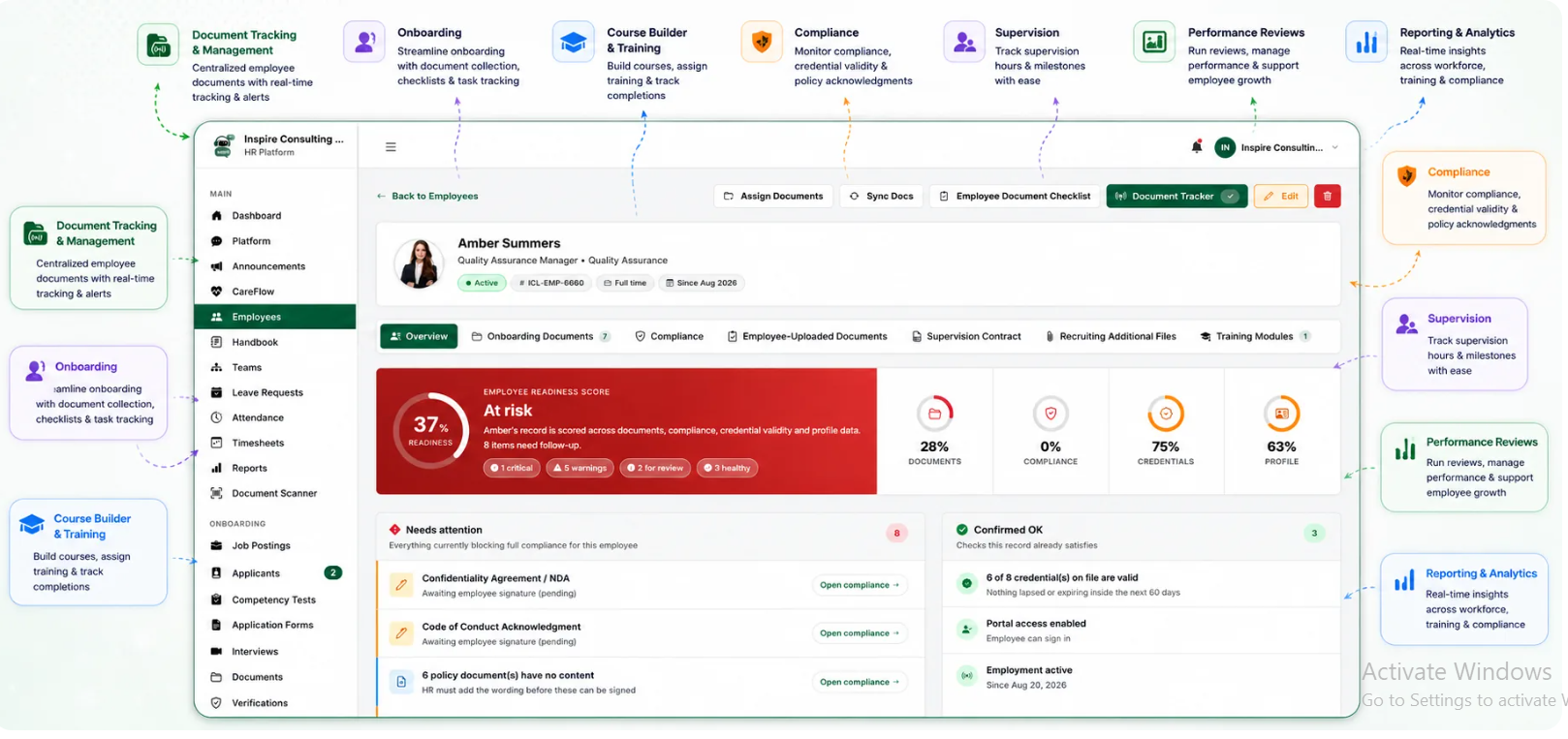
BUAMS HR helps behavioral health providers keep employee records, compliance tasks, and workforce readiness details organized in one system. That is especially useful for fit testing because the requirement touches more than a single health form. It affects onboarding progress, role readiness, assignment decisions, and ongoing documentation quality.
With BUAMS HR, organizations can keep fit testing evidence aligned with the employee file, track due dates more consistently, and reduce the manual follow-up that slows hiring or complicates coverage planning. HR and operational leaders get a clearer way to review what is complete, what is coming due, and where follow-up is still needed.
Because BUAMS HR is designed for behavioral health workforce management, teams can manage fit testing alongside other employee requirements instead of building a separate tracking process that becomes harder to trust over time. That helps organizations improve both day-to-day operations and audit readiness.
Final Thoughts
Mask fit testing tracking software gives behavioral health providers a practical way to organize a safety requirement that often becomes messy when managed by hand. When medical clearance, fit test history, renewal deadlines, and assignment impact are visible in one workflow, teams can move faster with fewer surprises.
For organizations that want to reduce start-date delays, strengthen documentation, and make safer staffing decisions, better tracking is not just administrative cleanup. It is a meaningful operational control. The clearer the record, the easier it becomes to support employees, guide supervisors, and prove readiness when it matters.