Multi-Location HR Management for Behavioral Health Organizations
Managing human resources across multiple locations can become complicated as a behavioral health organization grows. Each clinic, treatment center, or office may have different employees, supervisors, staffing needs, and documentation requirements.
Without a consistent HR process, important employee records can become scattered, onboarding may vary between locations, and managers may struggle to maintain accurate workforce information.
A structured multi-location HR management process helps organizations improve consistency, organize employee information, and support their growing workforce.
Why Multi-Location HR Management Matters
Behavioral health organizations often depend on different professionals working across several locations. These may include therapists, counselors, clinical supervisors, administrative staff, and other healthcare professionals.
When HR processes are handled separately at each location, organizations may experience challenges such as:
- Inconsistent employee onboarding procedures
- Difficulty tracking credentials and certifications
- Missing or outdated employee documentation
- Different approaches to training and performance reviews
- Limited visibility into workforce information across locations
- Repeated administrative work for HR teams
These challenges can become more difficult to manage as an organization opens new locations or expands its services.
Common HR Challenges Across Multiple Locations
1. Keeping Employee Records Organized
Employee information may be stored in spreadsheets, email attachments, paper files, and separate digital folders. When records are maintained differently across locations, finding accurate information becomes time-consuming.
Organizations should establish a consistent process for storing employee information, updating records, and determining who can access sensitive documents.
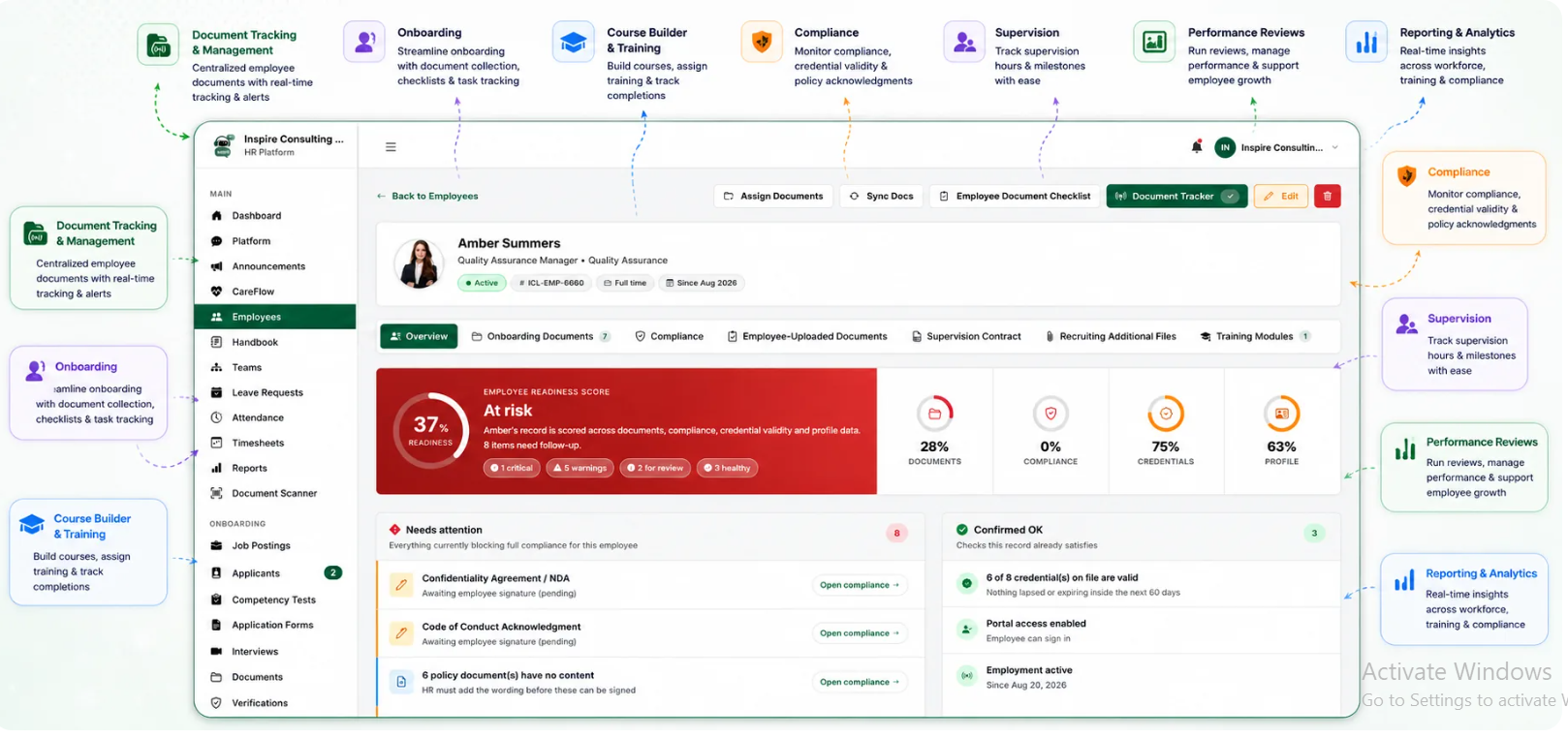
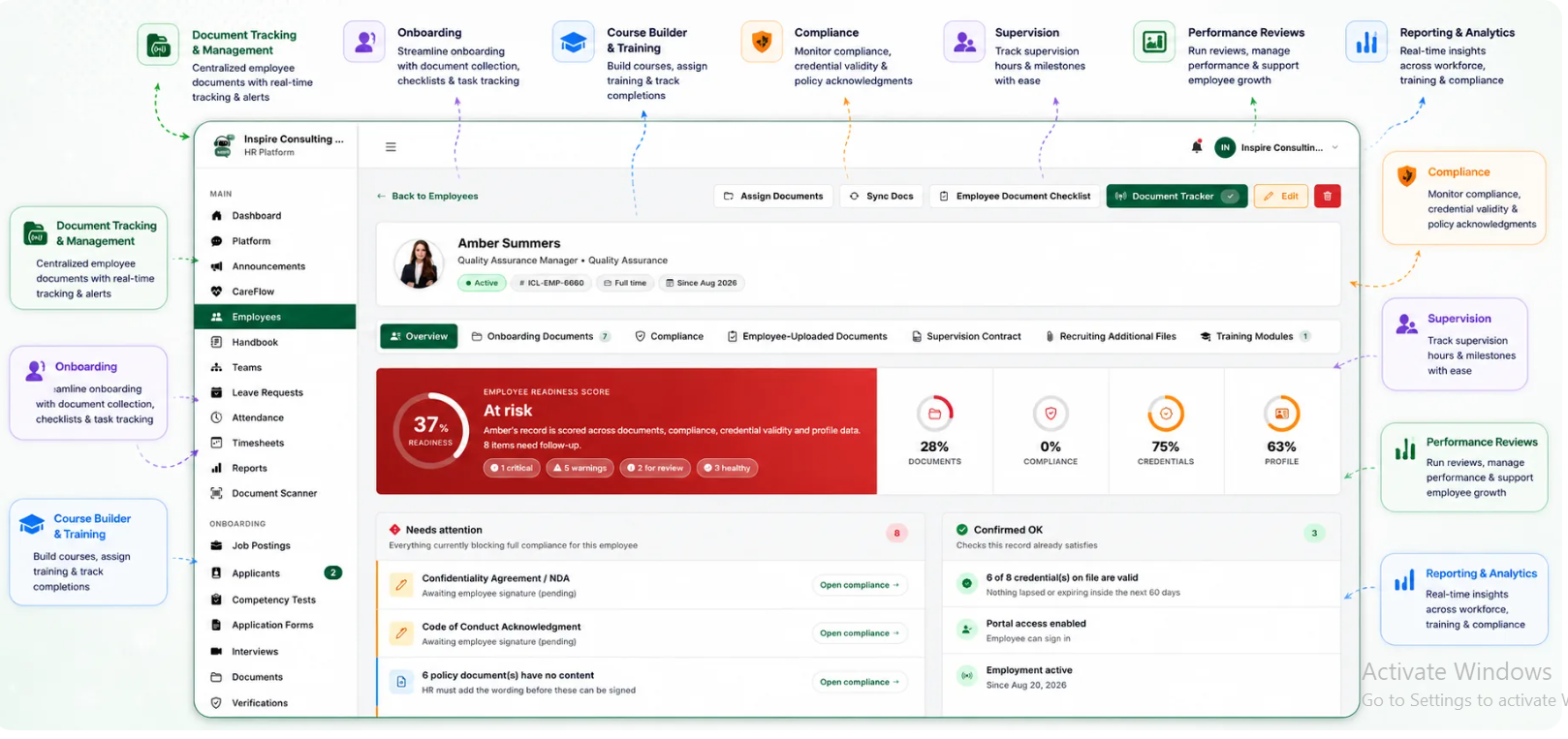
A centralized HR system can help organize employee records in one place, provided it supports the organization's requirements for multi-location access and permissions.
2. Standardizing Employee Onboarding
Every new employee should follow a clear onboarding process, regardless of which location they join.
Without standardized procedures, one location may complete all required documentation before an employee starts, while another may overlook important steps.
A consistent onboarding workflow should include:
- Collecting required employee information
- Reviewing relevant licenses and certifications
- Completing required employment documentation
- Assigning applicable training
- Explaining workplace policies and responsibilities
- Confirming that required onboarding steps are complete
Standardized onboarding helps HR teams provide a more consistent experience across the organization.
3. Monitoring Credentials and Certifications
Behavioral health organizations may employ professionals with different licensing, certification, and supervision requirements.
Tracking these requirements across multiple locations can become difficult when each manager maintains separate records.
Organizations should maintain accurate credential information, monitor expiration dates, assign responsibility for follow-up, and verify applicable requirements for each role and jurisdiction.
Where supported, credential tracking software can help HR teams organize these records and identify documents that require review or renewal.
4. Maintaining Consistent Training Requirements
Employees across different locations may need to complete organization-wide training, role-specific courses, and location-specific instruction.
Without a centralized process, managers may have difficulty determining which employees have completed required training and which still need follow-up.
A consistent training management process should identify required courses, maintain completion records, communicate deadlines, and help managers review outstanding requirements.
Training requirements should reflect applicable laws, professional standards, and organizational policies.
5. Improving Communication Between HR and Location Managers
Location managers often handle daily staffing and operational responsibilities, while HR teams oversee broader employee processes.
When responsibilities are unclear, important updates can be delayed. For example, HR may not receive timely information about an employee's role change, a document renewal, or a completed training requirement.
Organizations should define clear responsibilities for HR teams and location managers. They should also establish a reliable process for sharing employee updates and escalating issues that require attention.
Best Practices for Managing HR Across Multiple Locations
Create Standardized HR Procedures
Develop consistent procedures for onboarding, employee documentation, training, performance reviews, and credential monitoring.
Some requirements may differ by location, but the core process should remain consistent wherever possible.
Maintain Accurate Employee Information
Review employee records regularly and assign responsibility for updating important information. Establish clear procedures for correcting outdated records and handling employee departures or transfers.
Define Location-Level Responsibilities
Determine which tasks belong to central HR teams and which can be handled by local managers. Document these responsibilities so employees know where to direct questions and who should complete each task.
Use Consistent Reporting Processes
Standardized reporting can help leadership compare workforce information across locations, identify incomplete records, and understand where additional support may be needed.
The usefulness of these reports depends on the quality of the underlying data and the reporting capabilities available in the organization's HR system.
Review Access and Confidentiality
Employee records may contain confidential personal and professional information. Access should be limited according to job responsibilities, organizational policies, and applicable privacy requirements.
Multi-location access should not mean that every manager can automatically view every employee record.
How HR Software Can Support Multi-Location Behavioral Health Organizations
HR software can help organizations reduce reliance on disconnected spreadsheets and manual recordkeeping. The appropriate system depends on the organization's size, workflows, privacy needs, and required integrations.
When evaluating an HR platform, behavioral health organizations should consider whether it supports:
- Centralized employee records
- Location-based employee organization
- Consistent onboarding workflows
- Credential and certification tracking
- Training and completion records
- Performance review documentation
- Workforce reporting and administrative oversight
- Appropriate user permissions and access controls
Organizations should verify each capability with the software provider before choosing a platform. Features, integrations, and reporting options can vary between systems.
How BUAMS HR Can Support Workforce Management
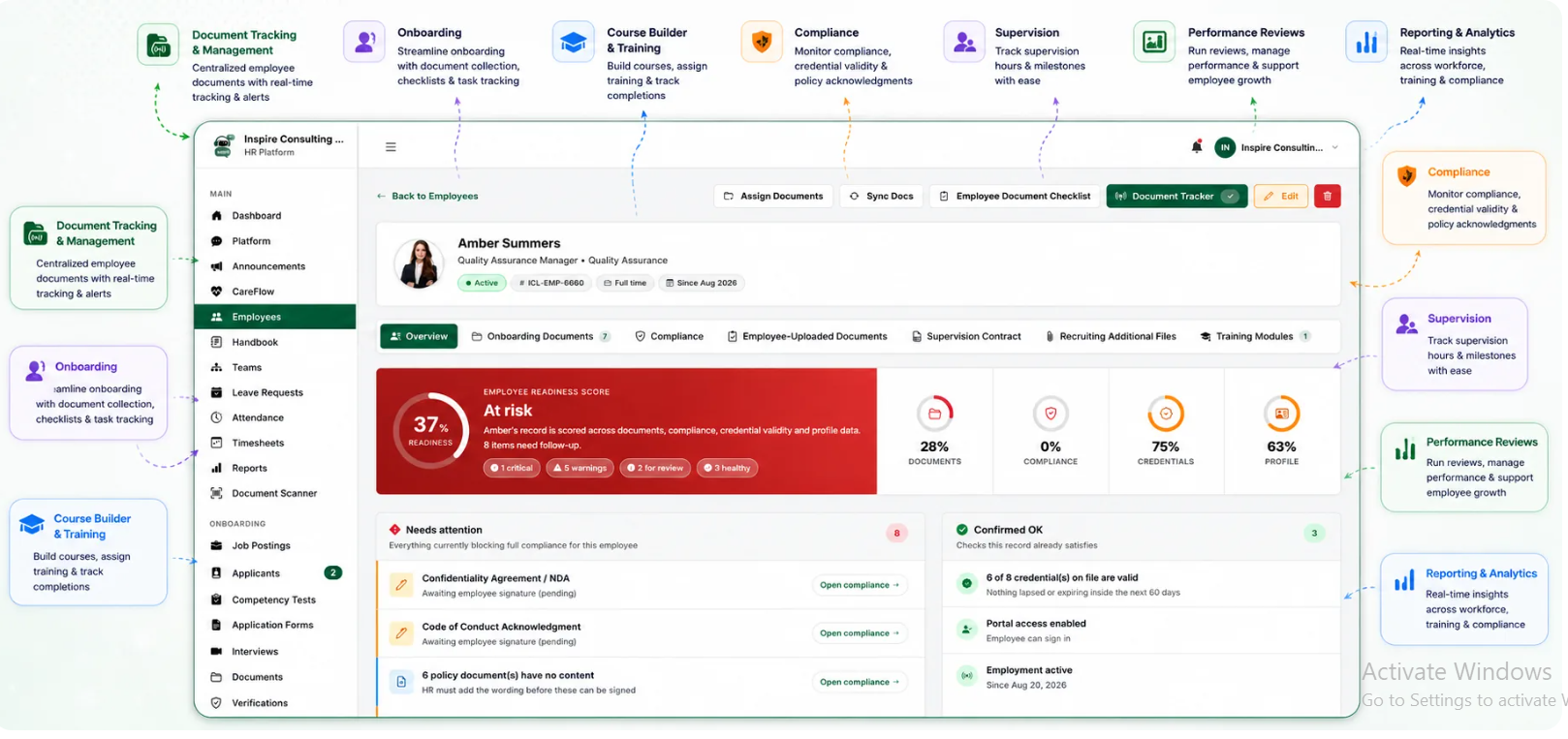
BUAMS HR helps behavioral health organizations organize important workforce processes and employee information.
Depending on the features available in the selected plan, organizations can evaluate BUAMS HR for employee record management, onboarding, credential tracking, training management, and related HR workflows.
For organizations operating across multiple locations, the goal is to create a more consistent approach to workforce administration while reducing unnecessary manual work.
Before implementation, organizations should confirm how BUAMS HR supports location-based records, user permissions, reporting, and any other requirements specific to their operations.
Build a More Consistent HR Process as Your Organization Grows
Managing employees across multiple behavioral health locations requires clear procedures, accurate records, and reliable communication between HR teams and local managers.
By standardizing onboarding, organizing employee documentation, monitoring credentials, and reviewing workforce information regularly, organizations can create a more manageable HR process as they expand.
The right HR software can support these efforts by bringing relevant workforce information and administrative workflows into a more organized system.
Explore BUAMS HR to learn how its available workforce management capabilities may support your organization's HR processes.
Frequently Asked Questions
What is multi-location HR management?
Multi-location HR management is the process of coordinating employee records, onboarding, training, documentation, and other HR responsibilities across multiple offices, clinics, or facilities.
Why do behavioral health organizations need consistent HR processes?
Consistent processes help organizations maintain accurate records, standardize onboarding, monitor professional credentials, and manage workforce responsibilities across different locations.
Can HR software manage employees across multiple locations?
Some HR platforms support centralized employee records and multi-location workflows. Organizations should verify location management, permissions, reporting, and other required capabilities before selecting a system.
What should organizations consider when choosing multi-location HR software?
Important considerations include employee record management, onboarding, credential tracking, training records, reporting, data security, user permissions, and compatibility with existing systems.
How often should multi-location HR records be reviewed?
Organizations should review records according to their policies and the requirements applicable to each employee and location. Time-sensitive credentials and certifications should be monitored before their expiration dates, with clear responsibility for follow-up.