Behavioral health organizations rarely struggle with the idea of after-hours coverage. The real challenge is deciding which employee can safely and compliantly take that assignment when needs change fast. A supervisor may know who is available, but availability alone does not confirm active licensure, required training, site access, program restrictions, supervisory coverage, or recent fatigue concerns. That gap creates avoidable risk.
On-call coverage eligibility software gives HR and operations teams a clearer way to match after-hours responsibilities to staff who are actually ready for the assignment. Instead of relying on memory, spreadsheets, and late-night text chains, providers can use one system to review workforce qualifications before a shift is handed off. For behavioral health teams managing crisis response, residential support, mobile services, or multi-site programs, that visibility can protect both compliance and continuity of care.
Key Takeaways
What Is On-Call Coverage Eligibility Software?
On-call coverage eligibility software is a workforce management approach that helps organizations confirm whether an employee meets the documented requirements for a specific after-hours assignment. In behavioral health, those requirements often extend beyond job title. A clinician may need an active license, recent safety training, valid background clearances, supervisor assignment, approved program access, and documentation showing they are permitted to support a certain service line or location.
The value of the software is not simply storing records. It is making those records usable when staffing decisions need to happen quickly. HR teams, compliance leaders, and program managers can review the right employee information before assigning an overnight phone rotation, weekend community support visit, residential backup shift, or urgent coverage need.
Strong on-call coverage eligibility software also creates consistency. Instead of each manager using a different checklist, the organization can define what “eligible” means for specific roles and programs, then verify staff readiness against the same standard every time.
Why It Matters for Behavioral Health Providers
After-hours assignments in behavioral health carry real operational and regulatory stakes. A rushed staffing decision can place an employee in a role they are not cleared for, not trained for, or not authorized to cover independently. Even when patient care is not interrupted, the documentation trail can become messy during an audit, incident review, or accreditation visit.
This problem becomes more visible as providers grow. Multi-program agencies may have different requirements for outpatient, residential, school-based, crisis, and community services. Staff may be eligible for one setting but not another. Supervisors may assume that because someone worked a similar shift last month, they are still eligible today. That assumption can break down when a certification expires, a training deadline passes, or a supervision assignment changes.
On-call coverage eligibility software helps reduce those blind spots. It gives decision-makers a structured way to check readiness before coverage is assigned, and it gives HR a cleaner process for maintaining the records behind those decisions. That matters for organizations trying to improve staffing resilience without expanding administrative chaos.
Common Eligibility Factors to Track Before Assigning After-Hours Coverage
The best systems reflect the real rules behind coverage decisions. Behavioral health organizations often need to confirm a combination of workforce, compliance, and operational factors before a staff member is placed in an after-hours role.
When this information lives in separate folders, inboxes, and spreadsheets, it is difficult to trust a fast coverage decision. On-call coverage eligibility software works best when it brings those data points together into an organized readiness view.
What to Look for in On-Call Coverage Eligibility Software
If a provider is evaluating on-call coverage eligibility software, the goal should be practical control rather than extra complexity. The system should make it easier to answer a simple question: can this person safely and compliantly take this assignment right now?
Look for software that supports centralized employee records, configurable role requirements, and clear visibility into expiring items. Teams should be able to see when a staff member is fully eligible, partially eligible, or blocked by a missing requirement. It also helps when the platform supports notes, document storage, and audit-friendly history so managers can explain how a staffing decision was made.
Another important feature is flexibility across programs. Behavioral health agencies often manage different rules by service line, location, or license level. A rigid system can create false confidence if it treats all roles as interchangeable. Better software allows HR to define eligibility logic that reflects how the organization actually operates.
Finally, reporting matters. Leaders should be able to identify which teams are vulnerable to after-hours coverage gaps because of expiring credentials, incomplete files, thin backup benches, or uneven training completion. That turns staffing readiness from a last-minute scramble into an ongoing management process.
How BUAMS HR Helps
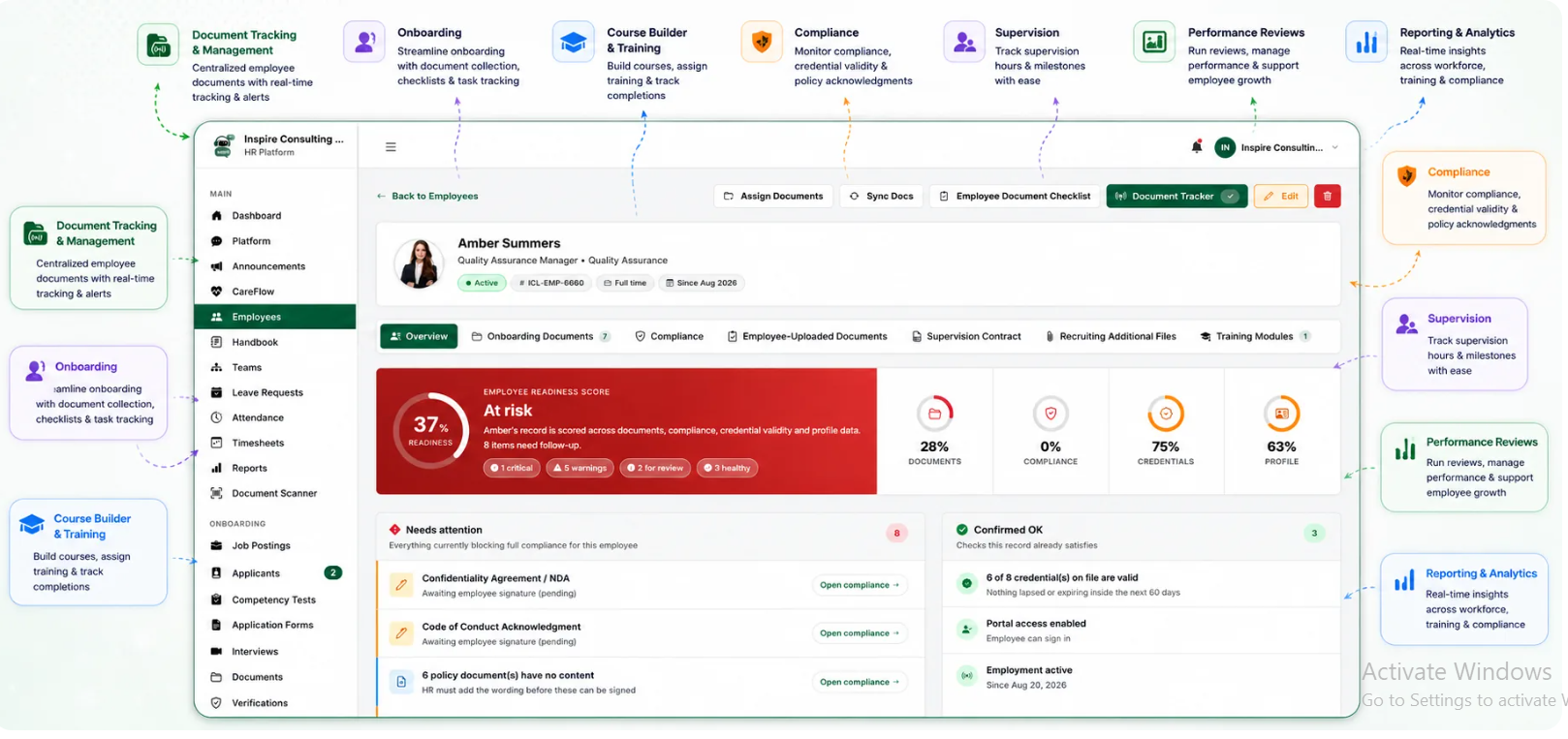
BUAMS HR supports the foundation behavioral health providers need for a stronger after-hours coverage workflow. By organizing employee files, compliance records, onboarding documentation, and workforce status details in one system, BUAMS HR helps teams reduce the manual hunting that slows urgent staffing decisions.
For example, HR can maintain cleaner records for licenses, certifications, training completion, and required documents. Program leaders can work from a more reliable source of truth when they need to review who is ready for specific responsibilities. Compliance teams can monitor gaps before they affect a weekend assignment or create risk during an audit.
That does not just improve response speed. It improves confidence. When records are complete, current, and easy to review, organizations can build a more disciplined process for assigning after-hours duties without overburdening managers or exposing the agency to preventable compliance issues.
Final Thoughts
Behavioral health providers cannot afford to treat on-call staffing as an informal process once organizations reach scale. After-hours coverage decisions depend on more than goodwill and availability. They depend on documented eligibility.
On-call coverage eligibility software gives HR and operations leaders a better way to match assignments to staff who are prepared, permitted, and properly documented for the work. For providers trying to protect patient care, workforce safety, and compliance at the same time, that structure can make a measurable difference. BUAMS HR helps make that structure easier to maintain by keeping the underlying employee and compliance records organized, visible, and ready when coverage decisions need to happen fast.