Behavioral health providers cannot afford delays or confusion when a new hire needs access to the systems that support care, documentation, scheduling, billing, and supervision. Yet EHR access decisions are often handled through scattered emails, last-minute tickets, or manual reminders between HR, IT, clinical leadership, and operations. EHR access approval software gives organizations a more controlled way to coordinate who should receive system access, when that access should begin, and what workforce requirements must be complete first.
This matters because access is not just a technical setup task. In behavioral health settings, system permissions are connected to role readiness, training completion, supervision structure, confidentiality expectations, and internal approval rules. If access is granted too early, an organization may create privacy or security risk. If access is delayed, start dates become less productive, documentation backlogs grow, and new staff may begin work without the tools they need to support clients safely.
Key Takeaways
What Is EHR Access Approval Software?
EHR access approval software is a workflow that manages how employees are reviewed, approved, and activated for electronic health record access. In behavioral health organizations, that workflow often involves more than one department. HR may confirm the employee is cleared to start, supervisors may define the role and location, compliance may require training or policy acknowledgment, and IT or operations may provision the final account.
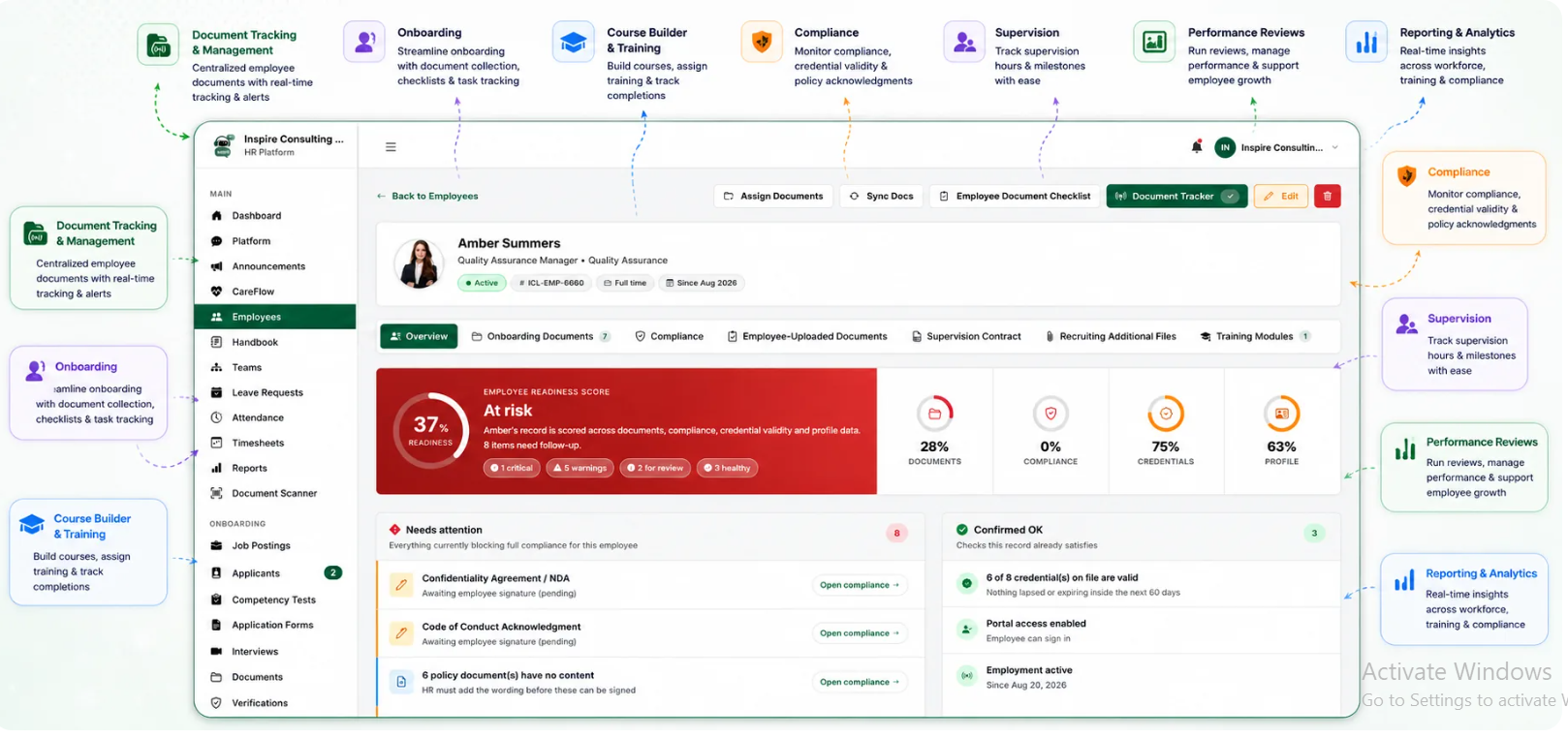
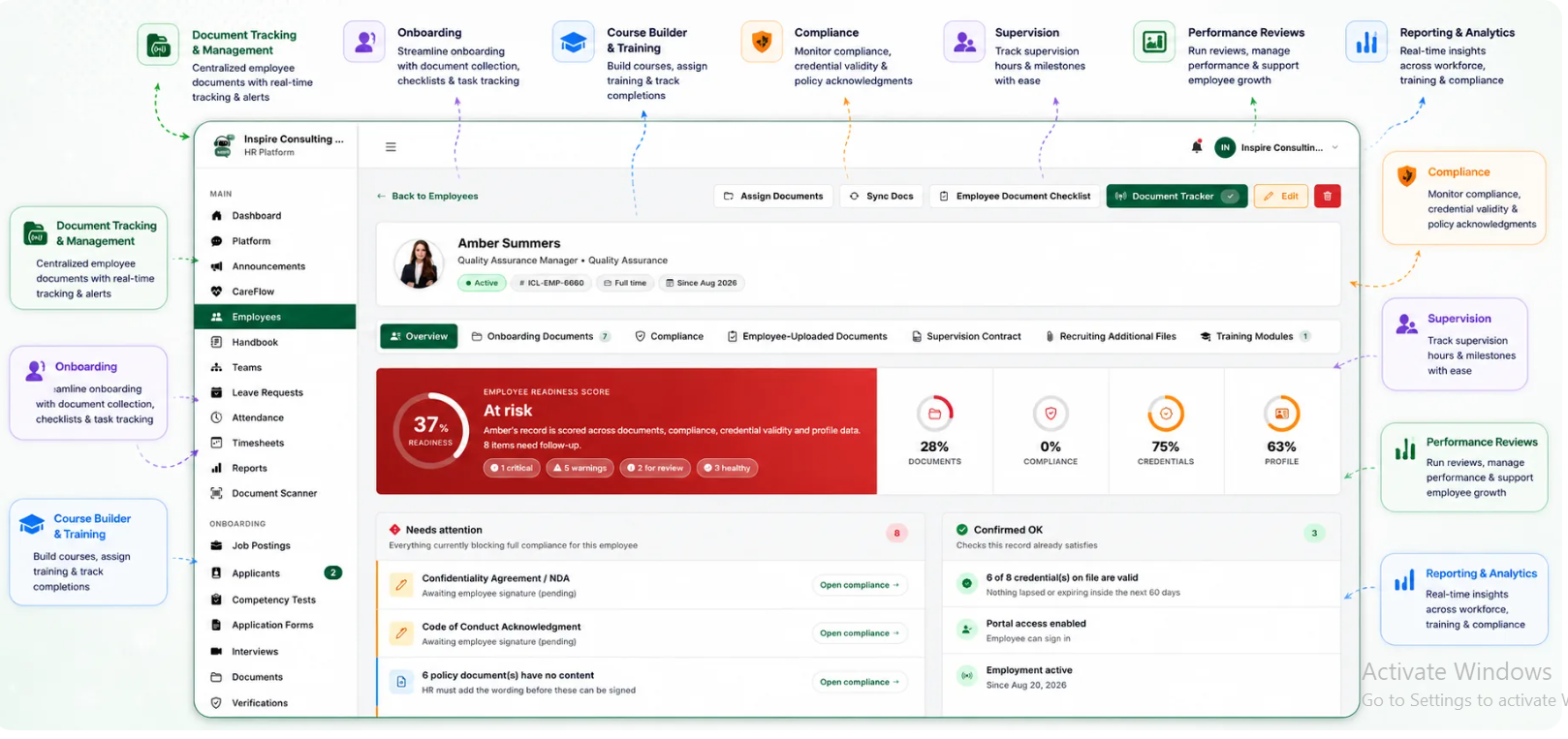
Instead of handling those steps in separate inboxes, the workflow keeps them connected to a single employee record. It can show whether a person has completed onboarding, whether access is approved for the right program or site, what permissions are requested, and whether any required tasks still block activation.
The goal is not simply faster account creation. The goal is to make access decisions consistent, documented, and easier to review when questions come up later.
Why It Matters for Behavioral Health Providers
Behavioral health environments depend on accurate, timely documentation and tightly controlled access to sensitive information. A therapist, case manager, intake coordinator, residential supervisor, or billing support employee may each need a different access profile. Even within one organization, access can vary by service line, location, documentation responsibility, and level of supervision.
Without a clear approval workflow, common problems appear quickly. A new clinician may arrive on day one without access to documentation tools. A transferred employee may keep old permissions that no longer match the new role. A supervisor may request broad access for convenience even though the employee only needs a narrower view. In another case, access may be created before mandatory privacy training or policy sign-off is complete.
These issues affect more than productivity. They can create compliance exposure, inconsistent documentation, delayed services, weak handoffs between departments, and unnecessary friction during onboarding. A formal access approval process helps behavioral health organizations treat system access as a workforce readiness issue, not just a technical ticket.
What to Include in the Workflow
An effective workflow begins with role-based access standards. Organizations should define what level of access each job type normally needs, who can request exceptions, and what must be completed before activation. This keeps the process from becoming subjective or dependent on whichever manager asks first.
The workflow should also connect access requests to the employee lifecycle. New hires, internal transfers, temporary assignments, leaves, and separations all affect what a person should be able to view or change inside clinical systems. When those events are disconnected from access management, outdated permissions are easy to miss.
Common Failure Points to Avoid
Many access issues are not caused by bad intent. They happen because the process is informal. One department assumes another team completed the prerequisite check. Someone provisions the account based on a verbal request. A manager asks for broad permissions to avoid delays. Later, no one can reconstruct why the access was granted that way.
Behavioral health providers should watch for a few recurring weak spots. The first is granting access before all onboarding requirements are complete. The second is failing to adjust permissions when an employee changes role, site, or supervisor. The third is leaving no record of why elevated or temporary access was approved.
These gaps become especially risky in multi-site organizations or providers with outpatient, residential, crisis, mobile, and administrative workflows under one umbrella. The more complex the service model becomes, the less safe it is to manage access with ad hoc coordination.
Best Practices for Better Start-Date Readiness
The strongest organizations make access planning part of onboarding from the beginning, not the final hour before a start date. As soon as the role is confirmed, the workflow should identify what systems the employee will need, what training must be done first, and who owns each approval step.
It also helps to separate standard access from exception-based access. Most employees should follow a normal role template. If someone needs broader permissions for coverage, leadership duties, or temporary cross-program work, that request should be documented with an approver and an end date for review.
Another good practice is to connect access status to manager visibility. Supervisors should be able to see whether their incoming employee is ready for documentation work, still pending training, or waiting on an approval decision. That reduces first-day surprises and makes the onboarding process easier to coordinate across teams.
How BUAMS HR Helps
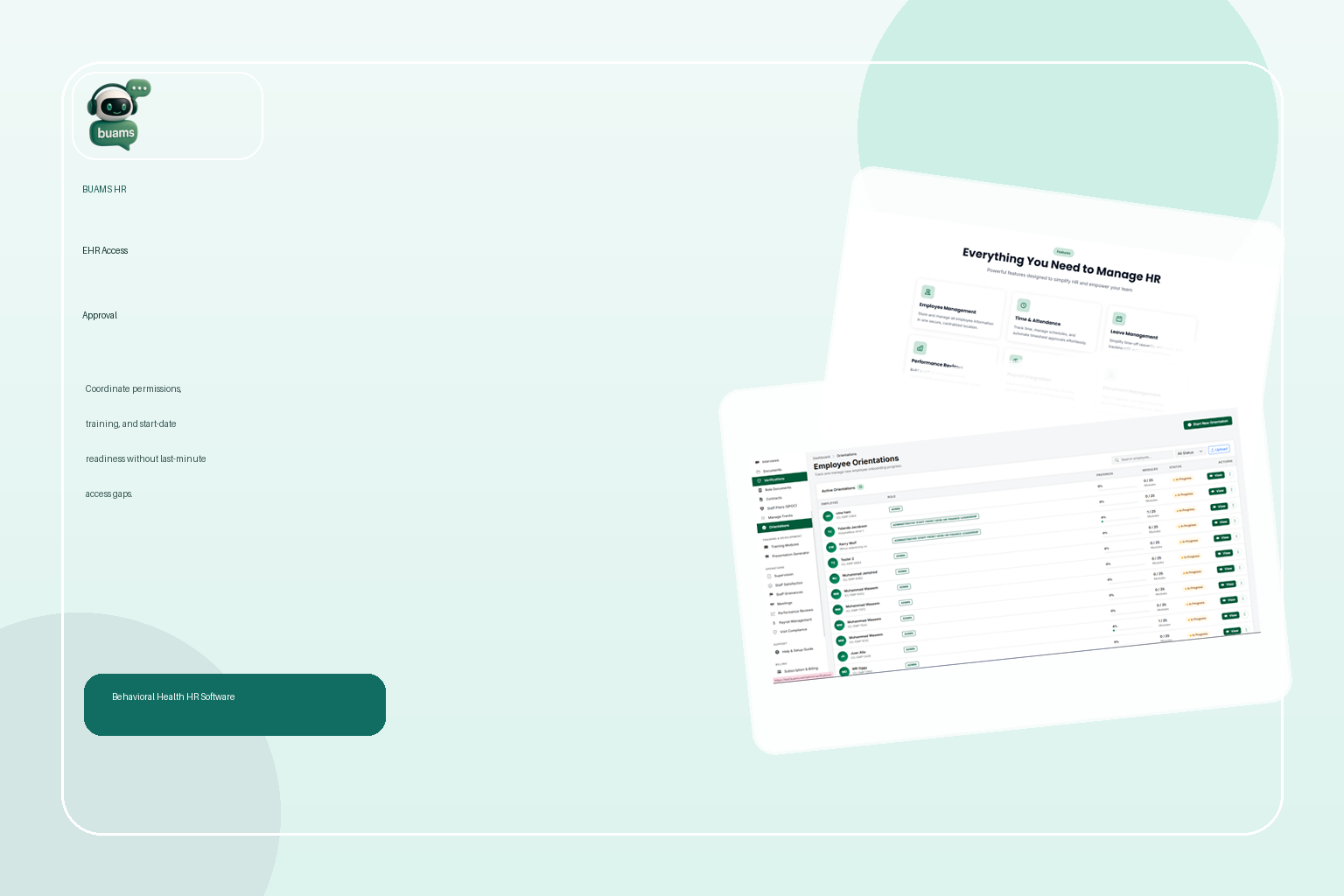
BUAMS HR helps behavioral health providers organize the workforce data that supports cleaner EHR access approval workflows. Instead of treating access requests as disconnected technical tasks, teams can tie them to onboarding milestones, employee records, supervisor assignments, compliance steps, and status tracking in one HR-centered process.
That visibility makes it easier to see whether a new hire is truly ready for activation, whether a transfer needs revised permissions, or whether an exception requires follow-up. BUAMS HR also helps teams keep supporting documents, acknowledgments, and readiness checkpoints attached to the employee file so access-related decisions are easier to explain and review later.
For organizations that want faster starts without weaker controls, that structure matters. Better access coordination improves the employee experience, reduces avoidable first-day delays, and supports stronger operational discipline across HR, compliance, and leadership.
Final Thoughts
EHR access approval software gives behavioral health providers a practical way to align permissions with role readiness instead of handling them through fragmented follow-up. When access decisions are connected to training, approvals, and employee status, organizations can move faster without creating unnecessary compliance risk.
For teams balancing sensitive data, complex service models, and constant workforce movement, a documented access workflow is more than a convenience. It is part of building a reliable HR and operations foundation that supports safe, timely care delivery.