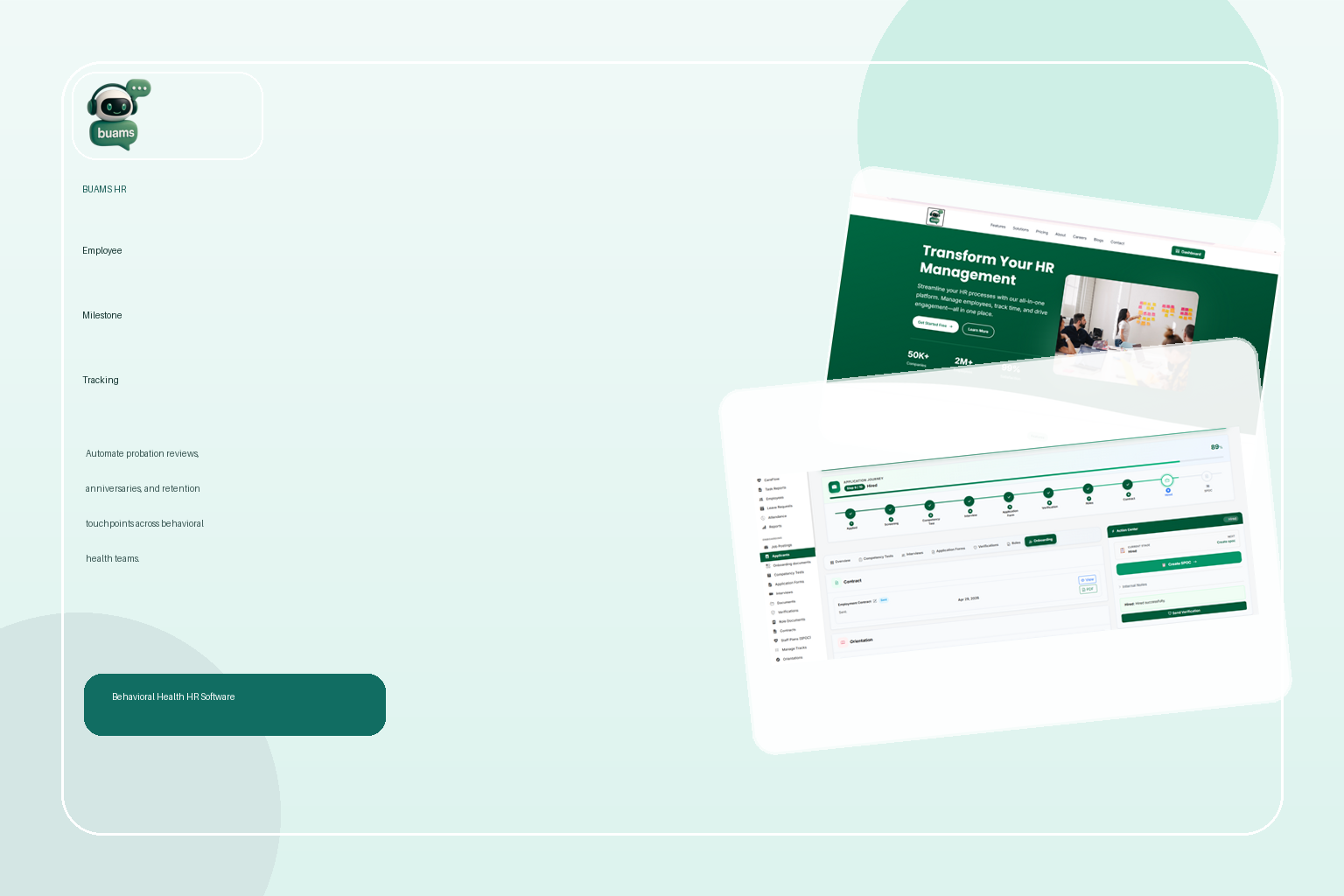
Behavioral health organizations rely on timely follow-up across the employee lifecycle, but many important milestones still live in scattered calendars, sticky notes, or one person’s memory. Probation check-ins, annual acknowledgments, work anniversaries, retention conversations, and role-based follow-up tasks can easily drift when HR teams are already balancing hiring, compliance, and workforce coverage.
Employee milestone tracking software gives behavioral health providers a more reliable way to monitor those moments. Instead of chasing dates manually, HR leaders can create repeatable workflows that surface upcoming deadlines, assign owners, and document completion in one place. That matters in environments where turnover is costly, supervisors are stretched thin, and delayed follow-up can affect staff experience as much as compliance readiness.
Key Takeaways
What Is Employee Milestone Tracking Software?
Employee milestone tracking software is a system that helps HR teams define important workforce dates and the actions tied to them. In behavioral health, those milestones may include 30-, 60-, and 90-day new hire reviews, annual policy acknowledgment cycles, supervisor check-ins, anniversary recognition, role transition follow-up, and retention outreach for high-risk teams.
The goal is not just to store dates. The real value comes from tying each milestone to a workflow: who should be notified, what forms or conversations are required, how completion is documented, and where leadership can see what is still pending. That turns milestone management from a passive calendar exercise into an active operating process.
Why Milestone Tracking Matters in Behavioral Health
Behavioral health providers often operate across multiple programs, locations, and staffing models. Teams may include salaried clinicians, hourly direct care workers, supervisors, peer support staff, contractors, and floating staff. In that environment, milestone follow-up tends to break down when ownership is unclear or when supervisors are tracking tasks in separate spreadsheets.
Missed milestones create more than administrative mess. A skipped probation review can delay coaching for a new hire who is struggling. An overdue stay interview can mean HR misses early turnover signals. A forgotten anniversary touchpoint can make staff feel invisible in already demanding roles. Even when these moments are not formal compliance requirements, they still shape workforce stability and manager accountability.
For behavioral health organizations focused on retention, consistency matters. Staff are more likely to trust HR processes when follow-up feels organized, timely, and fair across teams rather than dependent on which supervisor remembered to set a reminder.
Common Milestones Worth Tracking
Each organization will define its own lifecycle events, but several milestone categories show up repeatedly in behavioral health HR operations.
New Hire Stabilization Milestones
Early employment milestones often include first-week readiness checks, 30-day onboarding follow-up, 60-day coaching conversations, and 90-day probation reviews. These checkpoints help confirm that paperwork is complete, training is landing, supervision is happening, and barriers are addressed before they become resignation triggers.
Annual and Recurring Workforce Milestones
Recurring milestones can include annual evaluations, handbook acknowledgment, benefit review windows, recognition touchpoints, compensation review preparation, and recurring supervisory documentation cycles. These are the activities that are easy to delay when operations get busy, even though they shape employee experience over time.
Role and Status Change Milestones
Promotions, internal transfers, supervisory assignments, location changes, and return-to-work events often require a sequence of follow-up tasks after the initial change is approved. Milestone tracking helps HR confirm those follow-up actions actually happen instead of disappearing after the status change is entered.
What to Look for in Employee Milestone Tracking Software
Not every reminder tool is enough for behavioral health HR. The better approach is to look for software that supports repeatable workforce workflows, clear accountability, and operational visibility.
Configurable Milestone Rules by Role or Program
Different roles need different milestone schedules. A licensed clinician, a peer support specialist, and an administrative coordinator may all follow different onboarding or follow-up patterns. Software should let HR trigger milestone plans based on role, site, employment type, or program rather than forcing the same checklist on everyone.
Assigned Ownership and Escalation
A milestone should always have an owner. Sometimes that owner is HR, but often it is a supervisor, department lead, or program manager. Good software makes ownership visible, sends reminders before due dates, and escalates items when they are overdue so follow-up does not stall quietly.
Documentation Inside the Employee Record
It is much easier to prove consistency when milestone completion is tied to the employee profile. Notes, acknowledgments, attachments, and status updates should be easy to store alongside the staff record so HR is not hunting through email threads to reconstruct what happened.
Dashboards for Missed and Upcoming Milestones
Supervisors and HR leaders need quick answers to simple questions: which employees are approaching a probation checkpoint, which sites are overdue on anniversary outreach, and where is follow-through slipping. A dashboard that surfaces upcoming and late milestones helps teams intervene before problems spread.
Best Practices for Building a Milestone Program
Software works best when the underlying milestone design is practical. Behavioral health providers should keep the program focused on moments that truly support readiness, documentation, and retention.
How BUAMS HR Helps Behavioral Health Providers Stay on Top of Milestones
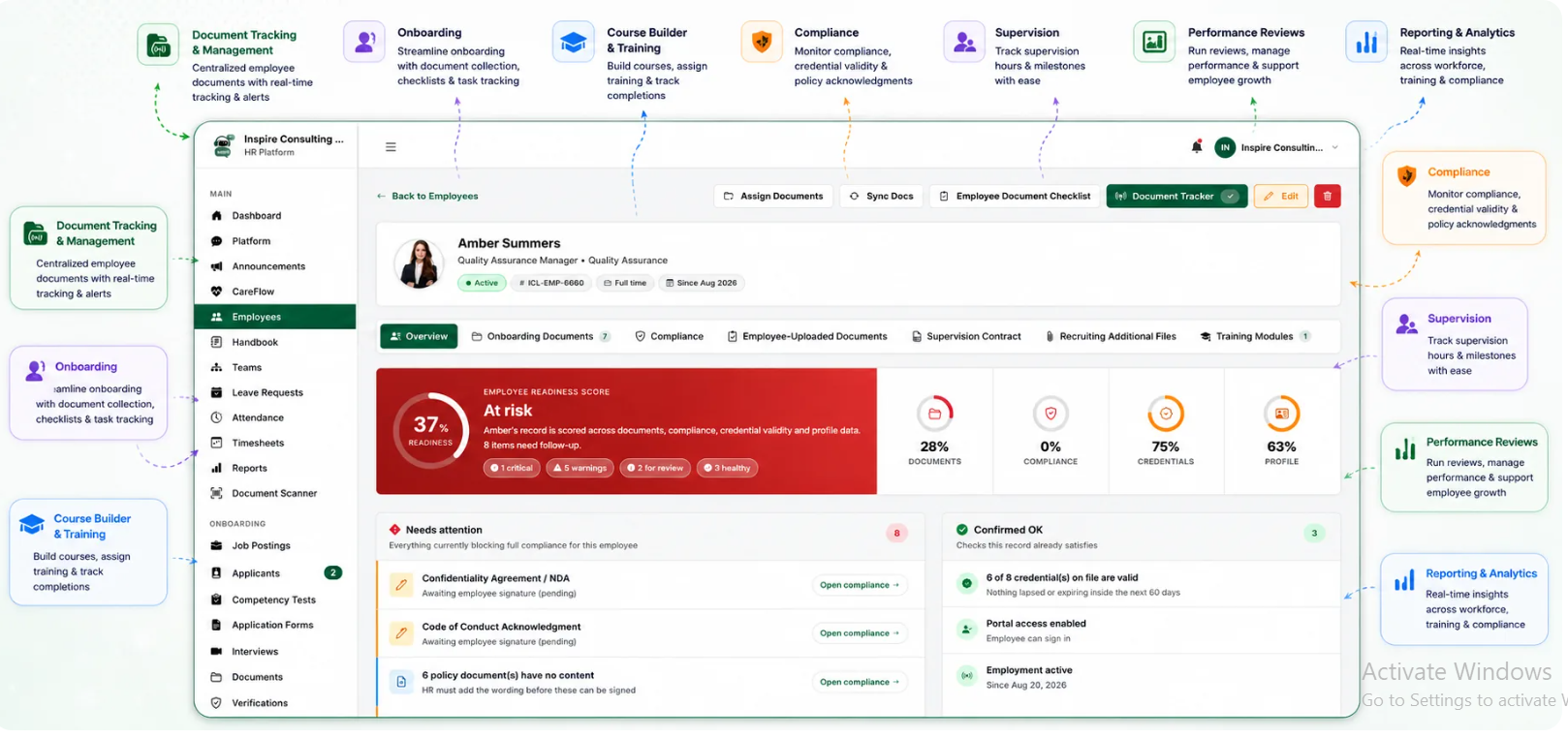
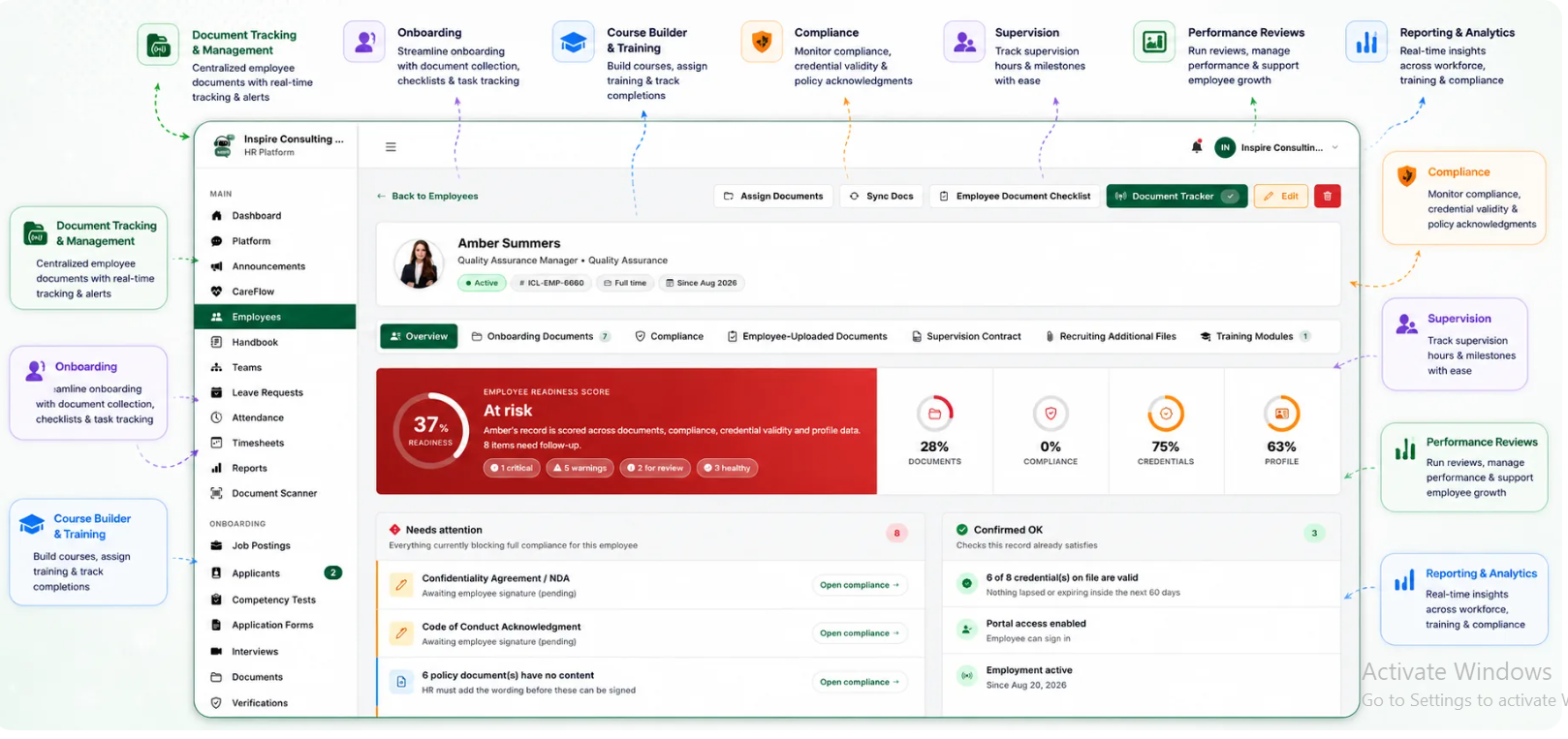
BUAMS HR gives behavioral health organizations a more structured way to manage workforce follow-up across the full employee lifecycle. Instead of treating milestone management as a separate manual process, teams can connect key dates to employee records, onboarding progress, compliance tasks, and supervisor accountability.
With BUAMS HR, organizations can standardize milestone workflows by role or program, assign ownership, and centralize supporting documentation in one place. That means a 90-day review, an anniversary touchpoint, or a post-transfer follow-up does not disappear into a spreadsheet that only one person can see. Leaders gain clearer visibility into what has been completed, what is due next, and where delays are starting to create risk.
For providers trying to improve retention without adding more administrative burden, that visibility matters. HR teams can spend less time chasing reminders and more time supporting the conversations and interventions that keep staff engaged and ready for the work.
Final Thoughts
Employee milestone tracking software gives behavioral health providers a more dependable way to manage the workforce moments that often fall between compliance and culture. When probation reviews, anniversary outreach, and recurring check-ins are tracked intentionally, organizations can support staff more consistently and reduce avoidable follow-up gaps.
For growing providers, the biggest advantage is not automation for its own sake. It is the ability to make important employee touchpoints visible, repeatable, and documented across the organization. That is the kind of operational discipline that supports both retention and long-term workforce stability.