Duplicate employee profiles are a quiet source of HR risk in behavioral health. A rehire gets entered as a brand-new person, a transfer creates a second file at the receiving program, or a legal name change leaves credentials and training records tied to an outdated profile. Employee records merge software gives HR teams a controlled way to reconcile those fragments before they create audit gaps, payroll confusion, or assignment mistakes.
For behavioral health providers, the issue is not only administrative. A duplicate record can separate licensure dates from supervision history, split required acknowledgments across two files, or hide missing onboarding items behind the appearance of a complete employee profile. The right workflow helps teams restore one reliable record without losing history.
Key Takeaways
What Employee Records Merge Software Solves
Employee records merge software is designed to identify when two or more profiles represent the same person and then guide HR through a clean reconciliation process. Instead of leaving duplicate files in place, the system should help teams compare demographic details, employment status, locations, credentials, documents, and compliance tasks before deciding which record becomes the source of truth.
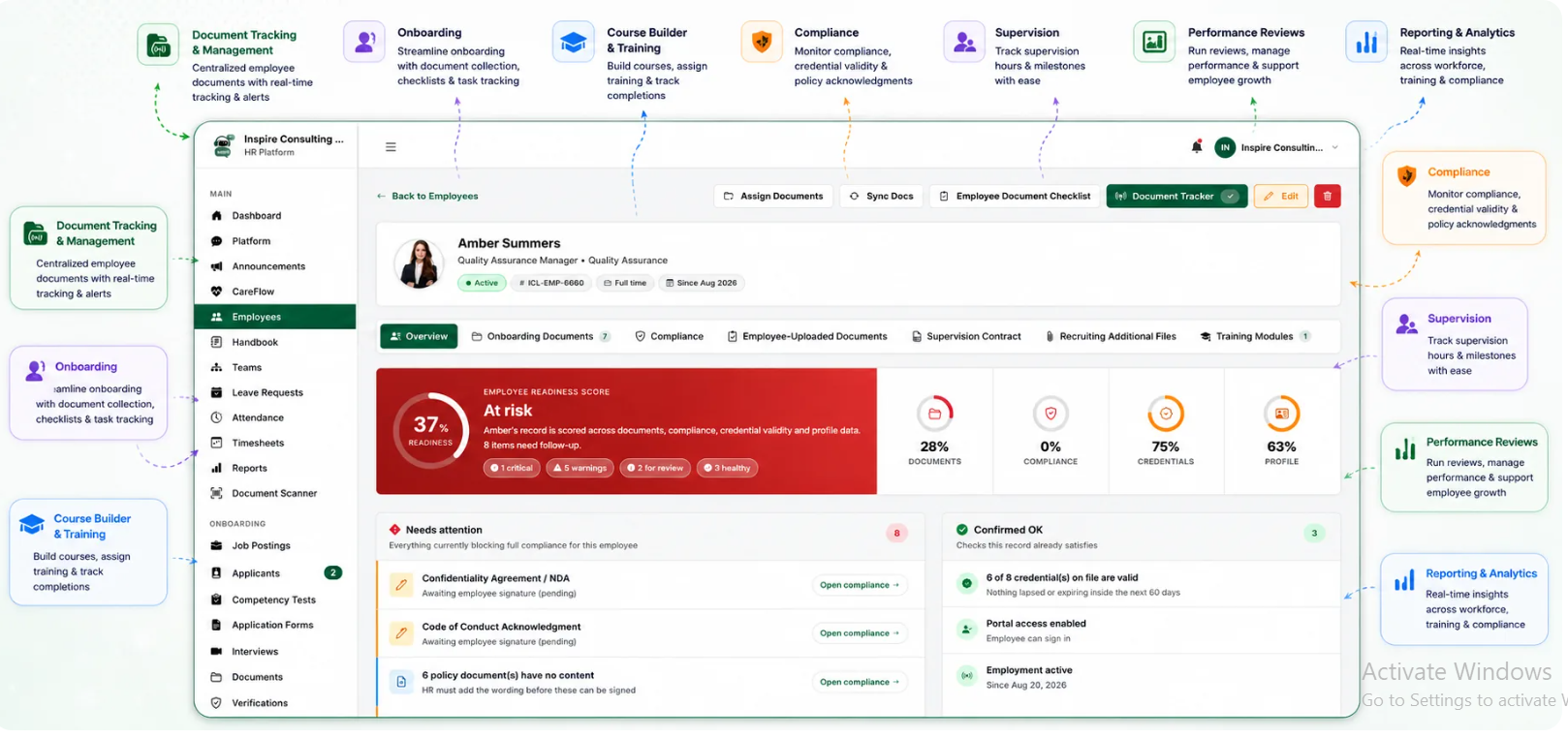
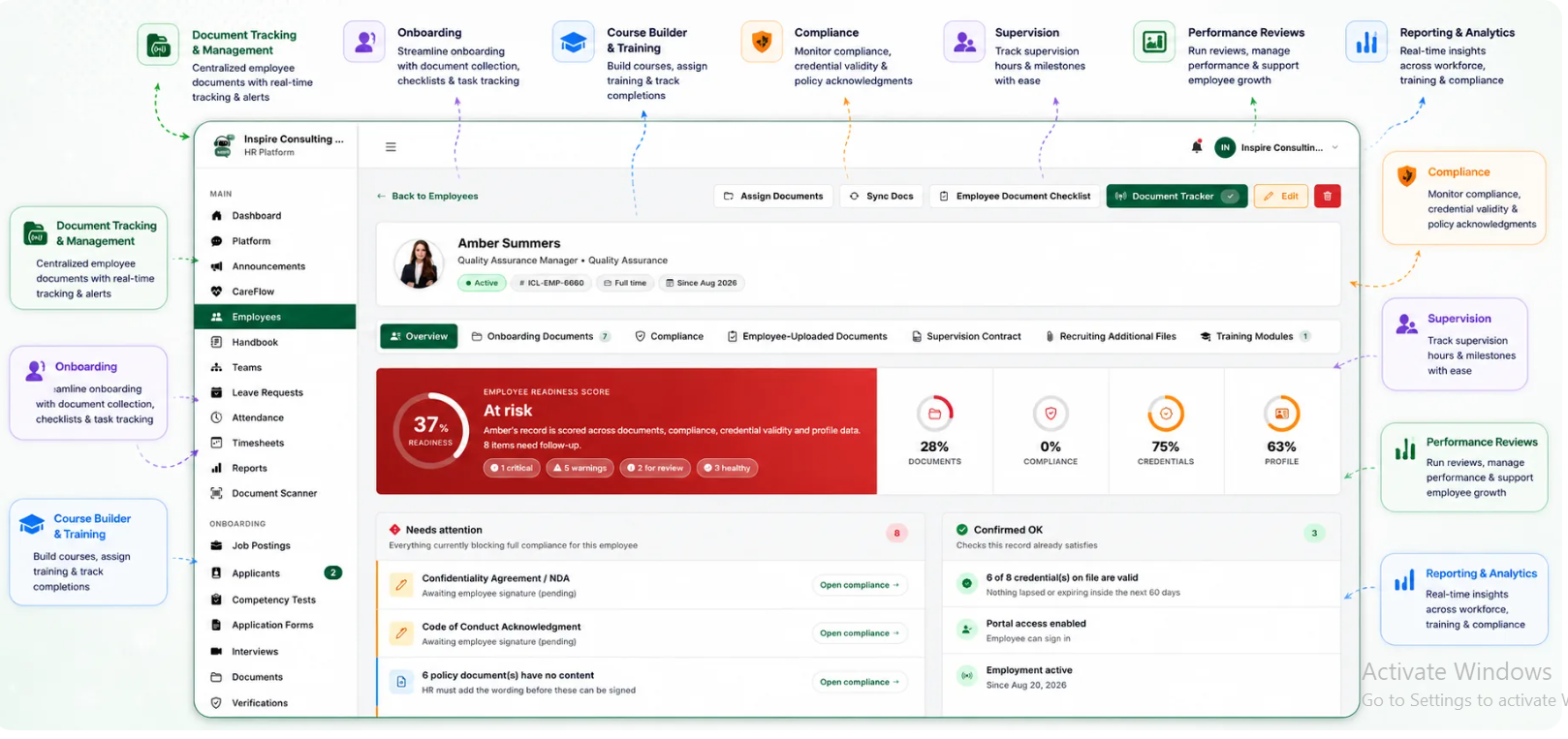
That matters in behavioral health because employee data is rarely limited to a single field. A clinician may have a supervisor assignment in one record, a license expiration date in another, and signed policy acknowledgments in a third. If those details are not aligned, managers can make decisions based on incomplete information.
Why Duplicate Profiles Create Real Risk in Behavioral Health
Behavioral health organizations depend on accurate workforce records to support care delivery, licensing, accreditation readiness, and internal accountability. Duplicate profiles can distort that picture in ways that are easy to miss until a review or incident forces the issue.
When Duplicate Employee Profiles Usually Appear
Rehires After a Gap in Employment
If a former employee returns months later, teams under time pressure may create a brand-new profile instead of restoring or reactivating the existing one. That can separate historical documents, previous clearances, and earlier performance notes from the current hiring workflow.
Transfers Between Programs or Locations
Multi-program behavioral health providers often move staff between outpatient, residential, community-based, and administrative roles. Without a consistent employee master record, a transfer can accidentally create a second profile tied to the new site, leaving permissions, required training, and assignment history split in two places.
Legal Name Changes or Demographic Corrections
Name updates can create matching problems across HR, payroll, credentialing, and scheduling systems. If staff members update a record manually instead of reconciling linked data, the organization can end up with one profile under the former name and another under the new one.
Imports From Legacy Systems or Spreadsheets
Behavioral health providers that consolidate data from separate tools often inherit duplicate records created by inconsistent formatting, missing identifiers, or outdated exports. Without a formal merge workflow, cleanup becomes a slow manual project that never fully finishes.
What to Look for in Employee Records Merge Software
Not every cleanup tool is enough for compliance-sensitive HR operations. The best employee records merge software should help teams reduce duplication without erasing context.
How BUAMS HR Helps Behavioral Health Teams Reconcile Workforce Data
BUAMS HR gives behavioral health providers a more organized foundation for employee data so duplicate-profile problems are easier to prevent and easier to resolve. When hiring, onboarding, employee files, and compliance tracking live in one system, HR teams spend less time stitching together partial records from different tools.
For organizations managing rehires, internal transfers, and frequent credential updates, that unified structure matters. Teams can review the employee record in context, confirm which documents and requirements belong with the person, and keep ongoing workforce tracking aligned to one dependable profile.
Final Thoughts
Duplicate employee files are easy to create and surprisingly hard to unwind once they spread across hiring, compliance, and workforce operations. A strong employee records merge software workflow helps behavioral health providers protect one source of truth, reduce avoidable audit risk, and keep staff records accurate as people move through the organization. For HR teams that want cleaner files and fewer compliance surprises, that is a practical place to start.