Behavioral health providers cannot treat employee screening as a one-time hiring task. Many organizations need recurring criminal background rechecks, exclusion monitoring, license validation, annual attestations, and other workforce reviews that prove staff remain eligible to work in sensitive care settings. When those follow-up checks live in scattered spreadsheets, inbox reminders, and shared drives, deadlines slip and supporting evidence becomes hard to find. Employee rescreening software gives HR teams a cleaner way to schedule recurring reviews, document completion, and show leadership that workforce risk is being managed before an audit or contract review forces a scramble.
For behavioral health organizations with multiple programs, mobile staff, or high turnover, this matters even more. A missed rescreening deadline can delay scheduling, create payer risk, or expose the organization to avoidable compliance findings. The right process keeps reviews predictable instead of reactive.
Key Takeaways
What Is Employee Rescreening Software?
Employee rescreening software is a system that helps organizations manage recurring employment eligibility and compliance reviews after onboarding is complete. In behavioral health, that can include periodic background rechecks, exclusion rescreens, license or certification follow-up, health clearances, signed policy renewals, and other workforce checks tied to role risk or payer requirements.
The goal is not just to store documents. Good employee rescreening software creates a repeatable operating model: define which employees need which reviews, assign deadlines based on role or location, notify the right people before due dates arrive, and keep a clear record of what was completed, when it was reviewed, and where the proof lives.
That distinction matters. A shared folder may hold completed PDFs, but it does not automatically tell HR which counselors are due next month, which supervisors have not responded, or which employees are cleared for assignment today. A true system closes that gap.
Why Manual Rescreening Breaks Down in Behavioral Health
Behavioral health workforces are rarely simple. Organizations may employ clinicians, direct care staff, peer support specialists, nurses, administrative staff, interns, contractors, and temporary workers across several sites. Each group can carry different review requirements and different timelines. One program may require annual rechecks while another needs additional payer-specific monitoring or site-level documentation.
Manual tracking starts to fail when HR has to answer practical questions quickly:
Without a structured system, teams spend too much time building one-off reports, digging through email threads, and reconciling conflicting dates. That raises the chance of both missed deadlines and weak documentation. In regulated care environments, those are not small administrative issues. They affect staffing confidence, compliance posture, and leadership trust in the HR process.
What to Look For in Employee Rescreening Software
Behavioral health providers should look for software that supports recurring compliance operations, not just basic file storage. The best setup makes it easy to standardize requirements while still allowing different rules for different job types, programs, or states.
Recurring due-date logic
The system should calculate next due dates from a completion date, expiration date, or hire date depending on the requirement. That keeps HR from manually rebuilding the schedule every cycle.
Role-based requirement mapping
Not every employee needs the same review set. Providers should be able to tie rescreening requirements to job title, department, program, site, or employment type so staff are not over- or under-tracked.
Status visibility that supports decisions
HR leaders need more than a long list of tasks. They need clear views for due soon, overdue, completed, and blocked items so they can focus on risk first. That visibility is especially important before audits, contract renewals, and staffing changes.
Centralized proof and notes
Each completed rescreening should have linked documentation, internal notes, and a timestamped record of review. If a surveyor or payer asks for proof, the team should not have to rebuild the story from multiple tools.
Alerts and accountability
Strong workflows notify HR, supervisors, or compliance owners before deadlines become urgent. They also make it obvious where action is stalled, whether the hold-up is missing employee paperwork, an outside vendor delay, or internal review.
How BUAMS HR Helps Behavioral Health Teams Stay Ahead
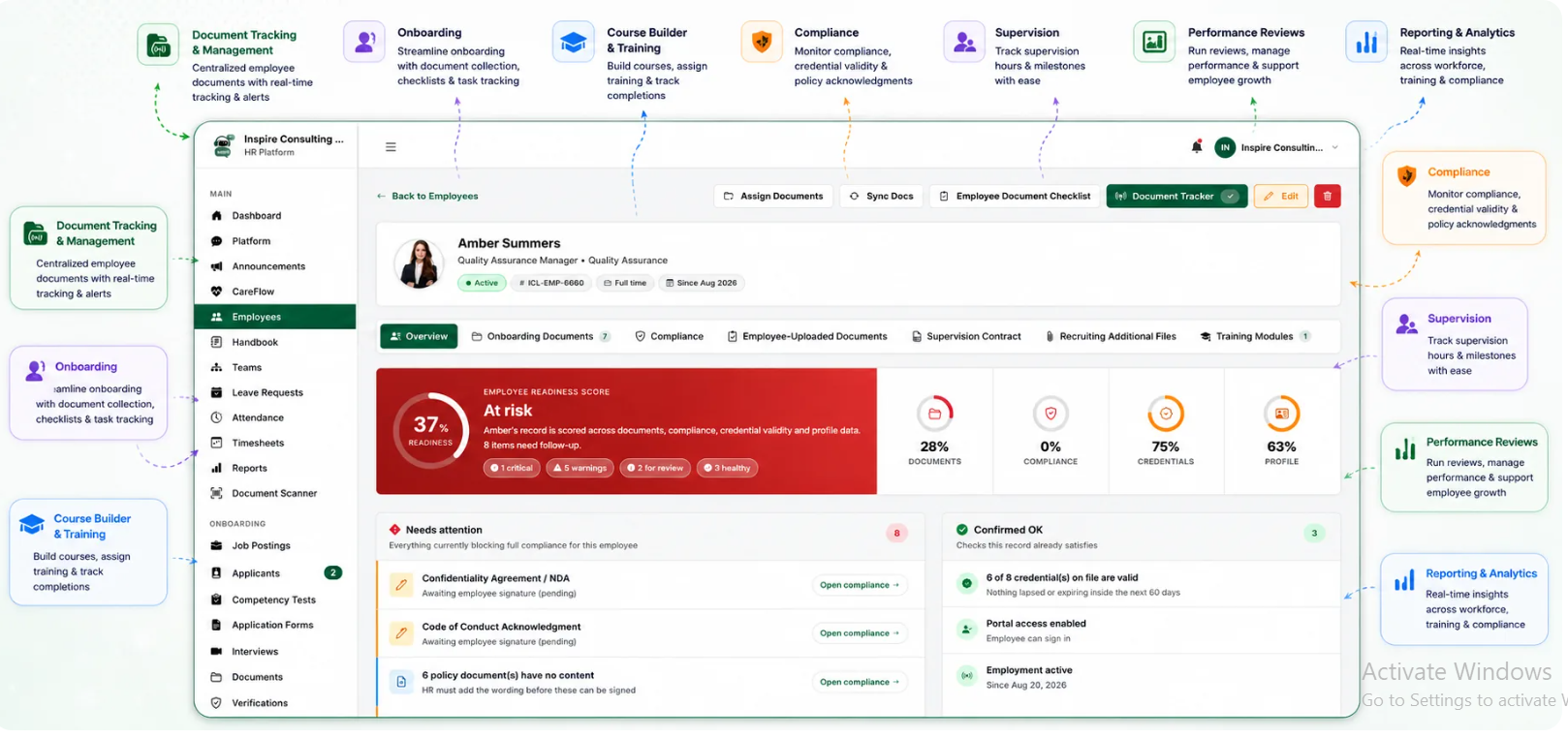
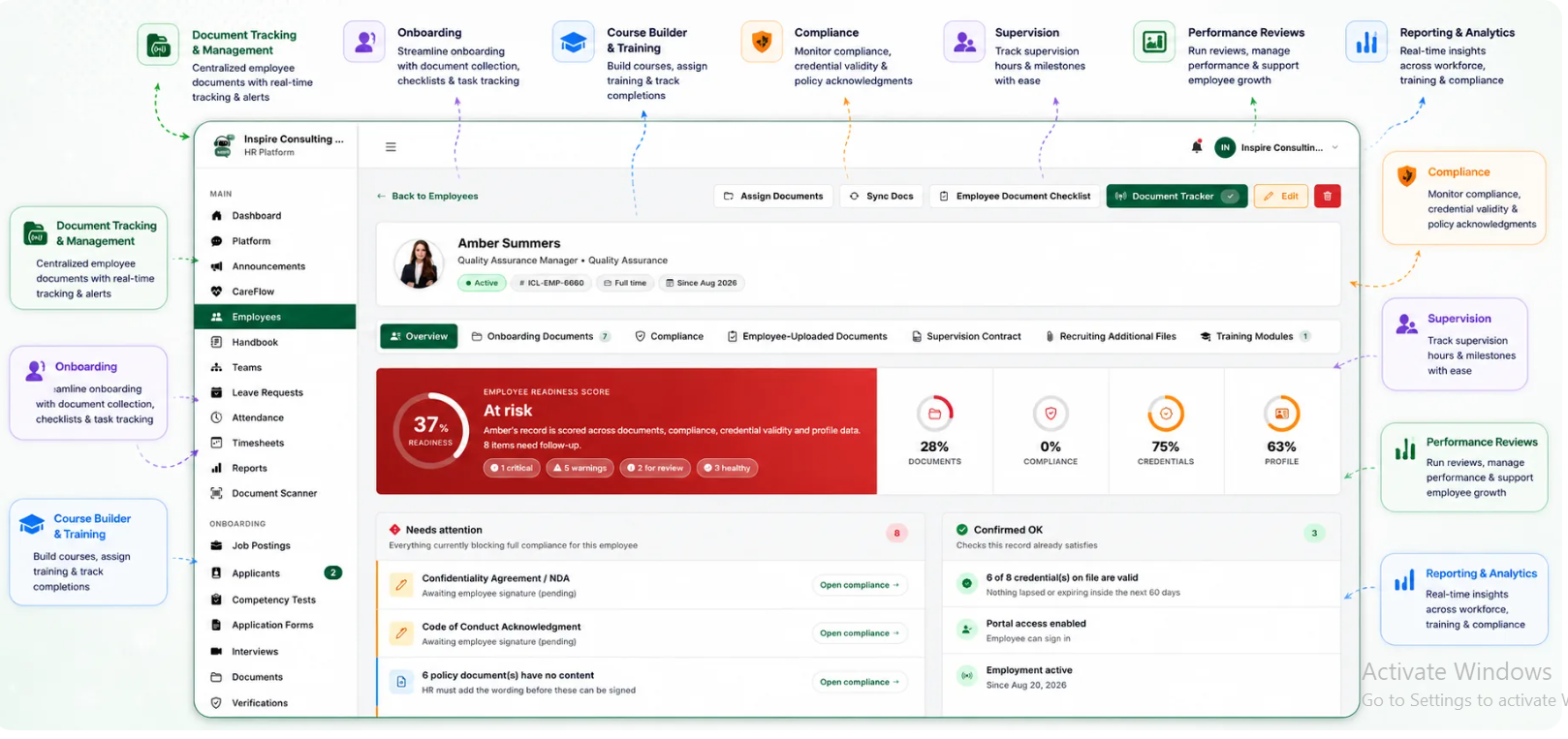
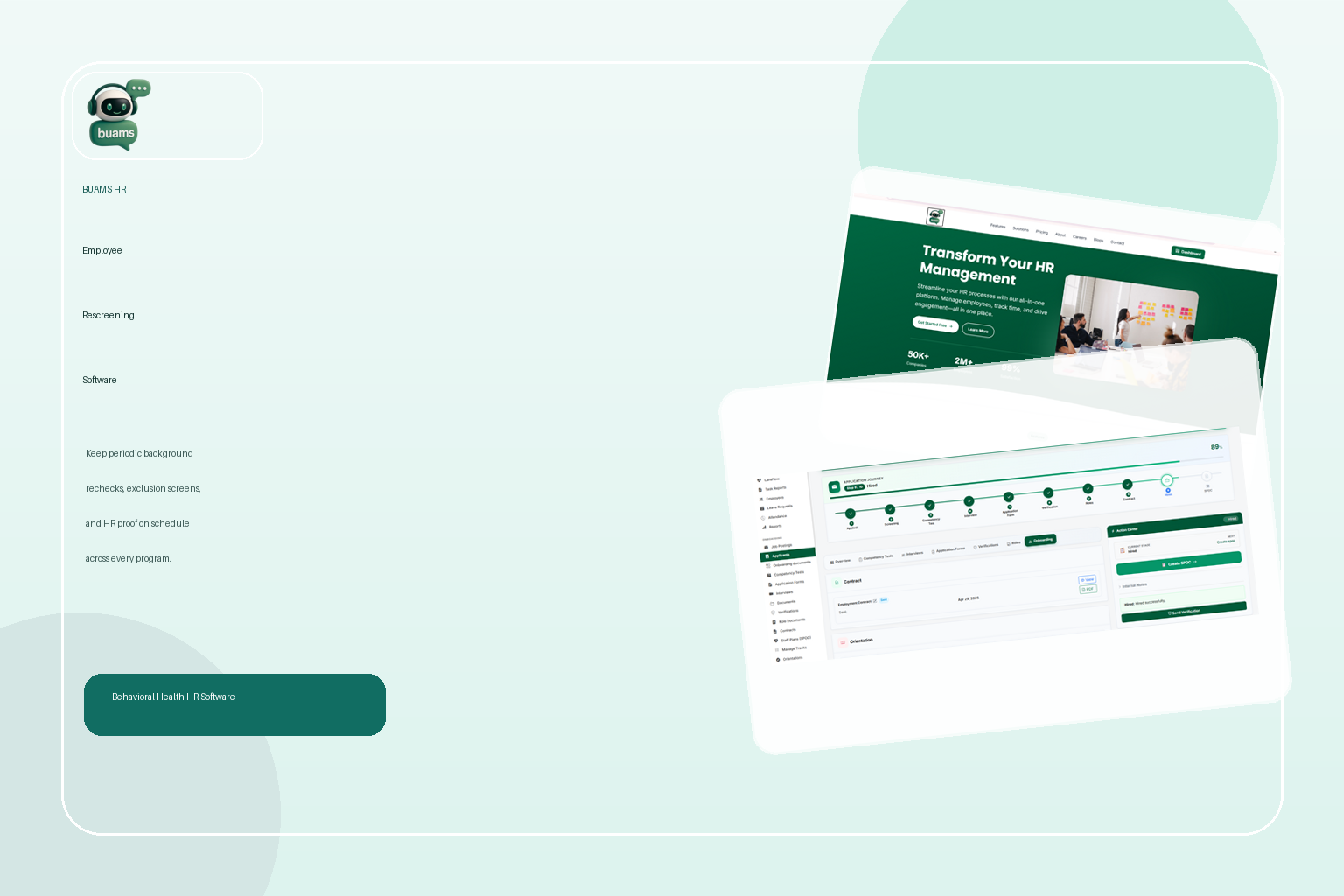
BUAMS HR gives behavioral health organizations a more organized way to manage employee records and recurring workforce requirements in one place. Instead of treating rescreening as a separate spreadsheet exercise, teams can connect due dates, supporting documents, employee files, and follow-up actions inside a consistent workflow.
For example, HR teams can standardize recurring checks by role, monitor upcoming deadlines across programs, and keep related documents attached to the employee record. That makes it easier to answer operational questions quickly, such as which staff are fully current, which files need follow-up this week, and which items may affect assignment readiness.
Because BUAMS HR is built for behavioral health workforce operations, it also fits the reality that organizations must balance compliance with staffing pressure. A practical system does not just tell HR that a deadline exists. It helps them prioritize what could slow starts, disrupt coverage, or create audit exposure if it stays unresolved.
Final Thoughts
Employee rescreening software is valuable because it turns an error-prone recurring task into a controlled process. For behavioral health providers, that means fewer surprise gaps, faster audit response, and better confidence that workforce records reflect current eligibility rather than outdated assumptions.
If your team is still managing periodic background rechecks, exclusion screens, and follow-up proof through spreadsheets and inbox reminders, this is usually a sign that the process has already outgrown the toolset. A more structured approach helps protect compliance without adding unnecessary admin burden, and it gives HR leaders a clearer picture of workforce readiness every day.