Behavioral health organizations deal with workforce changes constantly. Employees move between programs, change supervisors, take leaves of absence, return with restrictions, shift from part time to full time, or step into new locations as service demand changes. When those status changes are tracked in email threads or side spreadsheets, HR teams can lose sight of what is current, what still needs follow-up, and what could create a compliance problem later.
Employee status change tracking software gives behavioral health providers a structured way to document and manage those transitions. Instead of treating each change as a one-off task, organizations can use a repeatable process that keeps employee records, approvals, documents, and readiness details aligned. That matters in mental and behavioral health settings where staffing accuracy affects supervision, scheduling, documentation, and audit response.
Key Takeaways
What Is Employee Status Change Tracking Software?
Employee status change tracking software is a system for recording workforce changes from start to finish. In a behavioral health organization, that can include changes to employment status, department, work location, supervisor assignment, leave status, return-to-work documentation, pay class, and program alignment.
The purpose is not simply to note that a change happened. A useful system helps teams see what changed, when it changed, who approved it, which records were updated, and whether any follow-up steps are still open. That level of visibility reduces the risk of incomplete updates that create downstream problems.
Why Status Changes Create Risk in Behavioral Health HR
In many organizations, status changes sit in the gap between hiring and offboarding. They are common enough to be routine, but important enough to cause disruption when they are handled inconsistently. A transfer may require a new supervisor, updated training assignments, revised access, location-specific documents, or a change in required credentials. A leave of absence may affect active status, reporting relationships, and readiness for scheduling. A return to work may involve documentation deadlines or temporary restrictions that need careful tracking.
Behavioral health providers often operate across multiple sites and service lines, so a small status error can spread quickly. If HR updates one record but compliance or operations continues working from old information, staff may be assigned incorrectly, required follow-up may be missed, and managers may not realize which changes are still pending.
This is especially important for Maryland and DC providers managing distributed teams, community-based programs, and role-specific workforce requirements. Accurate status tracking helps protect continuity while reducing the administrative scramble that follows poorly documented changes.
Common Problems When Status Changes Are Managed Manually
Approvals Are Hard to Trace
When change requests are handled through email, it becomes difficult to confirm who signed off and whether every required stakeholder reviewed the update. Missing approval history creates avoidable confusion later.
Employee Files Do Not Match Current Reality
Teams may update a spreadsheet or a payroll note without updating the core employee record. That leaves HR with one version of the truth while supervisors or compliance staff rely on another.
Leave and Return Dates Are Easy to Miss
Leaves of absence, temporary accommodations, and return-to-work dates often require follow-up. Without reminders and clear ownership, those dates slip past and create operational or documentation gaps.
Transfers Trigger Too Many Separate Tasks
A location or program change can affect permissions, reporting lines, onboarding checklists, and role requirements. When those tasks are disconnected, teams spend more time chasing updates than completing them.
What to Look for in Employee Status Change Tracking Software
Structured Change Workflows
The system should make it easy to standardize common changes such as transfers, leaves, returns, promotions, and supervisor updates. Reusable workflows help teams move faster without reinventing the process every time.
Connected Employee Records
Status changes should update the employee profile in context, not sit in a separate tracking log. That helps HR teams confirm that files, assignments, and historical records stay aligned.
Document and Deadline Visibility
Some changes require forms, notes, acknowledgments, or deadlines. Software should make those requirements visible so nothing important disappears into inboxes.
Role and Location Awareness
Behavioral health providers need to see how a change affects programs, supervisors, locations, and readiness requirements. A generic status field is not enough when responsibilities differ by setting or service line.
Clear Audit Trail
Teams should be able to review what changed, when it changed, and who handled it. That supports internal review and gives organizations a cleaner record when questions arise later.
Best Practices for Cleaner Workforce Status Management
How BUAMS HR Helps
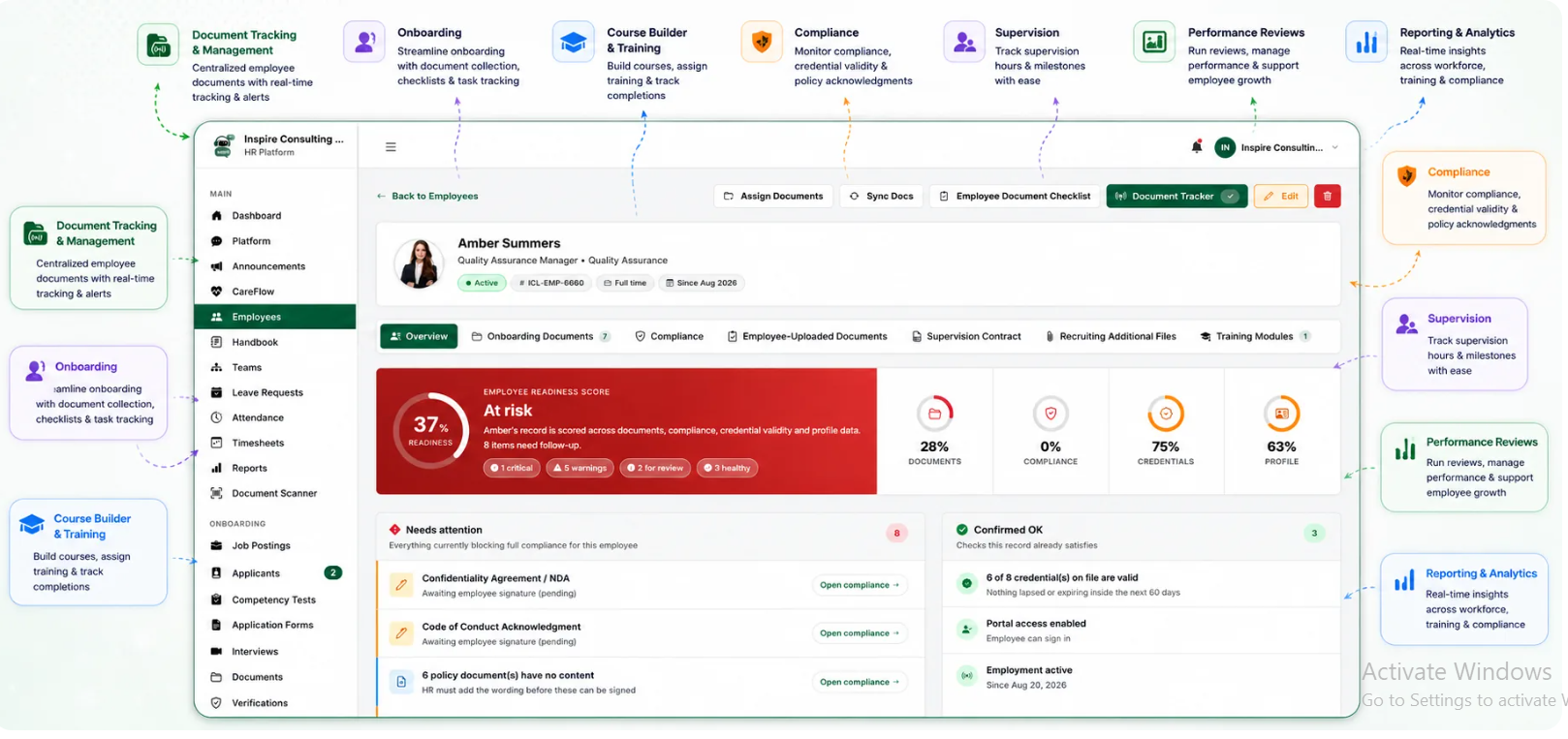
BUAMS HR helps behavioral health organizations manage workforce information in one place, making employee status changes easier to document, review, and follow through. Instead of relying on disconnected spreadsheets or informal communication, HR teams can work from a structured record that keeps employee files and operational details more aligned.
That is especially valuable when employees move between programs, supervisors, or locations. A centralized HR system supports better visibility into what changed, what still needs attention, and which documents or approvals belong with the update. For behavioral health providers balancing compliance demands with day-to-day staffing needs, that kind of consistency reduces friction.
Because BUAMS HR is designed for behavioral health workforce operations, it supports organizations that need cleaner coordination between HR processes, employee records, and readiness oversight. Better status change management helps teams stay accurate without slowing down service delivery.
Final Thoughts
Employee status change tracking software gives behavioral health providers a practical way to manage the workforce changes that happen between hiring and separation. When leaves, transfers, returns, and reporting changes are handled through a consistent system, teams spend less time reconciling records and more time supporting staff effectively.
For organizations that want more dependable workforce records, status change tracking is a meaningful operational upgrade. It strengthens communication, lowers the chance of incomplete updates, and helps HR teams support compliance without adding unnecessary manual work.