Behavioral health providers rarely struggle because they lack committed staff. More often, they struggle because backup coverage is scattered across spreadsheets, text threads, supervisor memory, and disconnected compliance files. When an employee calls out, a census changes, or a site needs immediate support, HR and operations teams have to answer the same questions fast: Who is available, who is qualified, who is current on requirements, and who can step into the assignment without creating risk?
That is where float pool management software becomes valuable. For behavioral health organizations, the issue is not just filling an open shift. It is filling that opening with a person whose role eligibility, credentials, training, supervision, and documentation all match the assignment. A strong system helps organizations move faster without making coverage decisions that create compliance gaps later.
Key Takeaways
What Is Float Pool Management Software?
Float pool management software is a structured way to organize employees who can provide backup coverage across sites, programs, or roles. In behavioral health settings, a float pool may include relief staff, cross-trained employees, part-time clinicians, supervisory coverage, or support team members who can step in when a team is short-staffed.
The goal is not simply to maintain a bench of names. The goal is to maintain a current picture of workforce readiness. That includes hire status, assigned home location, alternate work locations, supervisor alignment, required documents, training completion, credential validity, and any restrictions that affect where or how a staff member can work.
Without that structure, coverage planning becomes reactive. A manager may know a person is generally helpful, but not realize a background check is pending, an annual training is overdue, a license is limited to another setting, or a required supervisory link has not been updated for the site needing support.
Why It Matters for Behavioral Health Providers
Behavioral health organizations often operate across outpatient clinics, community programs, residential settings, crisis services, and mobile teams. Coverage needs can change quickly, and each environment may come with different documentation expectations, role requirements, and supervisory arrangements.
That makes backup coverage more complex than ordinary scheduling. A staff member may be clinically strong and willing to help, but still not be fully cleared for a particular assignment. If teams rely on memory or side conversations to make these decisions, small errors can turn into delayed starts, missing documentation, supervision problems, or difficult audit questions later.
Float pool management software supports a more disciplined process. Instead of asking who might be able to help, organizations can ask who is actually ready to help right now based on documented workforce data. That difference matters when providers are trying to maintain continuity of care while protecting compliance.
What Behavioral Health Organizations Should Track in a Float Pool
Not every employee who is available for backup coverage should be treated as equally ready. The strongest process starts with clear fields and rules for workforce eligibility.
When these items live in separate systems, HR teams spend valuable time reconciling them before a decision can be made. When they are centralized, coverage decisions become faster, more consistent, and easier to defend.
Best Practices for Managing Backup Coverage Without Creating Compliance Risk
1. Define site readiness before coverage is needed
Organizations should identify the specific requirements that make someone eligible for each type of assignment. That may include trainings, credentials, supervisor links, or documentation tied to a program. Defining those rules in advance reduces rushed guesswork when a team is suddenly short.
2. Separate availability from eligibility
A person can be available and still not be ready for a given placement. Float pool management software should make that distinction visible. This helps managers avoid filling coverage gaps with staff who create hidden problems for HR or compliance later.
3. Standardize reassignment documentation
When an employee floats between programs or sites, the organization should be able to document who approved the move, what role the employee is covering, and whether any temporary supervision or access updates were needed. Standard records protect both operations and audit readiness.
4. Review the float pool regularly
Backup coverage lists go stale quickly. A monthly or biweekly review can catch expired requirements, role changes, inactive employees, or staff who should no longer be considered for certain assignments. A current list is far more valuable than a large but unreliable one.
5. Give HR and operations one source of truth
Coverage decisions often involve more than one team. HR may own employee records and compliance details, while operations own day-to-day staffing realities. The best workflow lets both groups work from the same current data instead of maintaining separate versions of the truth.
How BUAMS HR Helps
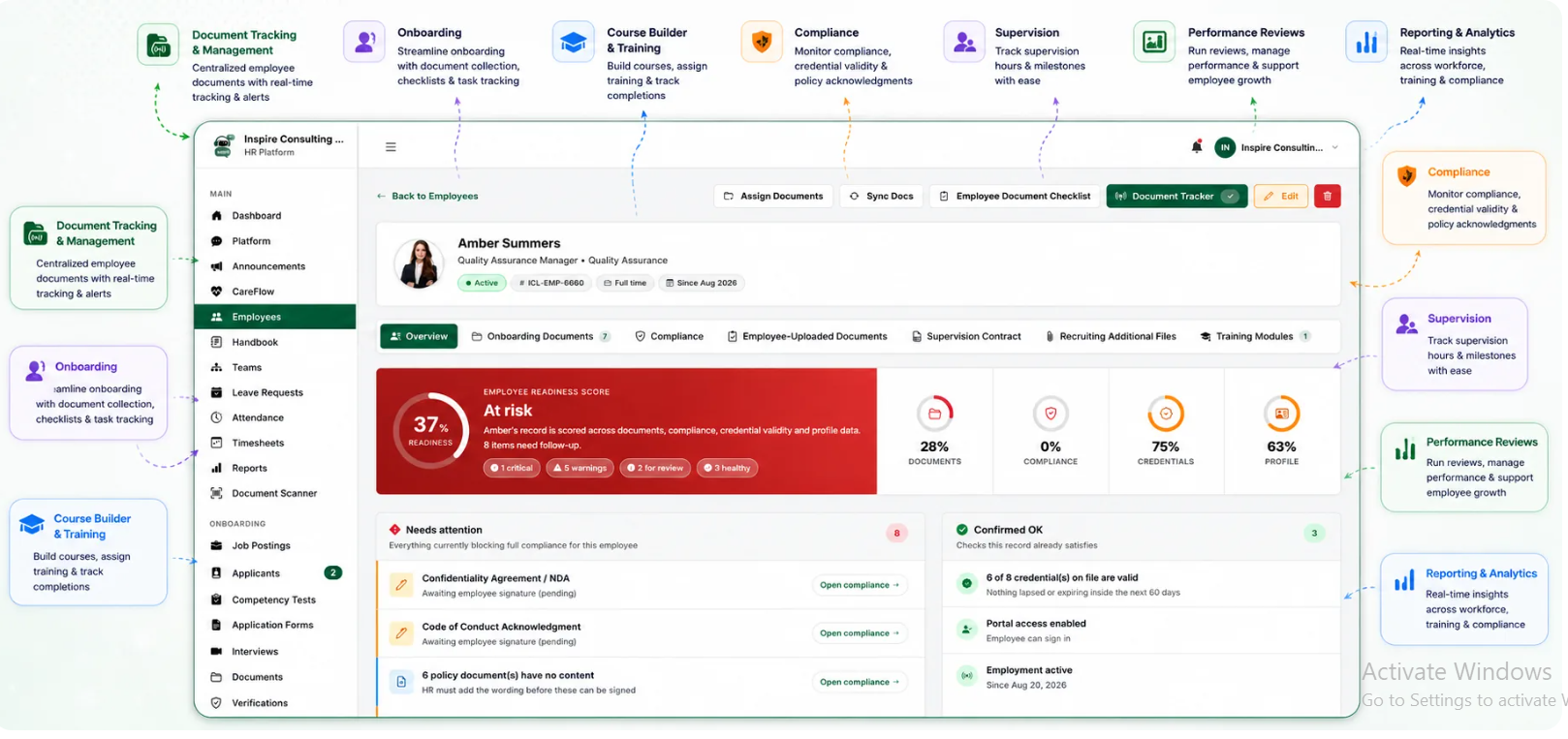
BUAMS HR helps behavioral health providers build a more reliable float pool management process by keeping workforce records, document status, and readiness signals organized in one system. Instead of tracking backup staff across disconnected files, teams can manage core employee details, onboarding completion, credential-related records, and workforce documentation in a more structured way.
That makes it easier to identify which employees are most prepared for backup assignments, spot missing requirements before reassignment happens, and maintain cleaner HR records when staff move between programs or support multiple sites. The result is a coverage workflow that is faster operationally and stronger from a compliance standpoint.
For growing providers, that kind of visibility also supports better workforce planning. Leaders can see where they rely heavily on manual follow-up, where cross-coverage is fragile, and where additional hiring or training may be needed to reduce future disruption.
Final Thoughts
Behavioral health organizations cannot eliminate every staffing disruption, but they can respond with more confidence when backup coverage is organized. Float pool management software gives HR and operations teams a practical way to connect staffing flexibility with documented readiness.
For providers that need to balance continuity of care, compliance, and workforce agility, the real value is not just faster reassignment. It is knowing that the person covering the need is properly documented, appropriately qualified, and ready for the work in front of them.