Behavioral health providers often feel turnover pressure long before a resignation letter appears. Caseload strain, supervisor overload, inconsistent onboarding, role confusion, and missed development conversations can quietly push good employees toward the door. Stay interview software gives HR teams a structured way to capture what staff are experiencing, turn patterns into action, and respond before burnout starts disrupting coverage, supervision, and continuity of care.
Key Takeaways
What Is Stay Interview Software?
Stay interview software is a system for planning, documenting, and following up on structured conversations with current employees about what is working, what is creating friction, and what might cause them to leave. Unlike exit interviews, which happen after a problem has already led to a departure, stay interviews are designed to surface issues early enough for leadership to do something useful.
In behavioral health settings, those conversations often reveal operational challenges that affect both workforce stability and service quality. Staff may describe burnout tied to documentation burden, unclear expectations between sites, inconsistent supervision access, limited growth pathways, or repeated schedule changes that make work harder to sustain. Software helps teams capture that information in a consistent format instead of letting it disappear into private notes or one-off manager conversations.
Why It Matters for Behavioral Health Providers
Retention problems in behavioral health rarely stay contained inside HR. When experienced clinicians, support staff, case managers, or supervisors leave, organizations can face disrupted client relationships, slower onboarding for replacements, higher compliance pressure on the remaining team, and more rushed coverage decisions. That is why providers benefit from finding warning signs earlier.
Stay interviews are especially valuable in environments where employee pressure builds gradually. A staff member may not be in formal discipline, may not be failing performance expectations, and may not have openly asked to leave. But they may already be carrying signals that predict turnover: exhaustion, limited support, confusion about advancement, frustration with repeated manual tasks, or concern that policy and operational expectations keep shifting. A structured process helps leaders notice patterns before they become staffing losses.
There is also an accountability issue. If managers hold informal retention conversations but no one documents themes, assigns follow-up, or checks whether improvements actually happened, the organization learns very little from those conversations. Stay interview software turns good intentions into a repeatable process with visible ownership.
What to Look for in Stay Interview Software
Standardized conversation templates
The best systems help managers and HR teams ask consistent questions about workload, supervision, recognition, career growth, communication, and day-to-day barriers. Standardization matters because it makes responses easier to compare across roles, sites, and programs without turning the conversation into a scripted checkbox exercise.
Confidential but usable documentation
Behavioral health providers need to balance employee trust with operational follow-through. Software should make it easy to record themes, risk signals, and agreed next steps while controlling who can view sensitive details. That protects confidentiality without losing the ability to act on what was learned.
Follow-up tasks with owners and due dates
A stay interview only helps if concerns lead to action. Strong software can turn issues into concrete follow-up items such as scheduling a supervisor check-in, reviewing workload distribution, clarifying role expectations, updating training plans, or escalating a recurring systems issue. Clear ownership reduces the chance that employee concerns stall after the conversation.
Trend visibility across teams
One conversation may point to an isolated problem. Ten similar conversations may point to a systemic one. Useful stay interview software helps HR leaders spot patterns across locations, managers, or job types so they can address root causes instead of responding only case by case.
Connection to broader workforce records
Retention signals become more useful when they can be reviewed alongside onboarding progress, role history, training status, supervisor assignments, and other workforce context. That connection helps leadership distinguish between a one-time frustration and an operational issue that needs broader correction.
How BUAMS HR Helps
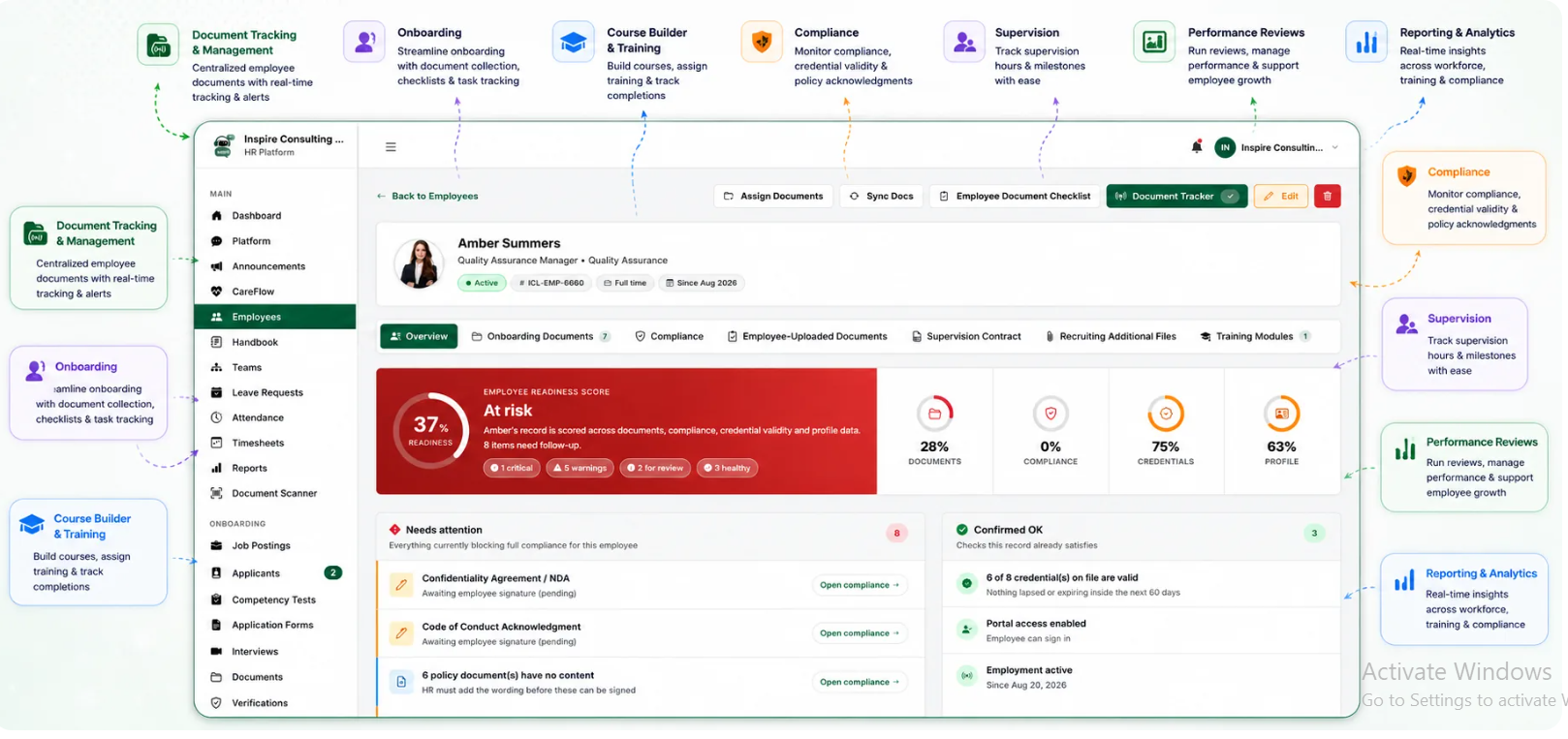
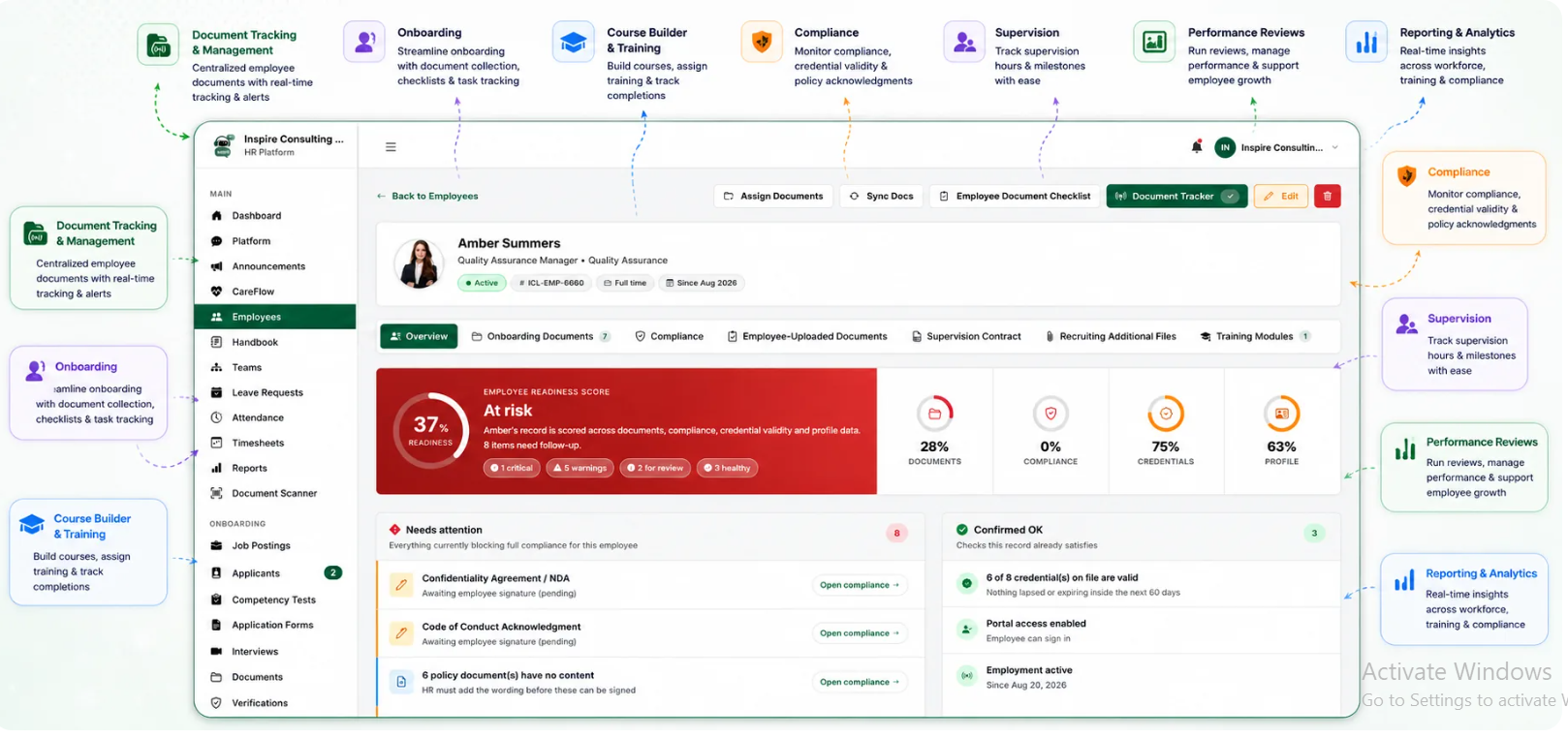
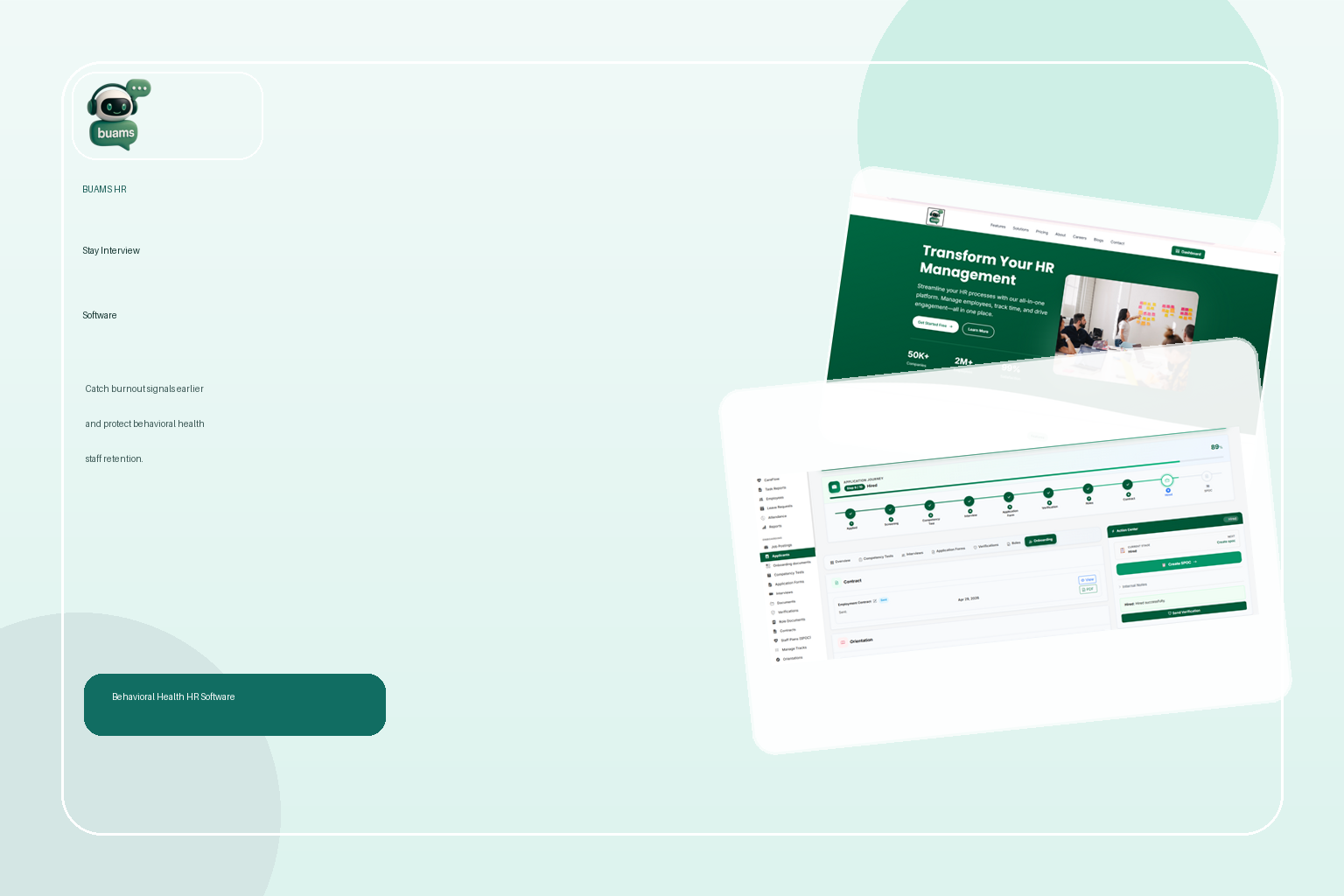
BUAMS HR helps behavioral health organizations keep workforce records, follow-up tasks, and employee documentation organized in one place. For teams that want a more disciplined retention process, that kind of structure matters. Stay interview outcomes can be tied to the right employee record, routed to the right leaders for follow-up, and reviewed alongside the operational details that shape the employee experience.
That makes it easier to move from conversation to action. If repeated themes point to onboarding delays, unclear supervision responsibilities, training gaps, or policy confusion, HR can coordinate next steps without rebuilding context every time. Instead of treating each concern as an isolated management issue, the organization can respond with better visibility and more consistent accountability.
Final Thoughts
Stay interview software gives behavioral health providers a practical way to detect retention risk before staffing instability affects care delivery. The goal is not to collect more notes. It is to create a repeatable process for listening to employees, spotting shared pressure points, and acting early enough to keep strong staff engaged. Organizations that do that well are better positioned to protect continuity, reduce avoidable turnover, and make workforce improvements based on evidence instead of guesswork.