Behavioral health providers rarely struggle because a role exists on paper. They struggle when a supervisor is out, a clinician changes programs, or a site needs backup coverage and nobody can quickly confirm who is actually cleared to step in. That is where role coverage matrix software becomes valuable. Instead of relying on scattered spreadsheets, email threads, and tribal knowledge, HR teams can maintain a live view of backup staffing options, credential status, supervision alignment, and role-based readiness in one workflow.
For behavioral health organizations, coverage decisions are tied to licensing, training, documentation, and client safety. A simple staffing gap can quickly become a compliance issue if a replacement lacks the right credential, orientation, or supervisory assignment. The right system helps HR and operations move faster without guessing.
Key Takeaways
What Is Role Coverage Matrix Software?
Role coverage matrix software is a structured way to track which employees are qualified to cover specific roles, programs, shifts, or locations. In behavioral health, that matrix often needs more than a simple yes-or-no assignment. HR teams may need to confirm licensure level, training completion, onboarding status, site restrictions, supervisor assignment, document completeness, and any temporary limitations before approving coverage.
A useful matrix shows not only who currently holds a role, but also who can back it up, what conditions apply, and what gaps still need to be resolved. That makes it easier to answer practical questions such as whether a residential program has enough credentialed backup staff, whether a newly promoted team lead can supervise at a certain site, or whether a float employee still needs one final training item before being scheduled.
Why It Matters for Behavioral Health Providers
Behavioral health organizations operate in environments where staffing changes can affect compliance and care delivery at the same time. Coverage decisions often intersect with payer rules, program requirements, documentation standards, and internal supervision policies. When HR data is fragmented, managers may fill a gap based on availability instead of verified readiness.
That creates avoidable risk. An employee may be active in payroll but not fully cleared for a particular assignment. A backup worker may have the right experience but an expired credential. A site may assume a supervisor can cover multiple programs without realizing the reporting structure was never updated. These are not abstract edge cases. They are the kinds of small disconnects that lead to audit findings, delayed services, and stressed managers.
Role coverage matrix software gives leadership a clearer operational picture. It helps organizations plan for absences, turnover, growth, and multi-site coverage with fewer surprises. It also supports better cross-functional communication because HR, compliance, and operations can work from the same underlying workforce facts.
What to Look For in a Strong Coverage Matrix Process
Not every staffing tracker deserves to be called role coverage matrix software. For behavioral health providers, the process should support compliance-aware decisions instead of just listing names in cells.
The best systems also make ongoing maintenance easier. A coverage matrix loses value when updates depend on one person remembering to edit a spreadsheet after every staffing change. The more it can pull from live HR records and compliance data, the more reliable it becomes.
How BUAMS HR Helps
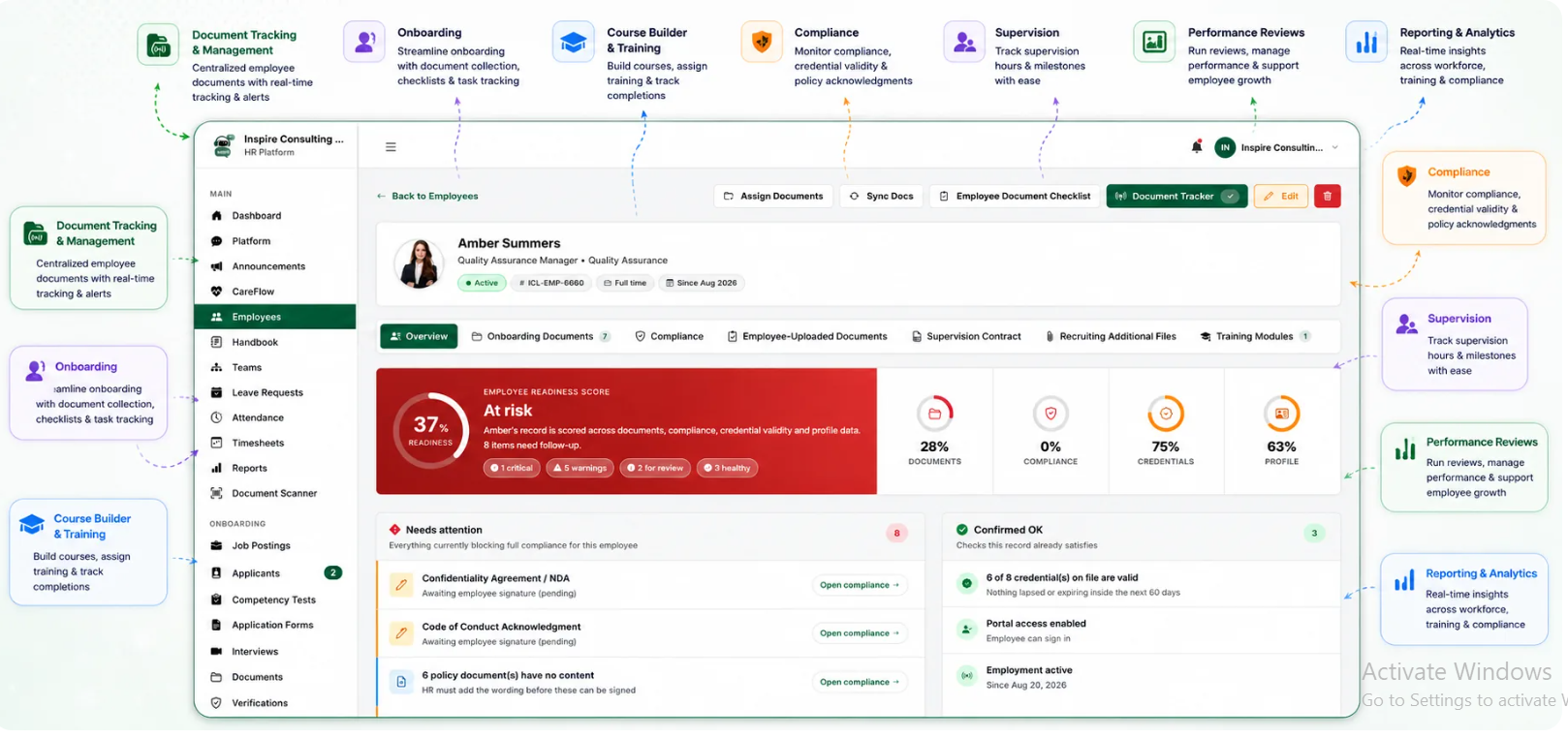
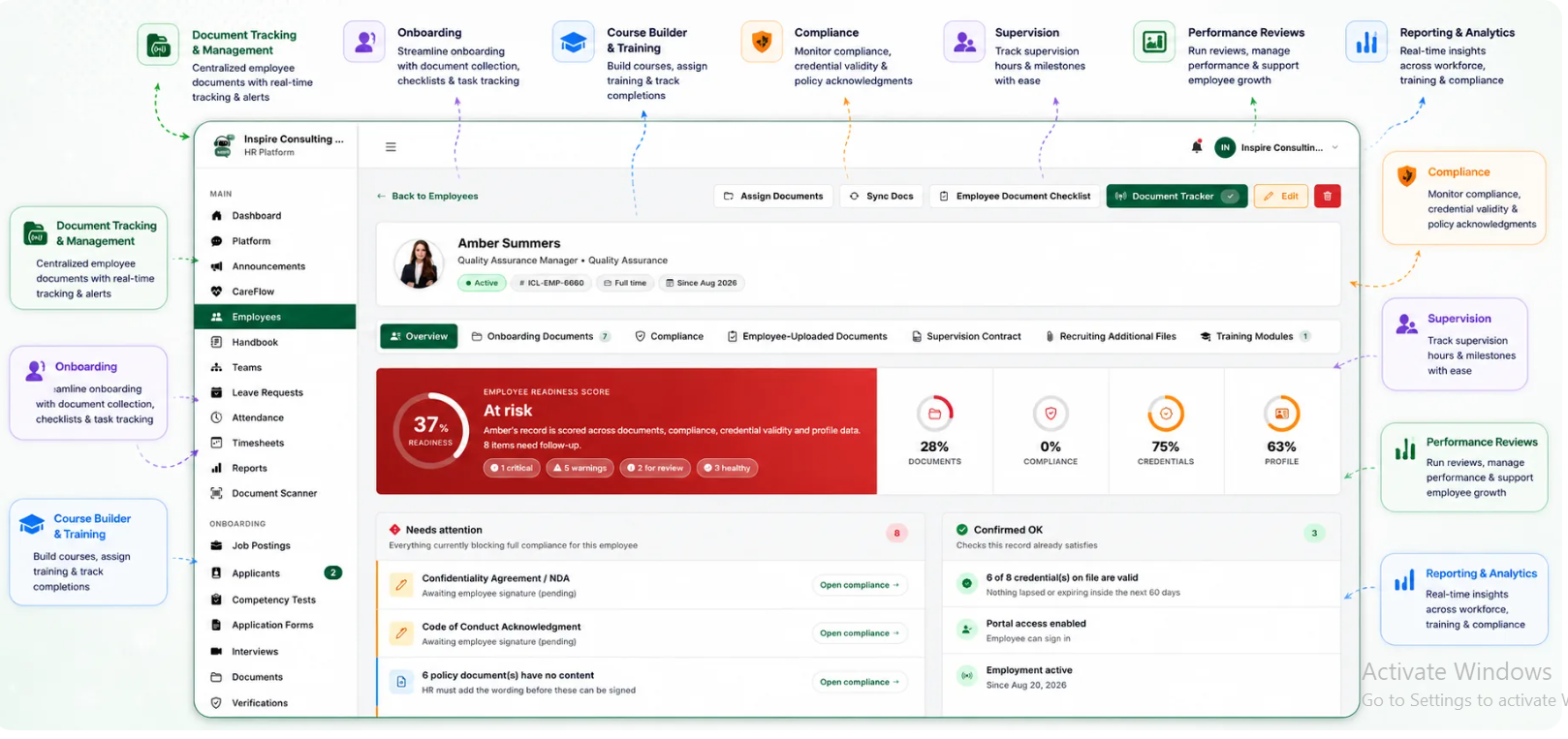
BUAMS HR helps behavioral health providers build a more dependable coverage process by centralizing the workforce records that coverage decisions depend on. Instead of checking multiple folders and messages, HR teams can review employee files, credential details, onboarding status, and documentation history from one system.
That matters when organizations need to answer time-sensitive questions. If a supervisor is out, HR can quickly confirm possible backup options. If a staff member is moving across programs, the system can support cleaner visibility into role requirements, file completeness, and compliance readiness. If leadership wants to know where coverage is thin, connected employee data makes those gaps easier to spot before they become emergencies.
BUAMS HR also supports stronger consistency. When role requirements, personnel records, and compliance workflows are managed together, teams can reduce manual handoffs and improve trust in the data behind staffing decisions. That is especially helpful for growing providers that operate across multiple sites or service models.
Final Thoughts
Role coverage matrix software is not just about scheduling backup names. For behavioral health providers, it is a practical way to connect workforce flexibility with compliance discipline. When HR teams can clearly see who is qualified, who is nearly ready, and where the real risks are, they can support operations without introducing preventable exposure.
Providers that want steadier coverage, fewer last-minute escalations, and better audit confidence should treat coverage planning as an HR systems issue, not just a scheduling problem. A connected platform like BUAMS HR can make that work far more manageable.