Behavioral health providers cannot afford to lose visibility when a licensing board issues a restriction, opens an investigation, requires supervision terms, or changes a clinician’s standing. Those updates can affect scheduling, service assignments, supervision requirements, payer rules, and overall compliance risk. License board action tracking software gives HR and compliance teams a structured way to document those events, coordinate follow-up, and keep workforce decisions aligned with current staff eligibility.
Key Takeaways
What Is License Board Action Tracking Software?
License board action tracking software is a system for recording and managing workforce events tied to licensing board decisions or status changes. In behavioral health, that can include probation terms, consent orders, scope restrictions, reporting obligations, temporary limitations, or required documentation reviews. Instead of treating each issue as a one-off case, the organization creates a repeatable process for intake, assessment, follow-up, and resolution.
The software should give HR leaders, compliance staff, and approved supervisors a clear record of what happened, when it was identified, what risk it creates, and what action the organization must take. That record becomes especially important when the provider needs to adjust assignments, verify supervision coverage, document leadership review, or prove that staff were not scheduled beyond their allowed scope.
Why It Matters for Behavioral Health Providers
Board actions are not only legal or clinical events. They create real HR and operational consequences. A staff member may still be employable, but only under certain supervision conditions. Another may need restricted duties while documentation is reviewed. A seemingly small update can affect which clients the employee can serve, which site they can cover, or whether additional oversight must be assigned immediately.
Without a formal tracking process, organizations risk inconsistent responses. One program may document the issue thoroughly while another handles it informally. One manager may know a restriction exists while scheduling staff elsewhere remains unaware. In behavioral health settings where documentation, supervision, and role fit matter every day, that lack of coordination can create exposure quickly.
There is also a readiness issue. During audits, accreditation reviews, or internal investigations, providers may need to show how they identified the issue, who reviewed it, what restrictions applied, and how follow-up was monitored. A controlled system makes that explanation much easier than trying to reconstruct events from scattered messages and memory.
What to Look for in License Board Action Tracking Software
Structured case intake and documentation
The platform should let HR or compliance teams log the board action with dates, source documents, affected employee details, and a concise summary of the issue. That creates a single source of truth from the start and reduces the chance that important facts are lost between departments.
Role and assignment impact visibility
Behavioral health providers need to know whether a board action changes what the employee can do right now. Strong software helps teams connect the issue to job duties, program assignments, supervision needs, and any interim restrictions so leaders can act before an inappropriate placement or coverage gap occurs.
Follow-up task tracking with deadlines
Many board-related events require additional actions such as collecting updated documents, confirming supervision plans, reviewing policy obligations, or checking for expiration of temporary terms. A useful system should turn those obligations into visible tasks with owners and due dates instead of leaving them in email threads.
Controlled access to sensitive workforce information
These cases often involve sensitive employee information that should not be widely visible. The right platform helps organizations limit access to approved HR, compliance, and leadership stakeholders while still making necessary status information available for operational decisions.
Audit-ready history
Organizations should be able to show what was recorded, what actions were taken, who approved decisions, and when restrictions or follow-up items were cleared. A strong audit trail supports internal accountability and helps prove the organization responded consistently.
How BUAMS HR Helps
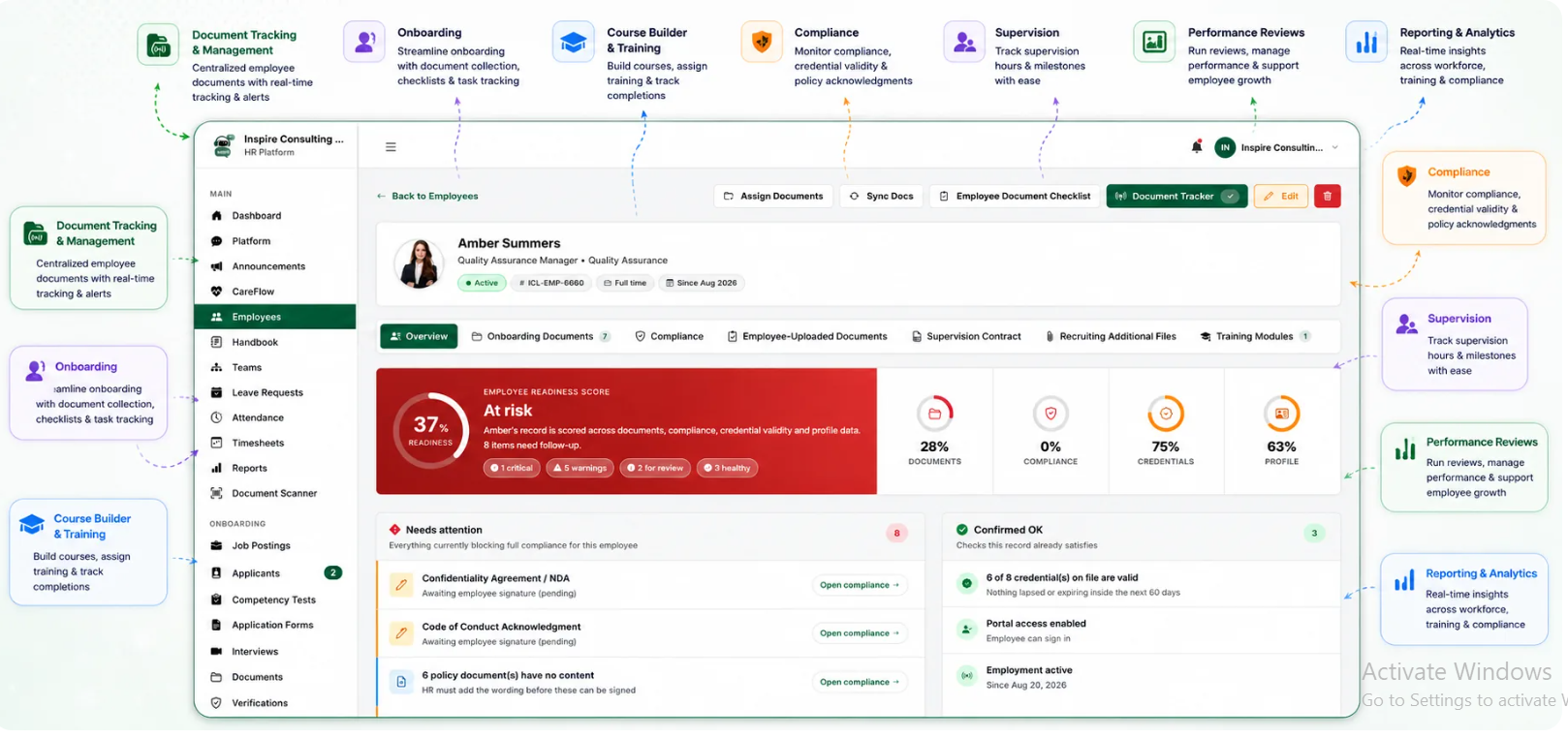
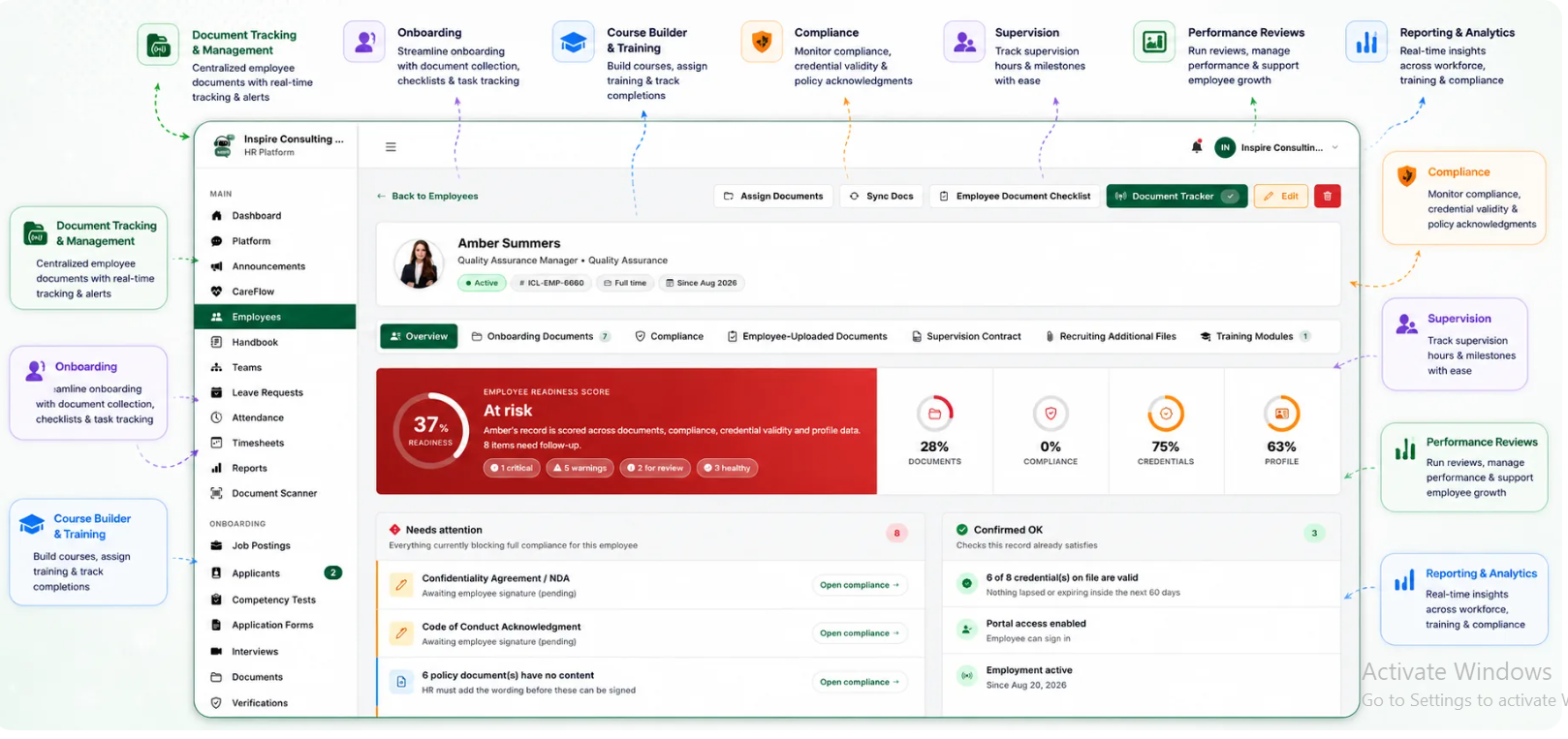
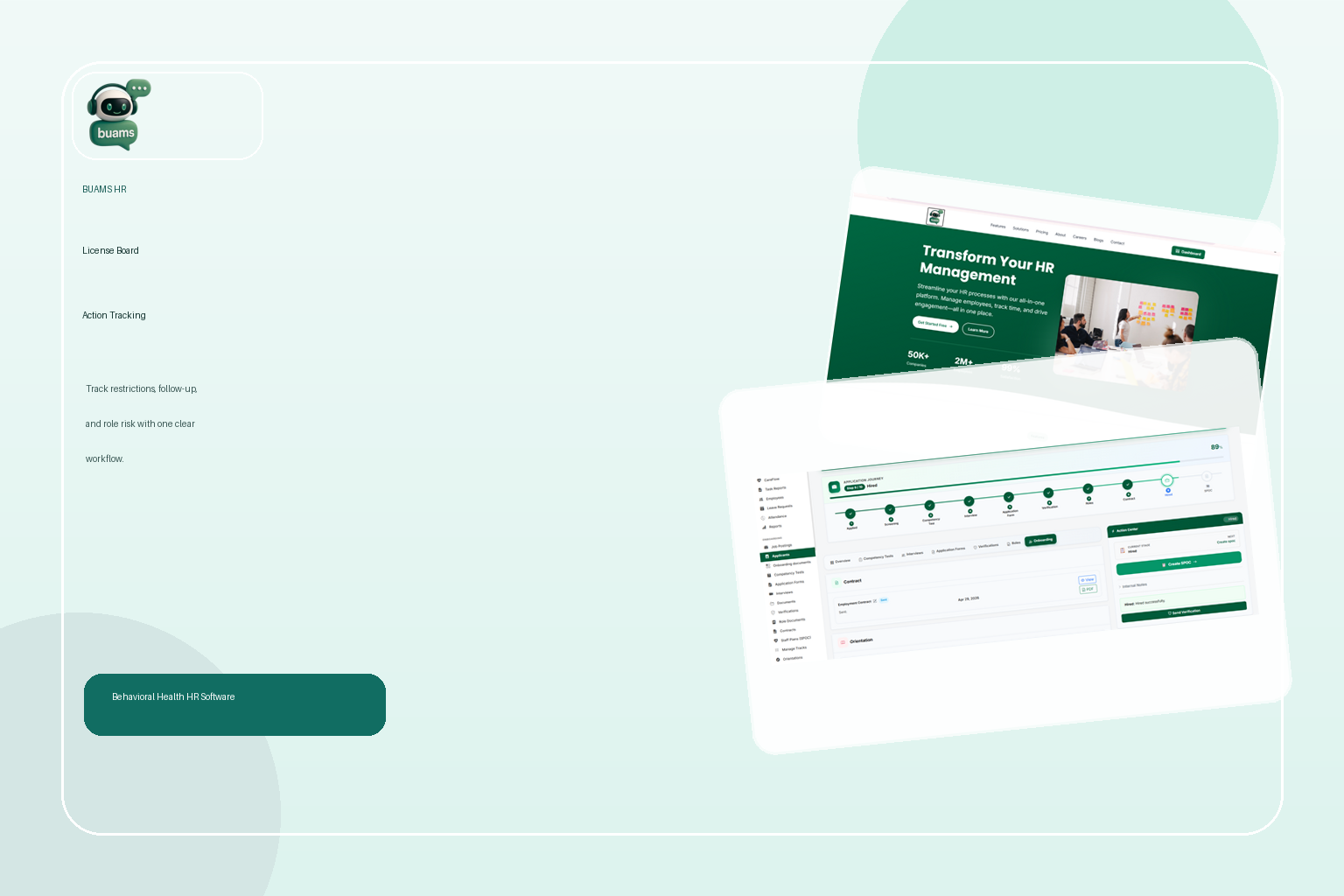
BUAMS HR helps behavioral health organizations manage employee records, compliance-sensitive documentation, and workforce follow-up in one centralized environment. When a license board action affects an employee, teams can keep the supporting records, internal notes, assignment changes, and required next steps connected instead of splitting them across separate systems.
That matters when leadership needs a practical view of risk. BUAMS HR can support a process where HR confirms the workforce impact, compliance tracks required documentation, and supervisors understand what follow-up is still open. By keeping those details organized, the organization is better able to respond quickly, protect role alignment, and avoid preventable gaps in oversight.
Final Thoughts
License board action tracking software gives behavioral health providers a more disciplined way to manage a difficult but important workforce scenario. When restrictions, investigations, or monitoring terms affect an employee, the goal is not only to record the event. It is to make sure the organization responds consistently, protects service quality, and maintains a defensible record of every follow-up step. Providers that build that process into HR operations are better prepared to manage risk without losing control of daily workforce decisions.