Growth creates opportunity for behavioral health providers, but it also creates HR complexity. New programs, additional supervisors, satellite sites, and blended clinical and administrative teams can make reporting lines harder to follow than they should be. When managers are not sure who approves a transfer, who owns a corrective action, or who signs off on supervision requirements, delays and compliance gaps show up quickly. HR org chart software gives providers a practical way to keep those relationships visible and current.
Key Takeaways
What Is HR Org Chart Software?
HR org chart software is more than a visual tree of names and titles. In a behavioral health setting, it should show who reports to whom, which supervisor is responsible for oversight, how roles connect across programs, and where approval authority sits. That matters because workforce decisions are rarely isolated. A change in supervisor can affect performance reviews, training accountability, clinical oversight documentation, access rights, and the routing of HR requests.
For organizations that operate outpatient, community-based, residential, and telehealth services at the same time, the org chart needs to reflect real operating conditions. A clinician may have a functional supervisor for day-to-day work, a licensed supervisor for clinical oversight, and a program leader who approves staffing changes. If those relationships live in separate spreadsheets, email threads, or stale PDFs, HR teams spend too much time confirming basics before they can move the work forward.
Why It Matters for Behavioral Health Providers
Behavioral health providers often grow through new contracts, expanded service lines, and additional locations. Each expansion changes the workforce map. Without a reliable structure for reporting relationships, organizations run into avoidable problems such as delayed onboarding approvals, unclear supervision coverage, and inconsistent communication when an employee changes roles or locations.
This is especially important in regulated care environments where documentation needs to match reality. If an employee file shows one supervisor, a training roster shows another, and a program leader assumes someone else owns follow-up, the organization can lose time during audits and internal reviews. HR org chart software helps align workforce structure with actual accountability.
It also helps during everyday operations. HR teams can answer practical questions faster: Who should receive a probation review reminder? Which manager needs to sign a job change? Who oversees a team member working across two sites? Which leader should be notified when a required credential is close to expiring? When the org structure is accurate and accessible, those answers do not depend on tribal knowledge.
Common Risk Areas When Reporting Lines Are Unclear
When providers rely on static charts or manually updated documents, problems usually appear in a few predictable places.
These breakdowns are frustrating, but they are also expensive. They slow hiring, create rework, and make it harder to prove consistent oversight when leadership or auditors ask questions.
What to Look for in HR Org Chart Software
Not every org chart tool is built for workforce operations. Behavioral health providers should prioritize software that supports live HR processes, not just presentation graphics.
Role-based structure that stays connected to employee records
The best systems link the chart to real employee and position data. That means title changes, department moves, supervisor updates, and new assignments can feed the structure without a full manual redraw. HR teams should not have to update a visual chart and then separately update the systems that power onboarding, employee files, and approvals.
Support for multi-layer accountability
Behavioral health organizations often need to reflect more than one relationship. A direct manager, a clinical supervisor, and an executive approver may all matter in different workflows. Good HR org chart software makes those distinctions easier to track so teams can route the right task to the right person.
History and change visibility
When an employee changes teams or a program restructures, organizations need to know what changed and when. Historical visibility is useful for employee relations reviews, audit preparation, and clean handoffs during leadership transitions.
Workflow alignment
A useful org chart should improve action routing. It should help organizations connect reporting relationships to approvals, reminders, notifications, and documentation tasks. If the chart cannot support downstream HR work, it becomes another reference file that employees stop trusting.
Easy access for HR and operations leaders
The tool should make it simple for authorized users to confirm relationships quickly. In busy provider environments, people need answers without digging through folders or waiting for someone to reply to an email.
How BUAMS HR Helps
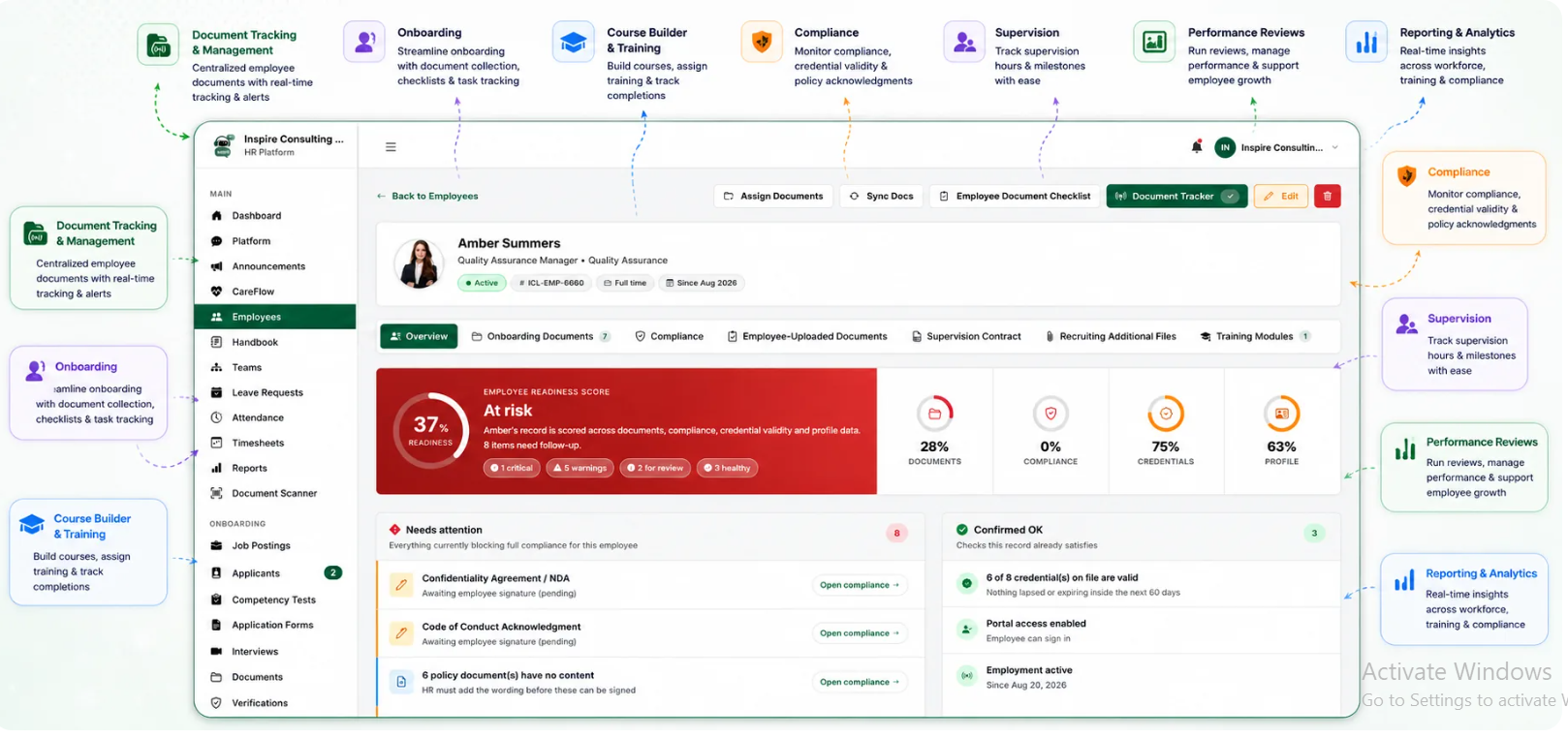
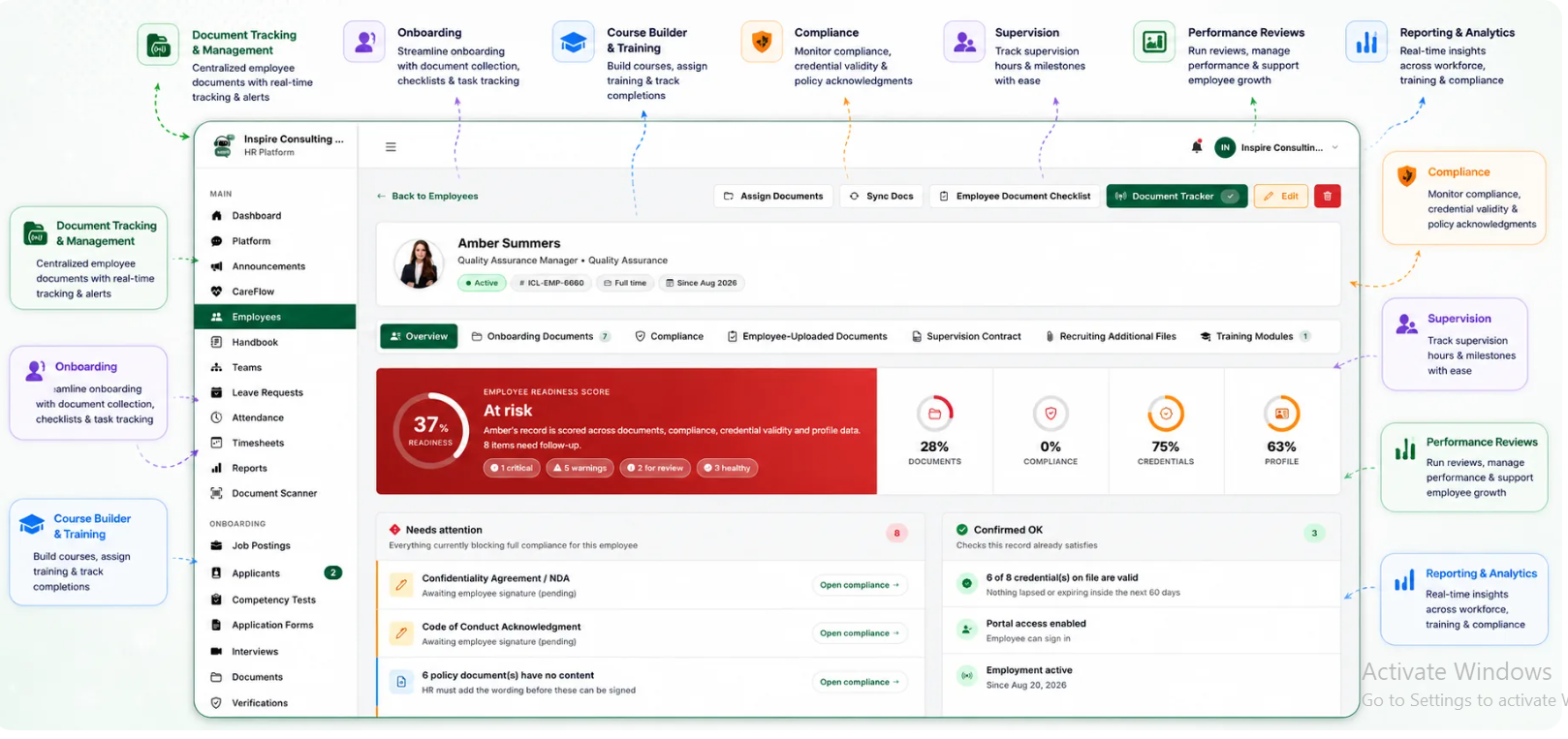
BUAMS HR gives behavioral health providers a practical way to centralize the workforce information that supports a clean organizational structure. Instead of treating reporting lines as a disconnected graphic, teams can manage employee records, role changes, approvals, and compliance-related follow-up in one operational system.
With BUAMS HR, organizations can keep employee files current as supervisors, departments, and assignments change. That helps HR teams reduce mismatches between file records and day-to-day operations. It also supports cleaner routing for onboarding tasks, status updates, and manager accountability.
For growing providers with multiple programs or locations, BUAMS HR can help leaders standardize how workforce relationships are documented. That matters when a new site opens, when a supervisor takes over a team, or when a staff member splits responsibilities across service lines. Clear structure improves response time and reduces the back-and-forth that usually follows unclear ownership.
BUAMS HR also supports the compliance mindset behavioral health organizations need. When workforce structure is tied to employee records and operational workflows, it becomes easier to document who is responsible for oversight, who should receive reminders, and how changes were handled over time.
Best Practices for Implementation
Providers get more value from HR org chart software when they treat it as an operating control instead of a one-time setup. Start by defining which relationships matter most for HR work: direct manager, clinical supervisor, approver, and program leadership. Then make sure those fields have a clear owner and update process.
It also helps to review the org structure whenever there is a site launch, merger, leadership change, or program expansion. Those moments are where stale charts usually begin. A simple governance routine can prevent months of drift.
Final Thoughts
For behavioral health providers, organizational clarity is not just a management preference. It affects hiring speed, supervision coverage, documentation quality, and compliance readiness. HR org chart software can turn a confusing web of reporting relationships into a usable operating system for HR and leadership teams.
When providers choose a system that connects org structure to real workforce workflows, they spend less time chasing answers and more time supporting safe, scalable growth. That is where a platform like BUAMS HR can make the difference.