Behavioral health providers depend on consistent leadership, documented supervision, and role-specific compliance coverage to keep services stable. When a program director resigns, a clinical supervisor goes on leave, or a site leader is promoted, the handoff can expose gaps in approvals, oversight, training ownership, and workforce documentation. Succession planning software gives HR teams a practical way to prepare for those transitions before they disrupt care or create audit risk.
Key Takeaways
What Is Succession Planning Software?
Succession planning software is a structured system for identifying critical roles, naming backup staff, tracking readiness, and documenting the steps required before someone can take on expanded responsibility. In behavioral health, that includes more than executive succession. Providers also need continuity plans for clinical supervisors, program managers, compliance owners, HR approvers, and site leads whose decisions affect hiring, file completion, staff oversight, and service readiness.
Instead of relying on disconnected notes, email chains, and memory, the software creates a repeatable process. HR can review which roles are essential, which employees are being developed as successors, what qualifications or training still need attention, and whether each program has a workable interim coverage plan.
Why It Matters for Behavioral Health Providers
Leadership transitions in behavioral health can create operational pressure quickly. A departing supervisor may leave unfinished evaluations, unsigned policy acknowledgments, or unresolved credential follow-up. A promoted program manager may need updated approval rights, training assignments, and revised reporting relationships before they can fully assume the role. If those changes are handled informally, teams can lose visibility into who owns key workforce tasks.
Succession planning also supports risk management. Providers often need to prove that supervision structures remained intact, role assignments were appropriate, and compliance responsibilities were not abandoned during turnover. A documented process helps organizations show that transitions were planned, reviewed, and supported with current workforce records.
What to Look for in Succession Planning Software
Role-based readiness tracking
The platform should let HR define critical positions and evaluate successor readiness based on the real demands of each role. For behavioral health teams, that may include supervisory qualifications, training completion, documentation habits, and familiarity with audits, incident response, or staff onboarding workflows.
Visibility into gaps before a transition happens
Good succession planning software should make missing pieces easy to spot. HR should be able to see whether a potential successor still needs a credential renewal, leadership training, policy acknowledgment, or file update before they can step into a role with confidence.
Clear transition documentation
When leadership changes happen, the organization needs a clean record of decisions, effective dates, interim assignments, and handoff steps. That record is useful for HR, executive leadership, compliance reviews, and anyone who needs to understand how responsibilities shifted.
Alignment with employee records and approvals
Succession planning should not live in isolation. The most practical systems connect future-role planning with current employee files, reporting relationships, and approval workflows so HR is not duplicating work across multiple tools.
How BUAMS HR Helps
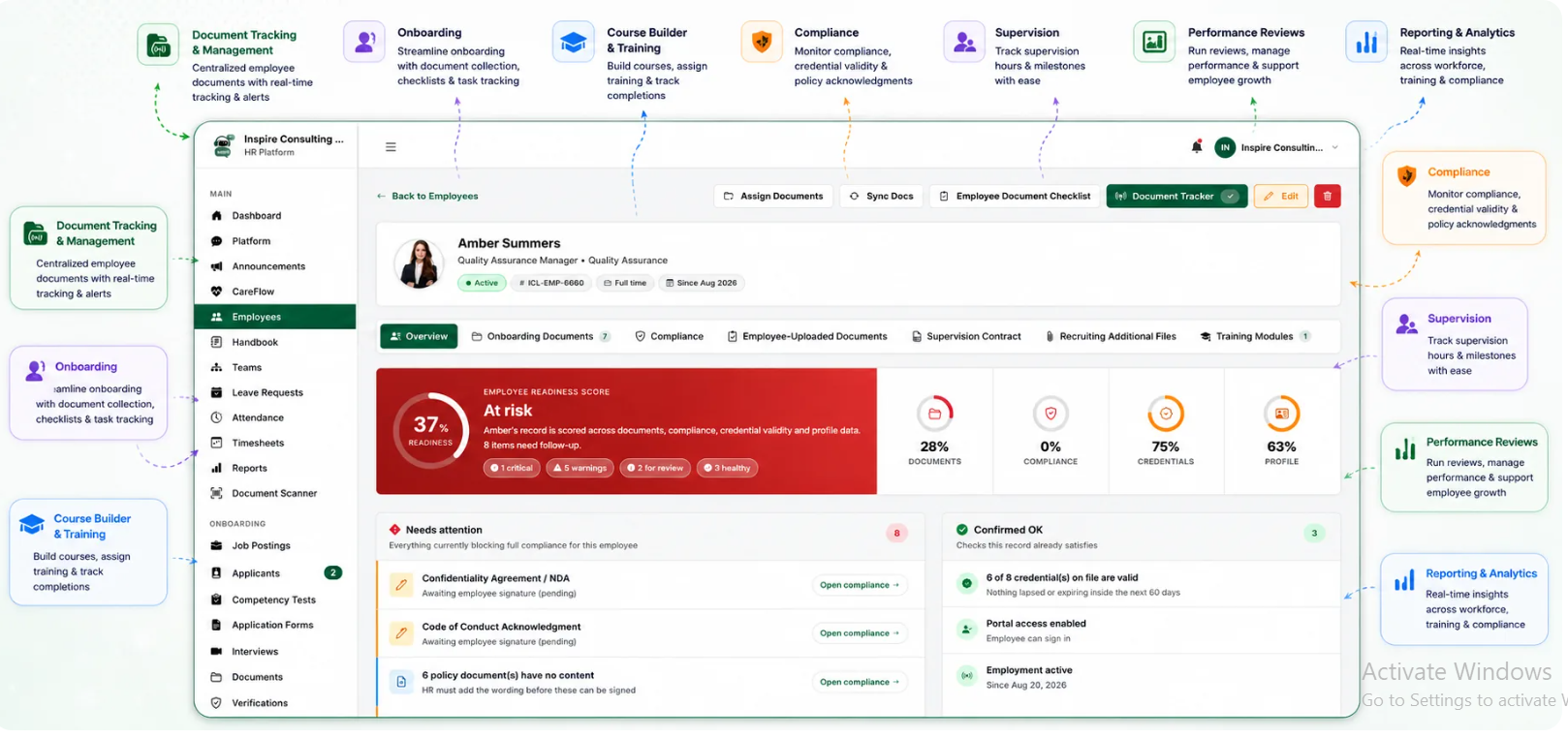
BUAMS HR gives behavioral health organizations a centralized way to manage workforce structure, employee records, and compliance-sensitive role changes. As succession plans evolve, HR can keep job information, supervisory assignments, document status, and required follow-up activities organized in one system instead of scattering them across folders and spreadsheets.
That matters when a provider is preparing an internal promotion, covering a leave, or planning for long-term leadership continuity. BUAMS HR helps teams see who is attached to which role, what documentation is complete, and what actions still need attention before responsibilities shift. The result is a more controlled transition process with less confusion for HR, supervisors, and program leadership.
Final Thoughts
Succession planning software is not only for large hospital systems or executive teams. For behavioral health providers, it is a practical safeguard that helps preserve supervision coverage, leadership continuity, and compliance readiness when key people change roles. Organizations that prepare for transitions in advance are better positioned to protect service stability, support internal growth, and avoid preventable workforce disruption.