Behavioral health providers often know they have capable people in the organization, but they do not always have a reliable way to see who is ready for a new assignment, who has adjacent experience, or who could step into an opening with the right training. That visibility gap slows promotions, stretches coverage decisions, and makes growth harder than it needs to be. Skills inventory software gives HR teams a structured way to track workforce capabilities so staffing decisions are based on current evidence instead of guesswork.
Key Takeaways
What Is Skills Inventory Software?
Skills inventory software is a workforce system that documents what employees can do, what they are approved to do, and what they may be prepared to do next with additional support. It can include role-specific competencies, prior experience, certifications, language abilities, site familiarity, supervisory readiness, and other practical details that matter when leaders need to fill openings or balance teams.
In behavioral health settings, this matters because staffing decisions are rarely based on job title alone. A provider may need to know which employees are cleared for specific programs, which team members have experience with certain documentation workflows, which supervisors can oversee provisional staff, or which employees are close to meeting requirements for expanded responsibilities. A skills inventory turns those questions into searchable information.
Why It Matters for Behavioral Health Providers
Growth and coverage pressure create constant movement inside behavioral health organizations. New programs open, caseloads shift, supervisors change, employees ask for advancement, and vacancies appear with little warning. Without a clear view of workforce capabilities, HR and operations teams can miss internal candidates, overuse a small number of dependable employees, or delay decisions while they chase information from multiple managers.
That delay has real consequences. An open role may stay vacant longer because no one can quickly confirm who already has similar experience. A promising employee may be overlooked for development because their skills were never documented beyond a resume uploaded months ago. Leaders may also make assignments that look reasonable on paper but create compliance issues because the employee does not yet have the right training, supervision arrangement, or credential support.
Skills inventory software helps organizations make better use of the workforce they already have. It supports smarter internal mobility, more targeted training investment, and better contingency planning when programs need backup coverage fast.
What to Look for in Skills Inventory Software
Role-based skill profiles
The system should let HR define the capabilities that matter for different jobs and programs. That may include clinical competencies, documentation experience, language skills, supervisory eligibility, crisis response training, or familiarity with specific service lines. Role-based structure keeps the inventory useful instead of turning it into a loose collection of notes.
Connection to licenses, training, and compliance records
Behavioral health providers need more than a list of strengths. They need to know whether a staff member is actually ready for a role from a compliance standpoint. Good skills inventory software should connect skills data with training completion, credential status, supervision arrangements, and required documentation so readiness is evaluated in context.
Searchable talent visibility across programs
When a provider needs coverage, opens a new role, or wants to build a succession bench, leaders should be able to quickly filter by relevant attributes. Searchability matters because it shortens the time between identifying a need and finding realistic internal options.
Support for development planning
The best systems do not only show what employees can do today. They also help organizations document what employees are working toward. That makes it easier to assign cross-training, track progress toward role eligibility, and build practical development plans that support retention and advancement.
Clear ownership and update workflows
Skills data becomes unreliable when no one knows who is responsible for maintaining it. Strong software makes it easy for HR, supervisors, or designated leaders to review updates, document changes, and confirm that workforce profiles still reflect current reality.
How BUAMS HR Helps
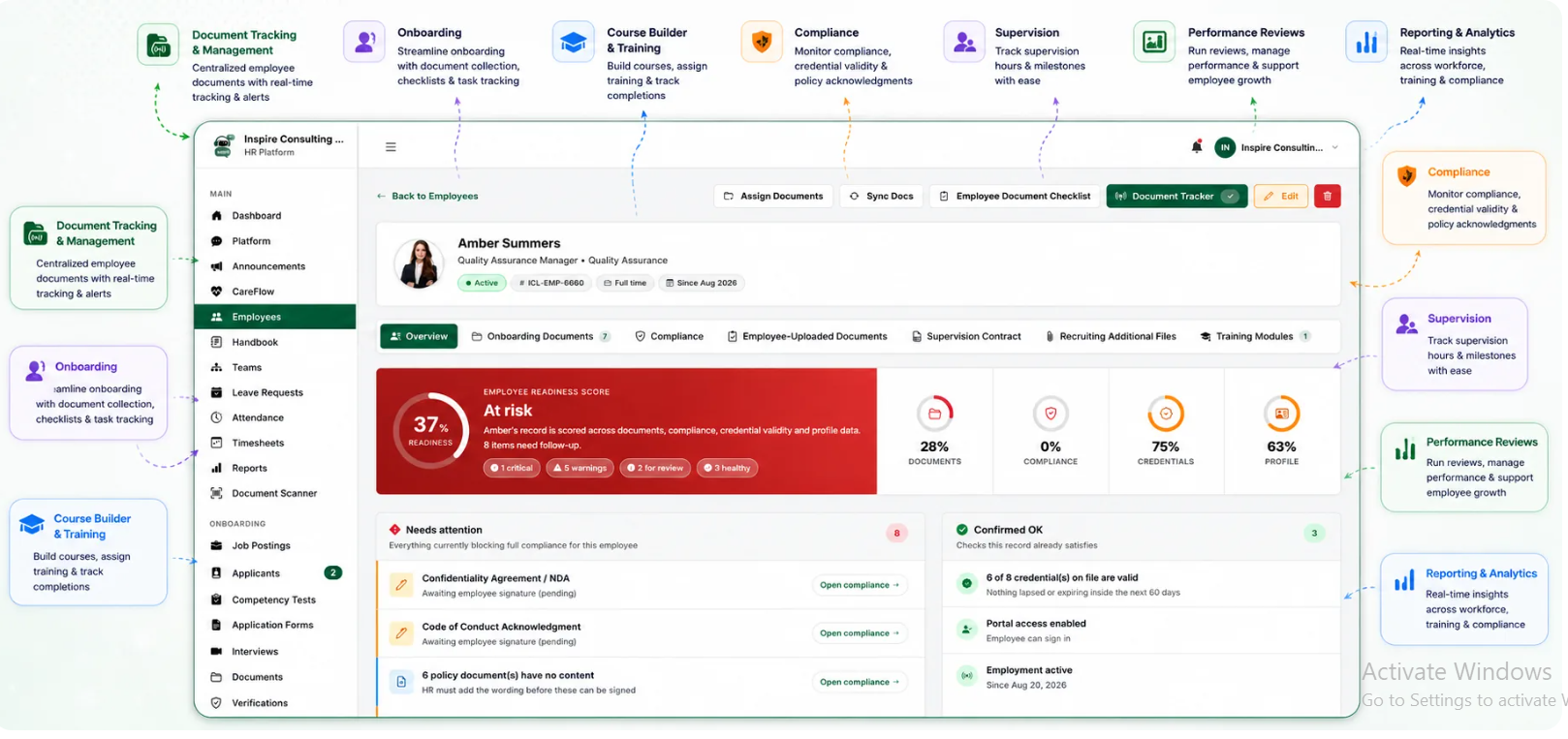
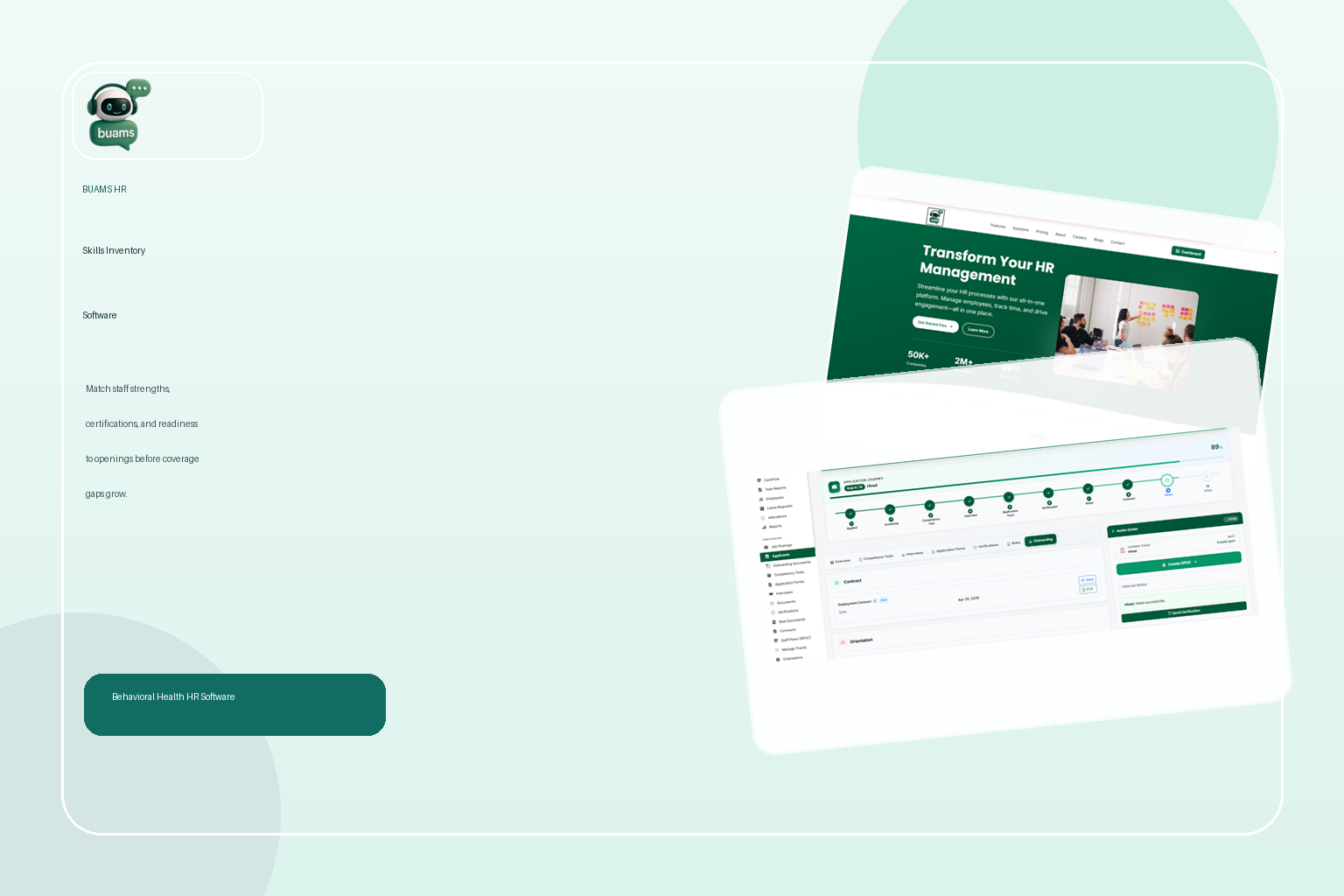
BUAMS HR helps behavioral health organizations keep employee records, training details, role history, and compliance-related documentation organized in one place. That foundation makes skills visibility more useful because teams can review workforce capability alongside the records that affect whether an employee is truly ready for a new assignment, promotion, or cross-training path.
Instead of piecing together resumes, supervisor memory, spreadsheet trackers, and separate compliance files, HR leaders can work from a more consistent source of workforce information. That supports faster staffing decisions, better development planning, and stronger alignment between talent strategy and operational readiness.
Final Thoughts
Skills inventory software gives behavioral health providers a practical way to see internal talent more clearly before openings, coverage gaps, or growth plans create avoidable pressure. When organizations know what their people can do, what they are qualified to do, and what they could do next with the right support, they can make workforce decisions with more confidence. That leads to better internal mobility, more focused training, and a stronger foundation for sustainable growth.