Behavioral health providers often manage leave questions in the middle of real staffing pressure. An employee may need time away for a serious health condition, a family care issue, or a qualifying event that requires quick review and accurate documentation. HR teams then have to answer several questions at once: is the employee eligible, were the right hours reviewed, which notices are due, what paperwork is still pending, and how should supervisors be updated without exposing private details? When those steps are handled through email threads, paper files, and disconnected spreadsheets, even experienced teams can lose track of timing and consistency. FMLA eligibility tracking software gives behavioral health organizations a cleaner way to manage leave decisions, required notices, and supporting records without turning every request into a manual scramble.
Key Takeaways
What Is FMLA Eligibility Tracking Software?
FMLA eligibility tracking software is an HR workflow tool that helps employers document the steps required to review, communicate, and maintain Family and Medical Leave Act eligibility decisions. Instead of relying on individual calendars and inbox reminders, the software creates a repeatable process for checking employment length, reviewing hours worked, issuing required notices, collecting certifications, and tracking leave-related documents in an organized record.
For behavioral health providers, that process matters because leave requests often affect direct care coverage, supervision planning, payroll coordination, and compliance documentation all at once. A provider may employ clinicians, residential staff, program managers, peers, and support teams across multiple sites, each with different schedules and reporting lines. HR needs a dependable way to show that eligibility reviews were handled consistently and that follow-up tasks did not depend on who happened to be watching their email that day.
Why It Matters for Behavioral Health Providers
Behavioral health organizations rarely experience leave administration as a simple paperwork exercise. When an employee needs protected leave, the organization may also be managing active caseloads, shift coverage, supervision assignments, medication support, community-based services, or licensing expectations. If eligibility review steps are inconsistent or late, the issue can quickly expand from an HR delay into a service delivery problem.
Manual tracking makes that harder. One coordinator may keep service-date calculations in a spreadsheet, another may store certification reminders in email folders, and a supervisor may only know that the employee is out without understanding what operational actions are still pending. That fragmentation creates risk. Notices can be delayed, supporting documents can be filed inconsistently, and internal communication can become too vague to be useful or too detailed to protect privacy.
FMLA eligibility tracking software helps providers create more discipline around a process that needs both speed and care. Teams can follow a standard workflow, see which requests are waiting on documentation, and maintain clearer separation between employment actions, compliance evidence, and day-to-day coverage planning.
Common Breakdowns in Manual Leave Eligibility Review
One common breakdown is inconsistent service and hours review. If teams calculate eligibility differently across locations or programs, employees may receive mixed answers to similar situations. Another problem is notice timing. Even when HR understands the rules, competing priorities can delay the first response, the formal eligibility notice, or later follow-up on missing certifications.
Documentation control is another weak point. Behavioral health providers often need to keep leave records organized while limiting unnecessary access to medical information. In a manual system, protected documents may end up attached to broad email chains or stored in inconsistent folders. Supervisor communication can also drift. Managers need enough information to coordinate schedules and expectations, but they should not be reconstructing leave administration from scattered messages or receiving sensitive details they do not need.
Finally, return-to-work and status changes can create confusion. If extensions, intermittent leave notes, or fitness-for-duty related steps are not documented cleanly, organizations may struggle to respond consistently when the employee’s situation changes.
What to Look for in FMLA Eligibility Tracking Software
Standardized eligibility review steps
The software should help HR teams document employment-length review, hours-worked review, request intake date, and the current decision status in a consistent sequence.
Notice and deadline tracking
A strong workflow should make required notices, due dates, reminder timing, and unresolved follow-up visible so the process does not depend on memory or personal calendar notes.
Protected document organization
Behavioral health providers need a secure way to keep certifications, forms, and related leave records attached to the employee’s file structure without exposing those materials to the wrong audience.
Supervisor-ready operational visibility
The best systems support limited operational updates such as approved time away, pending coverage needs, or return-date planning while preserving confidentiality around medical details.
Clear status history and audit trail
Organizations benefit from being able to show what decision was made, when it changed, who completed the review, and which documents supported each step of the process.
Best Practices for a More Reliable Leave Workflow
Start by separating intake, eligibility review, designation, and ongoing follow-up into distinct stages. Many teams collapse those steps together, which makes it harder to tell whether the organization is waiting on employee paperwork, manager input, or an HR decision. Clear stages reduce ambiguity and make escalation easier.
Next, define what information belongs in each audience’s view. HR may need detailed records, but supervisors generally need only the operational facts necessary to support staffing and employee communication. A structured system helps protect that boundary while still keeping work moving.
It also helps to connect leave tracking with related workforce data. When an employee changes role, site, schedule, or supervisor, leave administration should not have to restart from scratch. Connected records reduce duplicate data entry and make it easier to review the full context when an intermittent leave case or extension becomes more complex.
Finally, build follow-up discipline around deadlines. Missing a reminder is rarely a knowledge problem. It is usually a visibility problem. When teams can see open tasks, overdue documents, and upcoming status checkpoints in one place, they are far less likely to discover an issue only after payroll, scheduling, or compliance questions surface.
How BUAMS HR Helps
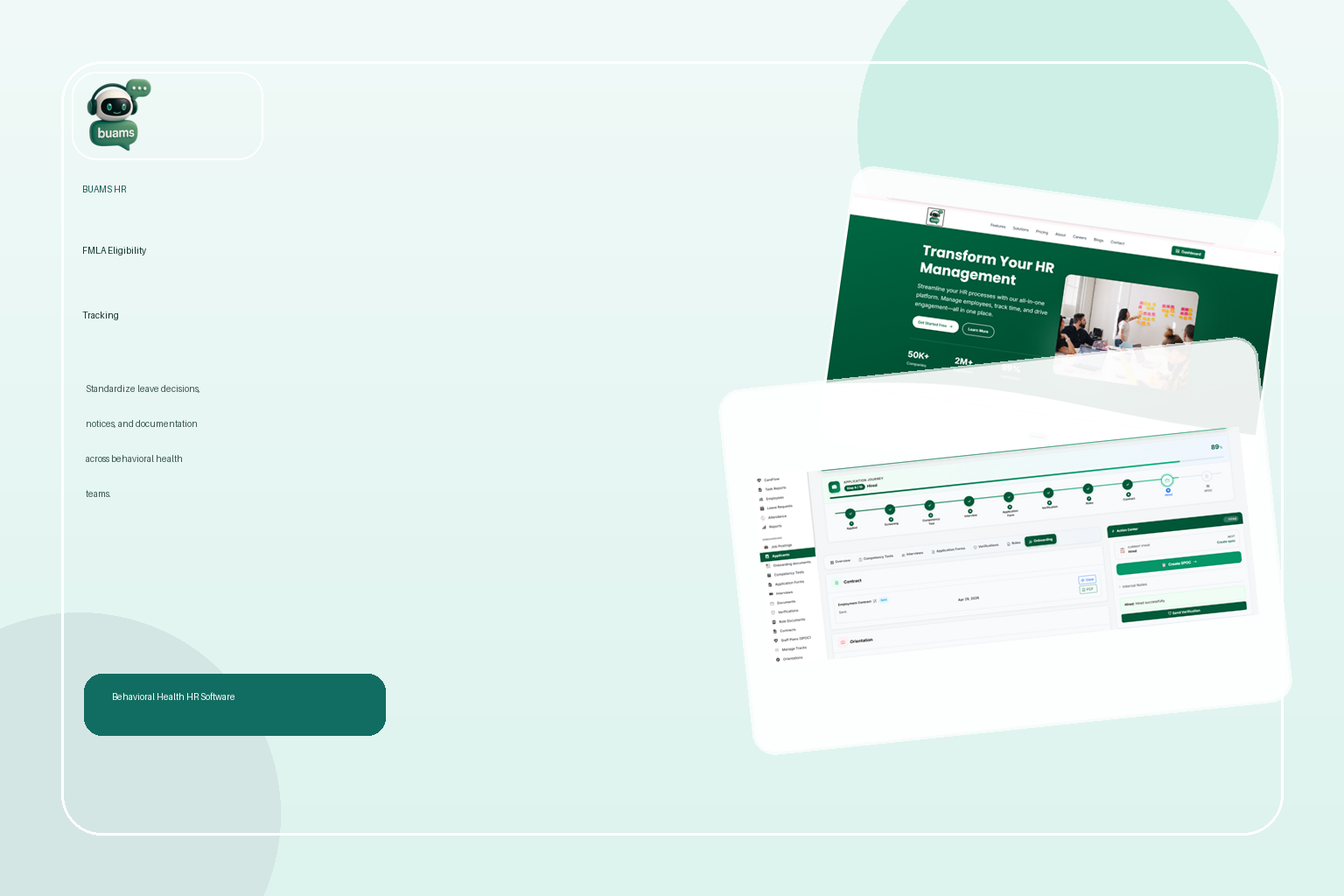
BUAMS HR helps behavioral health providers organize sensitive workforce processes with stronger documentation control and clearer operational visibility. By centralizing employee records, document management, approvals, and follow-up workflows, the platform gives HR teams a more dependable way to manage complex status changes without relying on scattered tools.
That matters for FMLA-related administration because eligibility review is not just a one-time decision. It is an ongoing workflow that can involve notices, certification tracking, schedule coordination, file updates, and return-to-work planning. BUAMS HR supports a cleaner operating model by keeping those related actions connected to the employee record while reducing the need to search across inboxes, paper files, and disconnected trackers.
For growing behavioral health organizations, that structure supports both compliance and continuity. HR teams can work more consistently, supervisors can get clearer operational guidance, and leadership can reduce the chance that a sensitive leave event creates avoidable documentation gaps.
Final Thoughts
FMLA eligibility tracking software gives behavioral health providers a better way to manage leave decisions, notices, protected documents, and follow-up expectations in one controlled workflow. In high-touch care environments, consistent leave administration protects more than paperwork quality. It supports employee trust, operational stability, and defensible HR practice. Providers that standardize eligibility review and connect it to broader workforce records are in a stronger position to respond quickly, document carefully, and keep services moving when staff circumstances change.