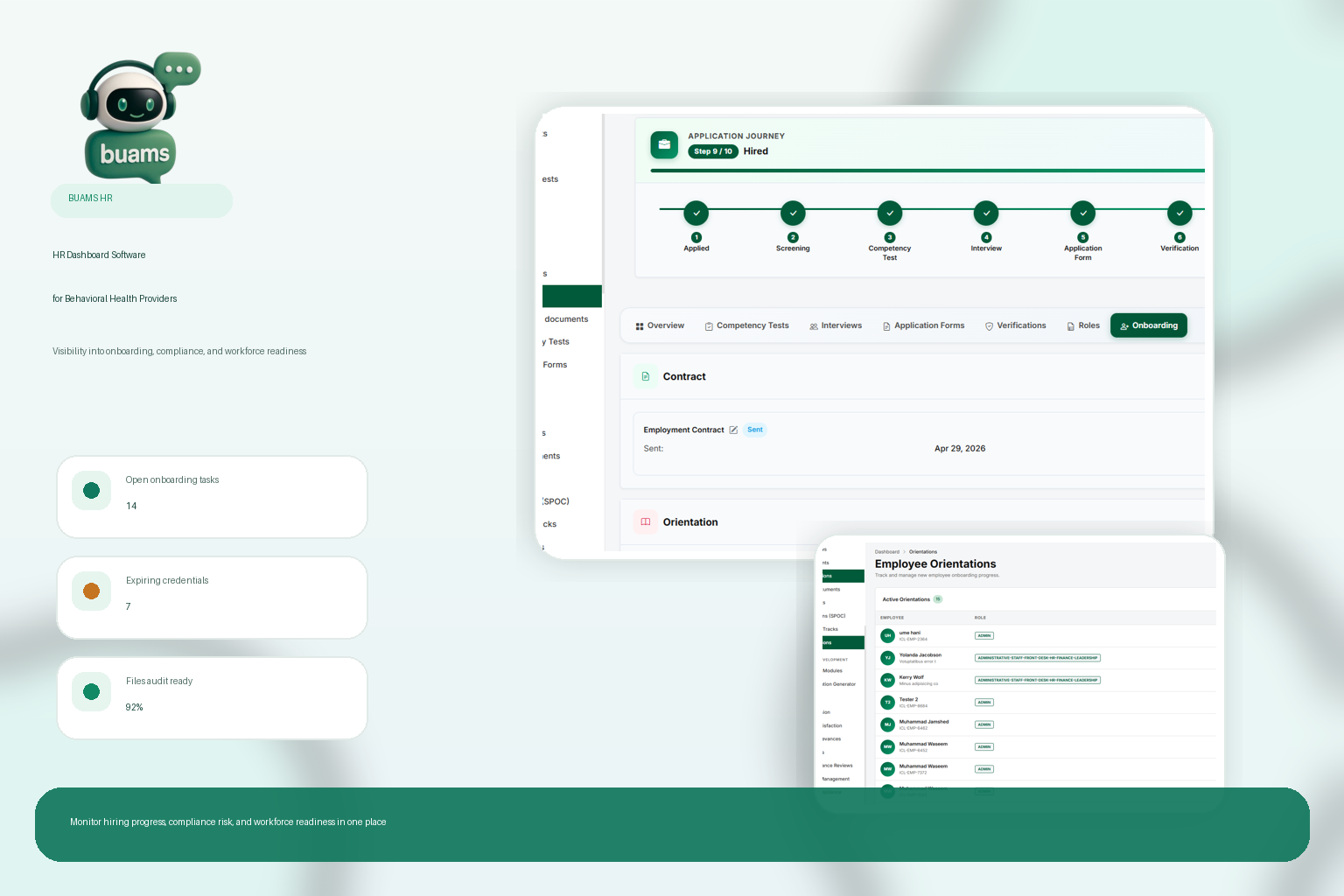
Behavioral health organizations manage a workforce with more moving parts than many general employers. Licenses expire, onboarding steps vary by role, supervisors need timely documentation, and leadership teams need a clear view of hiring progress, compliance risk, and workforce gaps. When that information lives across spreadsheets, inboxes, and disconnected systems, it becomes harder to spot issues before they affect operations.
HR dashboard software gives behavioral health providers a practical way to see what needs attention, what is on track, and where action is required. Instead of chasing updates from multiple people, HR and operations leaders can monitor workforce readiness from one place and respond faster.
Key Takeaways
What Is HR Dashboard Software?
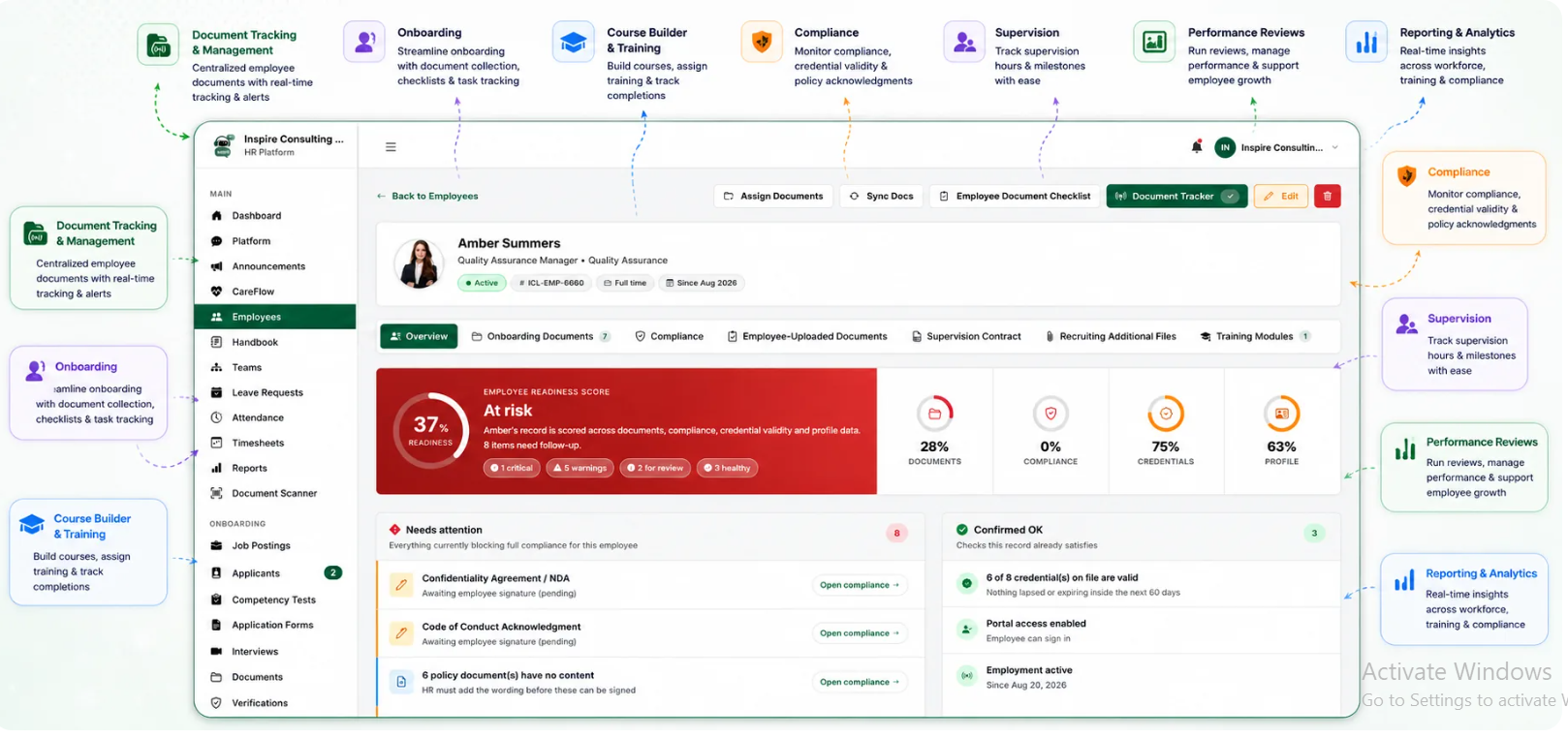
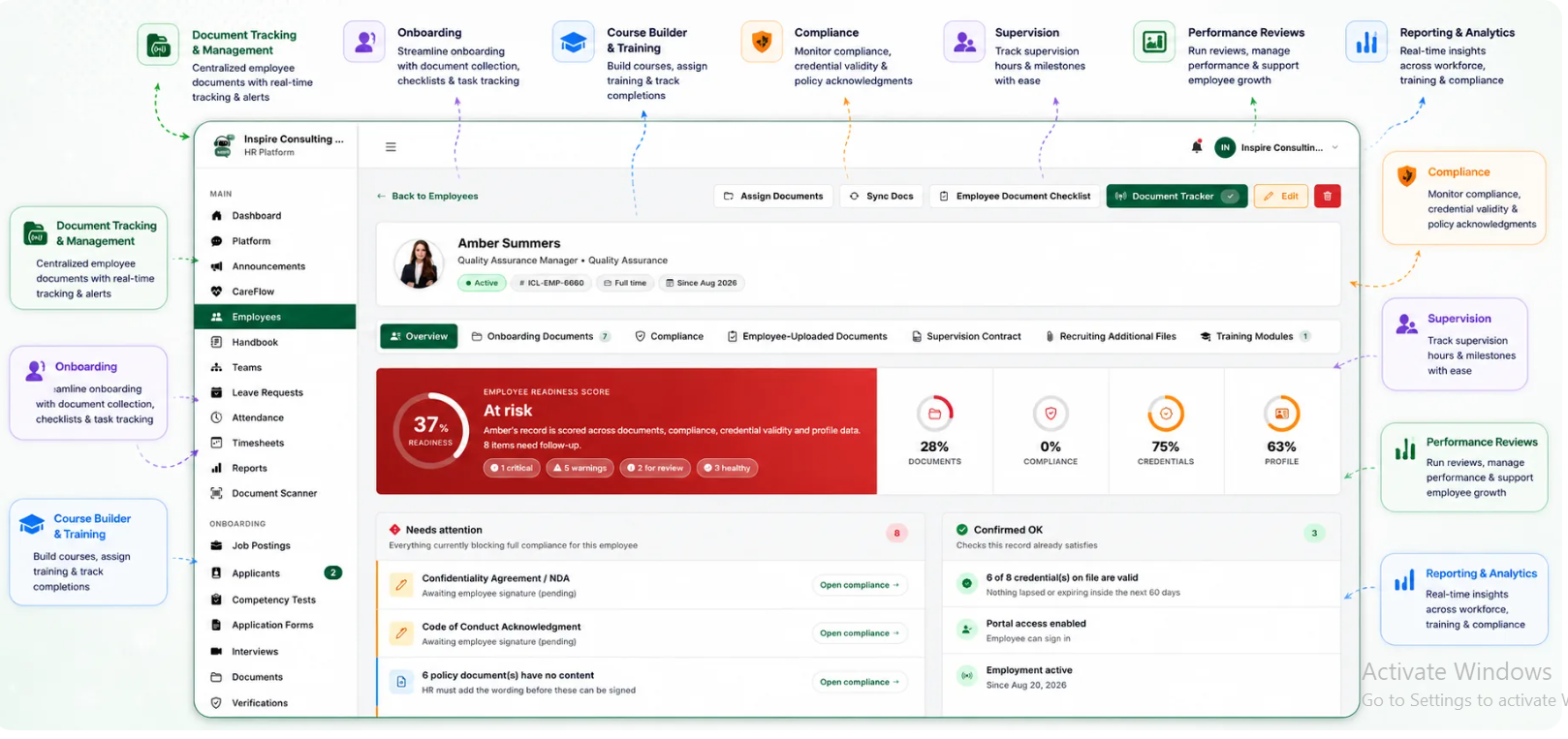
HR dashboard software is a reporting and workflow visibility layer that brings important workforce information into a clear, usable view. For behavioral health organizations, that often includes applicant progress, onboarding completion, missing documents, expiring licenses or certifications, training deadlines, employee status changes, and other compliance-sensitive tasks.
A strong dashboard is more than a collection of charts. It should help teams answer practical questions quickly, such as which new hires are blocked, which staff members have requirements coming due, which programs are carrying the most open positions, and where follow-up is needed right now.
Why Dashboards Matter in Behavioral Health HR
Behavioral health providers often support multiple programs, sites, and job types with different documentation and oversight needs. A clinic director may want to know whether a therapist can begin work next week, while HR may be waiting on a background check, license verification, or signed policy acknowledgment. Without a shared view of status, small delays can turn into missed start dates, compliance exposure, or avoidable pressure on supervisors.
Dashboard visibility helps teams move from reactive updates to proactive management. Leaders can identify bottlenecks earlier, prioritize the highest-risk items, and support better coordination between HR, operations, and program leadership.
What Behavioral Health Providers Should Look For
Role-based workforce visibility
Different stakeholders need different answers. HR may need a queue of incomplete onboarding files, while executives may care more about vacancy trends, overdue requirements, or workforce readiness across programs. Good HR dashboard software should allow teams to see relevant data without forcing everyone into the same static report.
Compliance signals that are easy to act on
A dashboard should not only display data, it should highlight what needs intervention. Expiring licenses, overdue training, unsigned documents, and incomplete files should be obvious so teams can act before those gaps create audit or staffing problems.
Progress tracking across hiring and onboarding
Behavioral health hiring involves many checkpoints. Dashboards should show where candidates or new hires are stuck, how far they have progressed, and what tasks are still open. That clarity helps reduce manual follow-up and improves the likelihood of an on-time start.
Connected employee file status
Dashboards are most useful when they pull from a live employee record. If the system is not connected to the documents, acknowledgments, credentials, and training records behind the metrics, staff still have to hunt for proof somewhere else.
Trends that support planning
In addition to day-to-day task monitoring, behavioral health organizations benefit from workforce trend visibility. Seeing repeated delays in onboarding, repeated compliance gaps by role, or recurring vacancy pressure in a certain program can support smarter staffing and process decisions.
Common Problems a Dashboard Can Help Prevent
How BUAMS HR Helps
BUAMS HR helps behavioral health organizations build a clearer operational picture of their workforce by connecting employee records, onboarding progress, compliance tasks, and HR documentation in one system. Instead of relying on disconnected spreadsheets and email threads, teams can track the status of key workforce requirements from a single source of truth.
That means HR can see incomplete tasks sooner, supervisors can understand what is still pending for a new team member, and leadership can monitor workforce readiness with more confidence. For providers balancing hiring demands with strict documentation expectations, that visibility can reduce administrative drag while supporting stronger compliance discipline.
Final Thoughts
HR dashboard software is especially valuable in behavioral health because workforce readiness is closely tied to compliance, service continuity, and staff experience. When leaders can see what is happening across hiring, onboarding, training, and employee records, they can make faster and better decisions without depending on scattered manual updates.
For organizations that want a more reliable way to manage HR operations, the right dashboard approach can turn hidden issues into visible, manageable workflows. That is where BUAMS HR can help, by bringing workforce data and action steps together in a way that supports both daily operations and long-term growth.