Behavioral health acquisitions move fast, but workforce risk does not disappear just because a transaction timeline is aggressive. A provider can inherit missing licenses, incomplete personnel files, outdated training records, and supervisor assignments that no longer match who is actually delivering care. HR due diligence software gives leadership a structured way to review workforce records before integration, identify material gaps early, and document follow-up work without relying on disconnected spreadsheets and email threads.
Key Takeaways
What HR Due Diligence Means in Behavioral Health
In a behavioral health acquisition, workforce diligence is more than counting employees and confirming job titles. Buyers need to understand whether staff records are complete, whether credentials support current assignments, whether supervisors are properly linked, and whether required training or attestations are current. That review matters because behavioral health providers often operate across multiple programs, service lines, sites, and payer expectations. A file that looks complete at a glance may still be missing the exact evidence needed for a role, a site, or a compliance review.
HR due diligence software gives teams a repeatable way to review those details by record type, employee group, location, and risk level. Instead of passing static file exports back and forth, teams can work from a living system that shows what is present, what is missing, and what still requires validation before integration plans are finalized.
Why Manual Diligence Creates Avoidable Risk
Many organizations still manage acquisition diligence with file shares, checklists, inbox threads, and one-off status meetings. That approach can work for a very small transaction, but it becomes fragile when the workforce includes licensed clinicians, direct care staff, supervisors, contractors, and multi-site operations. HR leaders may end up with several versions of the same tracker, unclear ownership for missing items, and no fast way to show executives which issues are resolved versus still open.
Manual processes also make it harder to distinguish a minor documentation cleanup item from a true workforce readiness problem. If one program has expired credentials, inconsistent supervision records, or incomplete onboarding documentation, leadership needs to see that quickly. A structured software workflow makes those issues visible earlier so the transition plan can include remediation instead of discovering the problem after employees are already expected to work under the new organization.
What to Review Before Close
The most effective diligence process groups workforce review into a few practical categories and applies the same standards consistently across the acquired organization.
Employee File Completeness
Start by checking whether each personnel file contains the required core documents for the role and employment type. That can include offer materials, acknowledgments, identification records, job descriptions, required forms, and policy sign-offs. The goal is not only to confirm that files exist, but also to understand whether records are complete enough to support future audits, role changes, and internal review.
Licenses, Certifications, and Time-Sensitive Requirements
Behavioral health organizations often depend on clinicians, supervisors, and direct care staff whose work is tied to licenses, certifications, background checks, health clearances, and periodic training. Diligence should identify which items are current, which are nearing expiration, and which records are missing evidence altogether. That helps the acquiring organization avoid inheriting invisible renewal risk that could interfere with scheduling, credentialing, or compliance after close.
Supervision and Oversight Structure
Behavioral health services frequently depend on documented supervision relationships, especially when provisional licenses, interns, trainees, or role-specific oversight rules are involved. A diligence review should confirm that employees are connected to the right supervisors, that required supervision evidence is documented, and that oversight assignments still make sense under the post-acquisition operating model.
Training and Policy Alignment
Different organizations may use different policies, training cycles, and sign-off practices. During diligence, HR should identify which employee groups will need transition training, new policy acknowledgments, or role-based refreshers after closing. That work helps prevent a chaotic day-one rollout where HR knows integration is necessary but cannot quickly tell who still needs what.
Open Workforce Risks and Remediation Work
Not every issue found during diligence should stop a deal, but every issue should be categorized and assigned. A practical review should separate critical blockers from manageable follow-up items, assign owners, and establish completion dates. That way, workforce risk becomes a visible workstream instead of a vague concern discussed only in status meetings.
What Strong HR Due Diligence Software Should Do
Behavioral health organizations evaluating HR due diligence software should look for tools that support both review and follow-through. Useful capabilities often include:
The right system should also make integration easier after close. Diligence is not only about inspecting the current state. It is about building a clean handoff into onboarding, records management, access review, supervision tracking, and ongoing compliance workflows once teams come together.
How BUAMS HR Helps Acquisition Readiness
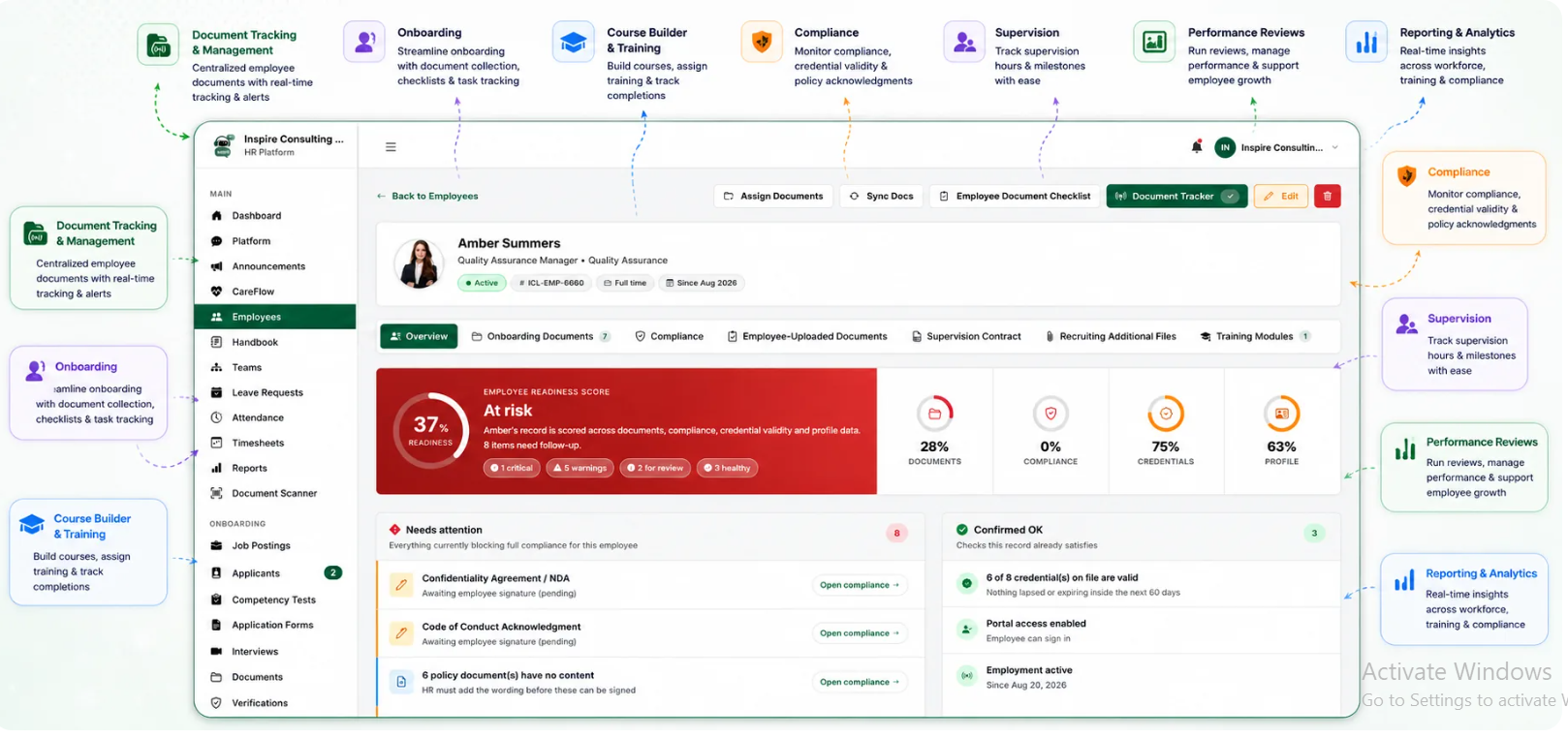
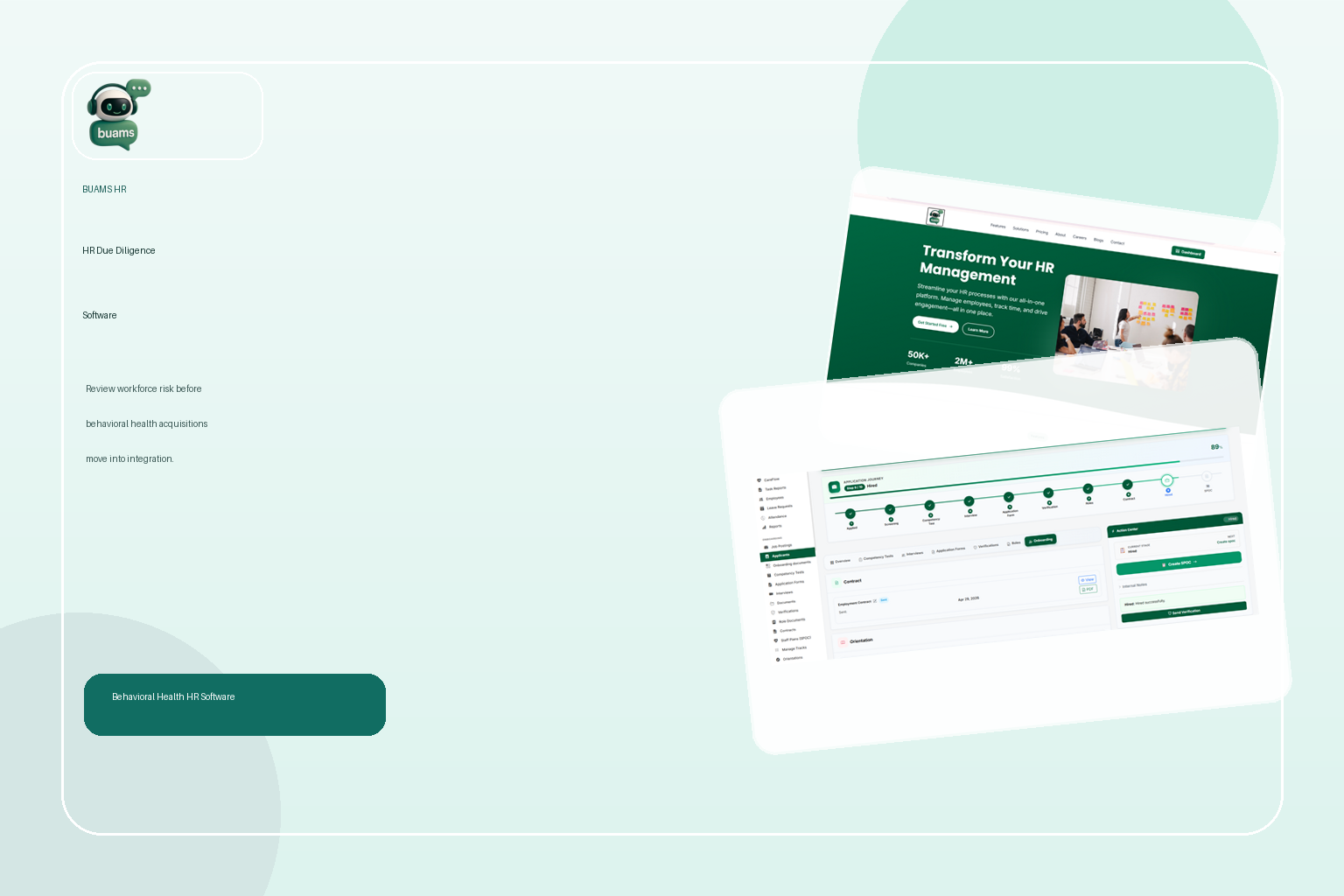
BUAMS HR gives behavioral health organizations a structured place to organize workforce records before and after an acquisition. HR teams can centralize employee files, track role-based requirements, review documentation gaps, and manage follow-up work without relying on disconnected trackers. That matters when leadership needs a clear picture of workforce readiness across multiple sites or newly combined programs.
Because BUAMS HR is designed for behavioral health workforce operations, it can also support the transition from diligence into day-one execution. Once risks are identified, teams can use the same environment to clean up records, monitor deadlines, standardize documentation expectations, and reduce the chance that integration issues linger unnoticed for weeks after closing.
Final Thoughts
Acquisition success in behavioral health depends on more than finance, contracts, and census projections. Workforce readiness is a major part of whether the combined organization can operate safely and confidently from day one. HR due diligence software helps teams review what matters, surface issues early, and turn workforce risk into an organized action plan. For providers that want a more controlled path from transaction review to operational integration, a system like BUAMS HR can make that process far more manageable.