Behavioral health providers are under constant pressure to staff programs quickly, support telehealth expansion, and keep clinician assignments aligned with licensure rules. That gets harder when organizations operate across multiple jurisdictions or rely on providers whose ability to practice depends on compact participation, reciprocity, supervision terms, or state-specific documentation. A generic spreadsheet may show who holds a license, but it rarely shows whether a person is truly ready to work in a specific program, location, or service line. That is where interstate practice eligibility software becomes valuable for behavioral health HR teams.
Instead of treating multi-state practice eligibility as a side note inside credential files, providers can manage it as an active workforce readiness process. The right workflow helps HR, compliance, and operations confirm what each employee can do, where they can do it, what documents support that decision, and what follow-up is needed before coverage begins.
Key Takeaways
What Is Interstate Practice Eligibility Software?
Interstate practice eligibility software is a structured way to monitor whether a clinician or other regulated team member is ready to practice across more than one state or jurisdiction based on the rules that apply to their role. In behavioral health, this may include counselors, social workers, nurses, psychologists, peer support staff, or supervisors whose assignments depend on more than a single active credential.
The goal is not just to store copies of licenses. It is to connect several pieces of information that often live in different places: active license status, reciprocity or compact documentation, expiration dates, supervision requirements, onboarding approvals, service restrictions, and the programs or locations where the employee is allowed to work. When these details are disconnected, organizations risk assigning staff before all requirements are confirmed or delaying coverage because nobody can quickly see what is missing.
Why It Matters for Behavioral Health Providers
Behavioral health organizations frequently grow through new programs, satellite locations, telehealth services, crisis response coverage, and contract expansion. As services spread, workforce eligibility becomes harder to manage. A clinician may be fully cleared for one location but not another. Another may hold an active license, yet still need additional documentation before practicing across state lines. A supervisor may be approved for one service line while awaiting confirmation for another.
Without a clear system, teams end up chasing email threads, reviewing scanned files manually, and relying on memory during scheduling decisions. That creates several problems:
A practical interstate practice eligibility software process reduces that ambiguity. It gives leadership a clearer picture of who is deployable, where they are deployable, and what follow-up is required before that changes.
What to Look For in a Strong Workflow
Behavioral health providers need a system that supports real operational decisions, not just static recordkeeping. Start with assignment-level clarity. HR teams should be able to see which jurisdictions, programs, or service types an employee is approved for, along with the evidence behind that status. If the only available field is a license expiration date, the organization is still doing most of the risk review manually.
Second, look for document-level organization. Compact participation letters, verification records, supervisor approvals, onboarding checklists, and policy acknowledgments should be tied to the employee file in a way that is easy to review. During staff transfers or urgent coverage requests, teams should not have to search multiple systems to answer a simple readiness question.
Third, build reminders and exception handling into the process. Multi-state practice eligibility can change when documents expire, supervision arrangements shift, or service models expand. Good interstate practice eligibility software should flag upcoming gaps early, route follow-up tasks to the right people, and preserve an audit trail of what changed and when.
Finally, make reporting useful for both compliance and operations. A behavioral health provider should be able to pull lists such as employees cleared for a new location, staff with unresolved eligibility documents, or supervisors whose oversight assignments need review. When HR data supports staffing decisions directly, the system becomes more valuable across the organization.
How BUAMS HR Helps
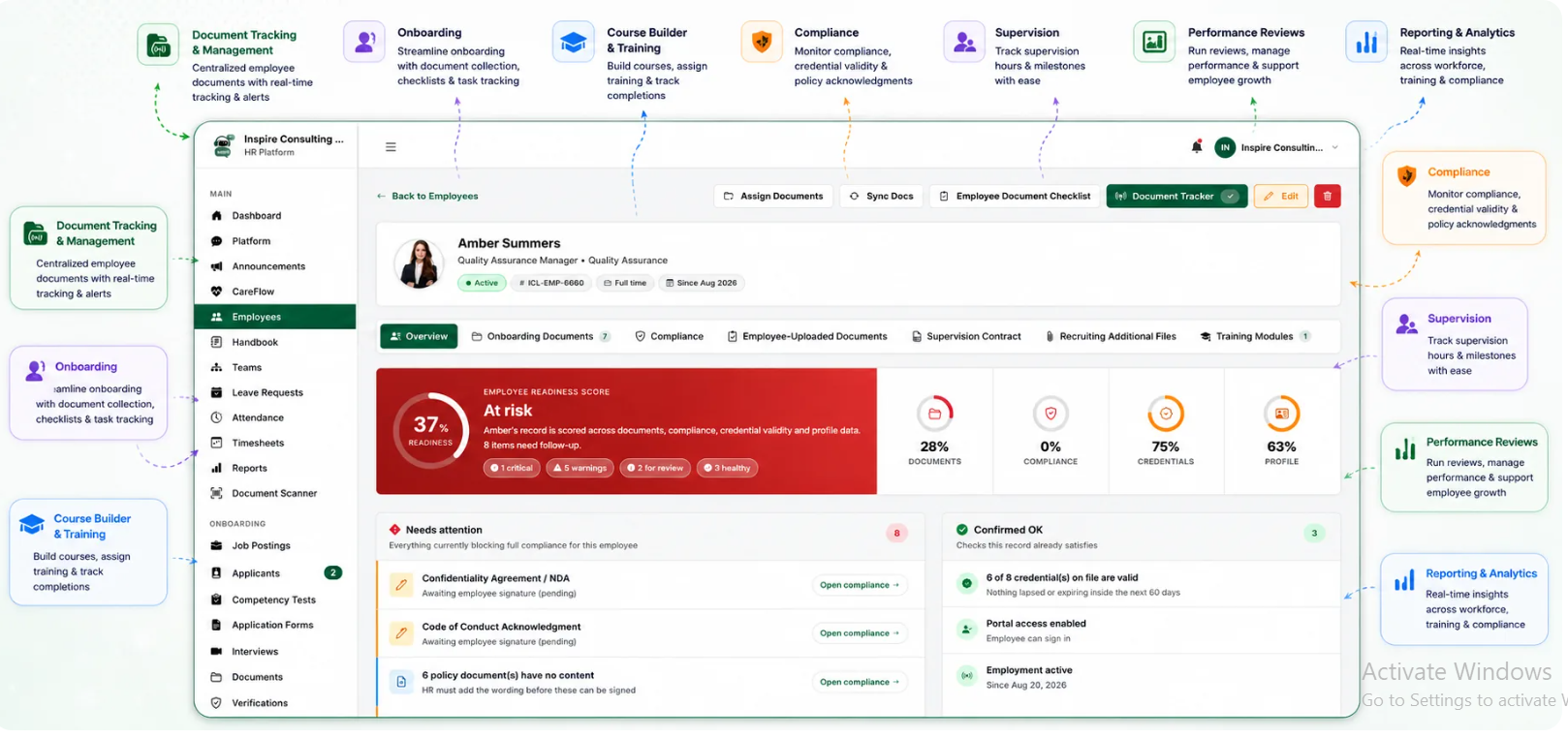
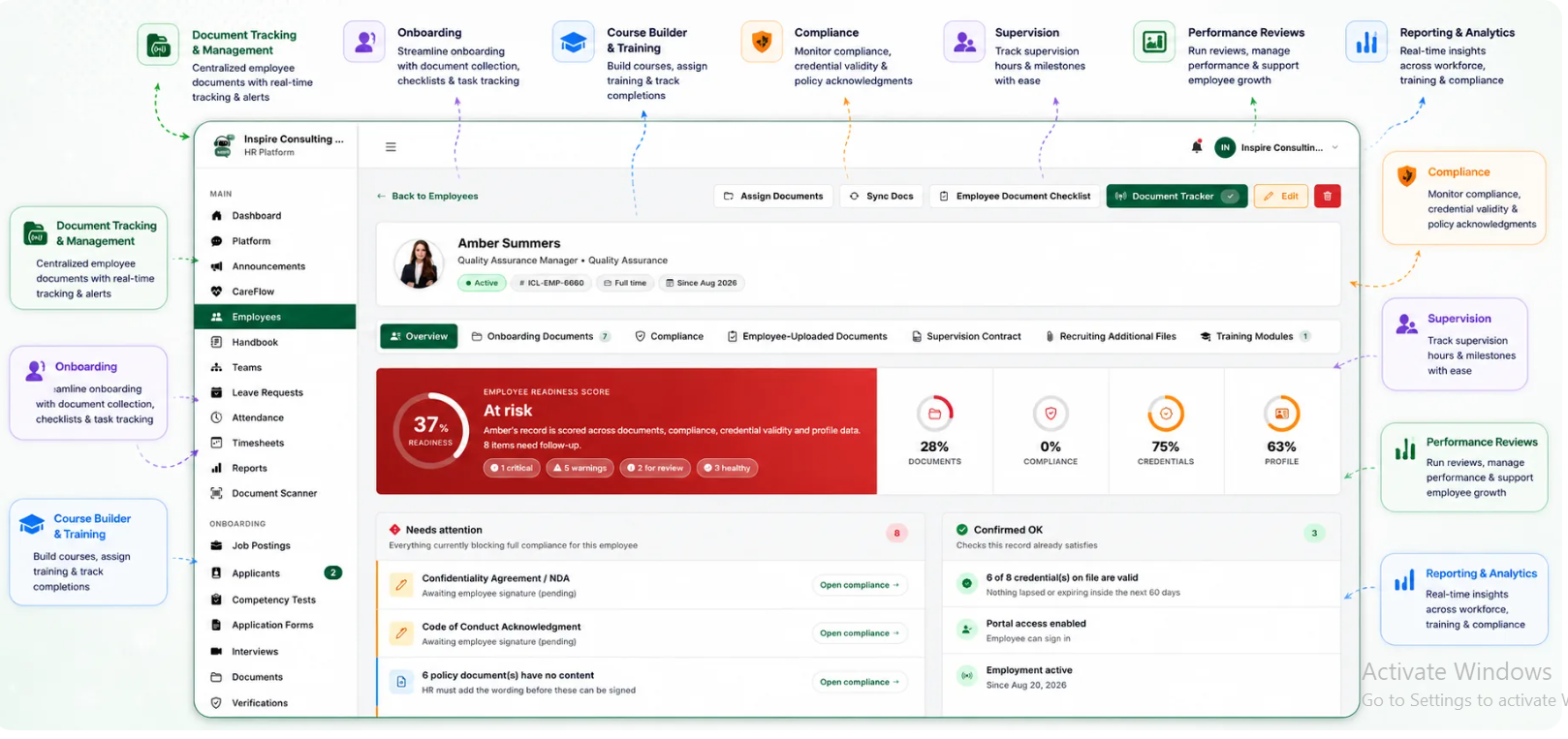
BUAMS HR gives behavioral health organizations a centralized place to organize employee files, compliance documents, onboarding checkpoints, and workforce readiness records. For teams managing multi-state practice complexity, that means fewer disconnected spreadsheets and a clearer workflow for reviewing who is ready for which assignments.
Instead of keeping license copies in one folder, onboarding notes in another, and follow-up tasks in email, teams can maintain a more complete employee record. HR can document required items, track completion, and make it easier to review whether the employee file supports a specific deployment decision. Compliance leaders gain more visibility into outstanding items, while operations leaders spend less time waiting on manual clarification.
BUAMS HR also supports the broader discipline behind interstate practice eligibility software: keeping status changes visible, organizing supporting evidence, and making employee readiness easier to audit. That matters when organizations are growing quickly, coordinating multiple sites, or trying to reduce the friction that slows hiring and service expansion.
Final Thoughts
For behavioral health providers, multi-state workforce readiness is not just a credentialing detail. It is an operational issue that affects hiring speed, coverage reliability, compliance confidence, and the ability to expand services responsibly. Interstate practice eligibility software helps organizations move from reactive document chasing to a clearer, repeatable process.
When HR teams can connect practice readiness, supporting records, and assignment eligibility in one system, they make better decisions with less delay. That is the real advantage: not just storing data, but turning it into a dependable workflow that supports safer staffing and stronger compliance across the organization.