Behavioral health providers often depend on bilingual and multilingual employees to support intake, therapy, case management, crisis response, and family communication. The operational need is obvious, but the workforce record behind it is often weak. HR may know that a staff member speaks Spanish, Amharic, or ASL, yet no one can quickly confirm proficiency level, role restrictions, documentation expectations, or whether that skill has been reviewed recently. Language proficiency tracking software gives organizations a structured way to manage those details before staffing pressure turns them into risk.
That matters because language ability is not just a recruiting advantage. In behavioral health settings, it can affect scheduling, client access, supervisor assignments, service quality, and compliance confidence. When language-related qualifications live in resumes, manager memory, or scattered spreadsheets, providers struggle to match the right employee to the right need with enough documentation behind the decision.
Key Takeaways
What Is Language Proficiency Tracking Software?
Language proficiency tracking software is a workforce management approach for recording which languages employees speak, how those abilities were identified, what level of proficiency is documented, and how that information should be used operationally. In a behavioral health organization, that can include spoken language ability, interpretation readiness, bilingual documentation capacity, and role-specific notes about how a language skill supports service delivery.
The goal is not to label someone as bilingual and move on. A useful system helps HR and program leaders understand whether the employee can support intake conversations, conduct therapy in another language, assist with family communication, or simply offer limited operational support. That distinction matters when organizations want to improve access without making unsafe assumptions.
Why It Matters for Behavioral Health Providers
Behavioral health organizations serve communities with varied language needs, and those needs do not always line up neatly with staffing patterns. A clinic may have one bilingual therapist carrying an outsized share of client demand. A mobile team may need to know which employees can support community visits in a specific language. A residential program may want better visibility into who can communicate with family members during urgent situations. Without a clear workforce record, leaders often rely on informal knowledge that does not scale well.
Informal tracking also creates compliance and quality concerns. An employee may be treated as the default language resource without clear confirmation of role expectations, supervisor awareness, or workload impact. Another employee may have strong language ability but never be considered because the information is buried in old hiring notes. Centralized tracking helps providers make better staffing decisions while keeping the employee record more accurate.
For growing organizations, language proficiency visibility also supports equity and retention. Staff members with valuable language capabilities should not be overused, overlooked, or assigned in ways that create hidden burden. Better tracking makes those contributions more visible and easier to manage responsibly.
Common Problems When Language Skills Are Tracked Informally
Managers Depend on Memory Instead of a Shared Record
One supervisor may know that an employee can support a specific client population, while another manager has no idea the capability exists. That inconsistency slows staffing decisions and creates avoidable gaps in service access.
Language Ability Is Not Connected to Assignment Decisions
Even when a language skill is listed somewhere, it may not be reviewed when building schedules, opening new programs, or shifting staff across sites. The organization ends up reacting late instead of planning ahead.
Role Boundaries Become Unclear
Behavioral health providers need to distinguish between conversational ability, interpreted support, and responsibilities that may require stronger validation or additional controls. Without that clarity, staff may be asked to do more than the organization has formally documented.
Workload and Follow-Up Are Hard to Monitor
Bilingual employees can become invisible bottlenecks when no one tracks how often they are pulled into extra communication tasks, urgent requests, or coverage needs beyond their core role.
What to Look for in Language Proficiency Tracking Software
Structured proficiency fields
The system should let HR capture more than a simple yes-or-no language flag. Providers need room for language name, proficiency level, verification notes, and role context so staffing decisions are based on usable information.
Searchable workforce visibility
Program leaders should be able to identify employees by language capability, location, department, or job type without emailing multiple managers for answers. Searchability matters when client needs shift quickly.
Connection to employee records
Language details should sit alongside employee profiles, role history, and supporting documents. That makes it easier to review the full workforce picture during hiring, transfers, promotions, and coverage planning.
Supervisor and assignment awareness
Good software should help teams understand where language skills are being used and whether related assignments are still appropriate. That supports better oversight and prevents hidden dependency on a small number of employees.
Reporting for planning and fairness
Behavioral health providers benefit from seeing where language coverage is strong, where it is thin, and where certain employees may be carrying disproportionate demand. Reporting turns language data into a practical planning tool.
Best Practices for a Stronger Process
How BUAMS HR Helps
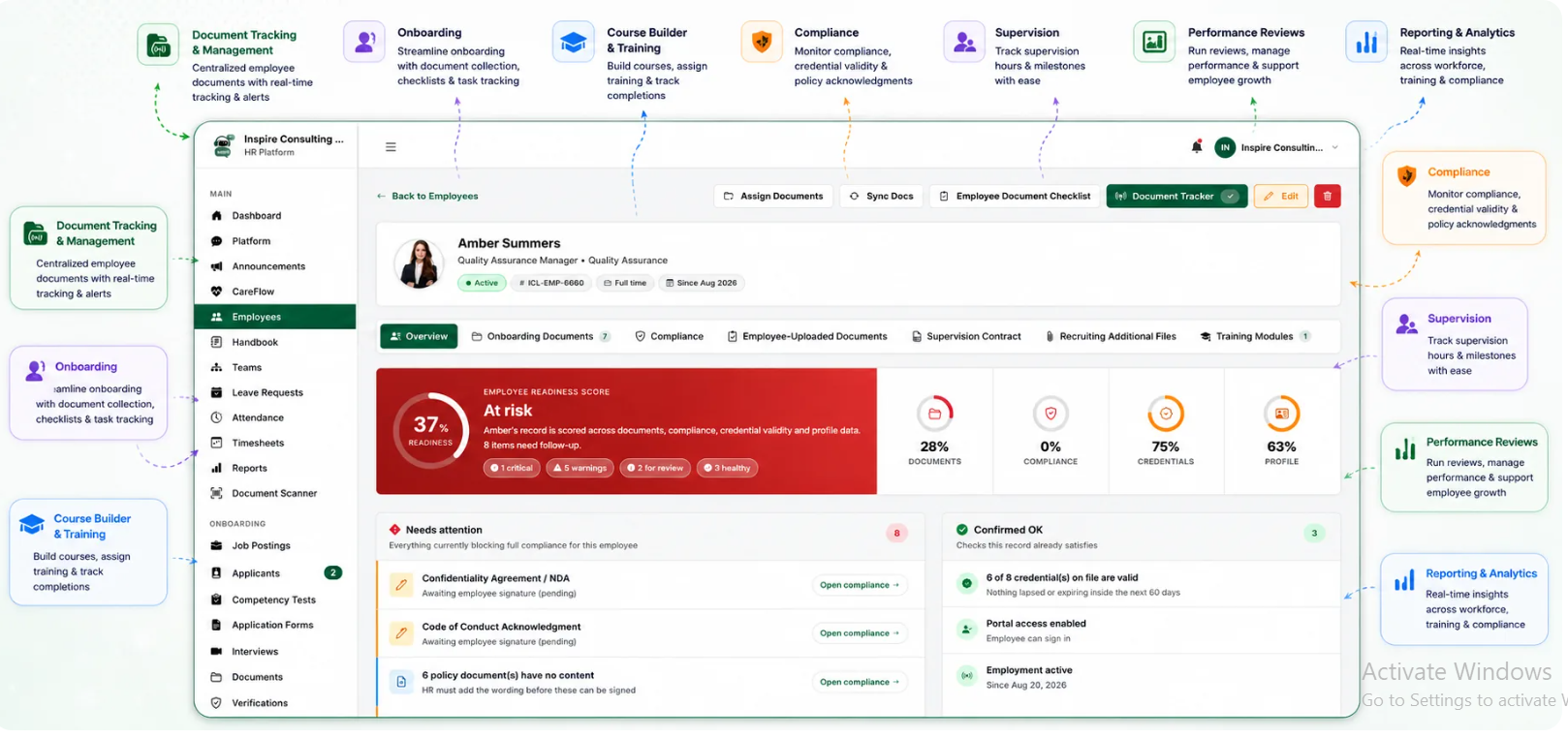
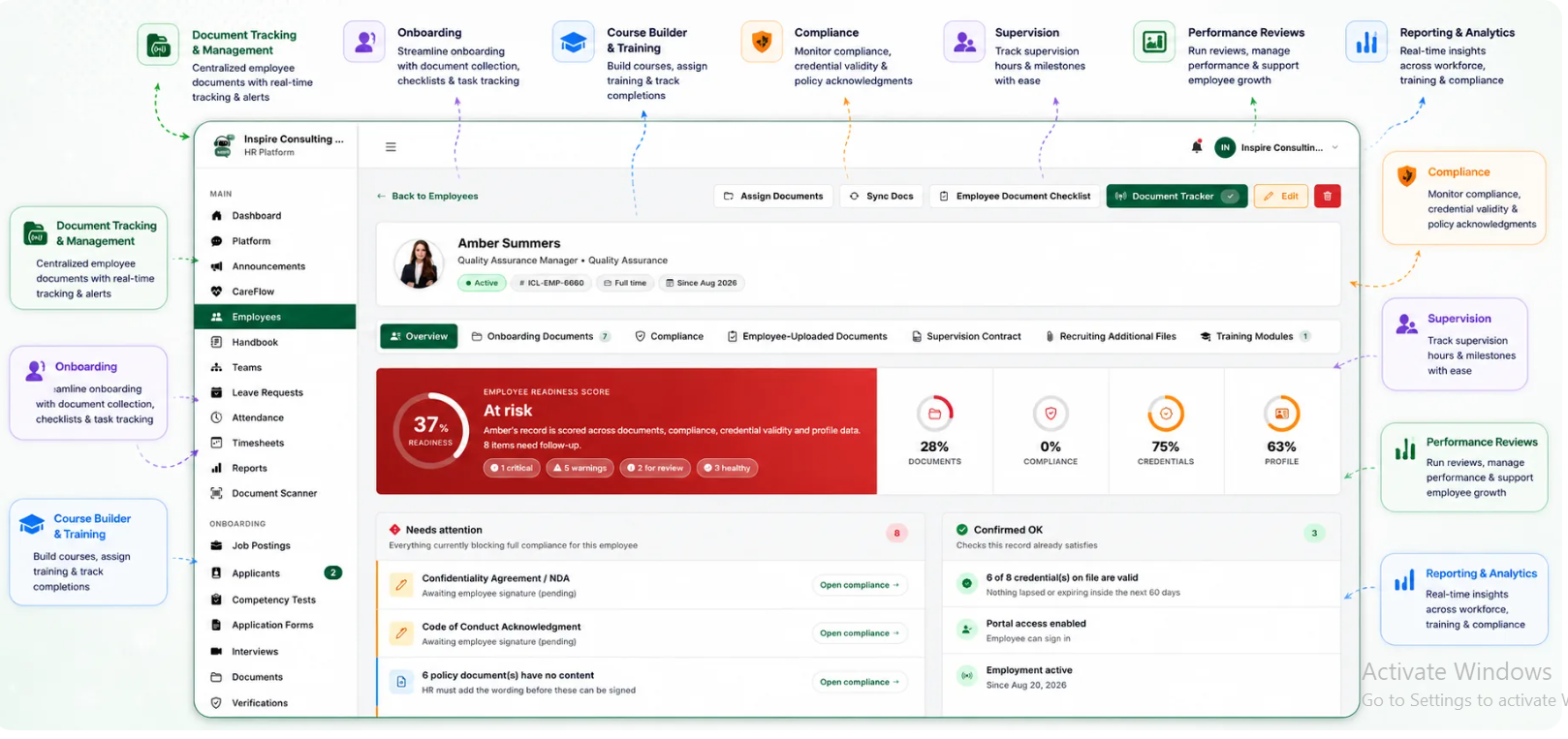
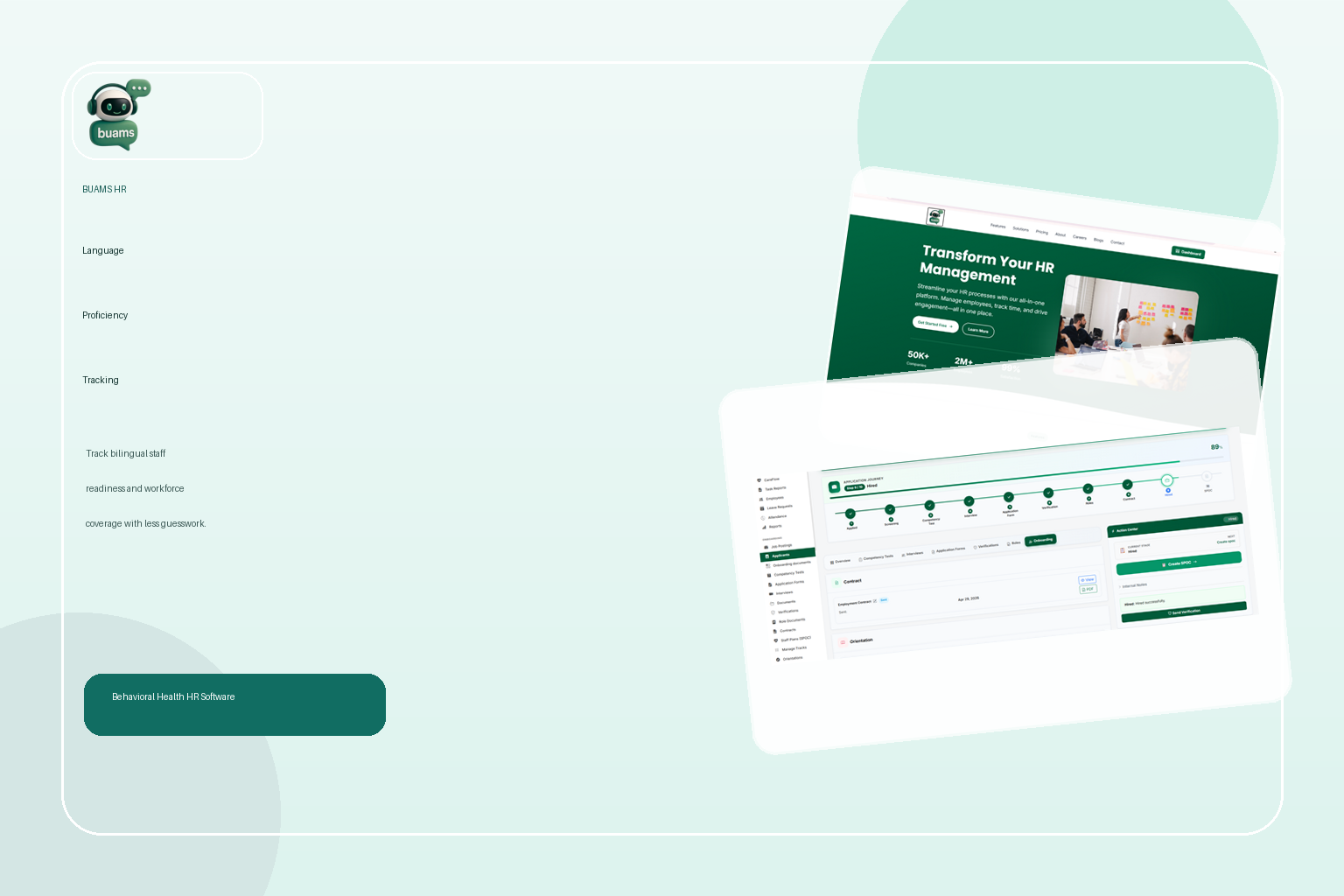
BUAMS HR helps behavioral health providers maintain workforce records that are easier to search, review, and trust. When employee details, documents, and assignment context are organized in one system, language proficiency tracking becomes more operationally useful. Teams can review workforce information in context instead of relying on disconnected notes from recruiting or supervisor memory.
That visibility supports better coordination across HR, operations, and program leadership. Providers can keep language-related workforce details connected to the employee profile, reduce last-minute scrambling when a specific capability is needed, and build a cleaner foundation for staffing decisions that affect access and quality. For organizations serving diverse communities, that structure makes it easier to support clients without losing oversight of the workforce behind the service.
Final Thoughts
Language proficiency tracking software gives behavioral health providers a practical way to turn a valuable workforce attribute into a documented, reviewable process. Instead of treating bilingual capacity as informal background knowledge, organizations can manage it as part of workforce readiness, access planning, and employee support.
For providers that want better visibility into language coverage, stronger documentation, and more deliberate staffing decisions, BUAMS HR offers a reliable foundation for keeping those workforce details organized.