Behavioral health providers often bring in locum clinicians when a resignation, leave of absence, census spike, or new contract creates immediate coverage pressure. The operational challenge is that short-term help still has to clear the same practical gates as permanent staff. HR has to confirm identity documents, collect policy acknowledgments, validate licensure, coordinate role-specific training, and make sure the clinician is attached to the right supervisor, site, and program before client care begins. When those steps are handled in email threads and scattered checklists, start dates slip and compliance risk grows.
Locum clinician onboarding software gives organizations a more reliable way to launch temporary clinical coverage without creating temporary-process chaos. Instead of treating each placement like an exception, behavioral health providers can use a structured workflow that captures required documents, routes approvals, tracks readiness tasks, and shows whether a locum clinician is actually cleared for the assignment they are about to start.
Key Takeaways
What Is Locum Clinician Onboarding Software?
Locum clinician onboarding software is a workflow system designed to manage the hiring-readiness steps required before a temporary or short-term clinician begins work. In behavioral health, that may include therapists, psychiatrists, nurse practitioners, counselors, crisis staff, or other licensed professionals who are filling a temporary staffing gap.
The software should give HR and operations teams a repeatable process for collecting required paperwork, confirming credentials, assigning onboarding tasks, and documenting who approved the clinician for a specific setting. Even when the assignment is short, the organization still needs confidence that the clinician has the right license status, training evidence, supervision alignment, and program-specific access.
Without a system, teams often rely on urgency to force progress. That usually means people working around process rather than through it. A better approach is to move fast with structure, not fast with guesswork.
Why It Matters for Behavioral Health Providers
Short-term staffing coverage can protect service continuity, but only if providers can launch the clinician safely and cleanly. A locum psychiatrist may need access to telehealth systems, prescribing workflows, and site protocols before the first appointment. A temporary therapist may need orientation to documentation standards, productivity expectations, and crisis escalation processes. A clinician covering multiple locations may need role-specific approvals that differ by site or population served.
Behavioral health organizations cannot afford to assume that temporary means simple. If onboarding steps are missed, providers can end up with clinicians who are technically hired but not operationally ready. That can create delayed visits, documentation inconsistencies, supervisor confusion, and audit exposure if required records are incomplete.
Locum clinician onboarding software matters because it turns a high-pressure staffing event into a visible process. HR can see whether documents are still missing. Compliance teams can verify that role requirements were met. Supervisors can confirm who the clinician reports to and what orientation was completed. Leadership can tell whether coverage is truly ready or only scheduled on paper.
Where Manual Locum Onboarding Breaks Down
Many behavioral health providers already have good onboarding practices for permanent hires, but temporary coverage often bypasses those controls because the organization is trying to fill a need quickly. That is where errors multiply.
These are not abstract risks. In behavioral health, documentation gaps can affect compliance reviews, payer expectations, internal quality controls, and client experience. A short-term assignment still creates long-term recordkeeping responsibility.
What to Look For in Locum Clinician Onboarding Software
Assignment-specific readiness checklists
The workflow should reflect the actual role, site, and service setting the clinician is covering. A locum clinician assigned to outpatient telehealth may need a different readiness sequence than one covering crisis stabilization or residential services.
Document collection with expiration visibility
Teams should be able to store licenses, identification records, insurance documents, signed policies, and other onboarding files in one place. It helps when the system also shows expiration dates and upcoming renewals that could affect the assignment window.
Clear ownership across HR, compliance, and supervisors
Temporary placements move faster when everyone knows which tasks they own. Good software makes it obvious whether a form is waiting on HR, a training item is waiting on the clinician, or a final readiness sign-off is waiting on the supervisor or program leader.
Access and orientation tracking
Behavioral health providers should be able to document whether the clinician received orientation to documentation standards, safety procedures, contact workflows, scheduling rules, and any systems needed for the assignment. This matters just as much as collecting paperwork.
Reusable templates without one-size-fits-all shortcuts
Organizations need standardization, but not oversimplification. A strong system lets teams reuse templates for temporary clinical roles while still adjusting tasks based on program type, state, site, or level of care.
Common Use Cases in Behavioral Health
Locum clinician onboarding software is especially useful when providers need to fill urgent gaps without sacrificing oversight.
These use cases are operationally different, but they all share the same need: the organization must be able to prove that temporary staff were onboarded intentionally, not informally.
How BUAMS HR Helps
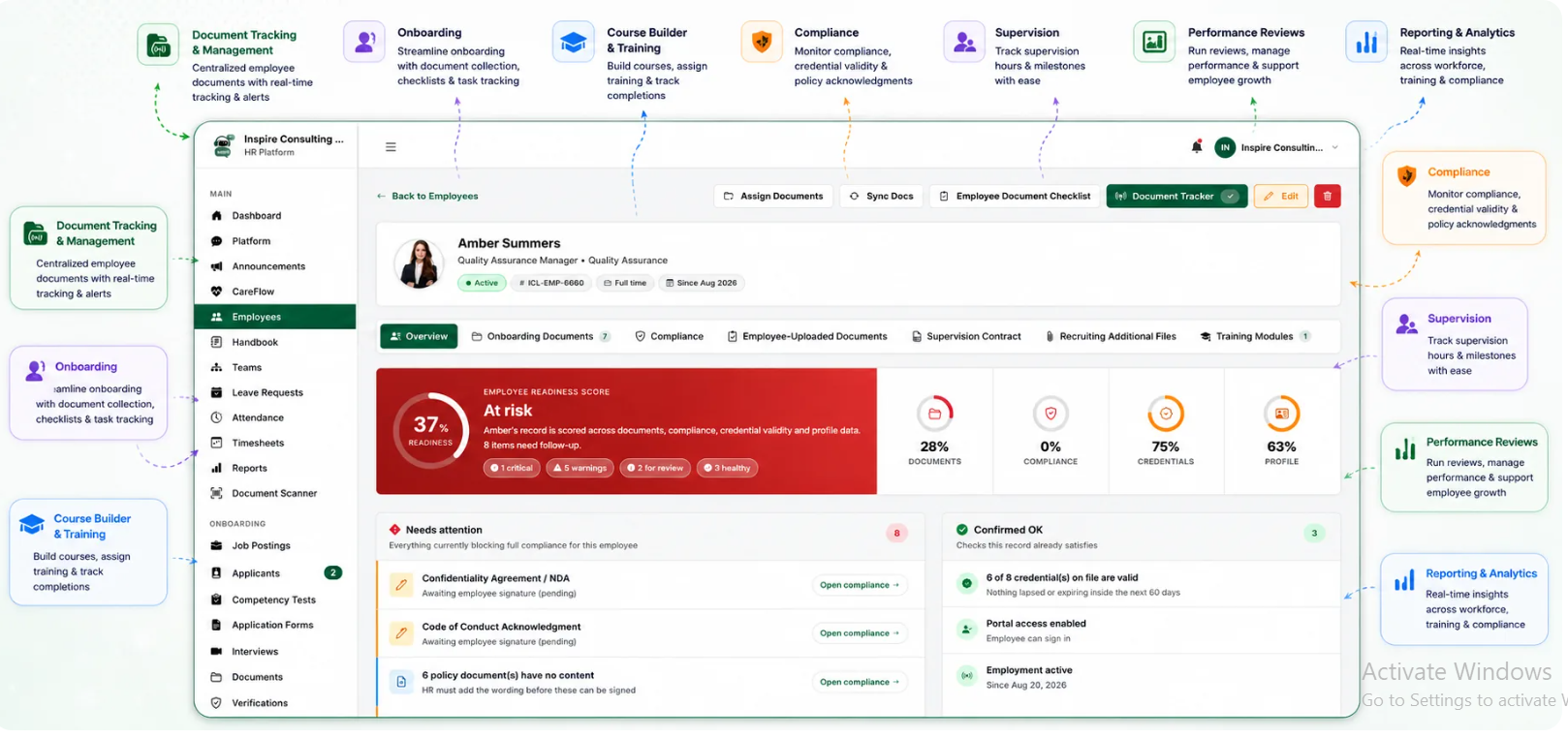
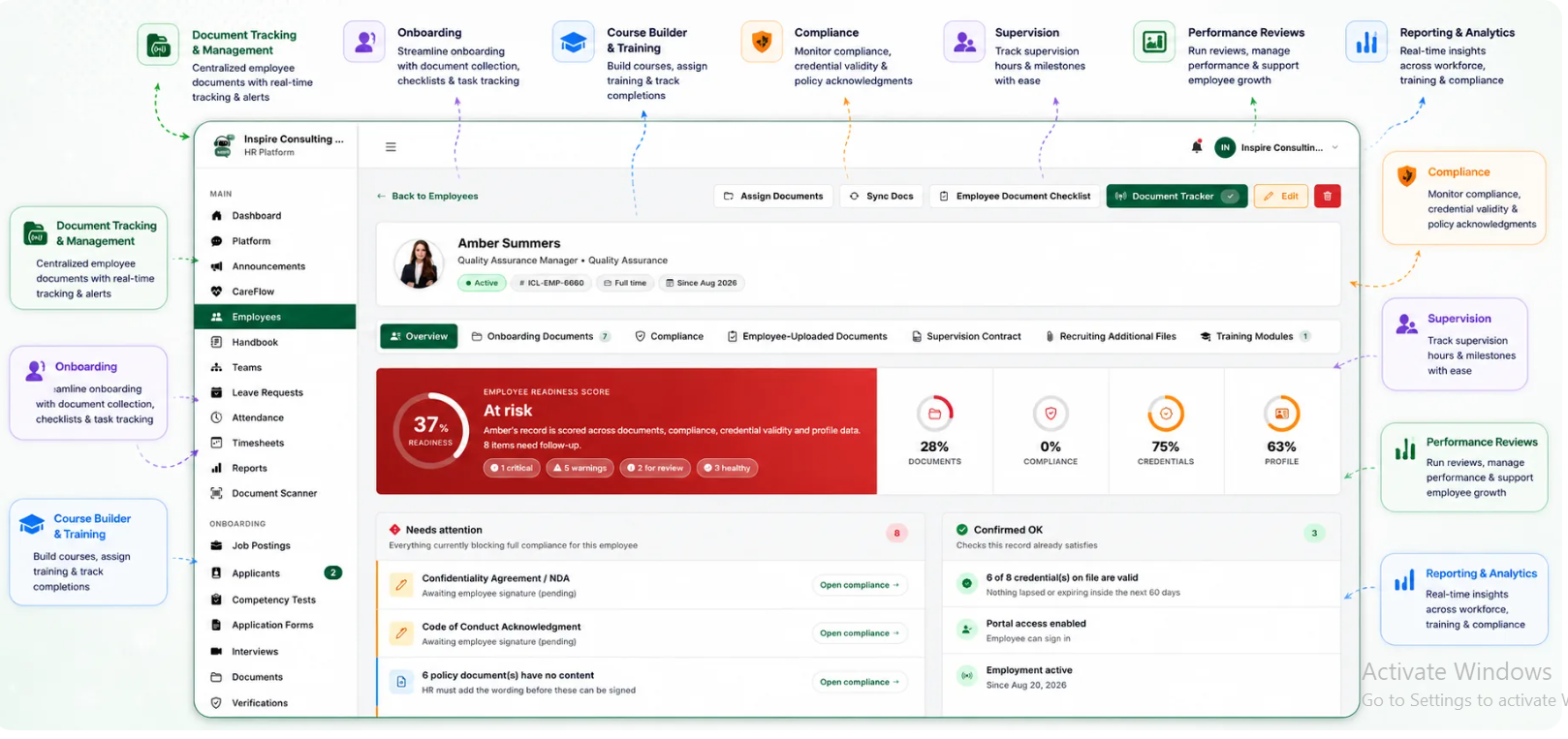
BUAMS HR helps behavioral health providers organize workforce records, onboarding steps, and compliance documentation in one system. For locum clinician onboarding software, that matters because short-term assignments often create the most cross-functional coordination pressure. HR, compliance, supervisors, and operations all need the same answer to one question: is this clinician actually ready to start?
With BUAMS HR, organizations can keep onboarding files centralized, reduce scattered follow-up, and create a more visible readiness process for temporary coverage. Teams can document key records, track task completion, and connect onboarding activity to the broader workforce record instead of rebuilding the story through inboxes and spreadsheets later.
That is especially useful for providers managing multiple sites, high clinical turnover, or specialized programs where temporary coverage has to be launched quickly but still reviewed carefully. A connected system helps the organization move faster without lowering the quality of oversight.
Best Practices for a Stronger Locum Onboarding Process
Final Thoughts
Locum clinician onboarding software helps behavioral health providers solve a very practical problem: how to launch temporary clinical coverage quickly without creating avoidable HR and compliance gaps. Speed matters when programs need help, but speed without structure usually creates more rework later.
For organizations that depend on temporary clinicians to maintain continuity, BUAMS HR offers a more organized way to connect onboarding, documentation, approvals, and readiness tracking in one place. That makes it easier to bring short-term clinicians into the workforce with the same discipline the organization expects from every other high-stakes staffing decision.