Behavioral health providers often rely on nurses, medication technicians, residential staff, and program supervisors to handle medication-related workflows safely and consistently. That work depends on more than a one-time orientation. Organizations need a reliable way to document initial training, observed competency checks, annual revalidation, policy acknowledgments, and any restrictions or remediation that affect whether an employee is ready to administer medications. When those records live across paper binders, scattered spreadsheets, and email chains, HR and compliance teams lose visibility just when they need it most. Medication administration competency software gives providers a more controlled way to manage workforce readiness before small documentation gaps become larger operational or regulatory risks.
Key Takeaways
What Is Medication Administration Competency Software?
Medication administration competency software is a workforce and compliance tool that helps organizations document whether an employee is trained, observed, approved, and still current to perform medication-related duties. Instead of storing skill checks in paper packets or isolated folders, the software creates a repeatable process for tracking who completed training, who observed the employee, what standards were reviewed, when the validation expires, and whether follow-up is still pending.
For behavioral health providers, that structure matters because medication workflows often involve multiple roles and settings. A residential program may use direct care staff with role-based medication responsibilities, while outpatient or community programs may rely on nurses, supervisors, or licensed clinicians with different requirements. The organization needs more than a training record. It needs a clear operational answer to a simple question: is this employee currently cleared to perform the task in this role at this site under the right level of oversight?
Why It Matters for Behavioral Health Providers
Medication-related work creates obvious safety and compliance stakes. If competency documentation is incomplete, outdated, or hard to verify, leaders may struggle to confirm whether the right employee was trained under the right policy, observed by the right person, and revalidated on time. That can create avoidable exposure during internal reviews, licensing visits, accreditation surveys, or incident follow-up.
The challenge grows in multi-site organizations. Different programs may use different forms, recheck schedules, or supervisory patterns. One location may keep scanned records in a shared drive while another relies on paper files and calendar reminders. Even when employees are capable, the documentation process can drift. HR teams then end up chasing supervisors for missing sign-offs, checking expiration dates manually, or discovering gaps only when a staffing decision depends on the answer.
Medication administration competency software helps providers move from reactive verification to continuous visibility. Instead of rebuilding status by hand, teams can see who is complete, who is pending observation, who needs annual revalidation, and which records still need review before assignment decisions are made.
Common Breakdowns in Manual Competency Tracking
One common problem is incomplete onboarding-to-readiness handoff. Training may be marked complete, but the live observation or final sign-off is still missing. Another issue is that restrictions are not documented clearly. A staff member may be approved for some medication tasks but not all of them, or may require closer oversight during an initial period. If those details are buried in notes, scheduling and supervision decisions become less dependable.
Annual revalidation is another frequent pain point. Behavioral health providers often have many competing compliance deadlines, and competency reviews can get lost among licensure renewals, policy attestations, and training requirements. By the time the organization notices a lapse, managers may already be trying to fill shifts or assign duties. Manual systems also make it harder to prove consistency. Even if a provider has a solid process in practice, scattered documentation can make the process look uneven during review.
What to Look for in Medication Administration Competency Software
Role-based competency workflows
The software should support different competency paths for different job types. Medication technicians, nurses, residential staff, and supervisors may not all follow the same checklist, approval rules, or revalidation schedule.
Observed sign-off documentation
Behavioral health organizations need a way to record who performed the observation, when it happened, what standards were reviewed, and whether the employee passed, needs remediation, or has temporary restrictions.
Expiration and recheck visibility
Competency records should not disappear into a completed folder. Useful software highlights upcoming expirations, overdue revalidations, and unresolved remediation steps so organizations can act before coverage is affected.
Connection to employee records and site assignments
The best workflow links competency status to the employee profile, supervisor, program, and work location. That makes it easier to confirm whether someone is ready for a specific assignment without searching multiple systems.
Document storage and audit readiness
Providers should be able to keep supporting forms, acknowledgments, and review notes together with the competency record. During audits or internal checks, centralized evidence saves time and reduces uncertainty.
Best Practices for a Stronger Process
Start by defining what “competent” means for each medication-related role. That sounds basic, but many organizations mix orientation completion, knowledge review, observation, and final approval together without clearly separating them. A stronger process breaks each stage into visible checkpoints with a named owner.
Next, standardize revalidation timing and escalation rules. If an annual review is coming due, leaders should know who is responsible, what evidence is required, and how far in advance reminders begin. It also helps to document restrictions explicitly. If an employee may assist with some medication tasks but not independent administration, that distinction should be visible to both HR and supervisors.
Finally, connect competency management to workforce planning. The point is not only to keep records complete. It is to support safer assignment decisions. When competency status is visible alongside employee files and supervisory context, organizations can respond faster to staffing needs without relying on memory or last-minute document hunts.
How BUAMS HR Helps
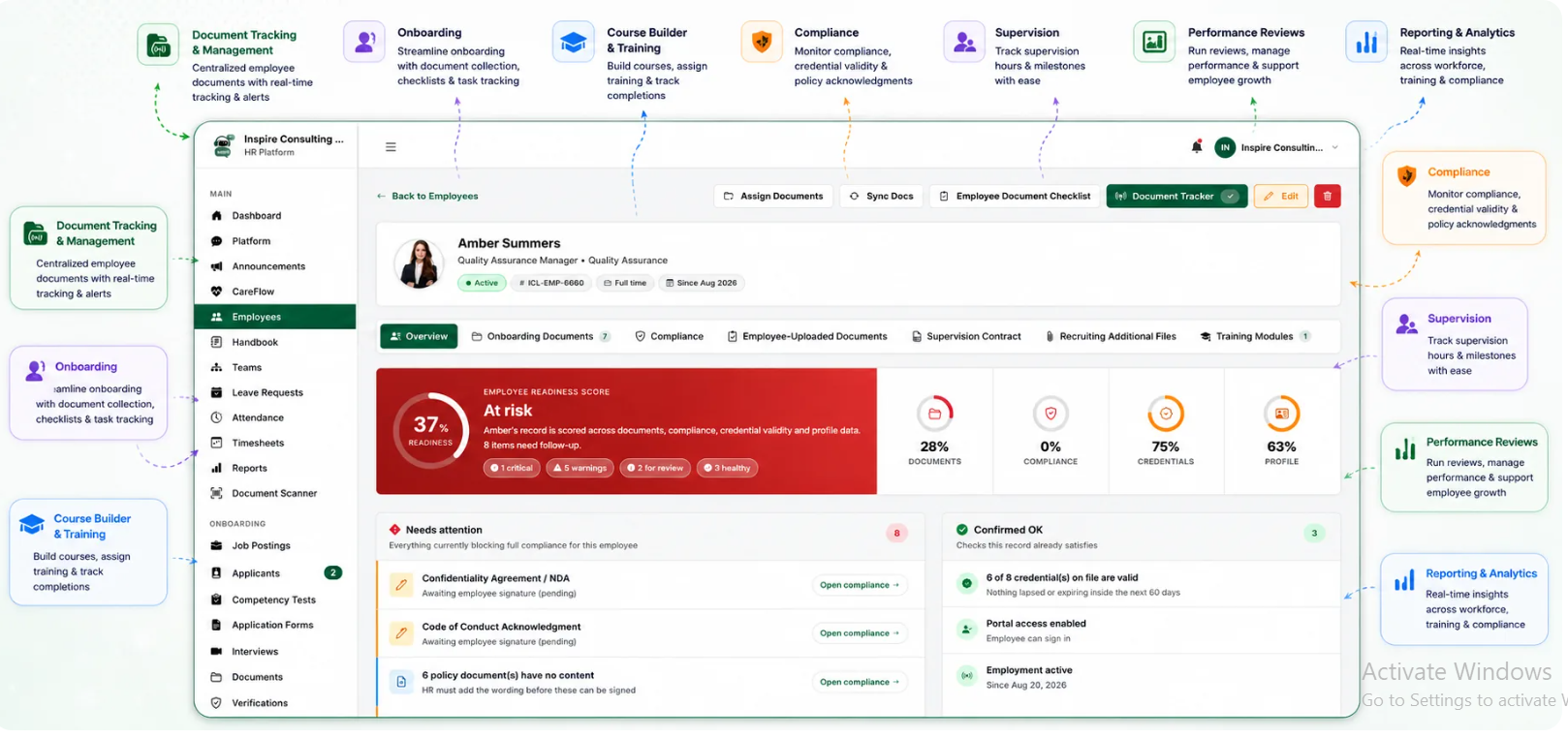
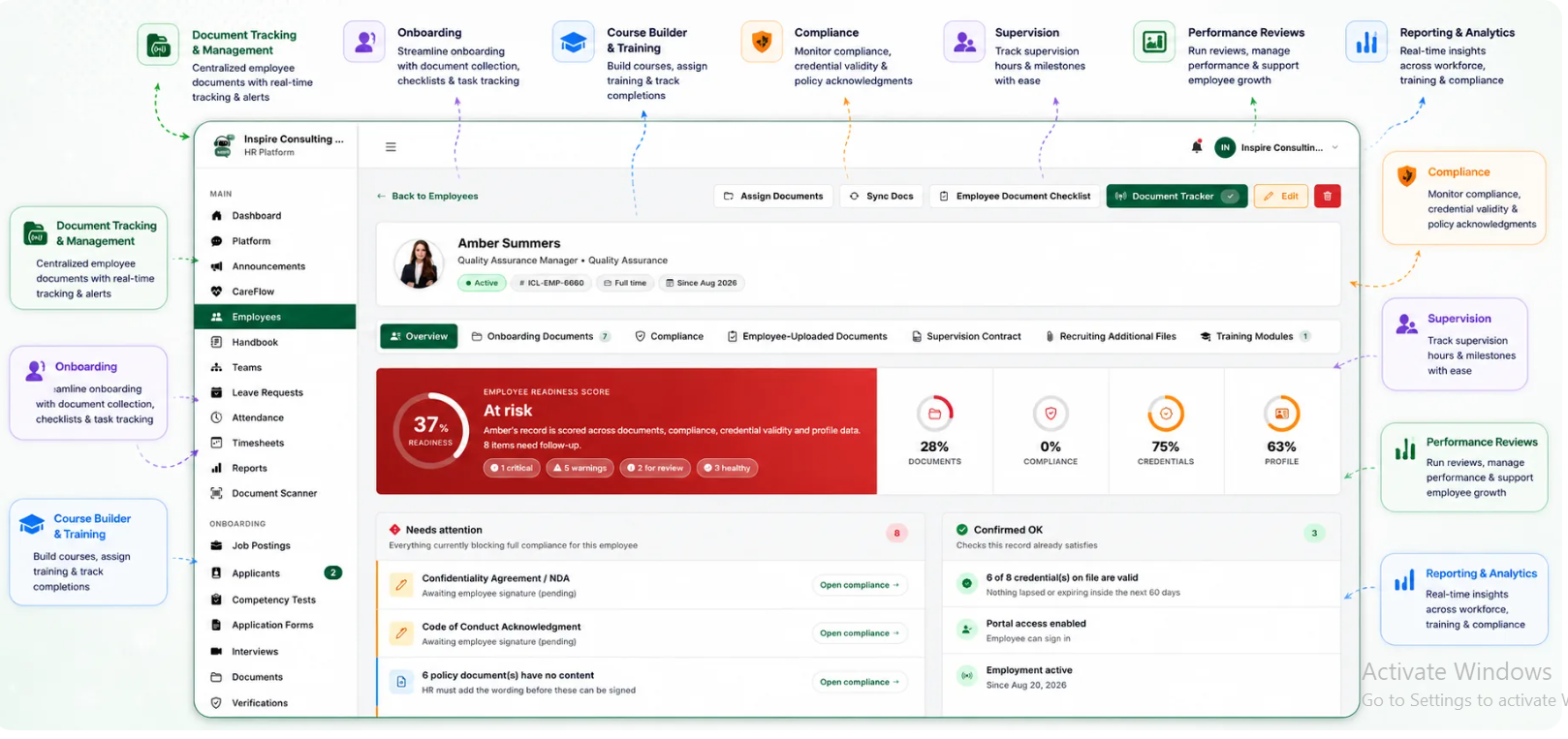
BUAMS HR helps behavioral health providers build more reliable workforce workflows around training, compliance, and employee documentation. When role requirements, employee files, supervisor relationships, and review deadlines are organized in one system, HR teams gain a clearer view of who is ready, what is missing, and where follow-up is still needed.
That is especially useful for medication administration competency processes, where readiness depends on several connected steps rather than a single form. BUAMS HR supports a cleaner operating model by centralizing records, reducing scattered tracking, and making it easier to review workforce status across programs and locations. Instead of chasing paperwork across departments, teams can work from a shared source of truth.
For growing behavioral health organizations, that visibility supports both compliance and day-to-day operations. Leaders can make staffing decisions with more confidence, maintain better documentation discipline, and reduce the chance that an important competency deadline slips past unnoticed.
Final Thoughts
Medication administration competency software gives behavioral health providers a more dependable way to manage training, observed sign-offs, revalidation, and role readiness. In environments where documentation quality can affect safety, staffing, and compliance all at once, a structured workflow is more than an administrative convenience. It helps the organization make better decisions with less guesswork. Providers that centralize competency evidence and connect it to broader HR operations are better positioned to protect staff, support supervisors, and stay prepared for the next review.