Behavioral health providers often hire through trusted professional networks, employee referrals, and local community relationships. That can be a strength, but it also creates a quiet HR risk when family relationships, household connections, or close personal ties are not documented clearly. A supervisor may end up reviewing a relative, a hiring manager may influence a candidate process without disclosure, or a payroll and HR approval chain may include people with overlapping personal interests. When those situations are managed informally, organizations can drift into inconsistency, employee-relations problems, and avoidable compliance questions.
Nepotism disclosure software gives behavioral health providers a more reliable way to document related-party relationships, route review steps, collect policy acknowledgments, and maintain a clean record of how potential conflicts were handled. Instead of relying on memory, side conversations, or scattered forms, HR teams can create a structured workflow that protects fairness without slowing hiring and staffing decisions.
Key Takeaways
What Is Nepotism Disclosure Software?
Nepotism disclosure software is a workflow tool used to capture, review, and document employee relationships that could create real or perceived conflicts of interest in workforce decisions. In behavioral health settings, that can include family members working in the same program, partners involved in approval chains, household members scheduled into the same reporting structure, or relatives participating in hiring, evaluations, compensation recommendations, or corrective action processes.
The goal is not to block every personal connection automatically. Many organizations allow relatives to work in the same agency as long as direct reporting conflicts, confidentiality risks, and decision-making concerns are addressed. The software helps HR separate acceptable arrangements from high-risk ones by making disclosures visible, reviewable, and tied to documented safeguards.
Why It Matters for Behavioral Health Providers
Behavioral health organizations operate in environments where trust, confidentiality, and fairness matter deeply. Teams are often close-knit, local labor markets can be tight, and employee referrals may play a large role in recruiting. That makes relationship-based hiring common, but it also increases the chance that conflicts are overlooked until something goes wrong.
For example, a relative may be involved in schedule approval, overtime distribution, leave review, performance feedback, or access to sensitive HR information. Even if no misconduct occurs, the appearance of favoritism can damage morale and create complaints that are difficult to investigate after the fact. A stronger disclosure process gives leadership a way to identify risks early, adjust reporting lines when needed, and show that decisions were handled consistently.
This matters even more for multi-site behavioral health providers, growing agencies, and organizations with a mix of clinical, administrative, and direct-care roles. As staffing changes happen quickly, undocumented relationships can create hidden conflicts across supervision, onboarding, discipline, or personnel file access. A centralized workflow helps HR keep pace.
Where Manual Nepotism Tracking Breaks Down
Disclosures are collected once and never revisited
Some providers ask about relationships only during onboarding, then never review the issue again. But conflicts can appear later through promotions, transfers, reorganizations, or new reporting structures. A one-time form is not enough if the workforce changes around it.
Policy acknowledgment is separated from the actual review
An employee may sign a conflict or nepotism policy, but the organization still lacks a documented record of the specific relationship, who reviewed it, and whether restrictions were applied. That gap makes follow-up much harder later.
Supervisory conflicts stay hidden in departmental spreadsheets
Managers sometimes know about a family connection locally, but HR does not see it in time to assess approval authority, corrective-action routing, or access to confidential records. That creates uneven handling across programs.
Changes in role or location create new risk
A relationship that posed no issue in one location may become problematic after a transfer, promotion, or shift reassignment. Without a system that tracks disclosures alongside status changes, organizations may miss the moment when a previously acceptable arrangement needs a new review.
What to Look for in Nepotism Disclosure Software
Disclosure records tied to the employee file
Relationship disclosures should live in the employee record so HR can review them alongside job changes, supervisor assignments, and policy acknowledgments. That keeps the issue visible when staffing decisions move quickly.
Clear review and approval workflows
The software should show who must review a disclosure, what decision was made, and whether any safeguards were required. Examples include changing reporting lines, restricting approval authority, documenting recusal expectations, or adding periodic review dates.
Support for ongoing updates
Good software makes it easy to record new disclosures when employees transfer, marry, move into the same household, or step into a new leadership role. Behavioral health teams need a living workflow, not a static PDF buried in onboarding records.
Policy acknowledgment and attestation tracking
Providers should be able to confirm that employees and supervisors reviewed the organization’s nepotism or conflict-of-interest policy, understood disclosure expectations, and completed any annual attestations required by leadership.
Restricted access and audit history
Because these records can involve sensitive personal information, the system should limit access appropriately while preserving an audit trail that shows when a disclosure was submitted, updated, reviewed, and resolved.
Common Use Cases in Behavioral Health HR
Best Practices for a Stronger Disclosure Process
First, define the relationships that require disclosure in plain language. Policies should explain whether the organization expects reporting of immediate family, household members, dating relationships, financial dependence, or other close connections that may affect workplace decisions. Ambiguous rules produce uneven disclosure behavior.
Second, connect the disclosure process to key workforce events. Hiring, promotions, transfers, supervisor changes, and annual policy attestations are all practical checkpoints for asking whether anything has changed. That approach catches issues before they become complaints.
Third, document the response, not just the disclosure. If a relationship is reviewed and allowed with safeguards, the record should show what those safeguards are. That might include alternate approval chains, separate evaluation ownership, or limits on access to sensitive personnel information.
Fourth, train supervisors to escalate rather than improvise. Local leaders should not have to guess whether a family relationship is acceptable. A clear workflow helps them route the issue to HR and maintain consistency across sites and programs.
How BUAMS HR Helps
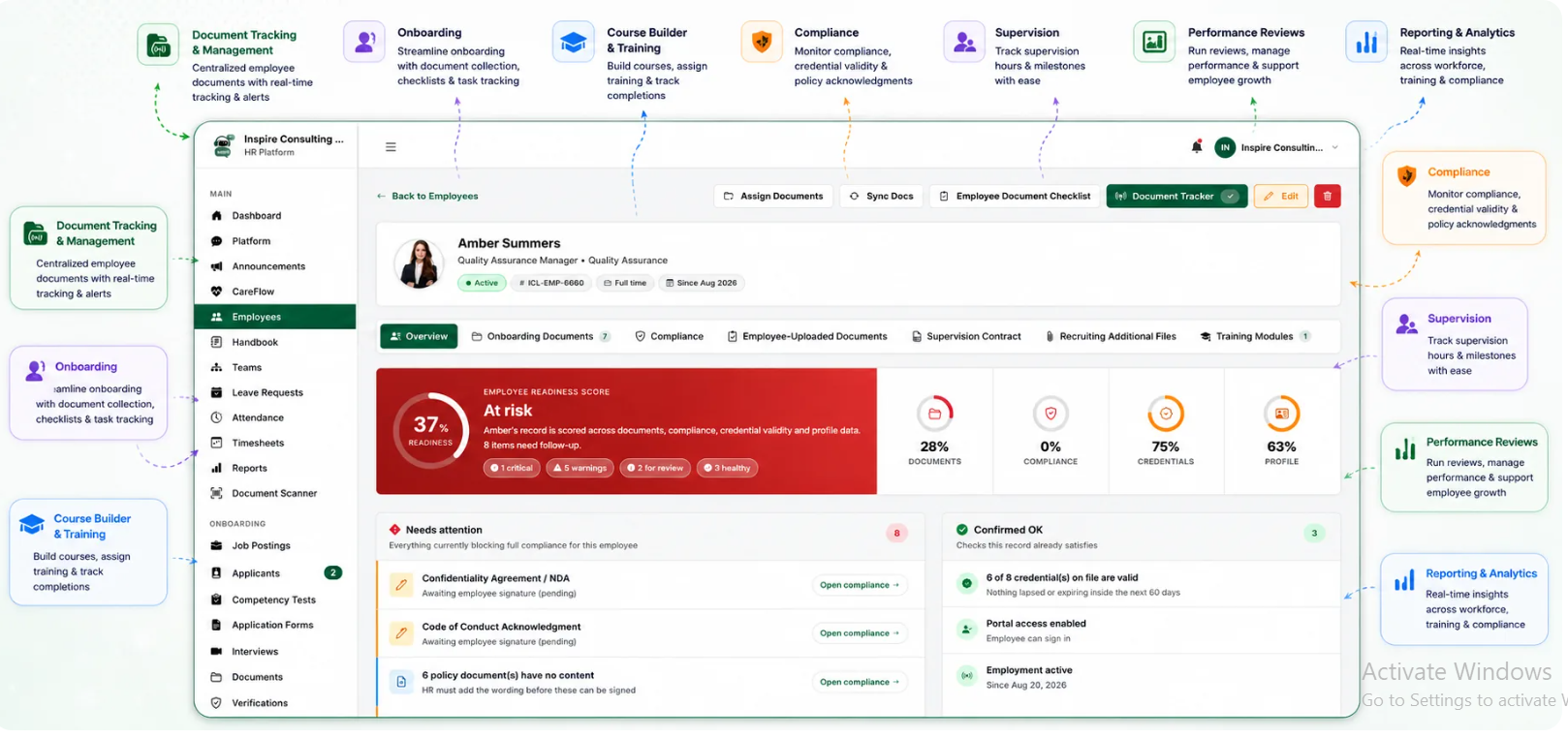
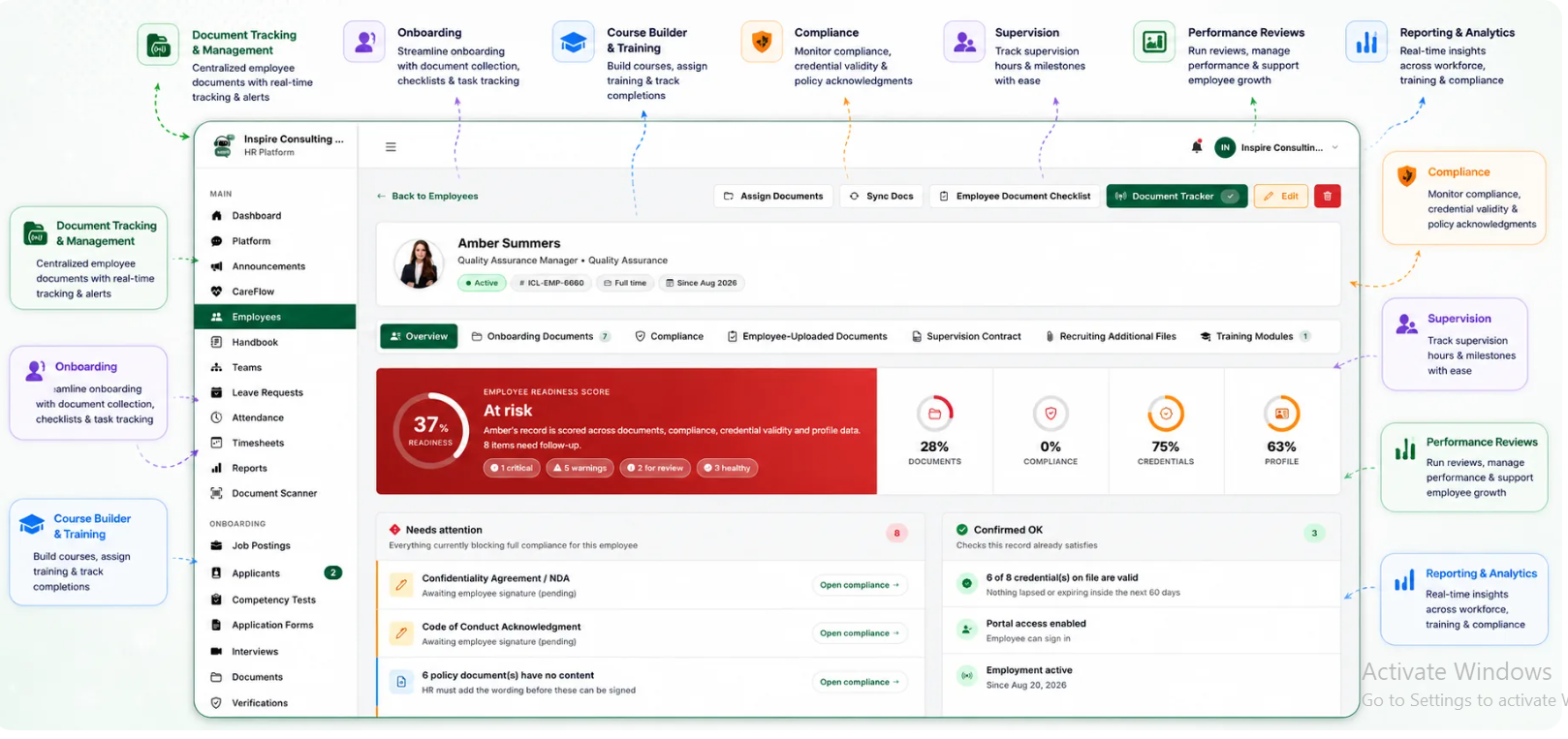
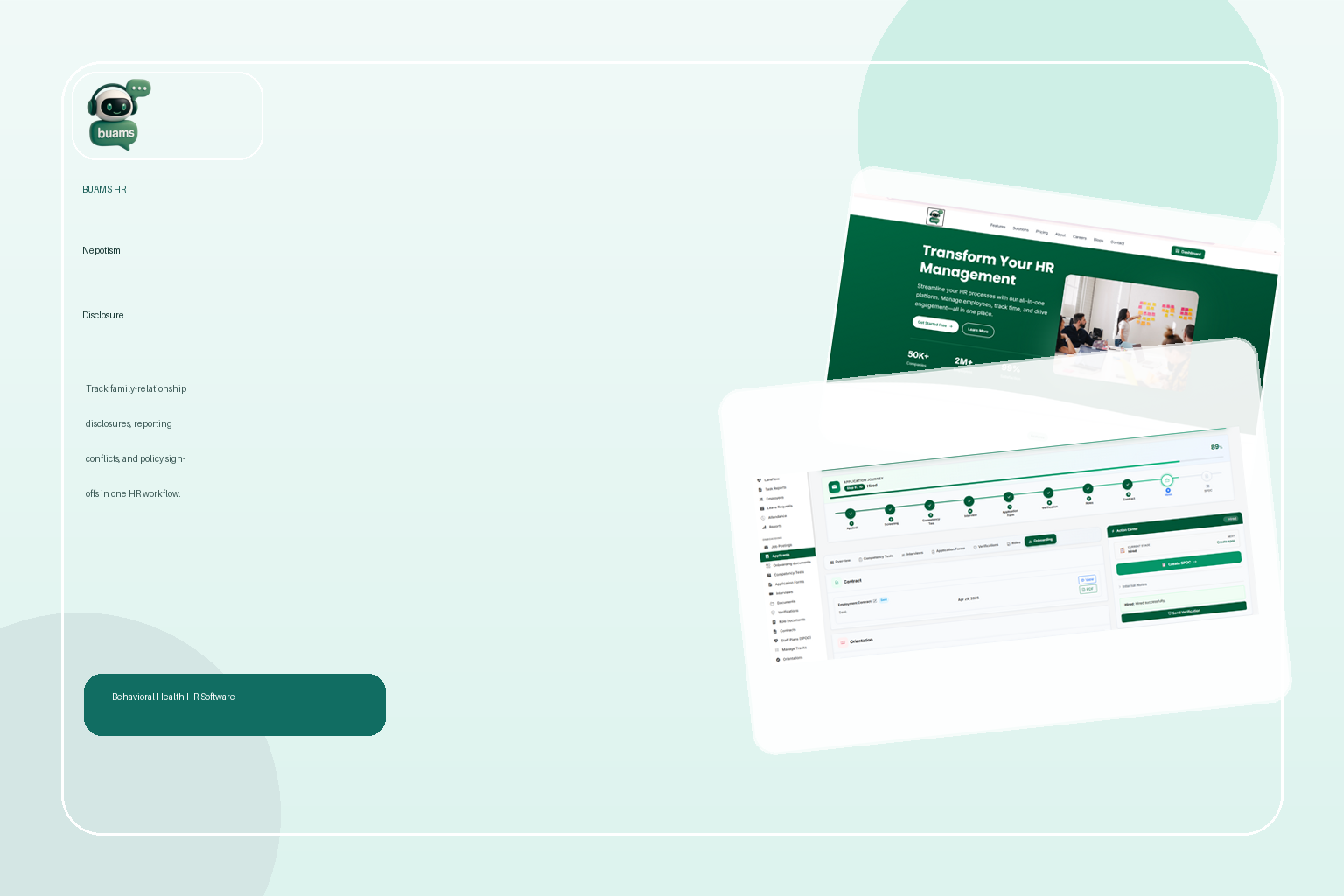
BUAMS HR helps behavioral health providers keep sensitive workforce documentation organized in one system so disclosures, policy acknowledgments, and follow-up records are easier to manage. When a nepotism concern or related-party review comes up, HR can connect the disclosure to the employee file, supervisor structure, and other workforce records instead of reconstructing the story from email threads.
That centralization makes it easier to document approval decisions, store signed acknowledgments, and maintain visibility into when a transfer or promotion may require a new review. For organizations managing multiple sites or fast-moving staffing changes, BUAMS HR supports a cleaner process that reduces hidden conflicts without adding unnecessary administrative friction.
It also helps leadership protect trust. Employees are more likely to view decisions as fair when the organization can show that relationship disclosures are handled through the same documented process every time.
Final Thoughts
Nepotism disclosure software gives behavioral health providers a practical way to manage a sensitive issue with more consistency and less guesswork. The real value is not in policing relationships for their own sake. It is in protecting fair supervision, cleaner approval chains, stronger employee trust, and better documentation when questions arise.
For providers that want to support growth without letting related-party risk hide inside informal communication, a structured disclosure workflow is a smart addition to the HR operating model. BUAMS HR provides the kind of centralized recordkeeping and workflow visibility that makes that process easier to manage.