Behavioral health providers often depend on occupational health clearance before a new employee can begin work, transfer into a higher-risk role, or return after a medical restriction. That process may involve immunization records, TB documentation, fit testing, physical exam results, role-based safety requirements, and proof that the employee is cleared for the type of work they will perform. When those steps are tracked in disconnected inboxes, shared drives, and paper packets, start dates can slip while HR scrambles to confirm what is complete.
Occupational health clearance software gives providers a more reliable way to coordinate medical readiness with hiring, onboarding, and compliance workflows. Instead of treating each clearance item like a one-off task, HR teams can organize requirements by role, track what is still missing, document approvals, and keep proof connected to the employee record. That structure helps agencies move faster without losing the documentation discipline that audits and high-risk environments demand.
Key Takeaways
What is occupational health clearance software?
Occupational health clearance software is a system used to manage the documentation, reviews, and approvals required before an employee is considered medically ready for work. In behavioral health settings, that can include pre-employment screenings, immunization requirements, respirator or mask fit testing, TB testing, job-specific health forms, restrictions review, and return-to-work clearance after leave or injury.
The purpose is not just storing a form. The purpose is making it easy to see which requirements apply, which items are complete, which approvals are still pending, and whether the employee can safely begin work in the intended role. A strong workflow keeps the medical readiness process visible enough for HR and operations while preserving organized documentation for future review.
Why this matters in behavioral health HR
Behavioral health organizations often hire across outpatient clinics, residential programs, community-based services, crisis teams, and administrative functions. Those roles do not always share the same exposure risks or clearance requirements. A therapist working primarily through telehealth may not need the same occupational health steps as an employee assigned to residential care, medication support, or field-based visits. Without a clear system, HR can accidentally apply the wrong checklist or miss an item that matters for a specific assignment.
The consequences are practical and immediate. A new hire may be fully credentialed and ready from a manager perspective, but still unable to start because one medical document is missing. A transfer between programs may be approved operationally while the occupational health review is still incomplete. A returning employee may have paperwork on file, but no clear confirmation that restrictions were reviewed against the actual role. Those gaps create confusion, delay staffing plans, and increase compliance risk.
Occupational health clearance software helps bring that process under control. It creates a repeatable path for collecting required documents, monitoring pending items, and showing when medical readiness is confirmed for a given job or work setting.
Where manual occupational health workflows break down
Many agencies start with good intentions and still end up with bottlenecks because the process is spread across too many systems and too many people.
These issues slow down hiring and create avoidable friction between HR, compliance teams, supervisors, and outside occupational health partners. They also make it harder to answer a basic question quickly: is this employee medically cleared for this assignment right now?
What to look for in occupational health clearance software
Role-based requirement tracking
Different jobs should trigger different clearance expectations. The system should let HR define requirements by role, program, site, or risk category so employees are not routed through irrelevant steps and important items are not missed.
Status visibility for every pending item
Leaders need more than a final yes or no. They need to see what is complete, what is pending, what is overdue, and who currently owns the next action. That visibility is what keeps start dates from stalling in silence.
Document organization tied to the employee file
Medical readiness records should stay connected to the employee record in a controlled, searchable way. When documents are buried in separate folders, agencies lose context and spend more time proving compliance than managing it.
Clear review and approval history
For sensitive steps such as fit-for-duty review, restriction acknowledgment, or return-to-work clearance, organizations need a reliable history of when documents were received, who reviewed them, and when the employee was approved for work.
Reminder and escalation support
Occupational health delays often happen because follow-up is informal. Automated reminders and overdue tracking help prevent required health steps from becoming a surprise the day before orientation or assignment.
How BUAMS HR helps behavioral health providers stay organized
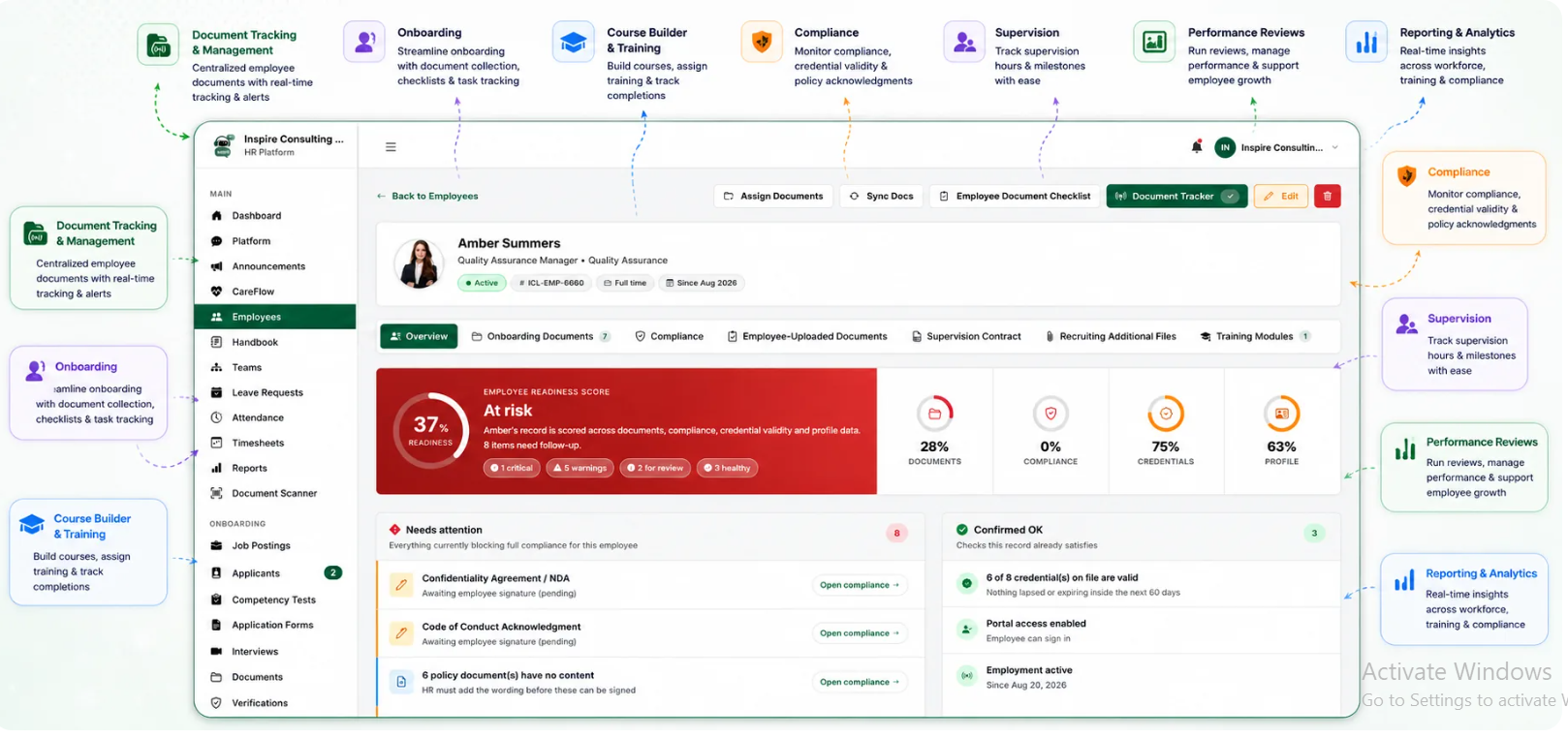
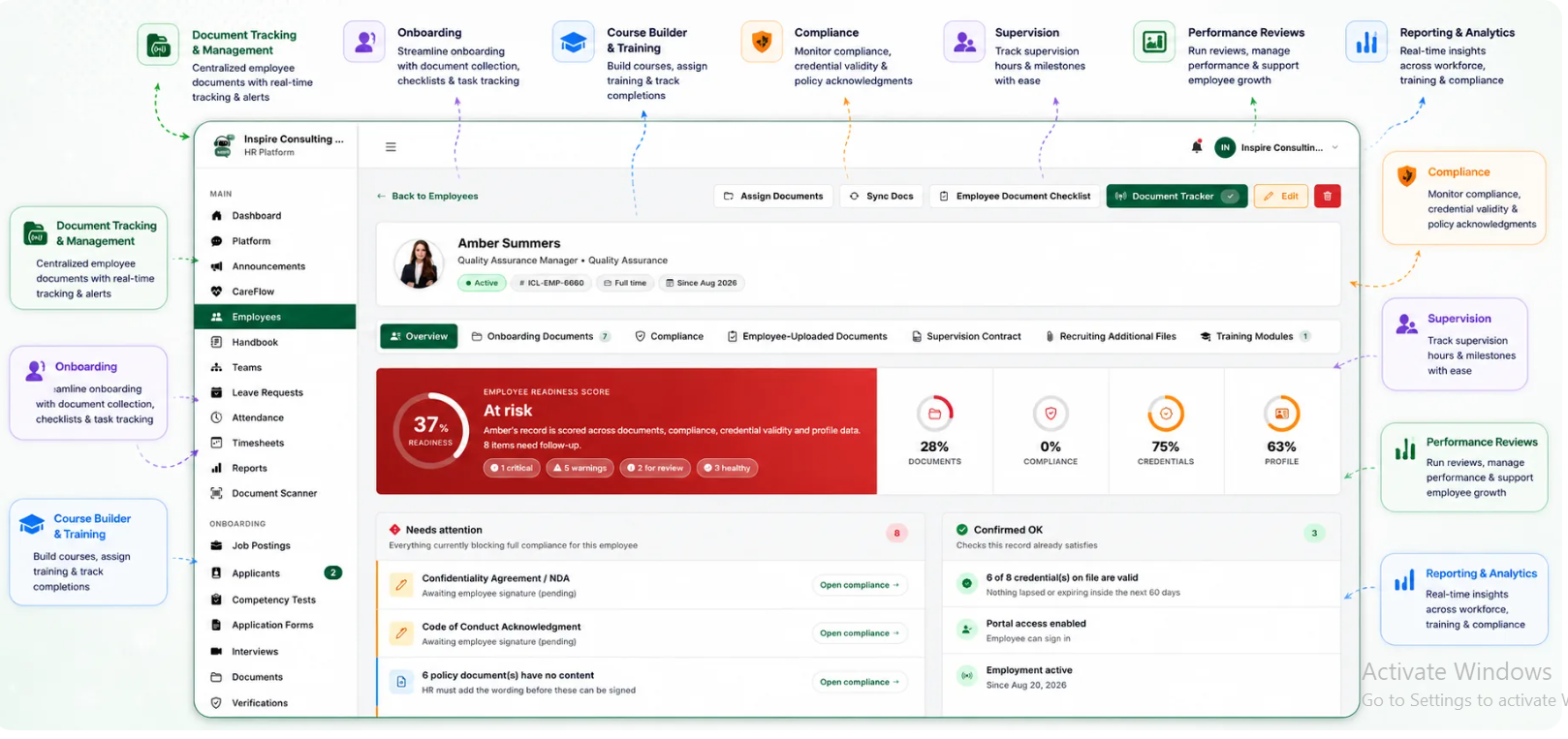
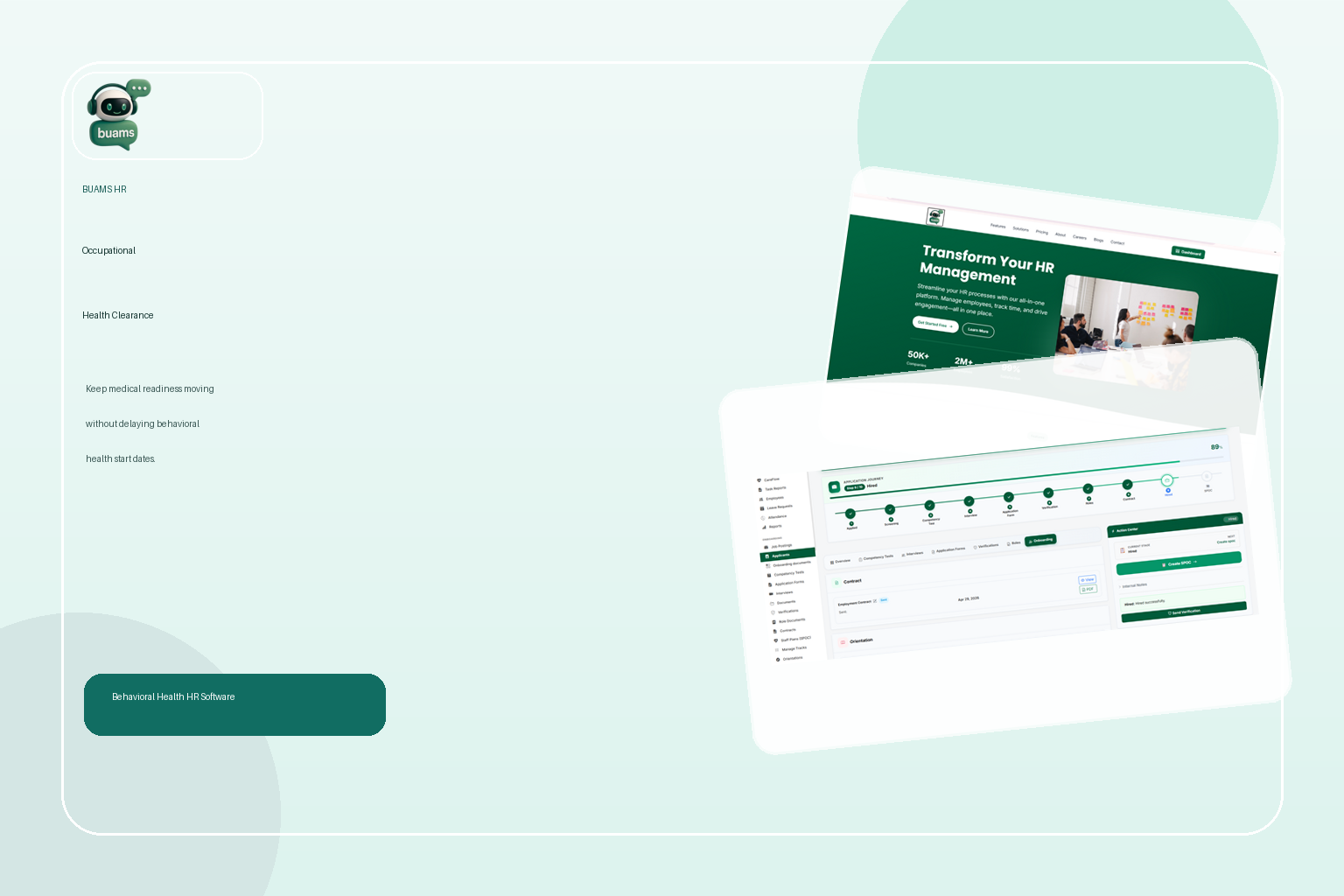
BUAMS HR helps behavioral health organizations centralize workforce records, onboarding documentation, and compliance tracking in one environment. That makes it easier to keep occupational health clearance tasks connected to the broader employee lifecycle instead of treating them as a disconnected side process.
When HR can see medical readiness items alongside role details, onboarding progress, and employee file documentation, teams can identify blockers earlier and respond faster. Supervisors gain clearer visibility into whether a start date is truly ready to proceed, and compliance teams can retrieve supporting evidence without rebuilding the history from scratch.
For agencies managing multiple locations or service lines, BUAMS HR also supports a more standardized approach. Instead of each program handling occupational health paperwork differently, organizations can define a cleaner workflow that improves consistency, accountability, and audit readiness.
Best practices for a stronger occupational health clearance process
These practices help agencies shift from reactive chasing to a controlled process that supports both workforce speed and employee safety.
Final thoughts
Occupational health clearance software gives behavioral health providers a practical way to manage medical readiness without losing track of documentation, ownership, or timing. It helps teams coordinate hiring and assignment decisions with the health-related requirements that protect employees, clients, and the organization.
As providers grow across programs and sites, manual clearance workflows become harder to monitor and harder to defend. A structured process inside BUAMS HR makes it easier to keep occupational health steps complete, visible, and connected to the employee record so start dates can move forward with more confidence and less last-minute scrambling.