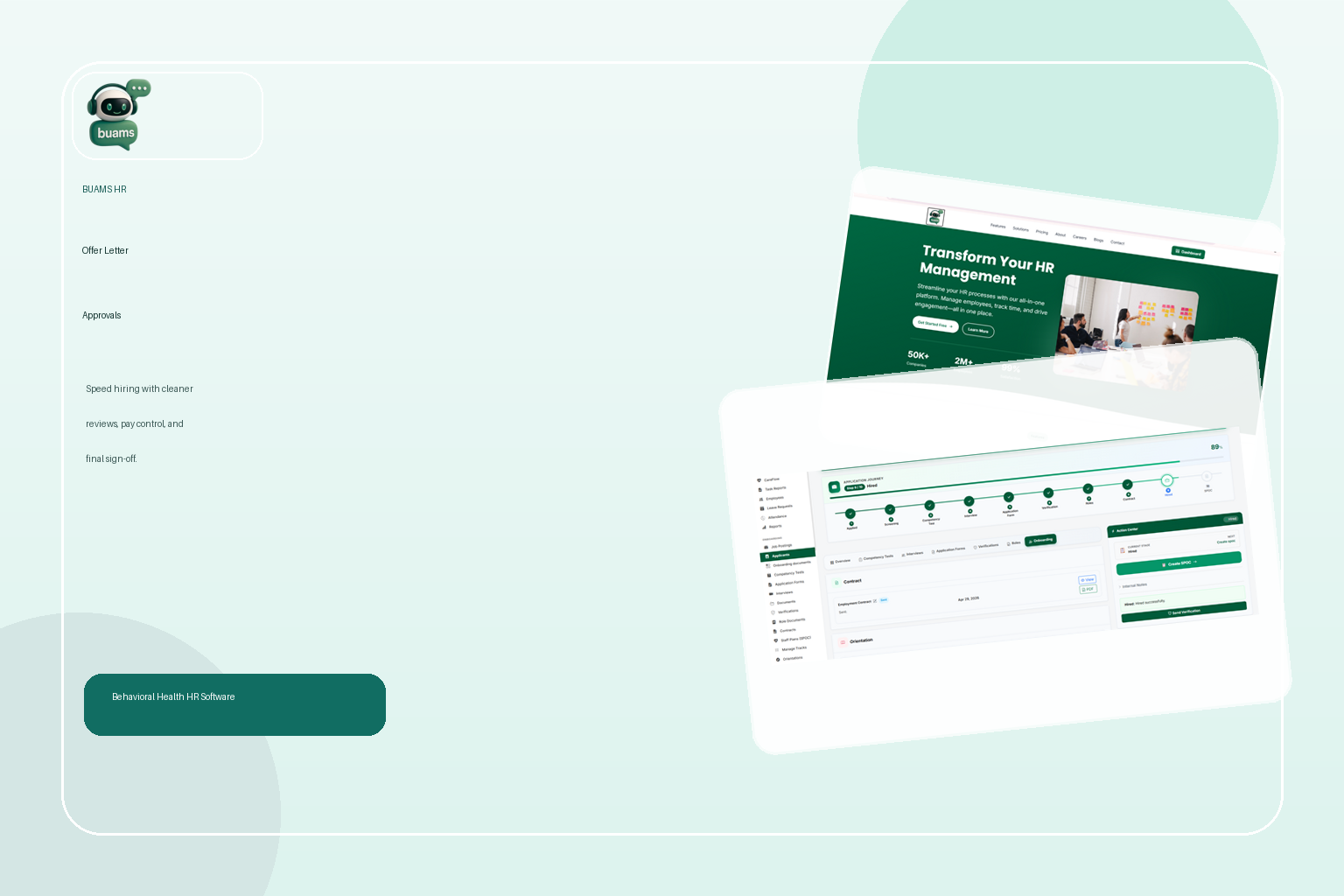
Behavioral health organizations often work hard to reduce time to hire, but the offer stage still creates avoidable delays. Recruiters may be ready to move, hiring managers may want to secure a candidate quickly, and HR may still be waiting on compensation approval, location confirmation, funding validation, or final wording changes. Offer letter approval software gives providers a cleaner way to move from candidate selection to signed offer without relying on email chains and version confusion.
For behavioral health providers, this stage matters more than it may seem. A slow or inconsistent offer process can cost the organization strong clinicians, case managers, and support staff who have other options. It can also create compensation inconsistencies, missing approval records, and poor handoffs into onboarding. A structured workflow helps HR teams move faster while preserving control over compensation decisions and documentation.
Key Takeaways
What is offer letter approval software?
Offer letter approval software is a workflow-based system used to manage the final review and authorization steps before an employment offer is sent to a candidate. Instead of building offers manually and circulating them through inboxes, HR teams can use a defined process to confirm pay terms, position details, reporting structure, work location, start-date assumptions, and any required internal sign-offs.
In behavioral health settings, these approvals often involve more complexity than a simple yes-or-no decision. A provider may need to confirm program funding, licensure expectations, shift requirements, bilingual differentials, supervision arrangements, or multi-site placement details before issuing the letter. When those details are handled informally, the organization risks sending inaccurate terms or delaying the offer while people search for the latest version.
Why the offer stage breaks down in behavioral health hiring
Many providers focus heavily on sourcing and screening, then underestimate how much friction shows up at the offer stage. Hiring teams may agree on a candidate, but the final package still depends on compensation approval, budget alignment, and coordination across HR, finance, and operations. Without a structured process, offer letters can sit in inboxes, get revised multiple times, or move forward without a clear record of who approved the terms.
Behavioral health organizations also face workforce pressure that makes these delays more costly. Hard-to-fill clinical roles, direct care openings, and community-based positions often require quick action. If the approval process drags, candidates may accept another role before the offer is finalized. Even when the candidate waits, a chaotic offer process can damage confidence before the employee ever starts.
There is also a compliance and governance angle. Compensation decisions should be consistent, explainable, and tied to approved position details. If the organization cannot show how final terms were reviewed, it becomes harder to answer leadership questions, defend decisions, or maintain a reliable record for future audits and internal reviews.
Common problems in manual offer letter workflows
Behavioral health HR teams usually recognize the symptoms of a weak offer process right away. Information lives in too many places, the latest template is unclear, and nobody wants to be the person who sends the wrong version to the candidate. These problems slow hiring and increase the chance of avoidable errors.
These issues may look administrative on the surface, but they have strategic impact. Every extra handoff extends the hiring timeline and raises the chance that a strong candidate will move on.
What to look for in offer letter approval software
Configurable approval paths
Different roles may require different reviewers. A clinical leadership role may need extra compensation review, while a direct support role may only need HR and program approval. The best systems let organizations route offers based on job type, location, compensation band, or other internal rules.
Controlled templates and standardized fields
Offer generation should start from approved templates, not copied documents from prior hires. Standardized fields reduce manual editing, improve consistency, and help the organization avoid outdated language in final letters.
Clear ownership and status visibility
Everyone involved should be able to see whether the offer is in draft, pending approval, returned for changes, approved, or sent. Visibility matters because silence is one of the biggest reasons offer workflows stall. When status is transparent, HR can intervene earlier and keep hiring momentum moving.
Approval history and audit trail
A strong system should capture who approved the offer, when they approved it, and what changed along the way. That record helps leadership understand compensation decisions, supports consistency, and reduces reliance on memory when questions come up later.
Connection to onboarding and employee records
The offer stage should not sit apart from the rest of the employee lifecycle. Once a candidate accepts, the organization should be able to transition cleanly into onboarding tasks, document collection, and employee record creation without reentering the same information in multiple tools.
Best practices for faster, safer offer approvals
Software works best when providers also define a practical operating model. Behavioral health organizations can strengthen this stage by agreeing on who owns each decision, which templates are valid, and how exceptions are handled before a requisition reaches the offer stage.
These practices help the organization move quickly without treating speed as the only goal. The real objective is controlled hiring velocity: faster decisions with fewer mistakes and better documentation.
How BUAMS HR helps behavioral health providers
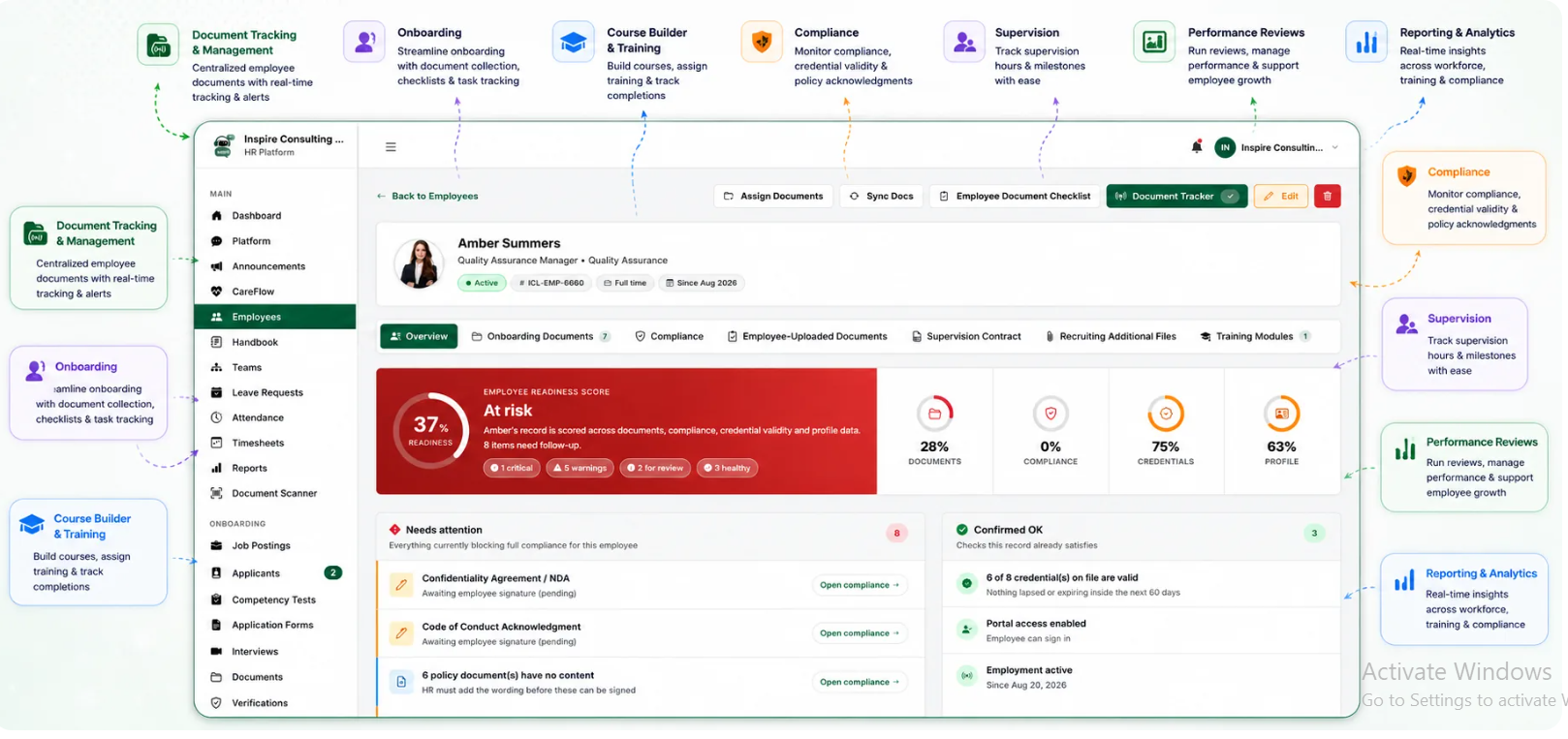
BUAMS HR supports the kind of connected process that offer letter approval software is meant to improve. Behavioral health providers can reduce friction between hiring, documentation, and downstream HR workflows by keeping critical information in one organized system. That means fewer disconnected handoffs between recruiting decisions, employee record creation, and compliance-sensitive follow-up work.
Because BUAMS HR is built around behavioral health workforce operations, it fits environments where approvals, documentation, and staffing decisions often involve multiple stakeholders. HR teams can create more repeatable processes, keep records easier to verify, and support cleaner transitions from offer acceptance into onboarding readiness.
For growing providers, that operational consistency matters. A stronger offer process does not just help a single requisition close faster. It improves compensation governance, reduces manual rework, and gives leadership better confidence that hiring decisions are being documented the same way across programs and locations.
Final thoughts
Offer letter approval software helps behavioral health providers solve one of the most overlooked points of hiring friction. When compensation review, template control, and final sign-off happen in a structured workflow, organizations can move faster without sacrificing consistency or documentation quality.
In a competitive hiring market, the offer stage can determine whether a strong candidate joins the team or disappears. Providers that standardize this process are better positioned to reduce delays, protect compensation oversight, and create a smoother bridge into onboarding. That is where a platform like BUAMS HR can deliver real value for behavioral health HR teams.