Behavioral health providers work hard to recruit, onboard, and retain staff, but many organizations still learn too little when employees leave. Exit interviews often happen inconsistently, notes are stored in email threads or private documents, and patterns across programs never make it back into workforce planning. That creates a missed opportunity. Exit interview software gives HR teams a more structured way to collect departure feedback, preserve documentation, and connect turnover insights to the operational realities behind retention, supervision, scheduling, and compliance.
For behavioral health organizations, employee exits can affect far more than replacement hiring. A resignation may disrupt supervision coverage, increase overtime, expose documentation gaps, or reveal preventable friction in onboarding, training, or manager support. When exit interview data is scattered, leaders may know turnover is happening without understanding why it keeps repeating in specific roles or sites. A stronger process helps organizations move from anecdotal reactions to usable workforce insight.
Key Takeaways
What Is Exit Interview Software?
Exit interview software is a tool that standardizes how organizations collect, store, review, and act on employee departure feedback. Instead of treating the exit interview as an informal meeting with isolated notes, the software creates a repeatable process with defined questions, tracked completion, centralized records, and role-based reporting.
In behavioral health settings, that process matters because employee departures often touch multiple responsibilities at once. HR may need to document final feedback, operations may need to understand whether turnover is tied to scheduling or coverage strain, and leadership may want to see whether certain programs are losing staff for similar reasons. Good software gives each stakeholder a cleaner way to gather information without turning sensitive feedback into unstructured noise.
Why It Matters for Behavioral Health Providers
Behavioral health providers operate in environments where workforce stability directly affects client continuity, supervision quality, and compliance readiness. Turnover is not only an HR concern. It can alter caseload distribution, strain credentialed coverage, delay onboarding for replacements, and increase the burden on remaining staff. If organizations do not understand why employees leave, they often respond with generic retention efforts that miss the real issue.
Exit interview software helps providers examine turnover with more precision. It can surface whether departures cluster around specific supervisors, shift patterns, role expectations, site assignments, documentation workload, safety concerns, or growth limitations. That level of visibility matters in behavioral health because small operational problems often become large retention problems once teams are stretched.
The software also supports a more defensible process. Instead of relying on verbal summaries or private manager notes, HR teams can document that an exit interview was offered, completed, declined, or escalated for review. That record can be helpful when organizations want to track recurring workplace concerns, identify culture issues early, or show leadership that follow-up decisions were based on real patterns rather than assumptions.
Where Manual Exit Interview Processes Break Down
Many organizations think they have an exit interview process because someone sends a form or schedules a final conversation. In practice, the process often breaks down in predictable ways.
These gaps create two separate problems. First, the organization misses useful feedback that could improve retention and workforce planning. Second, it becomes harder to show that employee concerns were captured, reviewed, and handled consistently. For behavioral health providers balancing people risk and compliance risk, that is a weak position.
What to Look For in Exit Interview Software
The right system should do more than collect a final survey. It should help behavioral health providers turn departures into actionable workforce insight while preserving appropriate documentation controls.
Standardized but flexible questionnaires
Organizations need consistent core questions so they can compare responses over time, but they also need the ability to tailor prompts by role, program, or departure type. A clinician exit may surface different risks than an administrative or residential staff exit.
Completion tracking and ownership
HR teams should be able to see whether an interview was scheduled, completed, declined, or still pending. Clear ownership matters because the process often crosses HR, supervisors, and site leadership during a short transition window.
Structured themes and reporting
Good software should make it easy to tag or categorize reasons for departure, such as compensation, supervision, burnout, scheduling, growth opportunity, documentation burden, or culture concerns. That structure helps leaders move beyond anecdotes and compare trends across locations and roles.
Controlled access to sensitive feedback
Exit interview notes may include concerns about management behavior, team conflict, or compliance culture. Software should support appropriate access controls so the organization can protect confidentiality while still enabling legitimate review and follow-up.
Links to employee records and downstream workflows
The strongest process connects exit interviews to offboarding steps, file retention, supervision review, and leadership follow-up. When departure feedback lives in a disconnected system, the organization loses context and delays action.
How BUAMS HR Helps
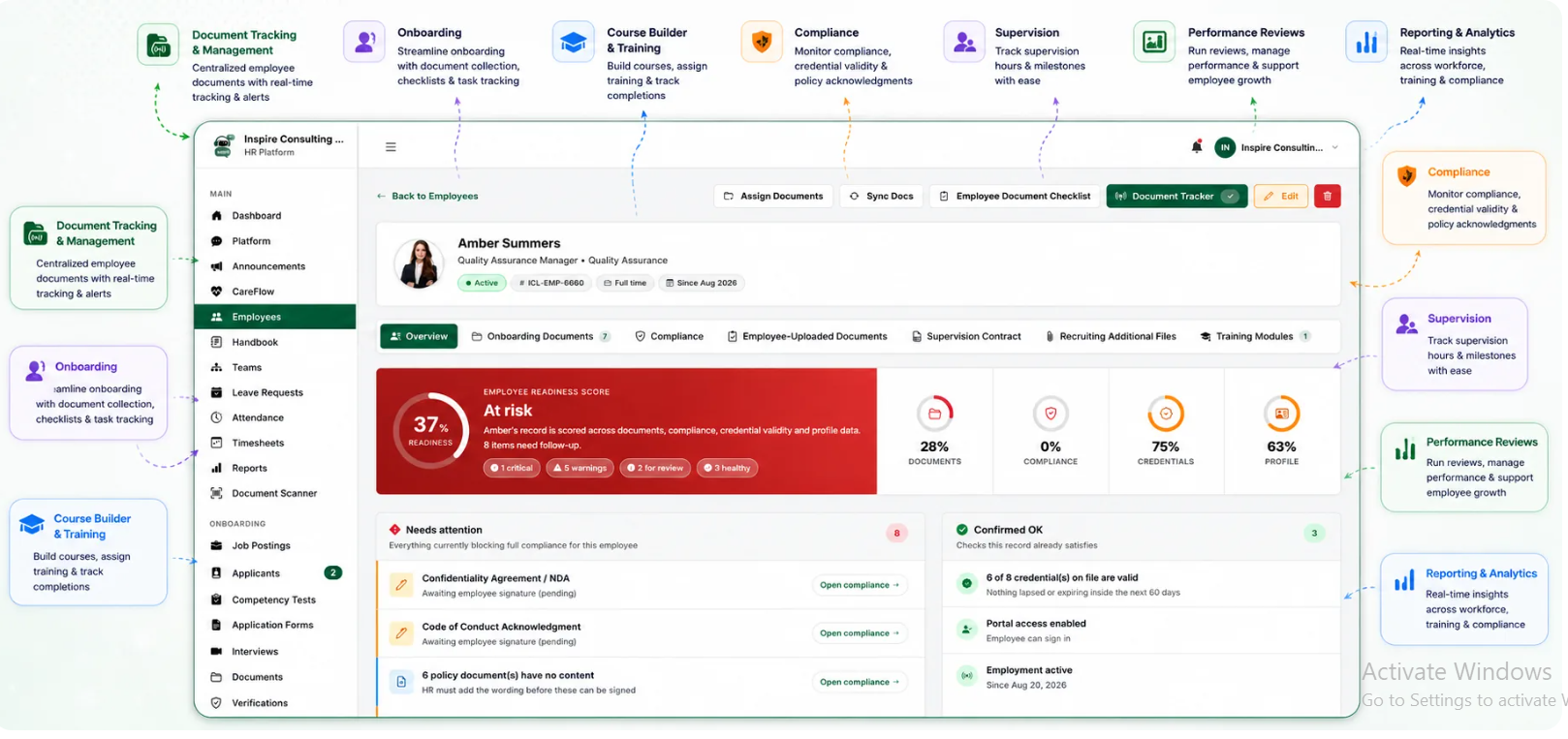
BUAMS HR helps behavioral health providers organize workforce processes in one place, which makes it easier to connect employee lifecycle events instead of handling them as isolated tasks. When departures happen, HR teams need more than a final checklist. They need a clean way to preserve records, track follow-up, and understand what the exit says about broader workforce operations.
With BUAMS HR, organizations can keep employee records, workflow ownership, and compliance documentation aligned while building a more structured approach to exits and offboarding. That supports better visibility into what happened, who responded, and what patterns may require leadership attention across programs or sites.
Because BUAMS HR is designed for behavioral health workforce management, it can also support the larger retention picture. Teams can connect departure feedback to onboarding quality, supervision structure, file readiness, and workforce coordination instead of treating each issue as a separate problem. That creates a more practical path from exit information to operational improvement.
Final Thoughts
Exit interview software gives behavioral health providers a better way to learn from employee departures without relying on fragmented notes or delayed recollection. A structured process helps organizations capture useful feedback, protect sensitive information, and identify patterns that deserve action before turnover becomes more expensive and disruptive.
For providers trying to improve retention, strengthen supervision, and reduce repeated workforce friction, better exit documentation is not just an administrative upgrade. It is a practical source of insight. When the organization can see why people leave, it has a better chance of fixing what pushes strong staff away.