Behavioral health providers often do a strong job collecting background checks before hire, then lose visibility once the employee is active. Over time, organizations may need periodic rechecks based on internal policy, contract terms, payer expectations, transportation duties, or role-based risk. When those deadlines are tracked in disconnected spreadsheets or calendar reminders, teams end up chasing managers, delaying follow-up, and exposing the organization to preventable compliance gaps. Background recheck tracking software gives HR teams a more reliable way to monitor ongoing screening deadlines, document completion, and keep workforce records current without manual scrambling.
Key Takeaways
What Is Background Recheck Tracking Software?
Background recheck tracking software is a workflow and recordkeeping system that helps organizations manage recurring employee screening requirements after the initial hire. Instead of treating a background check as a one-time task, the software tracks when a follow-up review is needed, what standard applies to the role, who is responsible for action, and whether supporting documentation has been completed and stored.
In behavioral health settings, rechecks may be tied to direct care responsibilities, community-based services, driving duties, access to vulnerable populations, or organizational risk policies. Some providers also need a clear process for documenting when a recheck is not required, when a due date changes, or when an exception needs review. Good software turns those decisions into a visible process rather than a quiet gap in the file.
Why It Matters for Behavioral Health Providers
Behavioral health organizations rarely operate with one simple staffing model. They may employ therapists, peer support staff, residential workers, case managers, supervisors, mobile teams, drivers, and administrative personnel across multiple programs. The frequency and urgency of follow-up screening can vary across those roles, especially when staff move between sites or take on new responsibilities.
That complexity becomes risky when HR depends on a single spreadsheet owner or a long list of reminders. Recheck deadlines can be missed during turnover, coverage changes, or busy hiring periods. Managers may assume HR is handling it while HR assumes a local program leader will follow up. If a review happens late, the organization may be left explaining why a sensitive role remained active without updated screening documentation.
Background recheck tracking software helps behavioral health providers create a repeatable, auditable process. It supports safer workforce oversight by showing what is due, what is completed, what is overdue, and where escalation is needed before a gap becomes a bigger problem.
Where Manual Recheck Processes Break Down
Manual tracking usually looks manageable until the workforce grows or responsibilities shift. Then teams start seeing the same avoidable issues.
These breakdowns create extra work even before they create compliance exposure. HR spends time reconciling dates, hunting for documents, and answering avoidable questions from supervisors or leadership. That energy is better spent on proactive workforce support.
What to Look For in Background Recheck Tracking Software
The right system should help behavioral health providers move from passive reminders to active workflow management.
Role-based due date logic
Teams should be able to define recheck timing by role, location, program, or duty set. A one-size-fits-all schedule can create unnecessary work for low-risk roles while still missing higher-risk positions that need closer attention.
Visibility into upcoming and overdue items
HR and program leaders need dashboards or filtered views that show which staff are approaching a deadline, which rechecks are in progress, and where follow-up has stalled. The goal is to act early instead of discovering problems after the fact.
Connected employee records
Recheck status should live alongside onboarding documents, credentials, acknowledgments, and other workforce compliance records. That makes it easier to review the full employee file during audits, internal investigations, or accreditation preparation.
Task ownership and escalation
Good software should make it clear who needs to initiate the recheck, who reviews results, and who gets notified if a deadline is at risk. Shared visibility matters because screening follow-up often crosses HR, operations, and compliance teams.
Documented exceptions and status history
Organizations sometimes need to pause, defer, or review a requirement based on leave status, role changes, or policy interpretation. Software should preserve that history so the record explains what happened and why.
How BUAMS HR Helps
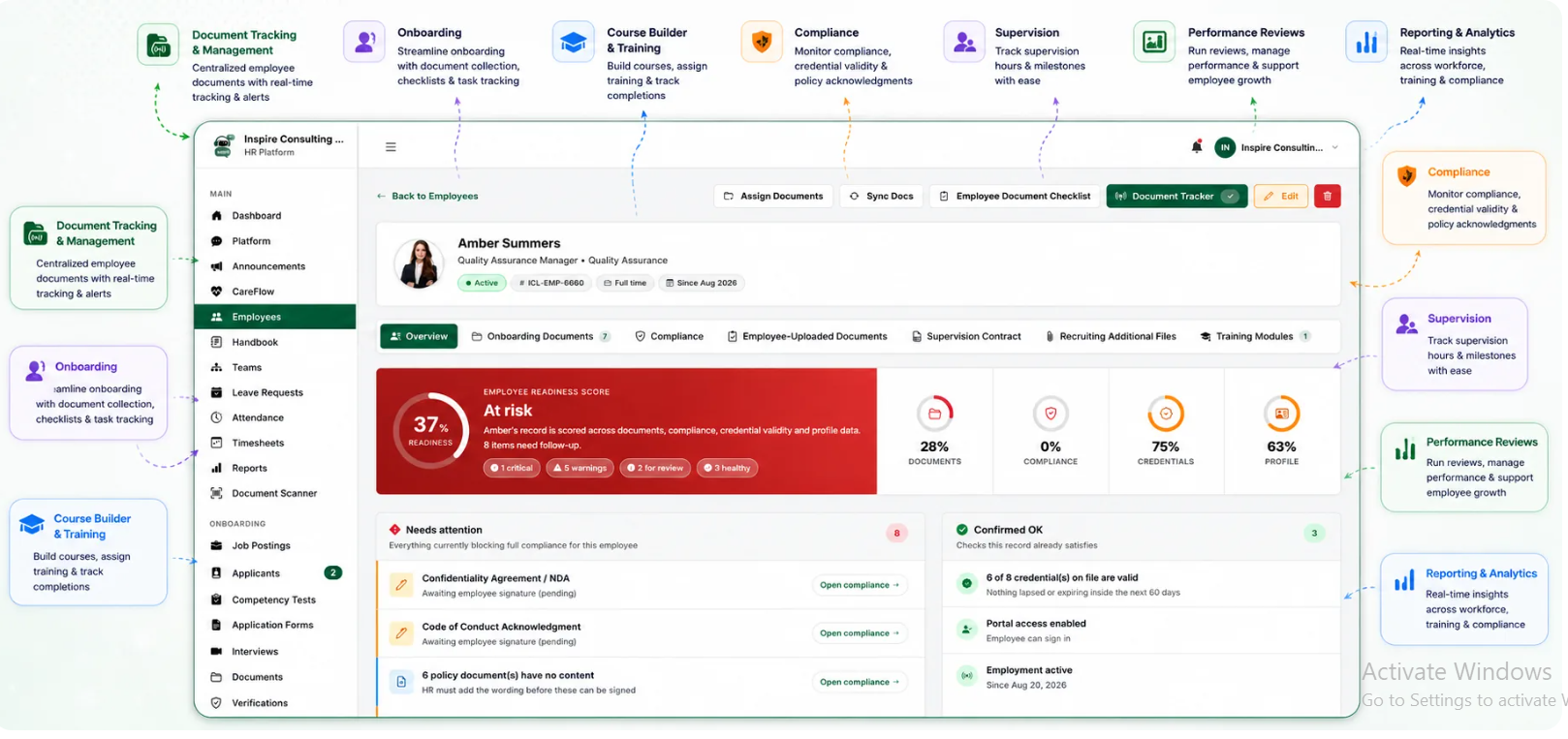
BUAMS HR helps behavioral health providers organize recurring workforce compliance tasks in one place, including employee file records, role-based requirements, and follow-up actions that should not depend on scattered reminders. Instead of managing rechecks as a disconnected administrative task, teams can keep due dates, documentation, and accountability tied to the broader employee record.
With BUAMS HR, HR leaders can maintain a clearer view of who needs action, what documentation is complete, and where program managers or supervisors need to follow through. That makes it easier to support multi-site behavioral health operations where screening requirements, role assignments, and staffing timelines can shift quickly.
Because BUAMS HR is built for behavioral health workforce management, it also supports a more defensible process. Teams can keep records organized, reduce last-minute chasing, and respond with more confidence when leadership, auditors, or accreditors ask how ongoing workforce requirements are being monitored.
Final Thoughts
Background recheck tracking software gives behavioral health providers a practical way to stay ahead of recurring screening obligations without turning HR into a reminder factory. When deadlines, ownership, and proof of completion are visible, organizations can reduce avoidable risk and keep their workforce records in better shape every day.
For providers trying to grow responsibly, maintain trust, and strengthen compliance discipline, recurring screening oversight deserves the same structure as onboarding and credential tracking. A clear system helps teams act sooner, document better, and avoid preventable surprises.