Behavioral health hiring does not usually fail because one big task was forgotten. More often, start dates slip because several small steps stall at the same time. A background check is still pending, a supervisor has not signed off on orientation, a license document is missing, or a site-specific training requirement is buried in email. By the time HR realizes where the delay is, the organization is already rescheduling coverage and apologizing to program leaders.
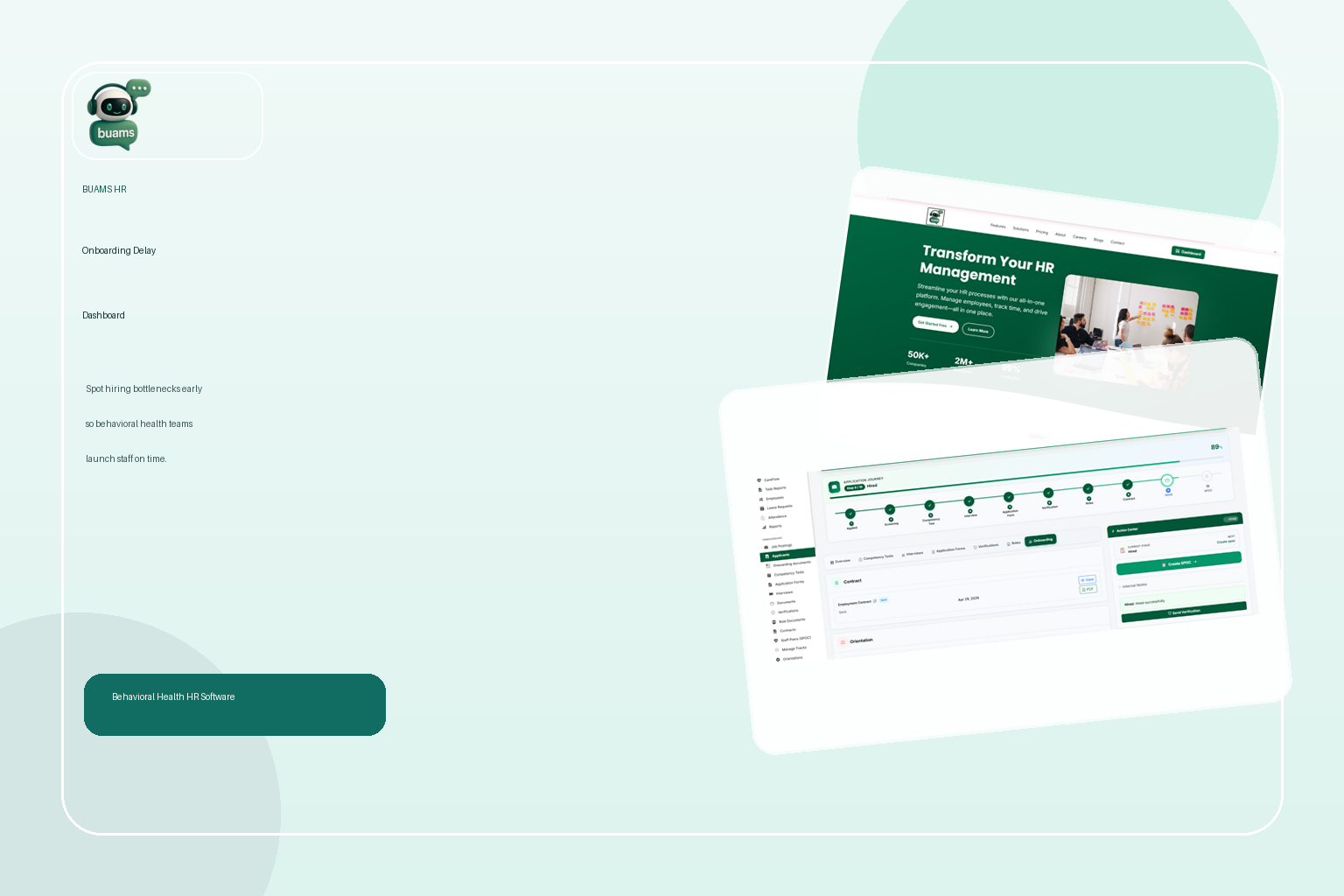
That is why onboarding bottleneck dashboard software matters. Instead of asking HR teams to piece together status updates from spreadsheets, inboxes, and separate systems, it gives them one view of where new-hire work is slowing down. For behavioral health providers, that visibility can make the difference between a confident launch and a preventable start-date delay.
Key Takeaways
What Is Onboarding Bottleneck Dashboard Software?
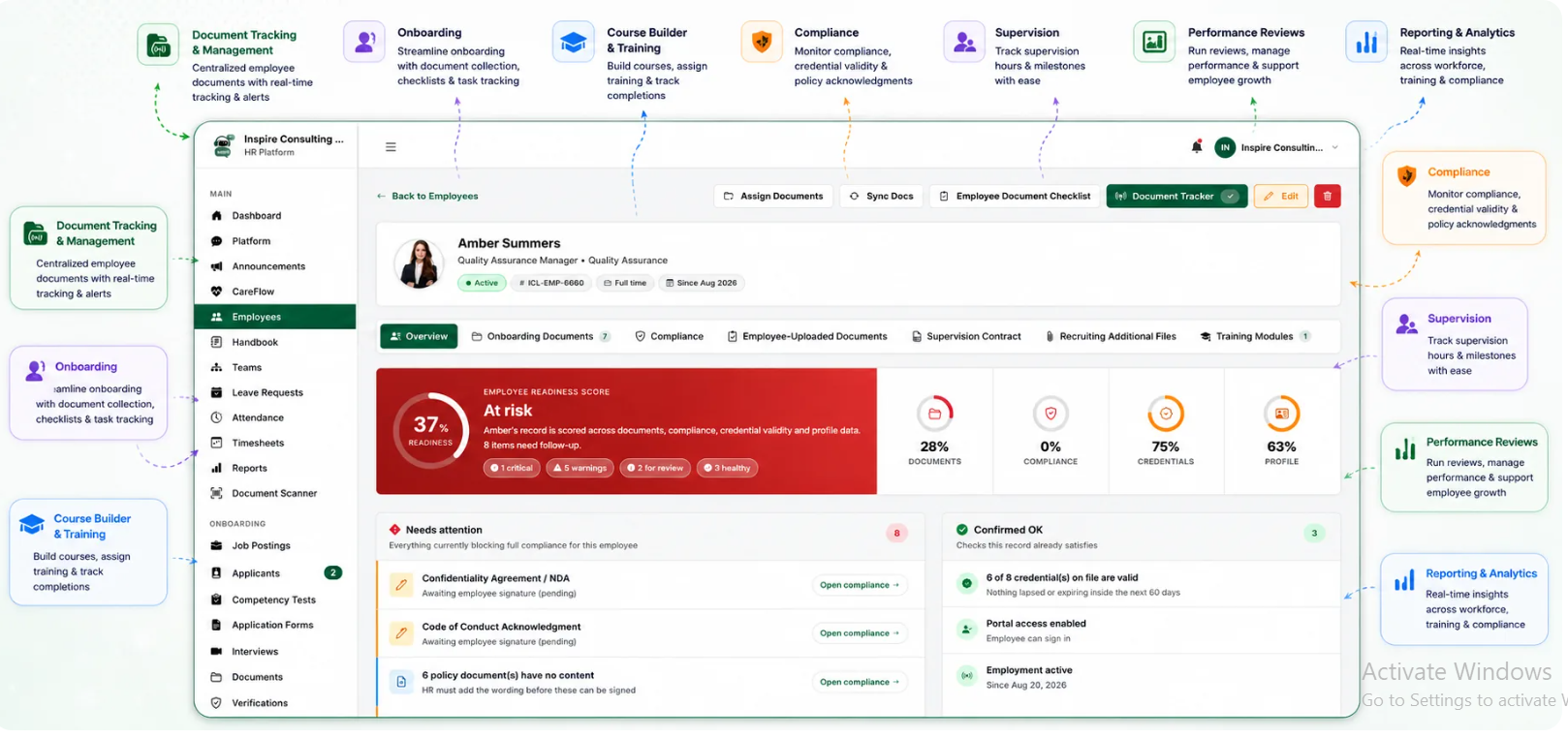
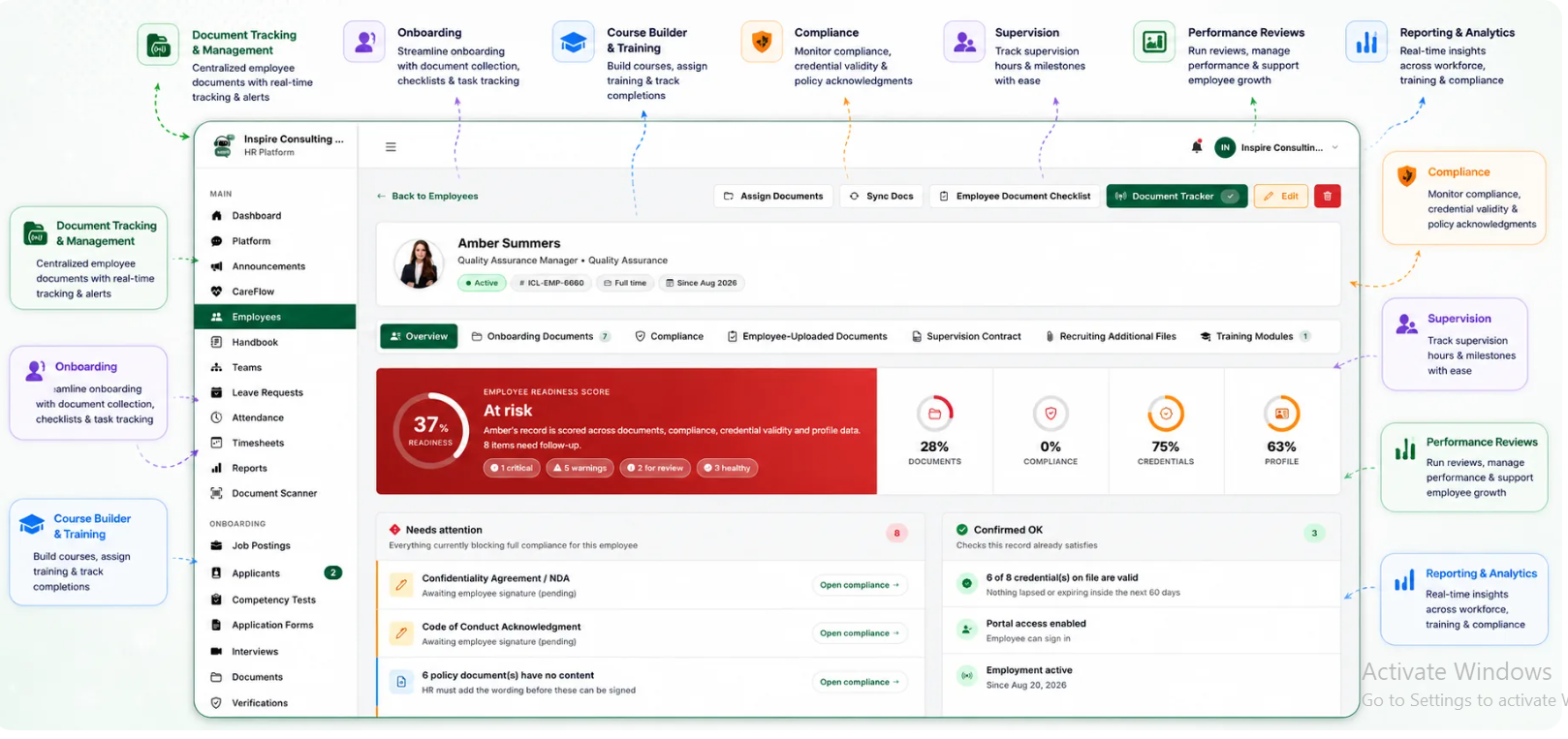
Onboarding bottleneck dashboard software gives HR leaders a live operational view of where new-hire work is getting stuck. Instead of only tracking whether an employee is generally "in onboarding," the software breaks the process into visible stages and highlights blockers before they turn into missed start dates.
For behavioral health providers, those stages often include offer acceptance, document collection, background checks, occupational health requirements, supervisor assignment, orientation scheduling, training completion, and role-based compliance review. A useful dashboard does not just list tasks. It helps HR see which tasks are overdue, which dependencies are incomplete, and which programs are repeatedly generating last-minute exceptions.
Why Behavioral Health Onboarding Gets Delayed
Behavioral health organizations operate in an environment where workforce readiness is tied directly to compliance and service delivery. A new employee may need general HR paperwork, job-specific documentation, site orientation, supervisor alignment, credential review, and proof of required training before they are truly ready to begin. When those steps live in different places, delay risk becomes hard to see.
Many teams also manage multiple hiring types at once. Full-time clinicians, support staff, per diem workers, interns, and contractors may all move through similar workflows with different requirements. Without a structured dashboard, HR may know that work is still open, but not whether the real bottleneck is waiting on the hiring manager, a missing employee document, or an unreviewed compliance task.
The result is familiar: rushed follow-up, repeated status meetings, and start dates that feel uncertain until the last minute. Over time, that hurts candidate experience, frustrates site leaders, and creates more room for file gaps that surface later during audits or accreditation reviews.
What to Include in a Strong Onboarding Bottleneck Dashboard
The best dashboards do more than display a checklist. They help HR prioritize intervention.
Stage-by-stage status visibility
Each hire should be easy to place in a clear onboarding stage, such as paperwork pending, screening in progress, orientation scheduled, training incomplete, or ready for start. That lets HR separate routine progress from true delay risk.
Aging and overdue task views
Tasks should not only show whether they are open. They should show how long they have been open and whether they have crossed a risk threshold. Aging visibility helps teams act before a pending step becomes a same-day emergency.
Ownership and handoff tracking
Behavioral health onboarding often crosses HR, compliance, supervisors, and operations. A dashboard should make ownership obvious so teams know whether the next action belongs to HR, the manager, the employee, or another reviewer.
Site and role trend reporting
If one clinic, program, or job type repeatedly causes delays, leadership should be able to spot that pattern quickly. Trend views help organizations improve the workflow itself instead of solving the same problem one employee at a time.
Compliance-sensitive blockers
Some delays are inconvenient. Others create real risk. A strong dashboard should distinguish high-impact blockers such as missing credential proof, incomplete required training, or unresolved health documentation so those issues rise to the top.
Best Practices for Reducing Onboarding Bottlenecks
First, standardize what “ready to start” actually means by role and program. If managers and HR use different definitions, the dashboard will show noise instead of useful signals. Behavioral health providers should define the required checkpoints for each employee type and make sure those checkpoints are visible in the same workflow.
Second, use exception handling carefully. There will always be urgent hires and operational pressure, but bypassing standard steps without documentation turns small delays into larger compliance problems later. If an exception is approved, teams should capture who approved it, what remains open, and when follow-up is due.
Third, review delay patterns regularly. If the same steps age out every week, the issue is probably structural. Maybe supervisors are getting requests too late, maybe one document packet is confusing, or maybe one training dependency is not being scheduled early enough. The dashboard should support process improvement, not just status reporting.
How BUAMS HR Helps Behavioral Health Teams Catch Delays Earlier
BUAMS HR helps behavioral health providers connect onboarding progress, employee files, compliance tasks, and workforce readiness in one system. That gives HR teams a clearer picture of where each hire stands and what is still preventing the employee from being fully ready.
With a more centralized workflow, organizations can monitor missing documents, stalled approvals, overdue steps, and role-based requirements without chasing updates across disconnected tools. Leaders can also see patterns that matter at scale, such as one site with recurring orientation delays or one role with repeated documentation gaps.
That visibility matters because onboarding is not just an HR checklist. In behavioral health, it affects coverage, supervisor planning, compliance readiness, and confidence that staff are entering the right role with the right documentation in place. BUAMS HR supports a more disciplined process without adding more manual tracking.
Final Thoughts
When onboarding delays stay invisible until the week of a start date, HR teams are forced into reactive mode. That creates stress for everyone involved and makes it harder to protect both the employee experience and compliance quality.
Onboarding bottleneck dashboard software gives behavioral health providers a practical way to see delay risk early, focus attention where it matters, and move hires forward with fewer surprises. For organizations trying to grow while staying audit ready, that kind of visibility is not just helpful. It is operationally necessary.