Peer support roles are expanding across behavioral health programs, but the HR work behind those roles is not always keeping pace. Agencies may hire certified peer recovery specialists, peer counselors, family peer support staff, or other peer-based positions across multiple sites and funding streams. Each role can carry training requirements, renewal expectations, documentation standards, and supervisor follow-up that are easy to lose track of when records are spread across inboxes, spreadsheets, and paper files.
Peer support certification tracking software gives behavioral health providers a more reliable way to organize those requirements in one place. Instead of waiting for a renewal issue, missing certificate, or expired training record to surface during scheduling or audit preparation, HR teams can monitor deadlines earlier, keep proof connected to the employee file, and coordinate next steps with supervisors before role readiness is affected.
Key Takeaways
What Is Peer Support Certification Tracking Software?
Peer support certification tracking software is a system used to monitor the status of employee certifications tied to peer-based roles. It can help HR teams record issue dates, expiration dates, renewal milestones, continuing education requirements, supporting documents, and follow-up activity without managing each case manually. In behavioral health organizations, that structure matters because peer support staff often work directly with vulnerable populations and may be assigned across outpatient, community-based, mobile, residential, or recovery-oriented programs.
Instead of treating certification as a one-time hiring document, the software supports an ongoing readiness workflow. HR can see who is current, who has an upcoming renewal, what proof is still missing, and whether supervisors have already been notified about a gap that could affect assignments. That is especially helpful when agencies are growing quickly or supporting multiple peer role types with slightly different documentation needs.
Why It Matters for Behavioral Health Providers
Peer support roles are valuable, but they also create a specific coordination challenge for HR. Agencies need to balance recruitment speed, onboarding readiness, role-specific documentation, and continuing compliance without overwhelming supervisors or asking employees to resend the same paperwork repeatedly. When peer certification records are incomplete or outdated, the impact can show up in staffing, program coverage, contract readiness, or external review preparation.
This is not only a compliance issue. It is also an operational issue. A team may believe a peer staff member is ready for a new assignment, billing environment, or site expansion, only to discover that a renewal document or required training proof is missing. In multi-site behavioral health settings, that delay can force schedule changes, create avoidable follow-up, and weaken confidence in workforce data. A structured tracking process helps agencies prevent those disruptions earlier.
Common Problems With Manual Tracking
These gaps create friction because the information may exist somewhere, but not in a form that is easy to review, verify, or act on in time. As the number of peer staff grows, manual tracking becomes harder to trust.
What to Look for in Peer Support Certification Tracking Software
Deadline visibility
The system should make renewal dates and pending follow-up easy to see well before they become urgent. HR teams need a simple way to spot upcoming expirations, overdue items, and completed renewals across the organization.
Employee-level document history
Certification proof, continuing education records, notes, and status updates should stay tied to the employee file. That reduces searching and helps teams understand readiness in context instead of piecing it together from separate storage locations.
Reminder and ownership workflows
Good tracking software should show who owns the next step. Whether the employee needs to submit proof, the supervisor needs to confirm a requirement, or HR needs to review a renewal, ownership should be visible and easy to follow through.
Program and site readiness reporting
Behavioral health organizations often need more than one-to-one tracking. Leaders may want to know which programs have several peer staff nearing renewal, where documentation gaps are concentrated, or whether expansion plans are being affected by certification risk.
Role-based access control
Certification tracking should be organized without exposing sensitive HR information too broadly. The right system helps agencies share status and follow-up details with the right people while protecting employee records appropriately.
Best Practices for Managing Peer Certification Workflows
Start by defining a standard record for every peer support role. Even if requirements vary by title or jurisdiction, HR should document core information the same way every time: certification type, issue date, renewal date, required attachments, responsible reviewer, and current status. Consistency matters more as agencies add programs, new supervisors, or larger recruiting volume.
It also helps to set follow-up checkpoints well before renewal deadlines. Waiting until the last few weeks creates unnecessary pressure and increases the chance that one missing document turns into a staffing problem. Early reminders give employees time to respond and give HR time to escalate unresolved items appropriately.
Agencies should also connect certification tracking to onboarding and internal movement workflows. A peer staff member changing roles, sites, or responsibilities may trigger new documentation or review needs. When those transitions are managed in separate systems, readiness gaps are easier to miss. Connected workflows reduce duplication and improve confidence in assignments.
Finally, review trends over time. If the same programs or locations repeatedly struggle with missing renewal proof or late follow-up, the issue may be process design rather than individual behavior. Reporting is useful not just for audits, but for improving how the organization supports peer staff readiness.
How BUAMS HR Helps
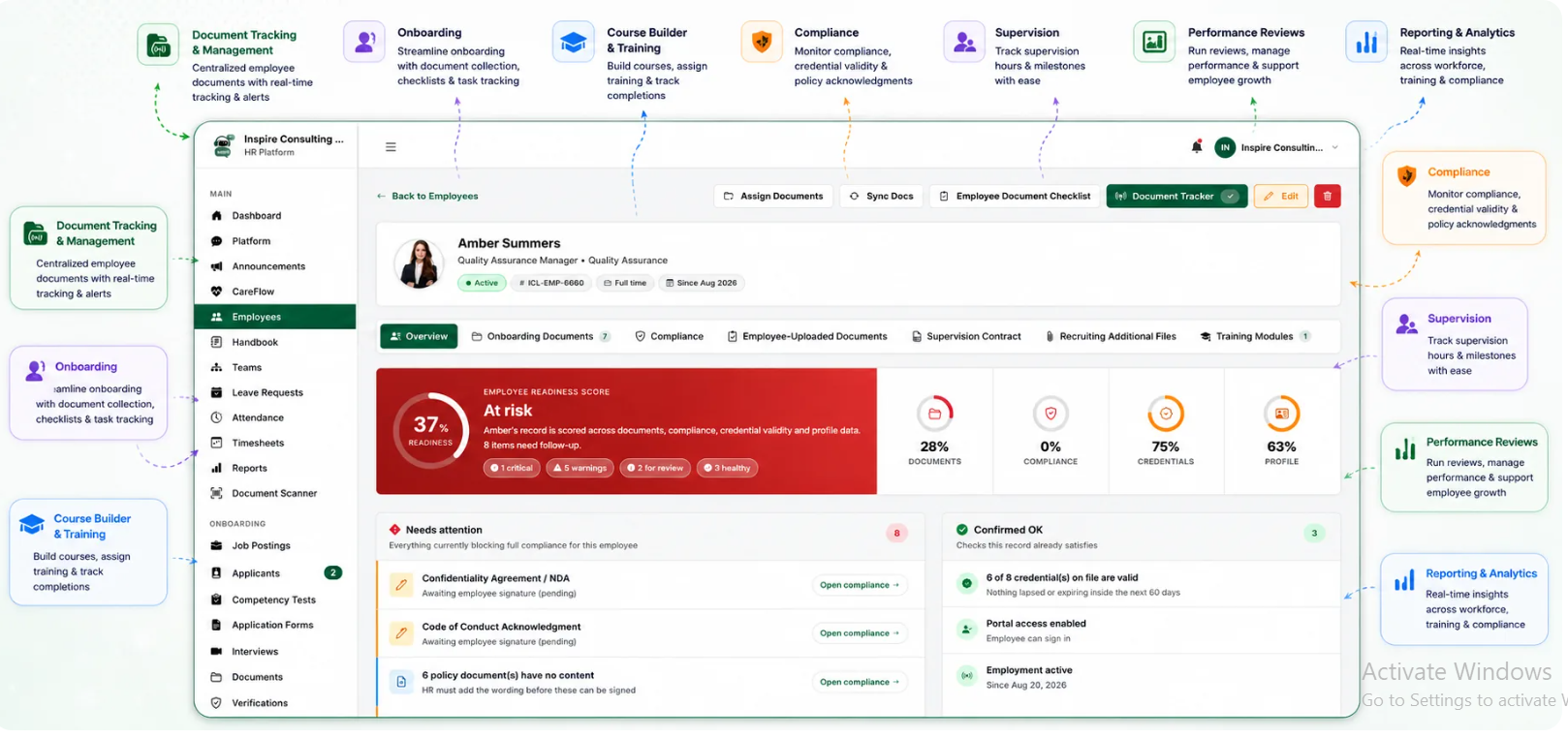
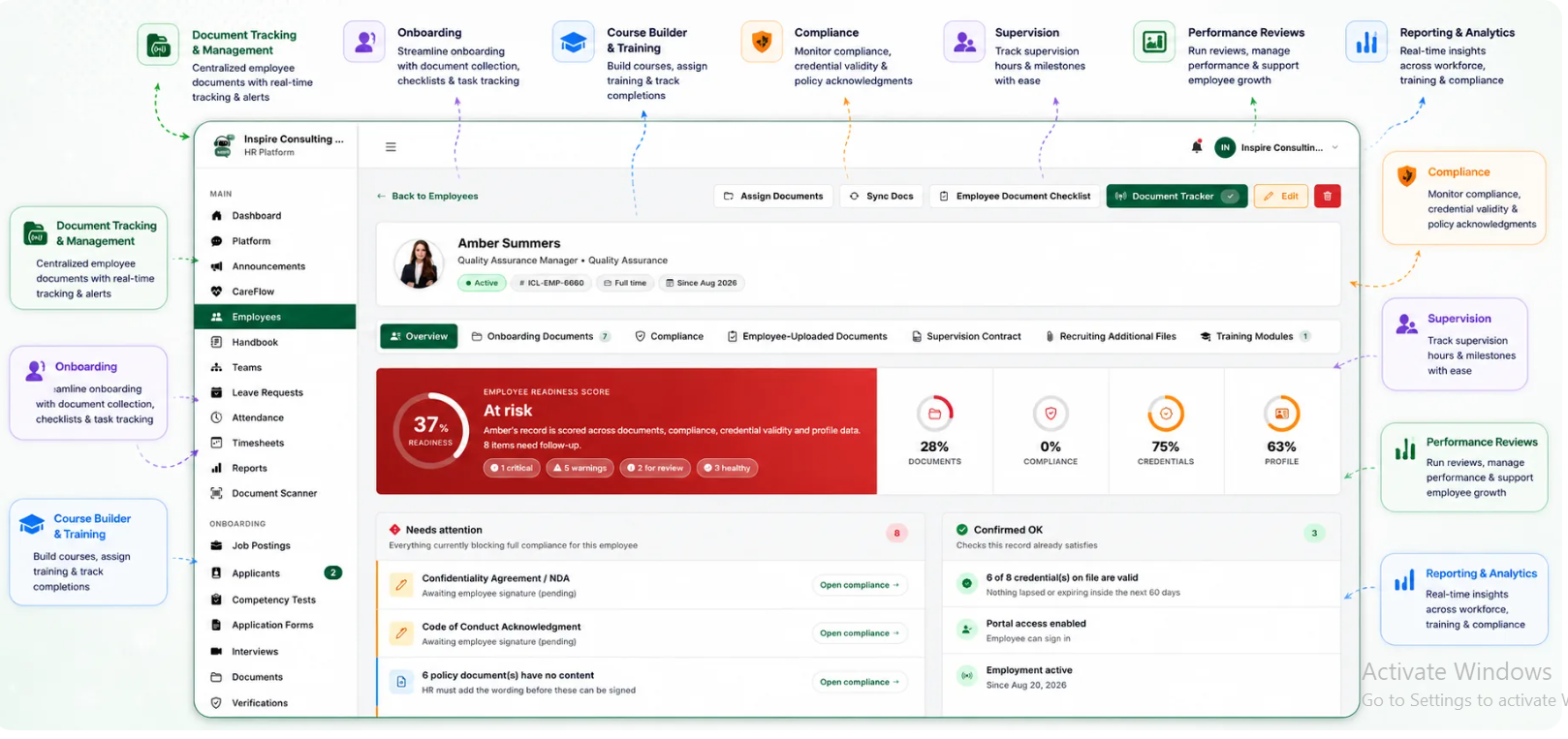
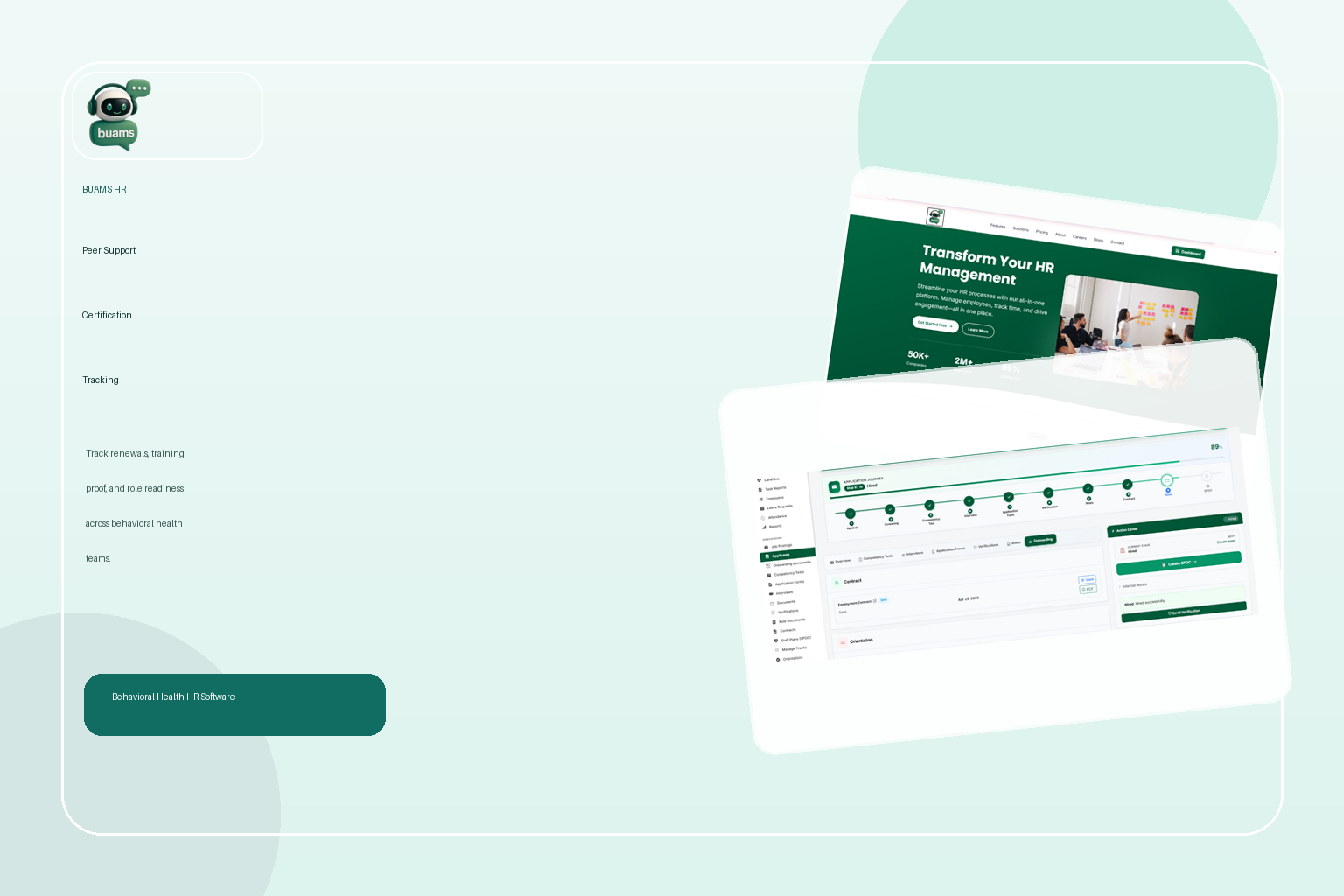
BUAMS HR helps behavioral health providers keep employee documents, readiness records, and compliance-related follow-up organized in one place. For agencies managing peer support staff across multiple programs, that centralized structure makes it easier to connect certification proof, renewal tracking, onboarding records, and employee file history without relying on disconnected spreadsheets or inbox threads.
Because BUAMS HR is built for mental and behavioral health operations, it supports the practical realities of workforce oversight in environments where role readiness, documentation quality, and site coverage all matter at the same time. HR teams can maintain cleaner records, supervisors can get clearer visibility into pending follow-up, and leadership can review workforce risk before it turns into a scheduling problem.
That kind of structure is especially useful for growing providers that want peer support programs to scale without losing control of documentation and readiness workflows.
Final Thoughts
Peer support certification tracking software gives behavioral health providers a better way to manage an important workforce process that often becomes messy as programs grow. When renewal dates, supporting documents, and ownership steps are visible in one workflow, agencies can reduce manual chasing and keep stronger proof of readiness.
For organizations that want more reliable oversight of peer staff documentation without adding unnecessary administrative burden, BUAMS HR offers a practical foundation for tracking certification-related work with greater consistency and confidence.