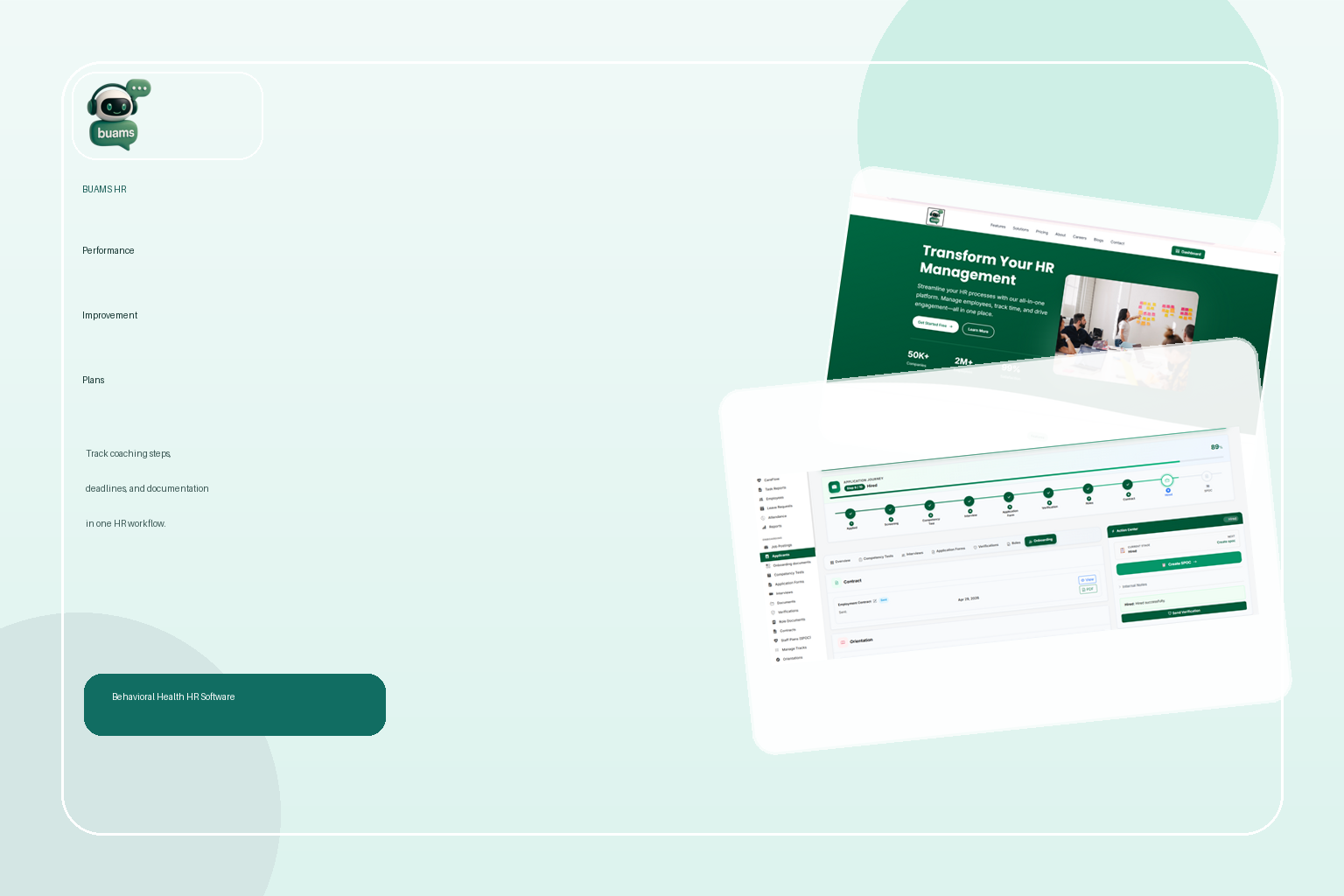
When a behavioral health employee needs structured coaching, HR teams often end up juggling meeting notes, deadlines, policy references, and supervisor follow-up across email threads and shared drives. That approach creates risk fast. A missed milestone can delay improvement, inconsistent documentation can weaken HR decisions, and scattered records make it harder to show that employees were treated fairly. Performance improvement plan software gives behavioral health providers a more reliable way to manage corrective coaching without adding more manual work.
Key Takeaways
What Is Performance Improvement Plan Software?
Performance improvement plan software is a workflow-driven system for creating, tracking, and documenting formal employee improvement plans. In behavioral health settings, that can include attendance concerns, missed documentation deadlines, repeated policy violations, incomplete supervision follow-through, or role-specific performance gaps that need a clear correction path.
Instead of managing each plan with separate Word documents and calendar reminders, the software keeps expectations, target dates, check-in notes, and final outcomes in one place. HR and supervisors can see what was assigned, what evidence was reviewed, and whether the employee met each requirement before the plan closed.
Why It Matters for Behavioral Health Providers
Behavioral health organizations operate in environments where workforce consistency, documentation quality, and supervisory accountability directly affect service delivery. If an employee improvement plan is poorly managed, the issue can spread beyond HR into scheduling, compliance readiness, and client care continuity.
Behavioral health providers also have added complexity because many roles involve licensing conditions, training requirements, documentation standards, and site-specific procedures. A vague or loosely tracked improvement plan can leave supervisors handling similar situations in completely different ways. That creates fairness concerns for employees and extra exposure for HR.
With a stronger system, providers can make expectations clearer, keep review points on schedule, and preserve a defensible record of what support was offered and what progress was documented.
What to Look for in a Practical System
Standardized plan templates
Teams should be able to start from consistent templates for common situations such as attendance, documentation timeliness, policy adherence, or communication expectations. Standardized structure helps supervisors focus on facts and measurable outcomes instead of reinventing the process every time.
Defined milestones and due dates
A useful workflow should make it easy to assign checkpoints, final review dates, and required follow-up meetings. This matters in behavioral health because delays in one plan can affect staffing decisions, caseload assignments, and ongoing compliance monitoring.
Documentation tied to the employee record
Improvement plans should not live in a disconnected folder. HR needs the plan, check-in notes, acknowledgments, and outcome summary connected to the employee file so future reviews, promotions, transfers, or disciplinary decisions are based on a complete record.
Controlled visibility for HR and supervisors
Performance matters are sensitive. The right system should support role-based access so supervisors can manage active plans while HR maintains oversight and protects confidentiality.
Clear status tracking
Teams should be able to tell at a glance whether a plan is active, overdue, completed, extended, or escalated. That visibility helps prevent quiet drift where everyone assumes someone else is following up.
Common Problems With Manual Improvement Plan Tracking
These issues are not just administrative annoyances. They can undermine coaching effectiveness and make later employment decisions harder to support.
How BUAMS HR Helps
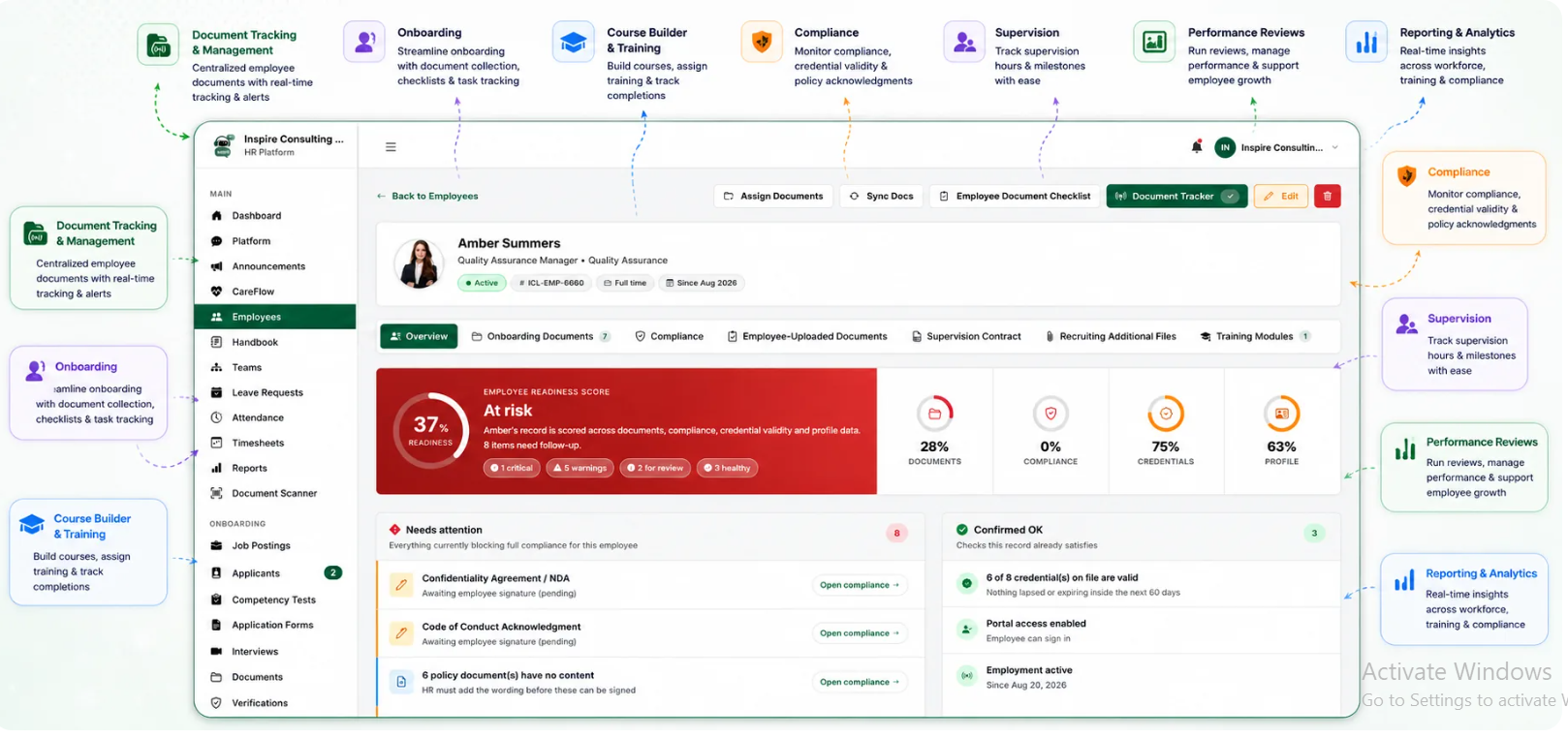
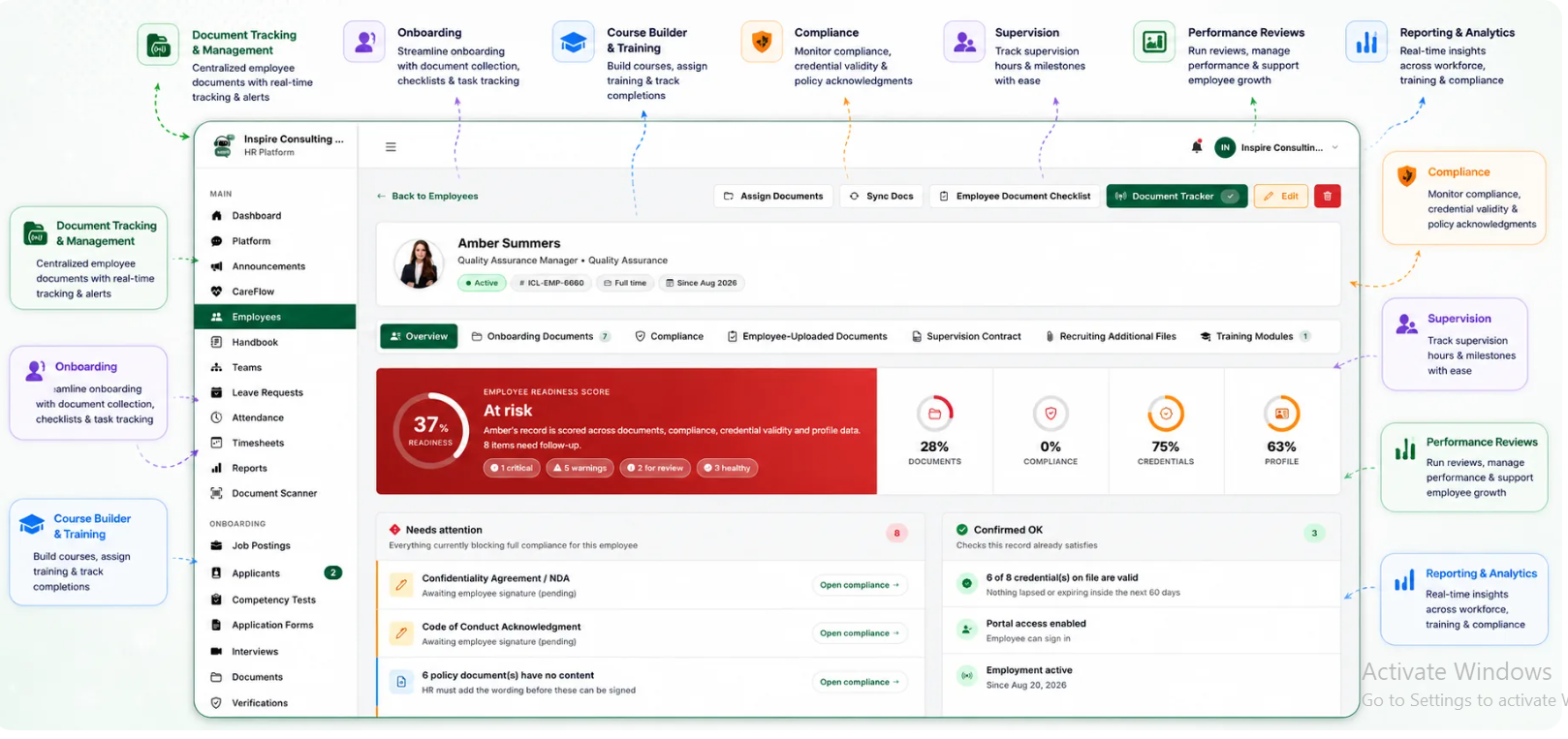
BUAMS HR gives behavioral health providers a structured home for performance improvement plan software workflows alongside the rest of the employee record. Instead of piecing together documentation across disconnected tools, HR can manage plan details in a system already designed for workforce operations, compliance tracking, and document control.
For example, HR teams can use BUAMS HR to centralize related files, keep supervisor follow-up visible, document required acknowledgments, and maintain a clearer history of actions taken over time. If an employee moves to a different program, changes supervisors, or needs related compliance review, the supporting context stays easier to access.
That kind of connected workflow matters in behavioral health organizations where staffing decisions, documentation quality, and supervisory consistency all influence risk. A cleaner process helps HR leaders support managers without losing oversight.
Final Thoughts
Performance improvement plans work best when they are structured, timely, and well documented. For behavioral health providers, that means using a system that supports coaching while also protecting consistency, fairness, and compliance. Performance improvement plan software can help HR teams move away from scattered documents and toward a process that supervisors can actually follow. With BUAMS HR, organizations can manage improvement plans as part of a broader workforce workflow instead of treating them like isolated paperwork.