Behavioral health providers cannot afford to treat HR policies like static documents. Hiring standards change, supervision expectations evolve, training requirements get updated, and site leaders need clear guidance they can actually follow. When policy reviews happen inconsistently, organizations end up with expired language, uneven enforcement, and avoidable audit risk.
That is why policy review cycle software matters. Instead of relying on shared drives, calendar reminders, and scattered email threads, it gives HR teams a structured way to track which policies need review, who owns each update, what approvals are still pending, and when revised content must be acknowledged or rolled out. For behavioral health organizations managing multiple programs, that kind of discipline helps protect both compliance and day-to-day operations.
Key Takeaways
What Is Policy Review Cycle Software?
Policy review cycle software is a system for managing the full lifecycle of HR and workforce-related policies after the document is first created. It does not just store files. It helps organizations schedule recurring reviews, assign responsibility, track revisions, route approvals, and maintain an audit-friendly record of what changed and when.
For behavioral health providers, that scope matters. Policies often touch onboarding, training, confidentiality, supervision, safety, leave practices, incident response, and employee file expectations. Each of those topics may have different review intervals, different approvers, and different operational consequences if the content becomes outdated. A dedicated workflow keeps that work visible instead of leaving it to memory.
Why Policy Review Discipline Matters in Behavioral Health
Behavioral health organizations operate in a setting where workforce policy is closely tied to service quality, risk management, and regulatory readiness. An outdated policy can create more than confusion. It can lead to inconsistent supervisor decisions, missing documentation, or staff following instructions that no longer match current requirements.
This risk increases when providers expand across sites, programs, or service lines. One program may still be using an older confidentiality form. Another may have updated orientation content but never documented who approved it. A third may have issued a new policy but failed to confirm that frontline leaders and employees saw the revised version. Those gaps create friction during audits and can weaken trust internally because staff are unsure which rules are current.
HR teams also face a coordination problem. Policy review work usually involves more than one person. HR may own the schedule, compliance may review language, operations may weigh in on feasibility, and supervisors may need time to implement the change. Without a structured workflow, deadlines slip quietly until someone asks for proof that a policy was reviewed, approved, and communicated.
What to Look for in Policy Review Cycle Software
The right system should make policy governance easier to manage at scale, not just provide another place to upload PDFs.
Recurring review schedules
Each policy should have a clear review cadence based on risk and operational impact. Some documents may need annual review, while others should be revisited whenever licensing, accreditation, or internal workflows change. The system should track next-review dates automatically so nothing depends on someone remembering to create a reminder.
Ownership and approval routing
Policy work stalls when accountability is vague. Good software should show who owns the draft, who must review it, and which approvers are still pending. That visibility keeps policy updates from sitting in inboxes with no clear next action.
Version history and change visibility
Behavioral health providers need a reliable record of what changed between versions. A strong workflow should preserve prior versions, note revision dates, and make it easy to explain whether a change was minor wording cleanup or a real operational update that affects staff responsibilities.
Acknowledgment and rollout tracking
Updating a policy is only part of the job. Organizations also need to know whether supervisors and employees received the current version, whether acknowledgment is required, and whether follow-up training should be triggered. Software that stops at document storage leaves a big compliance gap.
Program-level reporting
Leadership should be able to see which policies are overdue for review, which approvals are aging, and which programs still have rollout work open. Reporting helps HR prioritize high-risk items before they become larger governance problems.
Best Practices for Keeping Policy Reviews Under Control
First, define review ownership by policy family. For example, confidentiality and privacy items may require compliance review, while onboarding, attendance, and employee conduct policies may start with HR. Clear ownership reduces delays and prevents silent assumptions that someone else is handling the next step.
Second, separate review completion from policy communication. A document should not be considered fully complete simply because it was revised and approved. If the update affects employee behavior, supervisory expectations, or required forms, the rollout should be tracked as its own visible phase.
Third, use version control consistently. When teams save final files in different folders or rename documents informally, it becomes harder to prove which version was active on a specific date. A centralized system should keep the approved record clean and easy to retrieve.
Fourth, prioritize high-risk policies. Not every document carries the same operational impact. Policies tied to employee eligibility, confidentiality, mandatory reporting, supervision, training, and workplace safety deserve stronger review discipline because breakdowns in those areas can affect both compliance and care delivery.
How BUAMS HR Helps Behavioral Health Providers Manage Policy Reviews
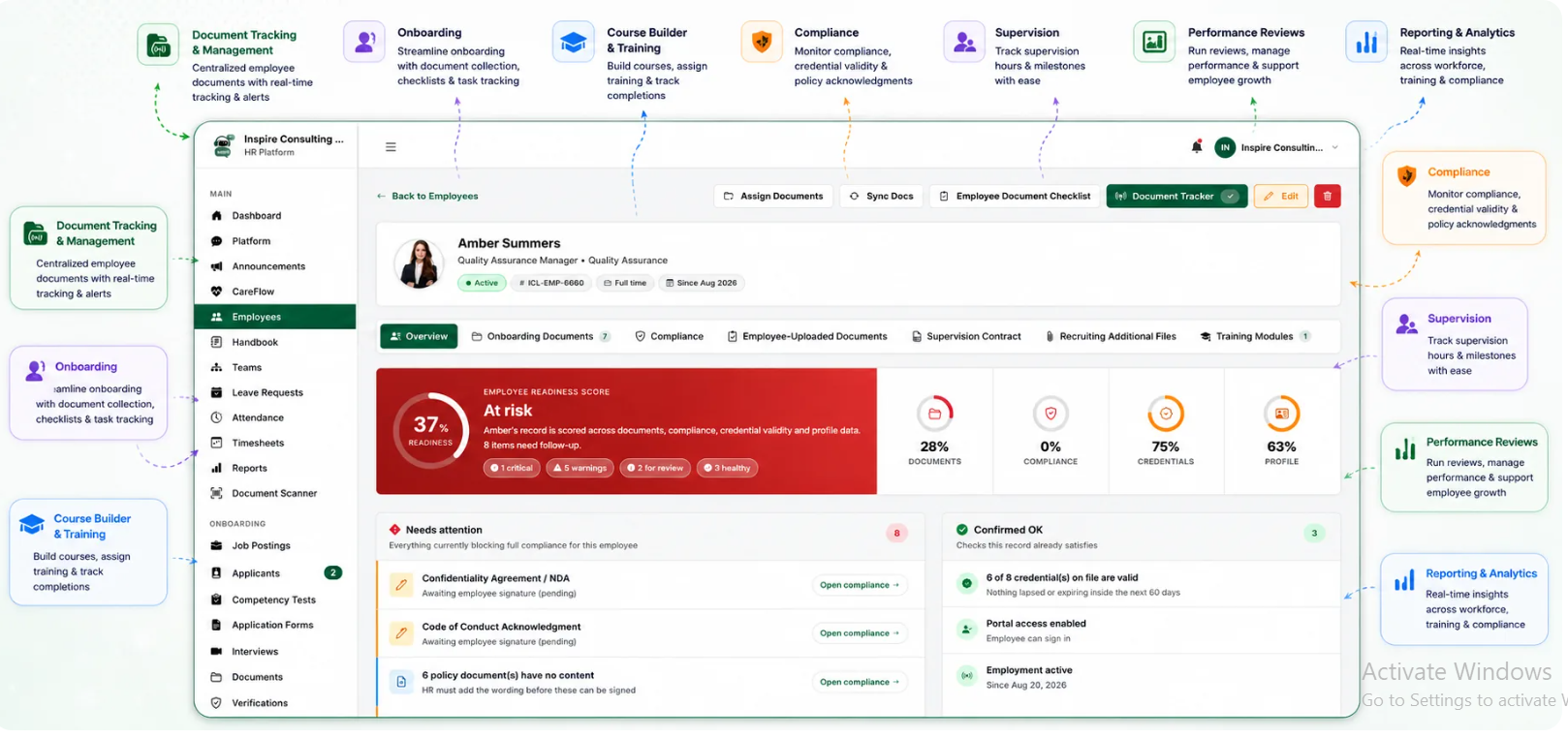
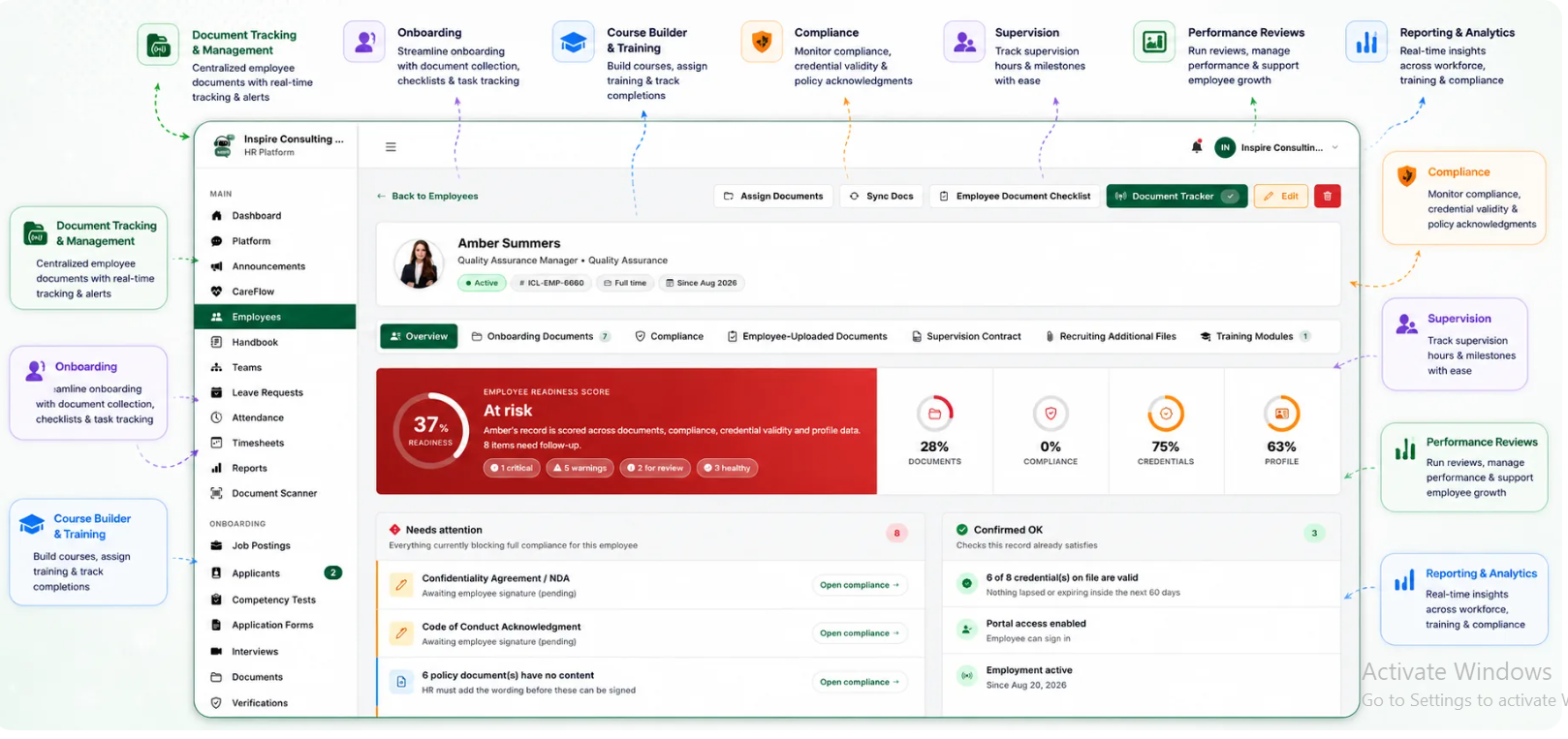
BUAMS HR helps behavioral health organizations centralize the work around policy review, approval, and workforce follow-up. Instead of managing document updates through disconnected folders and email chains, teams can keep policy ownership, review timing, and related employee actions in one operational environment.
That matters because policy updates often connect to other HR work. A revised policy may require new acknowledgment, supervisor follow-up, onboarding packet updates, or documentation inside employee files. BUAMS HR helps providers manage those connections more cleanly so policy governance becomes part of day-to-day workforce management instead of a separate scramble.
For growing behavioral health providers, that structure supports more consistent execution across programs and sites. Leaders can see what is overdue, what is approved, what still needs rollout, and where accountability is getting stuck. That visibility makes it easier to keep policies current without adding more manual tracking.
Final Thoughts
When policy review work lives in calendars, inboxes, and memory, organizations usually find out too late that something was missed. That creates preventable pressure during audits, increases inconsistency across supervisors, and makes it harder to prove that staff are operating under current expectations.
Policy review cycle software gives behavioral health providers a practical way to keep HR policies current, approved, and audit ready. For teams trying to strengthen workforce governance without adding more administrative chaos, that kind of structure is a meaningful advantage.