Open positions create more than recruiting pressure for behavioral health providers. They affect caseload coverage, supervision plans, onboarding timelines, overtime exposure, and the ability to keep programs fully staffed without scrambling. When vacancy information lives in separate spreadsheets, inbox threads, and department notes, HR teams often spend too much time confirming which roles are actually open, how long they have been open, and which gaps are creating the most operational risk.
Position vacancy tracking software gives behavioral health organizations a more reliable way to monitor open roles across programs, sites, and job types. Instead of treating every vacancy the same, HR leaders can see which openings are tied to licensure requirements, shift coverage, program expansion, or urgent continuity-of-care concerns. That visibility helps teams prioritize faster and document workforce decisions with less manual follow-up.
Key Takeaways
What Is Position Vacancy Tracking Software?
Position vacancy tracking software is a system for managing open roles from the moment a need is identified until the position is filled or closed. For behavioral health providers, that means tracking more than a job title. Teams often need to understand program location, shift coverage, credential requirements, supervisor assignment, budget status, urgency level, and whether a role is tied to a new service line or a backfill.
In practice, a strong process helps HR answer questions like: Which vacancies are actively approved? Which ones are holding up admissions or service capacity? Which programs have multiple open roles with similar requirements? Which openings have stalled because of incomplete internal steps rather than a weak candidate pipeline?
Without that structure, vacancy conversations become reactive. Managers escalate the loudest problem, HR rebuilds status updates by hand, and leadership loses confidence in the data behind hiring priorities.
Why It Matters for Behavioral Health Providers
Behavioral health staffing gaps can ripple quickly across operations. An open therapist role may reduce appointment availability. An unfilled supervisor position may delay clinical oversight. A missing residential shift lead may create overtime stress across the rest of the team. Even administrative vacancies can slow document review, onboarding, billing coordination, or employee support.
That is why vacancy tracking is not just a recruiting concern. It is a workforce management issue. HR teams need to know where gaps are emerging, how long they are lasting, and what kind of action each gap requires. Some openings need immediate recruiting support. Others need internal approval, clarified job scope, or updated compensation ranges before the search can move forward.
Behavioral health organizations also benefit from better vacancy data when they operate across multiple sites or programs. A vacancy in one location may be manageable for a week, while the same vacancy in another program may affect compliance, staff supervision, or client scheduling almost immediately. Centralized tracking helps leaders distinguish inconvenience from real operational risk.
What to Look For in Position Vacancy Tracking Software
Clear vacancy stages
The system should make it easy to separate requested roles, approved openings, positions in active recruiting, paused searches, and closed vacancies. That prevents teams from confusing headcount discussions with real-time hiring needs.
Program and site context
Each vacancy should include the details that matter operationally, such as location, program, shift, employment type, supervisor, and role requirements. Behavioral health organizations rarely hire into a generic pool, so context matters.
Priority and risk visibility
Not every opening deserves the same level of urgency. Good vacancy tracking software should support internal prioritization based on client impact, compliance exposure, supervisor capacity, and service continuity.
Internal accountability
Vacancies often stay open longer because of internal delays, including late approvals, outdated job descriptions, unclear role ownership, or incomplete hiring packets. A stronger workflow helps HR see where handoffs are getting stuck before time-to-fill gets worse.
Connection to onboarding readiness
Filling a role is only part of the process. Once a candidate accepts, HR still needs to move quickly through documentation, employee setup, training, and compliance steps. Vacancy tracking works better when it connects smoothly to onboarding rather than ending at offer acceptance.
Reliable reporting
Leaders should be able to review vacancy counts, aging, bottlenecks, and hiring priorities without waiting for manual spreadsheet cleanup. Consistent reporting helps teams spot patterns, such as programs that repeatedly experience delayed approvals or roles that stay open because requirements are poorly defined.
Common Problems With Spreadsheet-Based Vacancy Tracking
Many providers begin with spreadsheets because they are easy to start. The problem appears later, when multiple people update different copies or when HR must combine recruiting, operations, and approval notes into a single report. Common issues include:
These gaps create unnecessary friction. HR teams spend valuable time validating the list instead of moving the work forward.
How BUAMS HR Helps
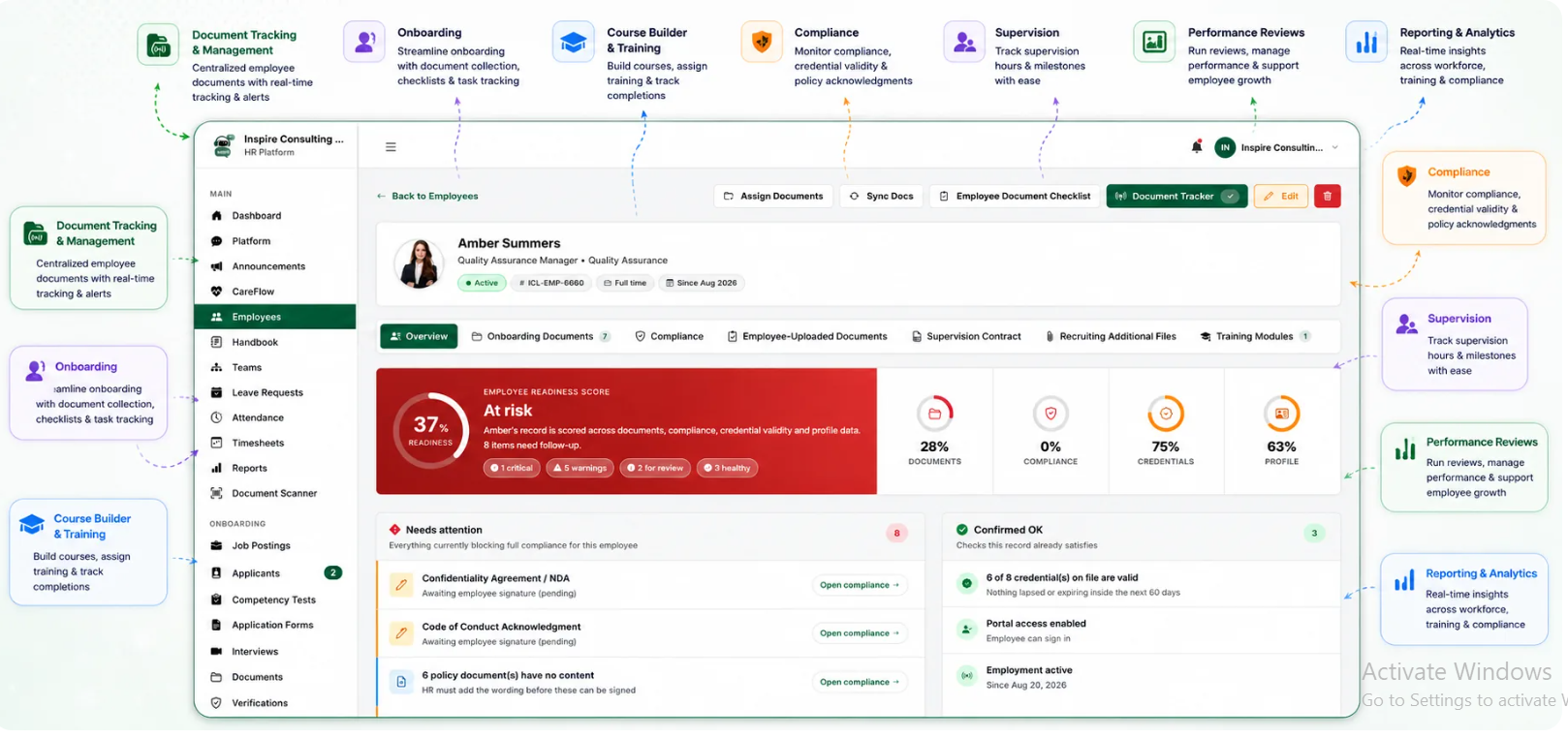
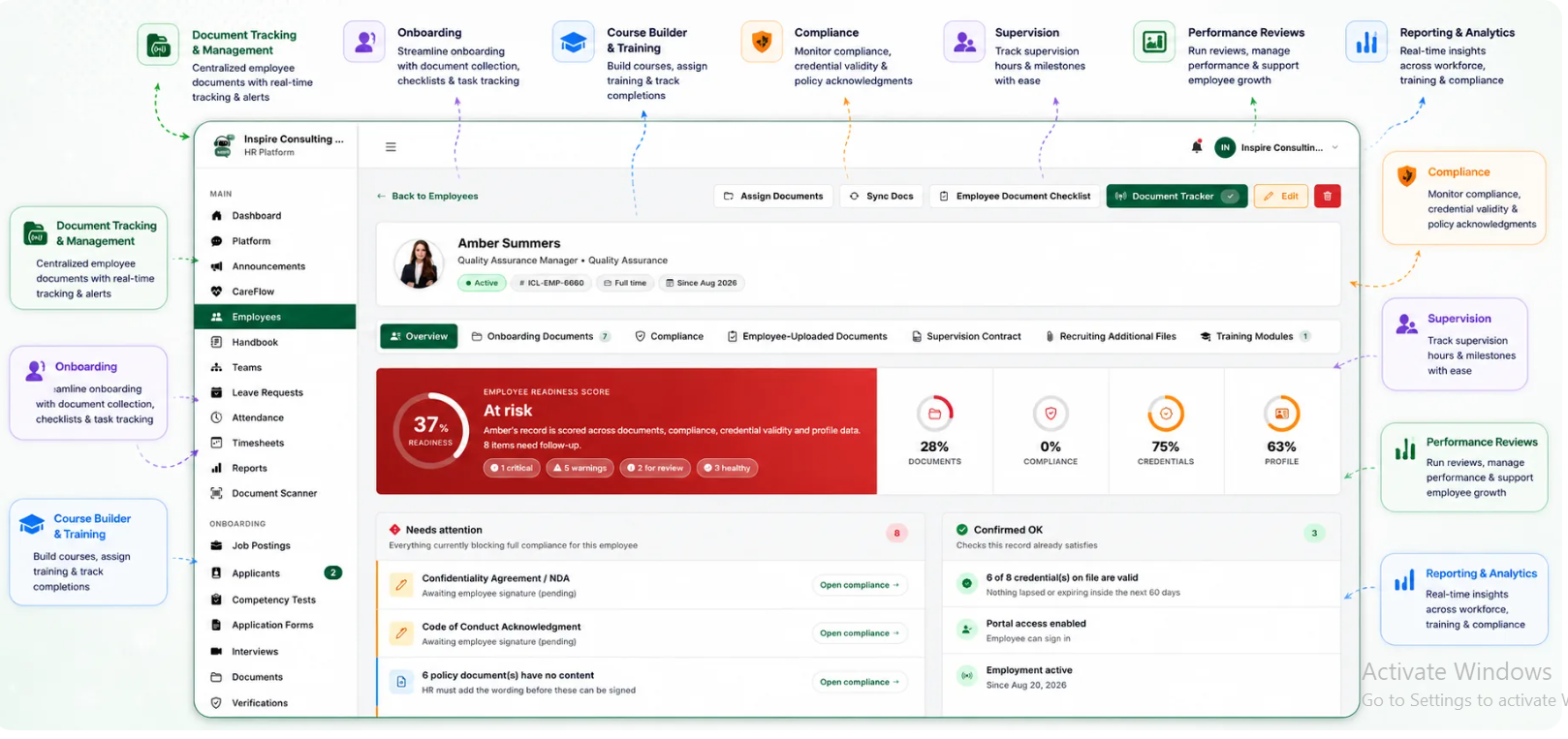
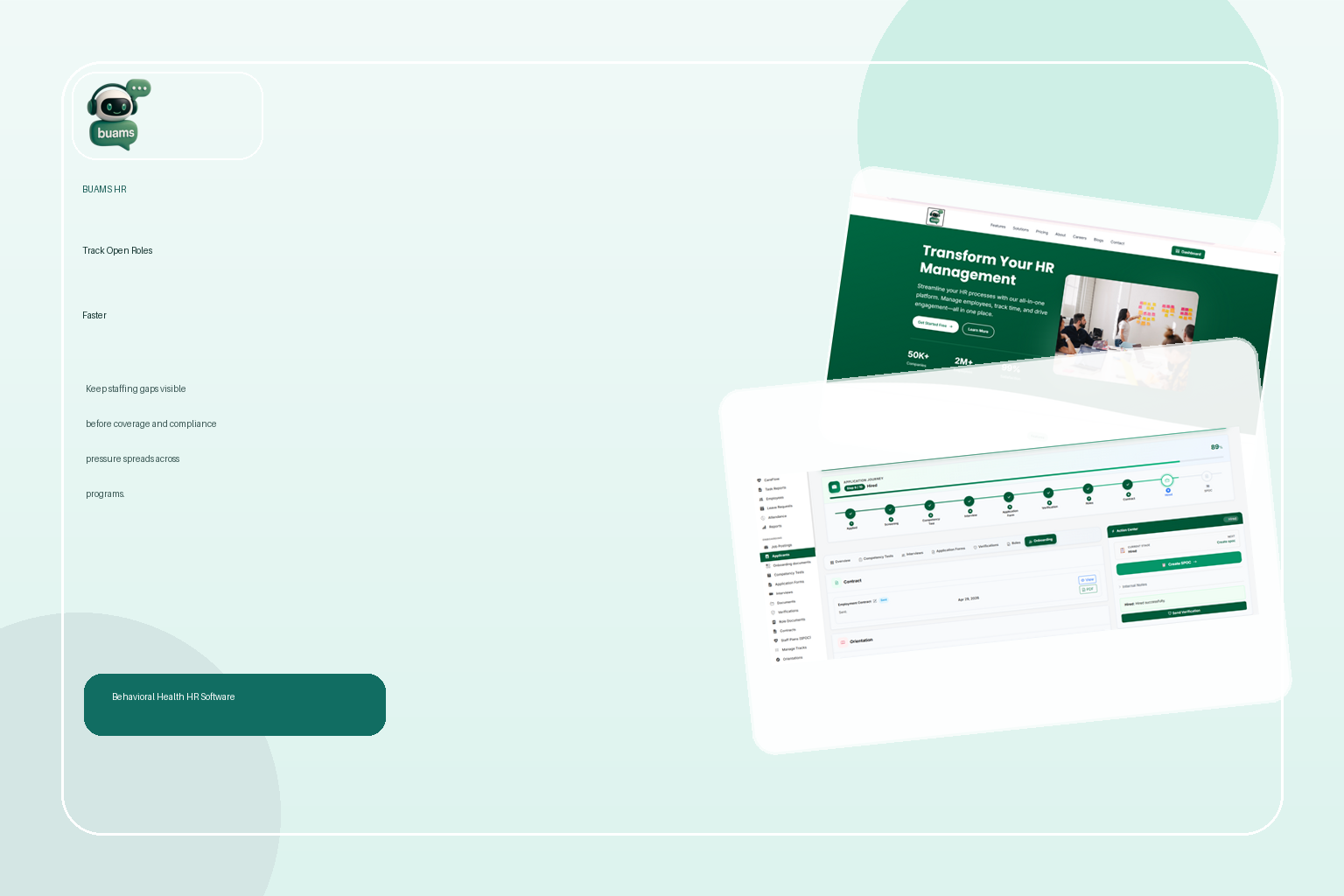
BUAMS HR can support a more organized vacancy management process by giving behavioral health providers one place to coordinate workforce information, approvals, employee records, and readiness workflows. Instead of treating open positions as disconnected notes, teams can manage the steps around each vacancy with better structure and visibility.
For example, HR leaders can use BUAMS HR to standardize the information tied to each role, keep hiring-related documentation organized, and reduce manual follow-up between program managers and HR staff. When a vacancy moves toward hire, the process can flow into onboarding tasks, employee file setup, training requirements, and other readiness checkpoints that matter before a new team member begins work.
That kind of connected workflow is especially valuable for behavioral health organizations that juggle multiple sites, mixed staff types, and role-specific compliance needs. It helps HR respond faster without sacrificing documentation quality or operational control.
Implementation Tips for a Stronger Vacancy Process
Final Thoughts
Position vacancy tracking software helps behavioral health providers turn open-role management into a clearer, more actionable workflow. When HR teams can see which vacancies are approved, urgent, aging, and tied to operational risk, they can prioritize better and support programs more effectively. For organizations trying to protect coverage, reduce hiring delays, and keep workforce decisions organized, a centralized approach is far more dependable than chasing updates across spreadsheets and email threads.