Behavioral health providers rarely struggle because they cannot identify an HR or compliance issue. They struggle because the follow-up work after that discovery is easy to lose. An internal file review may uncover missing signatures, outdated licenses, inconsistent supervision records, or training gaps across multiple employees and programs. A site survey or accreditation prep review may generate a list of fixes that crosses HR, compliance, operations, and leadership. When those action items live in spreadsheets, inboxes, and meeting notes, the organization can quickly lose track of who owns each item, what evidence is still missing, and whether the issue was actually resolved.
Remediation plan tracking software gives behavioral health providers a structured way to manage that cleanup work from finding to closure. Instead of treating corrective action as a one-time conversation, HR teams can document the issue, assign accountable owners, set deadlines, attach supporting evidence, monitor status, and confirm that the underlying risk was addressed. For organizations that want stronger audit readiness without constant manual chasing, that structure matters.
Key Takeaways
What Is Remediation Plan Tracking Software?
Remediation plan tracking software is a workflow system used to organize corrective action after an issue, gap, exception, or audit finding has been identified. In behavioral health settings, that can include missing personnel file documents, overdue training, licensing discrepancies, policy acknowledgment gaps, supervision documentation issues, onboarding errors, or broader workforce process problems that need structured follow-up.
The software does not replace leadership judgment. It gives the organization a disciplined way to move from discovery to resolution. Instead of keeping the remediation plan in a static spreadsheet, teams can track each action item as active operational work with status, owner, deadline, proof of completion, and escalation rules when something stalls.
That is important because many workforce problems are not fixed just by naming them. They are fixed by making the next steps visible and keeping them visible until they are complete.
Why It Matters for Behavioral Health Providers
Behavioral health organizations often manage complex HR and compliance requirements across multiple roles, sites, programs, and supervisory layers. A single review can reveal issues that affect hiring files, training records, credential management, employee acknowledgments, and operational readiness all at once. If the organization cannot coordinate remediation cleanly, the same gaps keep resurfacing during the next audit, leadership review, or site-level check.
The risk is not only regulatory. Manual remediation processes also create internal fatigue. HR may feel like it is sending the same reminder three times. Supervisors may not understand which items are urgent and which are informational. Leadership may hear that a problem is being handled but have no reliable view of whether the required evidence has been collected and documented. Over time, unresolved follow-up work erodes confidence in the organization’s control environment.
Remediation plan tracking software helps behavioral health providers create a more dependable operating model. It turns corrective action into a visible workflow with real accountability instead of a vague promise to fix things later.
Common Breakdowns in Manual Remediation Workflows
Most remediation plans fail in ordinary ways, not dramatic ones. The action list gets built, everyone agrees it matters, and then ownership becomes blurry once daily work takes over again. Without a structured system, progress is hard to trust.
These gaps matter because corrective action is only valuable if the organization can show what changed, who completed it, and why the issue should be considered closed. Behavioral health providers need more than a punch list. They need a remediation process that stands up to review.
What to Look For in Remediation Plan Tracking Software
Clear issue-to-action mapping
Every finding should translate into one or more defined next steps. The software should let teams record the original issue, describe the expected fix, and tie that fix to the right employee, site, program, policy, or workflow. This prevents broad corrective plans that sound good but are hard to execute.
Ownership and deadline visibility
Behavioral health providers need a simple way to see who owns each item, when it is due, and what is at risk if it slips. Good software makes overdue work obvious and supports escalation when a task remains unresolved past its target date.
Evidence attachment and closure standards
Remediation is not complete just because someone says it is done. Teams should be able to attach updated documents, approvals, training proof, policy acknowledgments, or review notes directly to the action item so closure has supporting evidence behind it.
Cross-functional coordination
Some findings belong entirely to HR, but many require supervisor action, compliance review, operations follow-up, or leadership approval. Strong remediation plan tracking software supports shared workflows without losing clarity about who is responsible for each stage.
Trend reporting
Organizations should be able to see which types of findings recur most often, which programs generate the most corrective work, and where follow-up regularly stalls. That visibility helps leaders fix root causes instead of repeatedly addressing the same symptom.
Best Practices for a Stronger Remediation Process
Software works best when the organization defines what good closure looks like. Providers should decide which evidence is required before an item can be closed, who has authority to approve remediation, and when repeat findings require broader process review instead of one-off cleanup.
These habits help behavioral health providers move beyond reactive cleanup. The goal is not just to close findings. It is to build a system that makes future findings less likely.
How BUAMS HR Helps
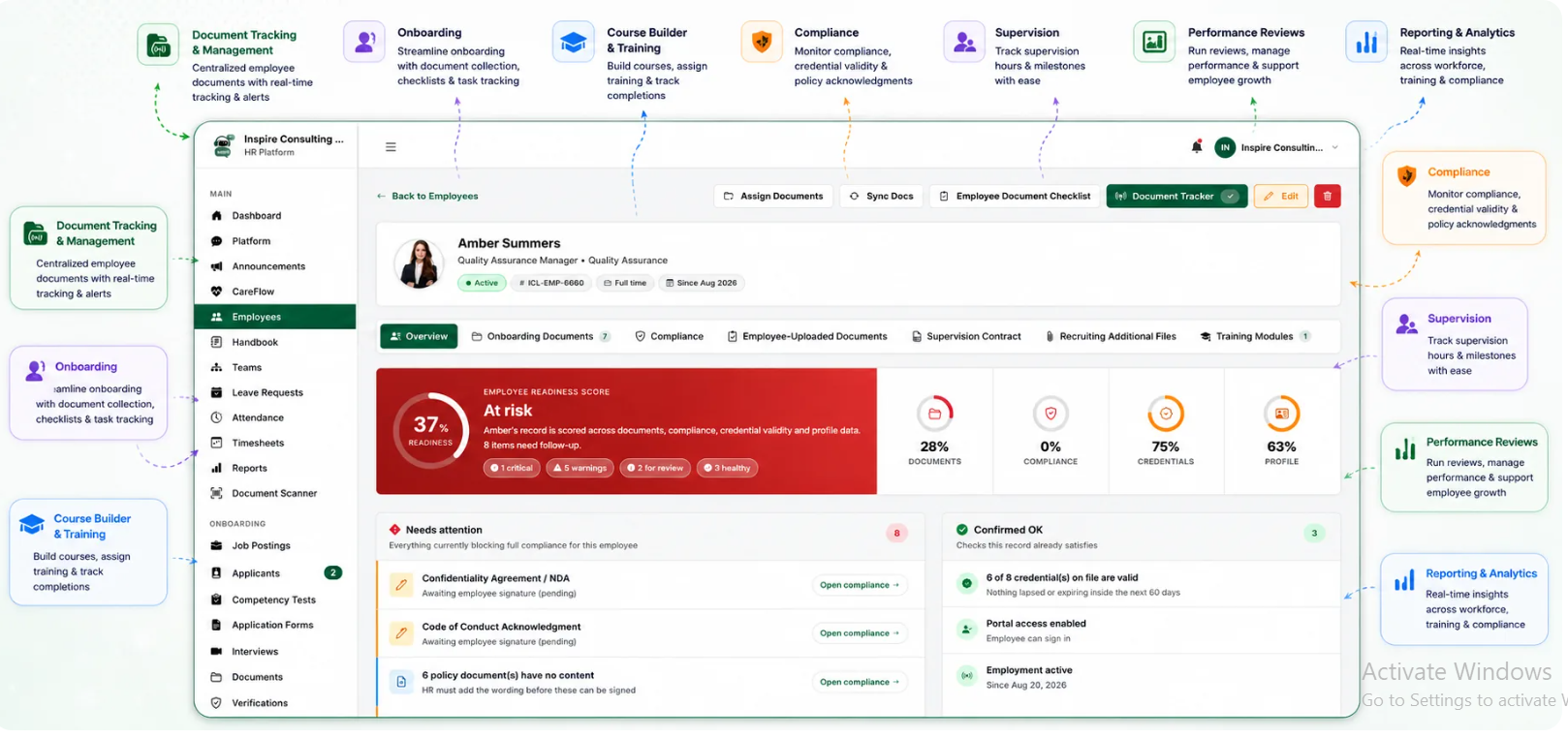
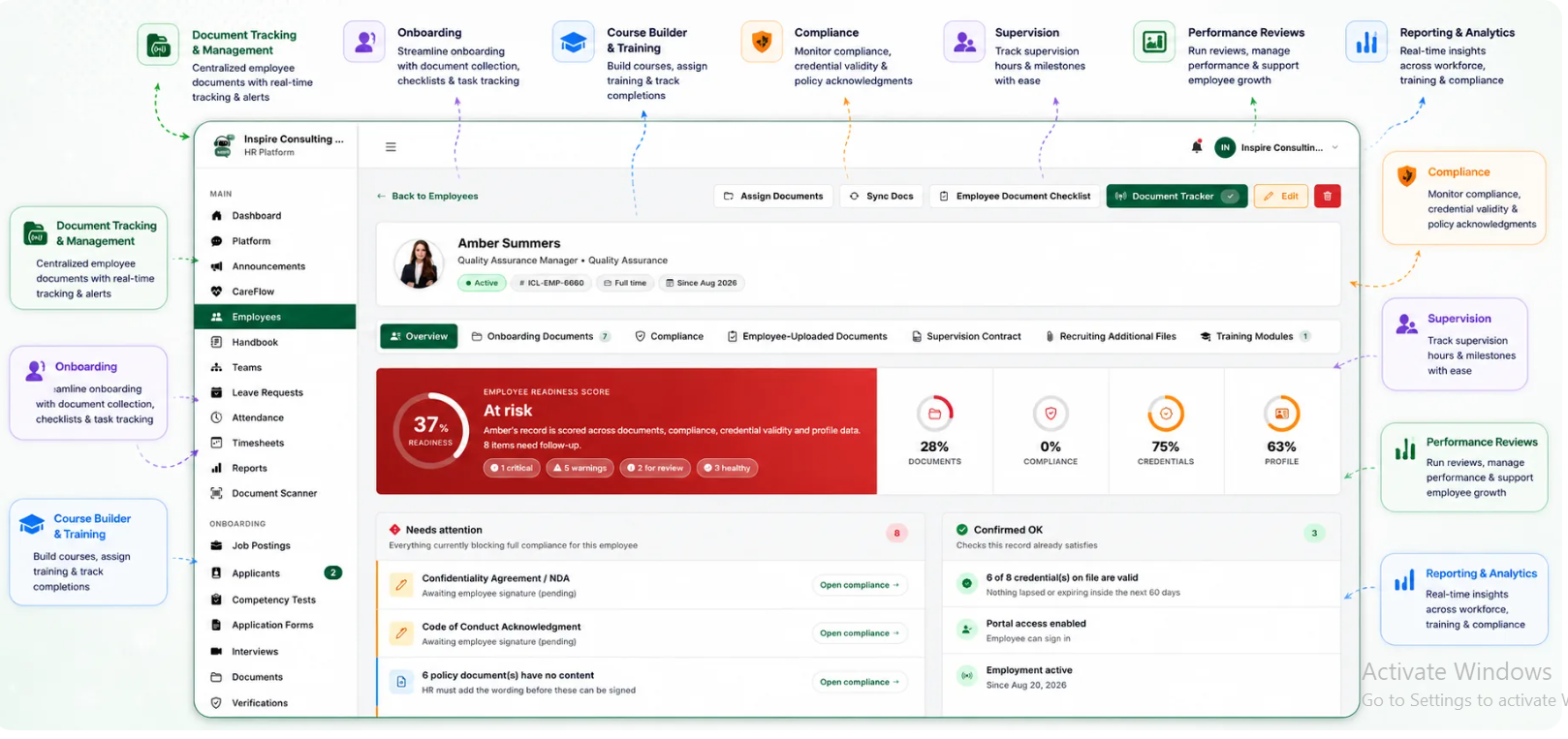
BUAMS HR helps behavioral health providers organize workforce records, compliance documentation, and follow-up activity in one connected environment. That foundation makes remediation plan tracking more practical because teams do not have to rebuild the context of every issue from scattered files and messages. When a finding relates to an employee file, training record, approval chain, or supervisor responsibility, the related information is easier to connect to the corrective action itself.
For providers managing multiple sites or service lines, BUAMS HR supports clearer accountability by making workforce documentation and status visibility more consistent across teams. HR can identify what needs correction, supervisors can see what they still own, and leadership can monitor whether the organization is actually reducing risk or just moving unresolved items from one meeting to the next.
That kind of structure is especially useful when preparing for accreditation reviews, responding to internal audits, or cleaning up recurring file and training issues that affect readiness. A connected workflow helps providers close gaps with more confidence and less administrative friction.
Final Thoughts
Remediation plan tracking software helps behavioral health providers treat corrective action as a controlled workflow instead of an informal promise to follow up later. When ownership, proof, deadlines, and status are all visible, organizations are far better equipped to resolve HR and compliance gaps before they repeat.
For teams that want stronger audit readiness, cleaner employee records, and better follow-through after issues are discovered, that structure is worth having. A disciplined remediation process does not just reduce open items. It builds trust that workforce problems will actually get fixed.