Behavioral health providers rarely lose staff for just one reason. Turnover usually builds through small signals: missed supervision follow-up, uneven caseload balance, stalled development plans, recurring schedule friction, or managers who know a concern exists but do not have a clean way to document what happens next. Retention action planning software gives HR teams a structured way to capture those warning signs, assign the right follow-up, and keep leaders accountable before a valued employee becomes an urgent vacancy.
For agencies that depend on clinical continuity, stable supervision, and audit-ready workforce records, a loose retention process creates both operational and compliance risk. When action plans live in email threads, side notes, and memory, HR cannot easily see whether interventions were started, whether commitments were completed, or whether patterns are emerging across teams. A stronger process helps organizations respond earlier and learn faster.
Key Takeaways
What Is Retention Action Planning Software?
Retention action planning software is a structured system for recording workforce risk signals and turning them into concrete interventions. Instead of treating retention as a one-time survey result or a vague management concern, the software creates a documented action plan tied to an employee, team, program, or role group.
A practical workflow may include identifying the issue, tagging the risk type, assigning an owner, setting due dates, documenting the agreed response, and reviewing whether the plan reduced the risk. In behavioral health settings, that matters because turnover often affects caseload stability, supervision coverage, scheduling flexibility, onboarding pressure, and client experience at the same time.
Why It Matters for Behavioral Health Providers
Behavioral health organizations operate in an environment where workforce strain is visible quickly. A difficult vacancy can increase overtime, delay intakes, stretch supervisors, and force program leaders to make short-term staffing decisions that create more risk later. If HR only learns about a likely resignation after notice is given, the organization has very little room to stabilize the situation.
Retention action planning software helps agencies intervene earlier by making patterns easier to see. Maybe a clinician has repeated concerns about documentation volume, a residential team has higher turnover under one coverage model, or a new supervisor has not completed check-ins promised during onboarding. With a defined retention planning process, those issues can be tracked, escalated, and reviewed before they become another replacement search.
It also improves consistency. Without structure, some managers respond to turnover risk with thoughtful follow-up while others rely on memory or informal conversations. A software-based approach gives HR a standard playbook without forcing every situation into the same script.
What Strong Retention Plans Should Capture
The best retention plans are specific enough to guide action but flexible enough to reflect the real cause of risk. Behavioral health providers should look for a system that allows teams to document the signal, context, and intervention clearly.
Common Retention Breakdowns Without a System
Many providers already care about retention, but their process breaks down because the follow-up is too manual. HR business partners may hear a concern during a meeting, managers may promise changes, and leaders may assume someone else is monitoring progress. Weeks later, there is no shared record of what was discussed or whether any intervention happened.
Another common problem is fragmentation. Workforce data lives in one system, employee files in another, policy acknowledgments somewhere else, and manager notes nowhere reliable. That makes it hard to connect retention risk with the underlying drivers. If a high-performing employee is frustrated by delayed approvals, incomplete onboarding for transferred staff, or recurring compliance catch-up, the organization needs one place to coordinate the response.
Finally, manual retention work makes measurement weak. Leaders cannot easily answer which interventions reduce resignations, which programs need more support, or whether certain managers need coaching around follow-through. A structured system turns retention from a general goal into an improvable operating process.
Best Practices When Evaluating Retention Action Planning Software
Behavioral health providers should prioritize software that supports real management follow-up, not just reporting dashboards. The goal is not to collect more workforce noise. It is to help the right people act on important signals quickly and consistently.
How BUAMS HR Helps Behavioral Health Teams Respond Earlier
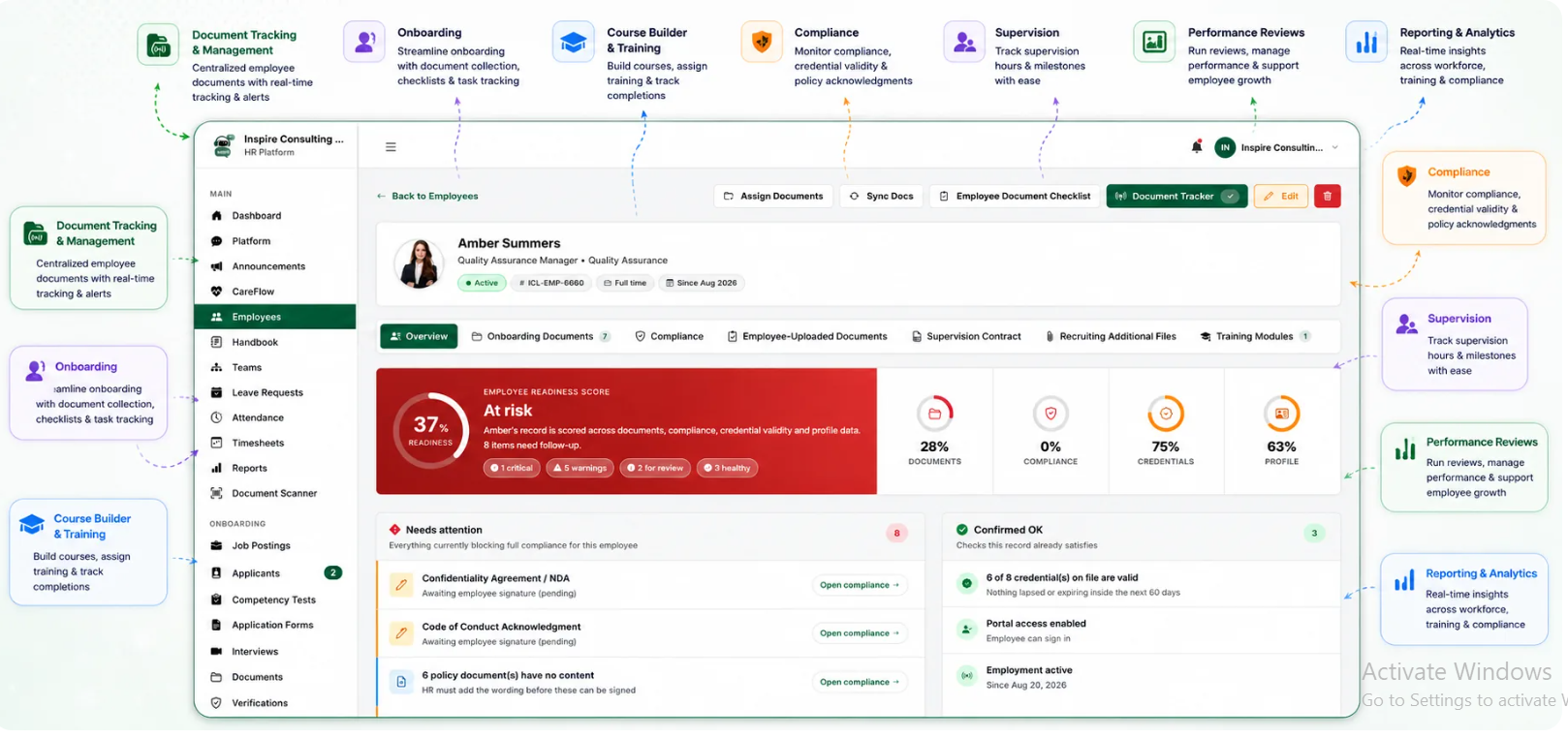
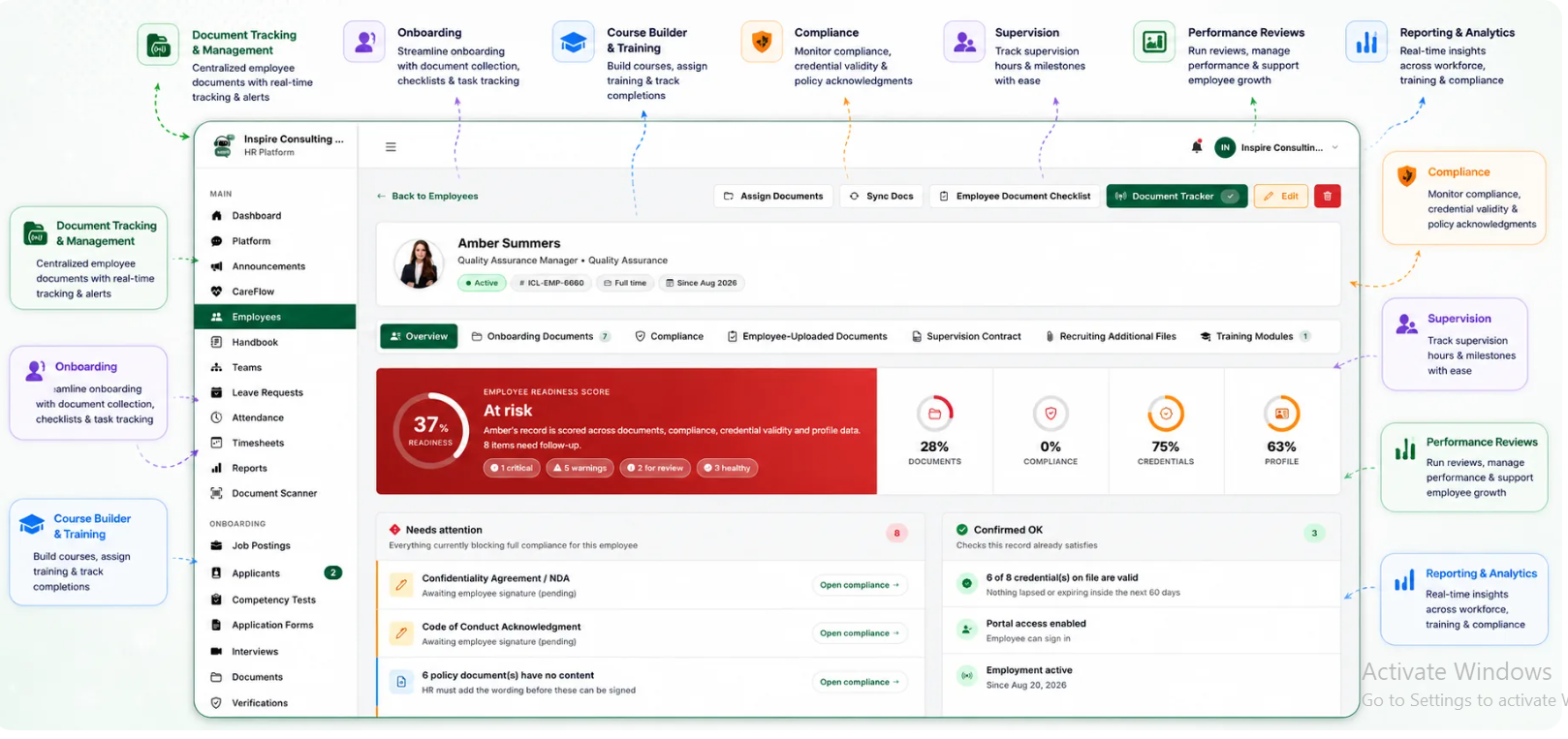
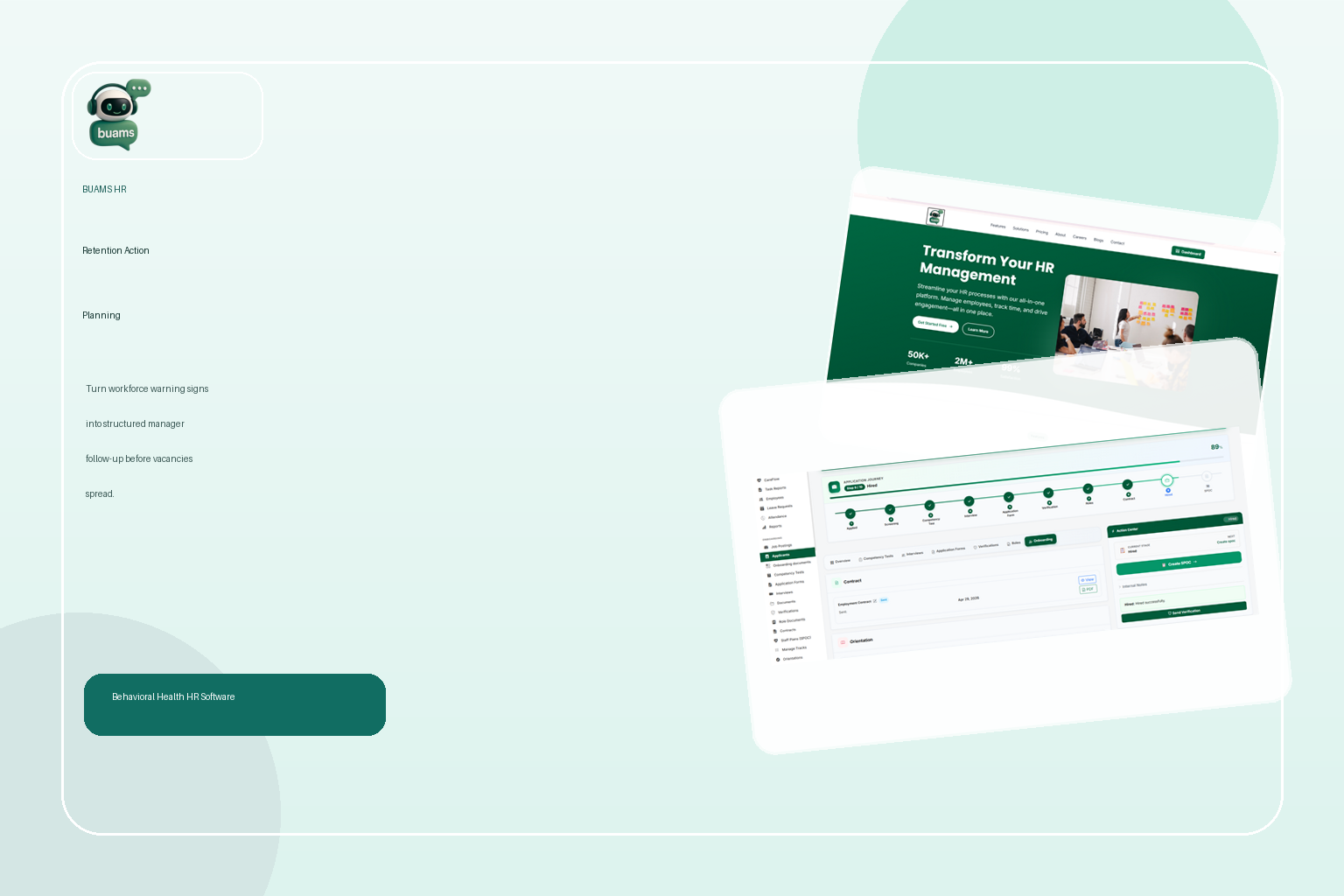
BUAMS HR gives behavioral health organizations a practical foundation for retention action planning by keeping employee information, workflow accountability, and HR documentation connected. When workforce concerns emerge, HR teams need more than a spreadsheet and good intentions. They need a system that makes follow-up visible.
With BUAMS HR, agencies can organize employee records, manager responsibilities, compliance details, and workflow tasks in one operational environment. That helps teams document retention concerns, assign next steps, and monitor whether interventions were completed on time. Instead of losing momentum across multiple systems, leaders can manage the response in a way that is consistent, trackable, and easier to review later.
This kind of connected workflow is especially valuable for behavioral health providers balancing staffing pressure with compliance expectations. If a retention plan depends on supervision adjustments, role reassignment, updated documentation, or leadership follow-up, BUAMS HR supports the structure needed to move those actions forward without adding more administrative confusion.
Final Thoughts
Retention action planning software gives behavioral health providers a better way to respond to turnover risk before it becomes a vacancy problem. It replaces reactive, scattered follow-up with documented action, clearer ownership, and measurable improvement.
For organizations trying to protect continuity of care while reducing HR friction, that shift matters. The sooner leaders can spot risk, assign the right next steps, and confirm that action was taken, the better their chances of keeping strong staff engaged and available to serve clients.