Behavioral health providers often need to hire quickly, but speed can expose weaknesses in compensation control. A program director wants to secure a hard-to-fill therapist, a recruiter needs to move an offer before the candidate accepts another role, or a supervisor asks for an exception because a site is already stretched thin. When salary range decisions happen through scattered emails, side conversations, and copied spreadsheets, HR teams can lose sight of who approved the range, why an exception was made, and whether the offer still fits internal compensation structure.
Salary band approval software gives behavioral health organizations a more disciplined way to manage those decisions. Instead of treating pay-range review like an informal last-minute step, the organization can route requests through a structured workflow that shows the approved band, proposed starting rate, justification for exceptions, and required sign-offs. That helps providers move faster without creating unnecessary equity concerns, documentation gaps, or leadership confusion later.
Key Takeaways
What Is Salary Band Approval Software?
Salary band approval software is a workflow used to review, approve, document, and monitor compensation range decisions tied to open roles, new offers, promotions, and pay exceptions. The goal is not simply to store a pay table. The goal is to make sure HR and leadership can see which range applies to the role, what amount is being proposed, whether the request stays inside policy, and who must approve it before the decision moves forward.
In behavioral health, that structure is especially helpful because compensation decisions are often shaped by more than one factor at once. A role may vary by service line, licensure level, shift type, location, supervision expectations, or funding source. A residential supervisor opening may need one range, while an outpatient therapist role in another market may need a different one. Without a structured approval process, teams can make inconsistent decisions that are hard to defend and even harder to track later.
Why It Matters for Behavioral Health Providers
Behavioral health organizations face constant tension between hiring urgency and internal consistency. Leaders may need to move fast on licensed clinicians, bilingual staff, direct care workers, or site leadership roles, especially when coverage gaps affect admissions, caseload balance, or service continuity. But quick decisions still need governance. If two similar roles receive very different offers without clear justification, the organization can create employee relations issues, management distrust, and future compensation cleanup work.
These problems are magnified when providers operate across multiple programs or locations. One manager may believe an exception is reasonable because the role is difficult to fill. Another may assume a higher rate was already cleared because recruiting is moving forward. Finance may not see the final number until after expectations have been set with the candidate. Salary band approval software helps create a shared process before those misalignments become real offers or internal disputes.
Better range control also supports stronger documentation. If leadership later asks why one hire started near the top of the band, HR should not have to reconstruct the answer from old messages. The reasoning, approvals, and effective compensation record should already be visible.
Common Compensation Problems a Strong Workflow Can Prevent
None of these issues are unusual. They appear when compensation review is treated as background administration rather than an operational control point.
What to Look For in Salary Band Approval Software
Role-based compensation structure
The system should connect compensation bands to the actual role framework used by the organization. That may include job title, site, program, licensure level, shift type, employment category, or other factors that influence approved ranges. If the range logic is disconnected from real workforce structure, approvals become inconsistent again.
Exception routing with required justification
Not every request fits the standard range. Strong software should let teams request an exception, explain why it is needed, and route it to the right decision-makers. A simple note such as market pressure or candidate experience may not be enough. Providers often need a cleaner explanation that leadership can review later.
Status visibility across HR, recruiting, and leadership
Everyone involved should be able to see whether the request is in draft, pending review, approved, denied, or returned for revision. That transparency helps reduce silent delays and keeps recruiters from moving faster than compensation approval allows.
Approval history and audit trail
A dependable workflow should capture who reviewed the request, what amount was approved, when the decision happened, and whether any changes were made along the way. That record supports internal oversight and reduces the chance that the same pay discussion has to be recreated later.
Connection to hiring and employee records
Compensation approval should not live in isolation. Once a range or offer amount is approved, the workflow should connect naturally to the hiring record, the offer process, and the employee file so teams are not re-entering the same information into disconnected systems.
Best Practices for Behavioral Health HR Teams
Start by defining when a request should follow the standard band and when it should trigger an exception path. Behavioral health organizations often benefit from simple thresholds, such as midpoint reviews, market adjustments, sign-on requests, location differentials, or licensure-related premiums. That makes the process easier to follow and easier to enforce.
It also helps to limit the number of unofficial compensation sources. If managers, recruiters, and HR business partners each rely on different copies of the range table, approval quality will drift over time. One controlled source of truth is more useful than several partially current files.
Finally, review exception patterns regularly. If one program repeatedly requests out-of-band approvals, the issue may not be individual candidates. It may signal that the range itself is outdated, the role is poorly defined, or the labor market for that position has shifted. Salary band approval software is most valuable when it helps leadership improve the compensation model, not just approve one exception at a time.
How BUAMS HR Helps
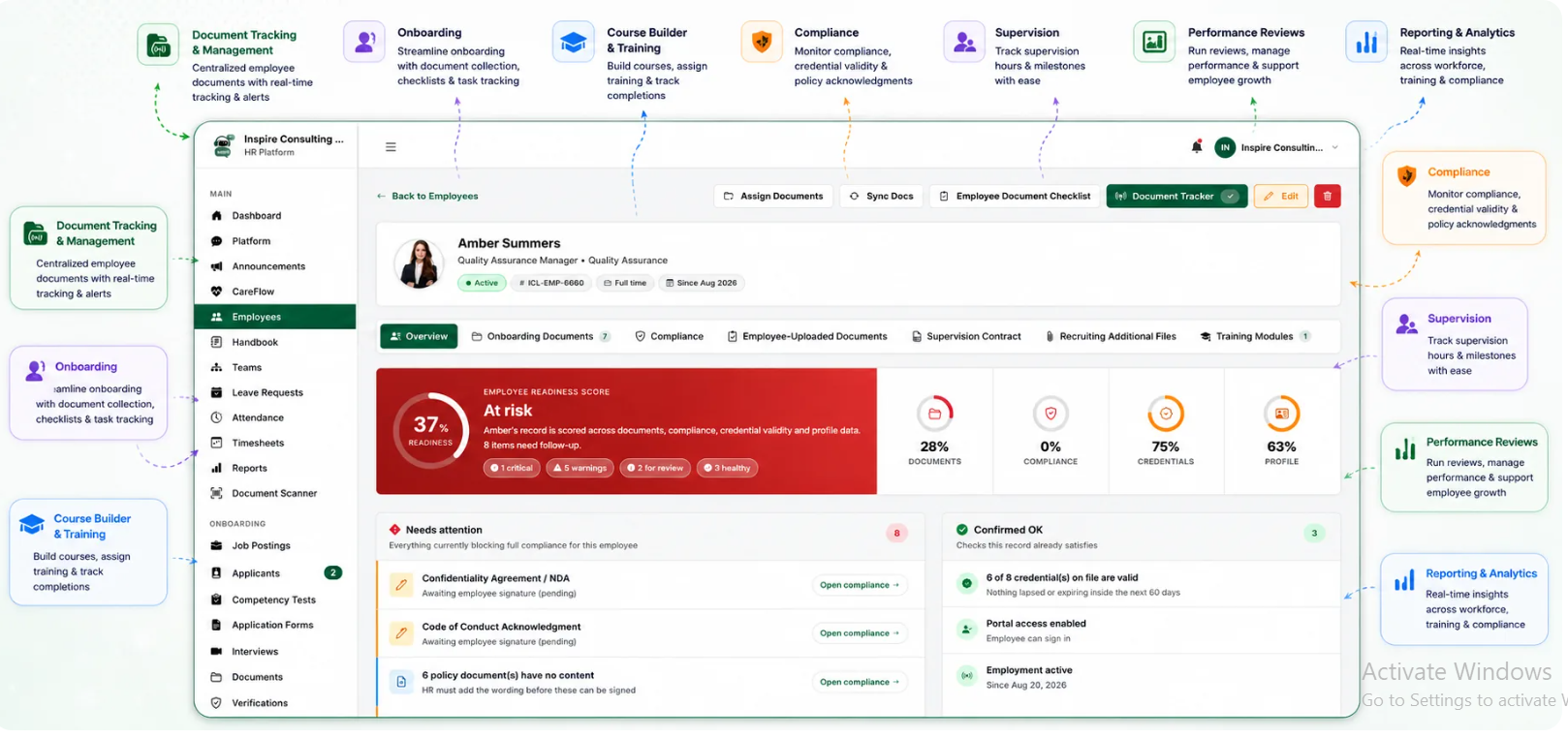
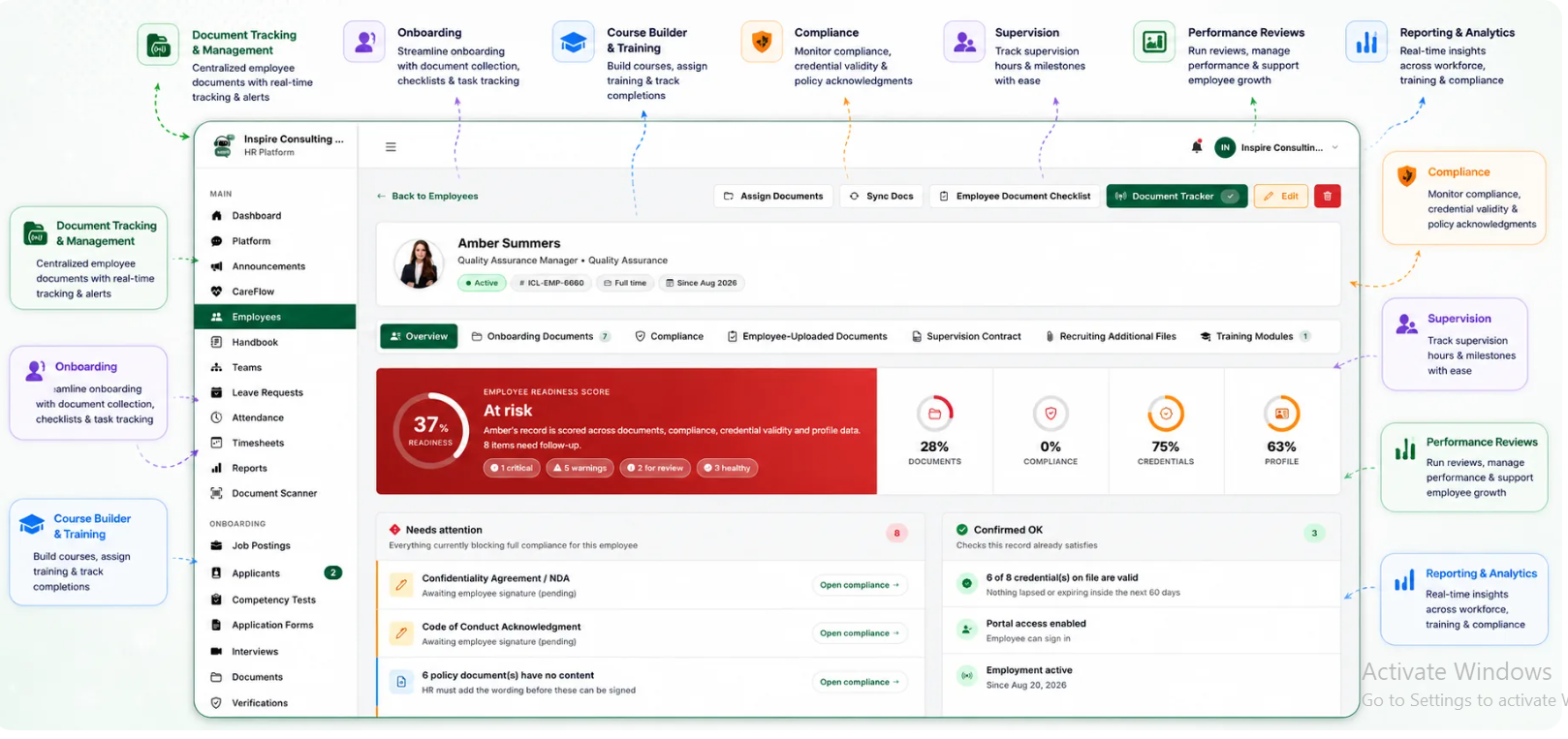
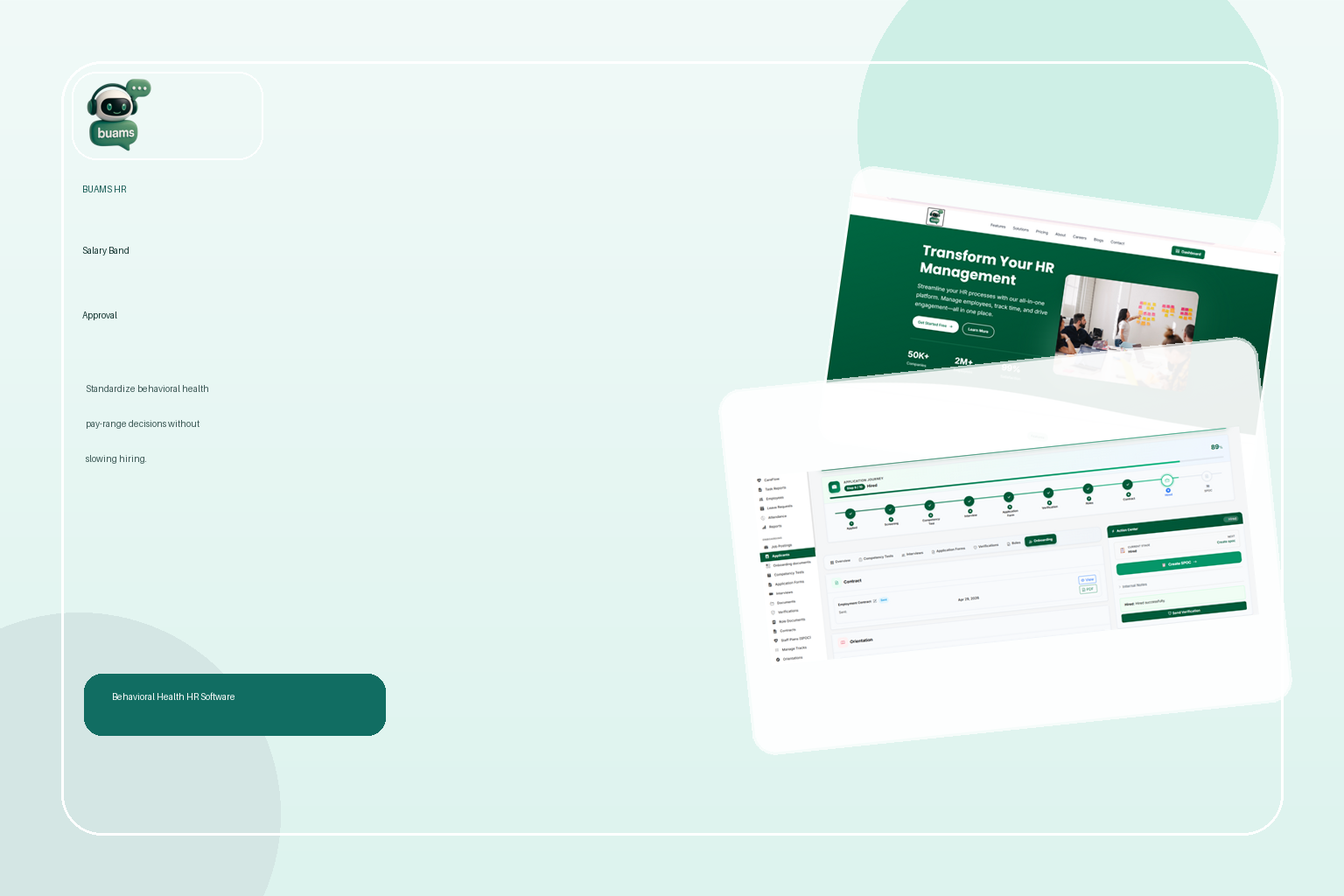
BUAMS HR helps behavioral health providers keep workforce records, approvals, and hiring workflows organized in one place. That makes compensation-related decisions easier to support because role details, employee information, and approval context do not have to live in separate tools. Teams can maintain cleaner documentation, reduce manual follow-up, and create a more reliable bridge between compensation review and downstream onboarding activity.
For growing organizations, that structure matters. A centralized HR platform helps providers apply the same approval discipline across multiple programs, sites, and managers without depending on one spreadsheet owner or a long email chain. When compensation decisions are easier to trace, the organization can move faster with more confidence.
BUAMS HR also supports stronger operational consistency by helping teams connect role data, employee files, and workflow history. That visibility is useful when HR needs to answer leadership questions, review internal equity concerns, or confirm why a certain pay decision was made at a specific time.
Final Thoughts
Salary band approval software gives behavioral health providers a practical way to protect compensation discipline without slowing hiring to a crawl. When range decisions are structured, visible, and documented, organizations are better positioned to make competitive offers while still preserving internal consistency and accountability.
For providers that want cleaner compensation governance across hiring, promotions, and exceptions, BUAMS HR offers a stronger operational foundation than scattered spreadsheets and ad hoc approvals. That makes it easier to support growth, respond to hiring pressure, and keep workforce decisions aligned with policy.