Behavioral health providers often use sign-on bonuses to compete for scarce clinicians, direct care staff, supervisors, and support roles. The hiring decision may move quickly, but the follow-through usually becomes manual. HR teams end up tracking offer details, repayment terms, start-date conditions, milestone dates, and employee acknowledgments across email, spreadsheets, and shared folders. That creates avoidable risk. A missed document can complicate repayment enforcement, inconsistent approvals can raise fairness concerns, and disconnected records make it harder to explain what the employee agreed to. Sign-on bonus agreement tracking software gives behavioral health organizations a cleaner, more defensible way to manage the full lifecycle of bonus commitments.
Key Takeaways
What Is Sign-On Bonus Agreement Tracking Software?
Sign-on bonus agreement tracking software is a system for managing the documents, approvals, conditions, and deadlines tied to hiring incentives. In behavioral health, those incentives may apply to licensed therapists, psychiatric rehabilitation program staff, nurses, peer support specialists, supervisors, or hard-to-fill overnight and community-based roles.
Instead of relying on separate offer letters, finance spreadsheets, and reminder emails, the software keeps each agreement tied to the employee record. HR can document who approved the bonus, what amount was offered, when it should be paid, whether the employee must remain employed for a minimum term, and what repayment language applies if the person leaves early.
The goal is not just administrative convenience. The goal is to reduce confusion before it becomes a hiring, payroll, or employee relations problem.
Why It Matters for Behavioral Health Providers
Behavioral health organizations face constant hiring pressure. Some programs need rapid staffing to maintain coverage, support new referrals, or open shifts in residential, outpatient, school-based, or community settings. Sign-on bonuses can help, but they also create downstream obligations that need consistent handling.
If agreements are poorly tracked, several problems show up fast. HR may struggle to confirm whether an employee met the conditions for payout. Payroll may process a bonus before the required paperwork is complete. Leaders may approve similar candidates under different terms without realizing it. If someone resigns early, the organization may not have easy access to the signed language that explains repayment expectations.
Behavioral health providers also need to think beyond the offer itself. Some roles require background checks, license verification, supervision arrangements, training completion, or site-specific readiness before the employee is truly active. A sign-on bonus agreement that is disconnected from onboarding and compliance records can create confusion about whether the employee actually satisfied the intended conditions.
What to Look for in a Practical System
Standard agreement templates
HR should be able to start with approved language for common bonus scenarios instead of rebuilding terms from scratch each time. Templates help reduce inconsistency and make legal or policy review easier.
Approval visibility
A strong workflow should show who authorized the incentive, what level of approval was required, and whether finance or executive review was part of the decision. That matters when organizations want to control exception handling across multiple sites or programs.
Milestone-based tracking
Many bonuses are not simply paid on day one. Some depend on start date, 30-day retention, training completion, full-time status, or a longer service commitment. Software should make it easy to track those milestone dates and follow-up actions without manual calendar chasing.
Connection to employee files
The agreement, acknowledgments, payout notes, and any repayment documentation should live alongside the employee record. That creates a more complete history if questions come up later about status changes, leaves, transfers, or terminations.
Clear status and exception handling
Teams should be able to tell whether a bonus is pending approval, signed, partially paid, fully paid, under review for repayment, or closed. Exception notes should also be easy to document when leadership makes a case-by-case decision.
Common Risks With Manual Bonus Tracking
These are not minor paperwork issues. They affect trust, budget control, fairness, and the organization’s ability to defend its employment decisions.
How BUAMS HR Helps
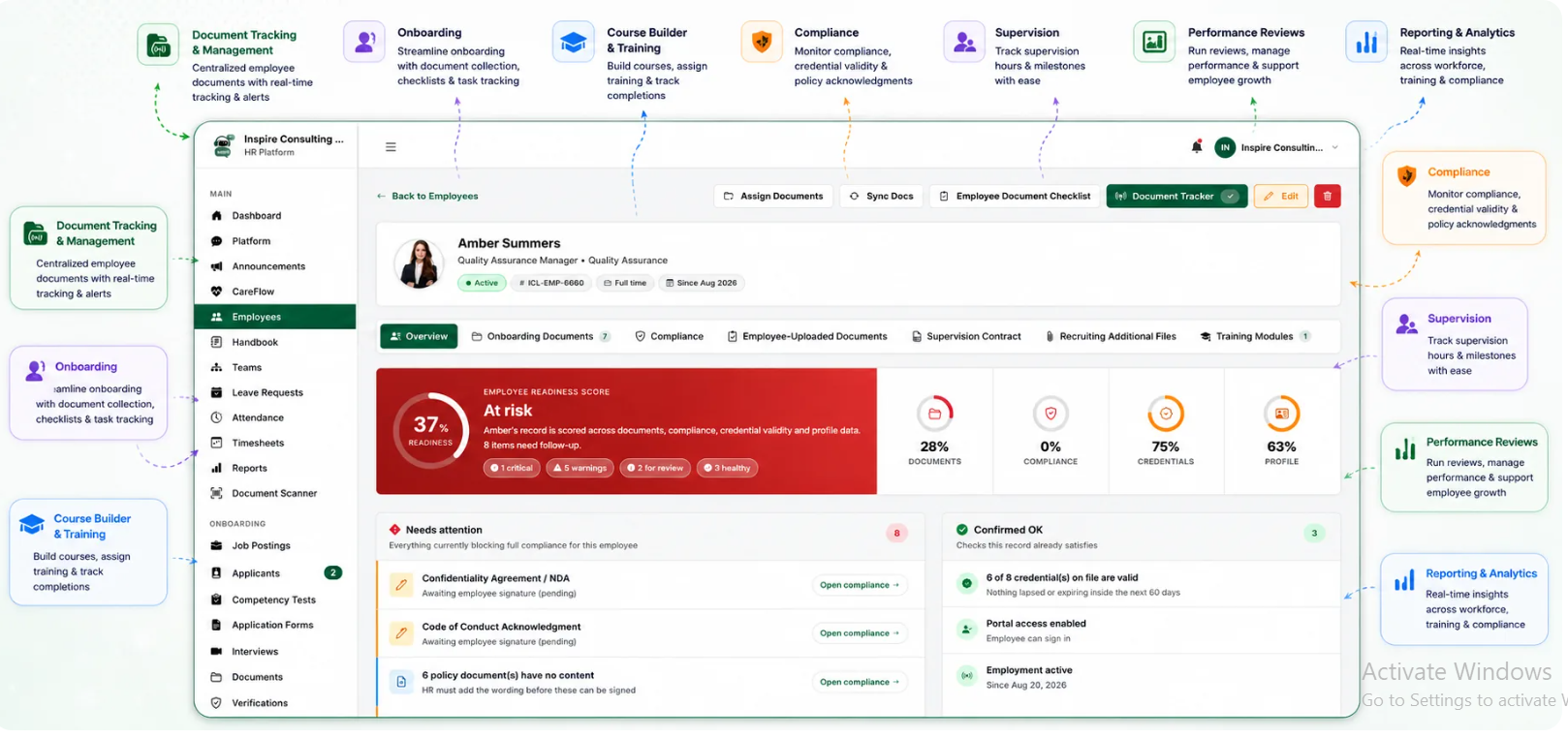
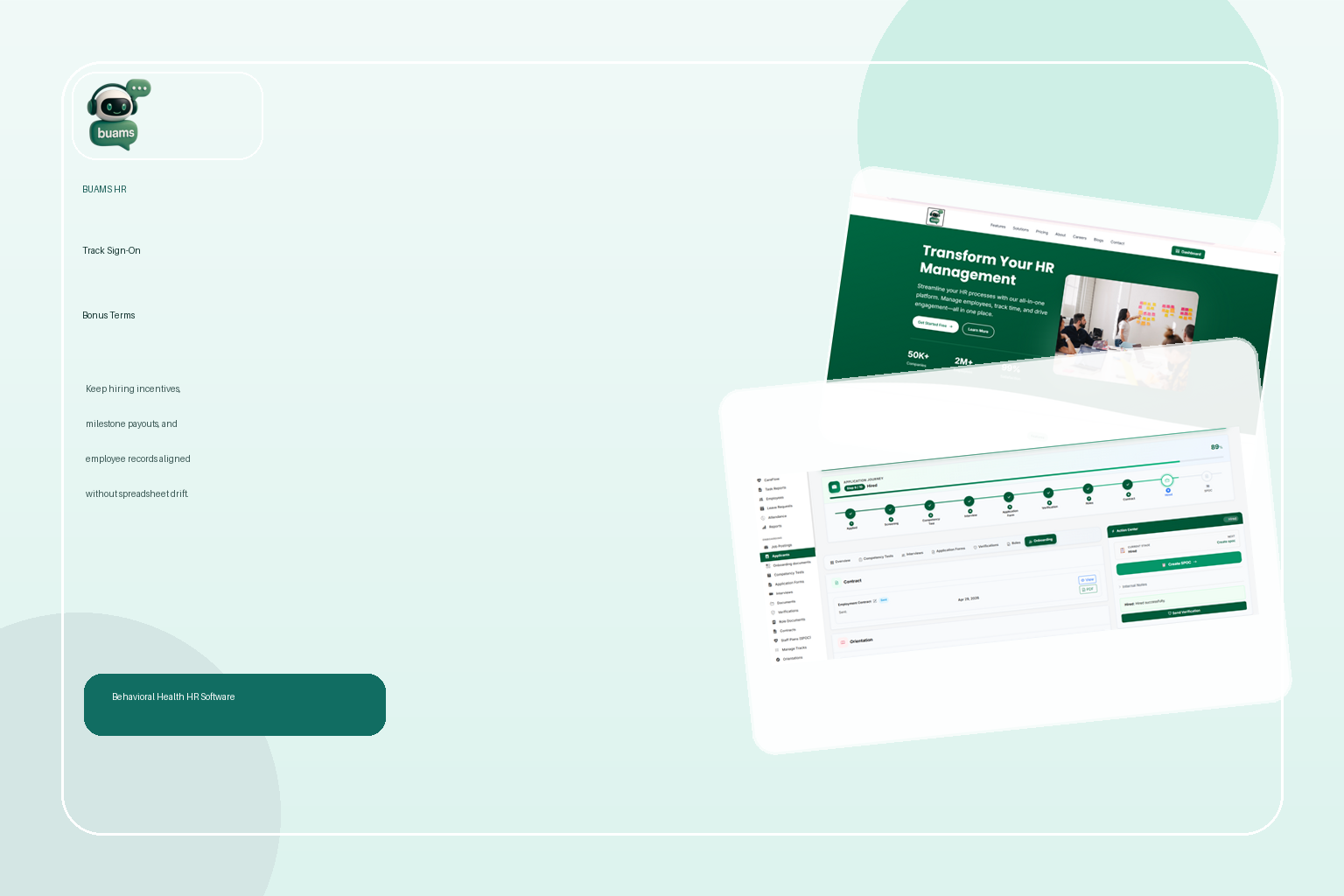
BUAMS HR gives behavioral health providers a better foundation for sign-on bonus agreement tracking software by keeping incentive documentation connected to the broader employee lifecycle. HR teams can centralize agreement files, acknowledgments, and milestone notes in the same environment used for onboarding, employee records, and compliance-sensitive workforce documentation.
That matters because bonus commitments rarely stand alone. A new hire may still need a license review, policy acknowledgments, training completion, or supervisor assignment before everything is truly complete. With a connected system, teams can reduce handoff problems between recruiting, HR, operations, and payroll while maintaining a clearer audit trail.
For multi-program providers, BUAMS HR also supports a more consistent process across locations. Leaders can reduce ad hoc exceptions, improve visibility into active commitments, and keep supporting records easier to retrieve when someone asks what was approved and why.
Best Practices for Rolling Out a Better Process
Final Thoughts
Hiring incentives can help behavioral health providers fill critical roles faster, but only if the agreements behind them are clear and well managed. Sign-on bonus agreement tracking software helps HR teams protect hiring speed without losing control of documentation, milestone follow-up, or repayment terms. For organizations that want a more consistent and compliance-aware process, BUAMS HR makes it easier to connect bonus agreements with the rest of the employee record instead of treating them like isolated paperwork.