Behavioral health providers rarely struggle because a single employee is missing one task. More often, risk builds quietly across the workforce. A program may have supervisors carrying too many new staff, direct care teams missing role-specific refreshers, or expanding sites that depend on a few employees with specialized experience. By the time those gaps show up in onboarding delays, inconsistent service coverage, or compliance findings, the organization is already reacting under pressure.
Skills gap analysis software gives HR and operations leaders a practical way to see those problems earlier. Instead of relying on scattered spreadsheets, verbal manager feedback, and outdated employee files, teams can compare role requirements against actual staff readiness in one structured workflow. That makes it easier to prioritize hiring, training, supervision, and internal development before workforce strain spreads into daily operations.
Key Takeaways
What Is Skills Gap Analysis Software?
Skills gap analysis software is a system for measuring the difference between what a role, program, or service line requires and what the current workforce can reliably deliver. In behavioral health, that may include clinical competencies, supervision availability, documentation expectations, credential-related responsibilities, onboarding completion, training status, and site-specific readiness factors.
The goal is not to create a generic talent inventory that sits unused. A strong skills gap analysis process should show leaders where risk is building in operational terms. That could mean one location has too few staff ready for crisis response, a growing outpatient program depends on a narrow pool of supervisors, or a residential team has inconsistent training completion across shifts. When those signals are visible early, leaders have more options than emergency hiring or last-minute reassignment.
For HR teams, the value also comes from structure. Instead of asking every manager to define readiness differently, the organization can standardize which requirements matter for each role and how missing readiness is tracked over time.
Why It Matters for Behavioral Health Providers
Behavioral health organizations operate in environments where workforce capability affects both compliance and care delivery. It is not enough to know how many employees are on the roster. Leaders need confidence that the right people are ready for the right work, with the right oversight, at the right locations.
Without that visibility, several problems tend to appear at once. Hiring teams may recruit for the loudest vacancy instead of the most strategic workforce risk. Supervisors may inherit employees who need more support than expected. Training deadlines may be met on paper while role readiness still varies widely between programs. When coverage becomes tight, managers may move staff into roles that look similar but have different documentation, supervision, or competency expectations.
Skills gap analysis software helps prevent those disconnects by tying workforce planning to real readiness evidence. For growing providers, that is especially important during expansion, leadership transitions, new program launches, or multi-site staffing changes.
What to Look For in Skills Gap Analysis Software
Role-based requirement mapping
The system should let teams define what readiness means by role, program, or service type. That may include training, experience, credentials, supervision requirements, language capabilities, or site eligibility.
Current employee readiness visibility
Gap analysis is only useful if the underlying employee data is current. Leaders should be able to review completion status, missing items, expiring requirements, and developmental needs without rebuilding the picture manually.
Program and site comparisons
Behavioral health providers often face uneven readiness across locations. Strong skills gap analysis software should make it easier to compare where coverage is strong, where it is thin, and where one team is carrying more risk than another.
Connection to hiring and development plans
Identifying a gap is not the finish line. The workflow should support action by linking findings to hiring priorities, onboarding plans, cross-training efforts, or supervisor follow-up.
Clear reporting for leadership
Executives, HR leaders, and program managers need a shared view of workforce risk. Reporting should help them understand whether the biggest problem is recruitment volume, training backlog, supervision capacity, or narrow bench strength in critical roles.
Common Gaps Manual Reviews Miss
Many providers review readiness informally, often during staffing meetings or after a service issue forces attention. That approach can miss patterns that matter:
These issues are hard to see when employee information is stored across separate files, shared drives, and manager memory. A structured system makes those patterns easier to review before they affect service stability.
How BUAMS HR Helps
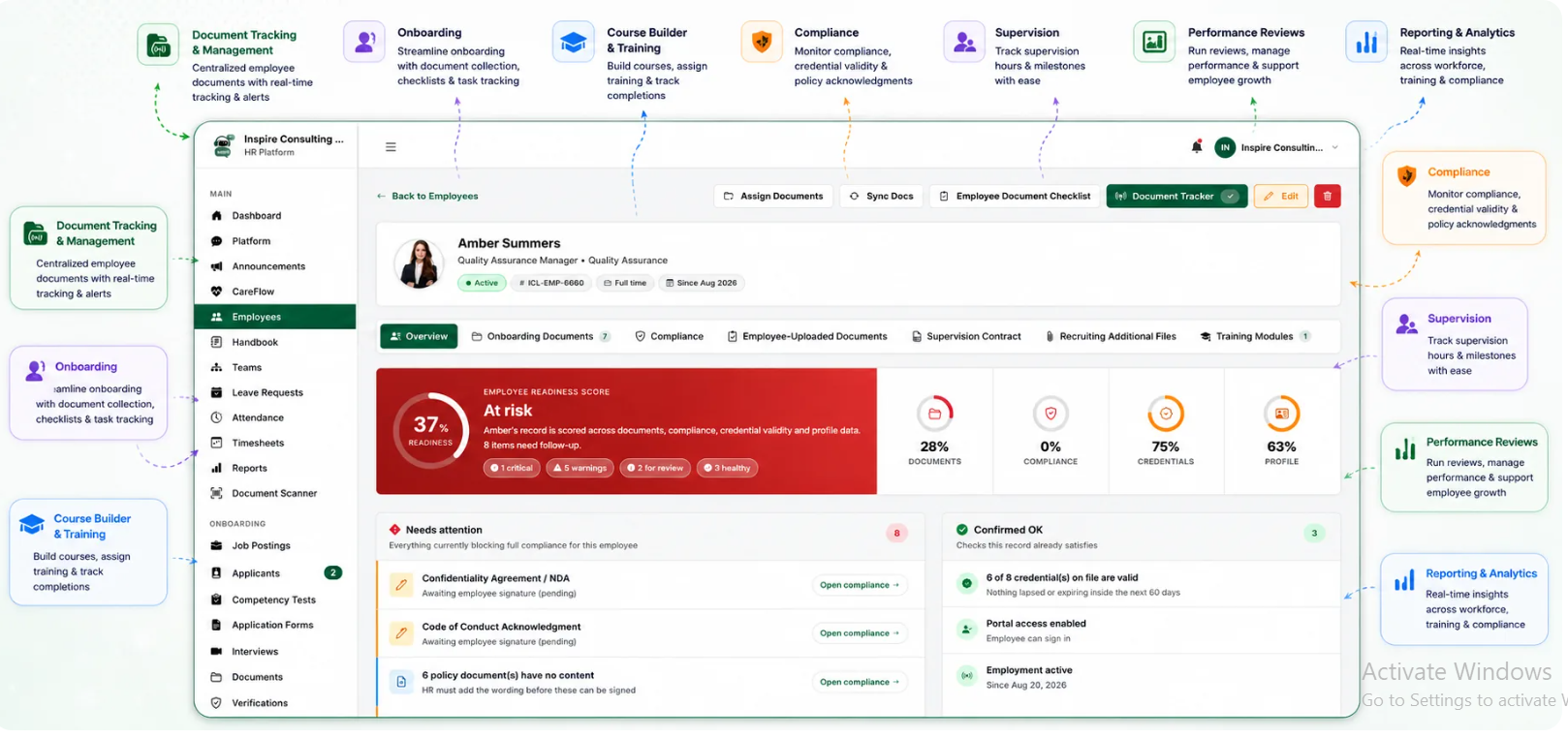
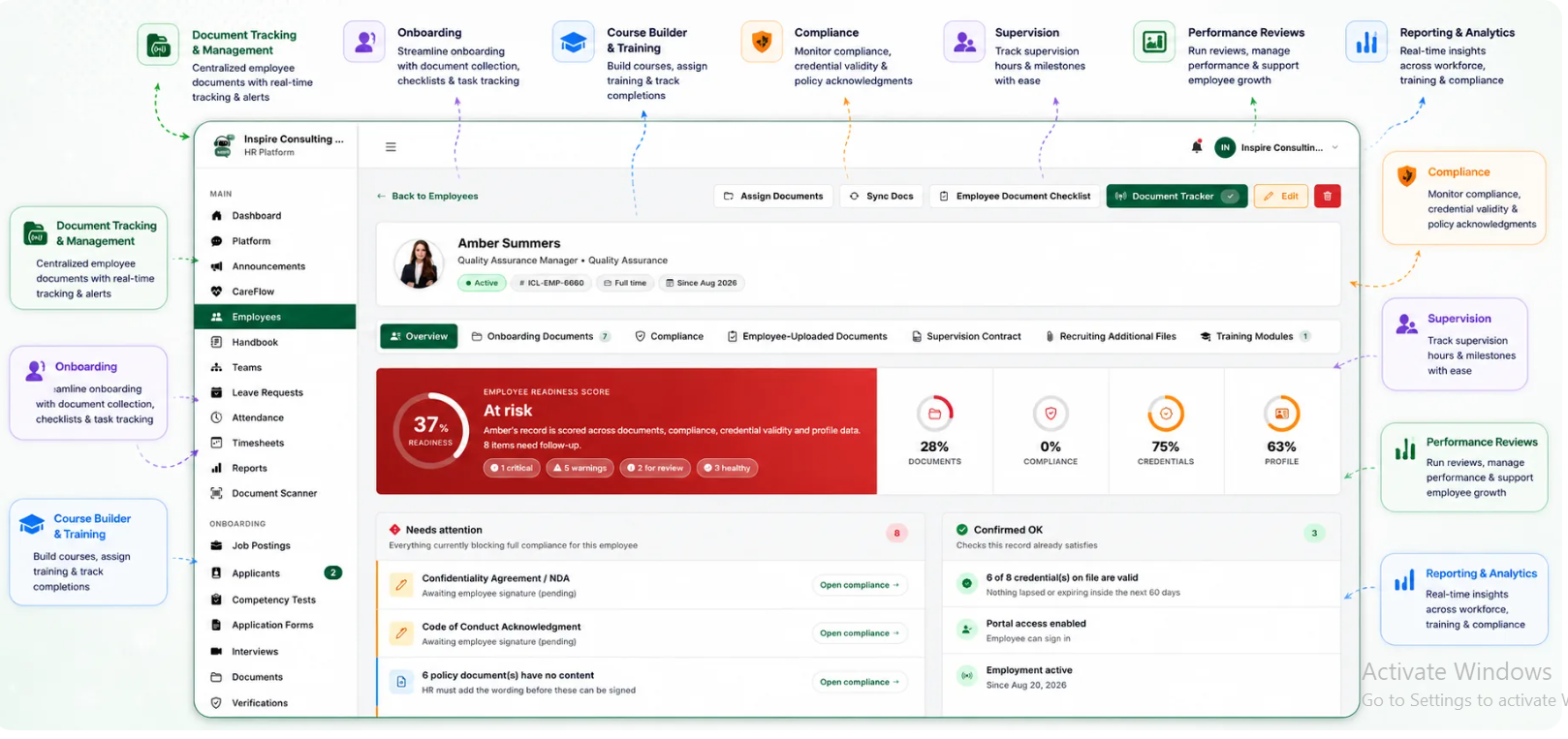
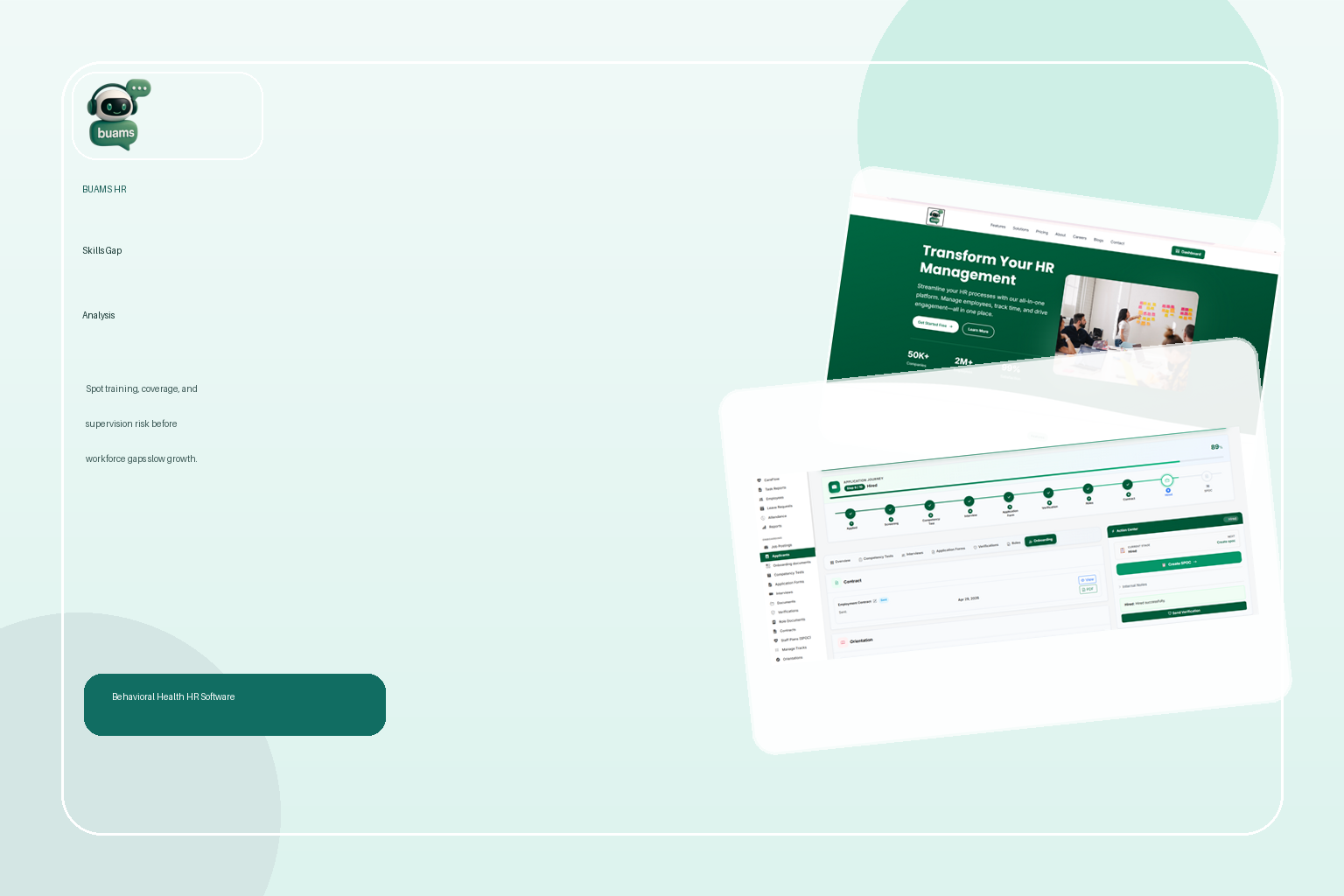
BUAMS HR can support a stronger skills gap analysis process by bringing key workforce information into one place. Instead of treating employee files, training records, compliance details, and role assignments as separate administrative tasks, teams can use connected records to understand readiness more clearly.
That matters when leaders need to answer practical questions quickly. Which programs have the thinnest supervision bench? Which employees are closest to being ready for expanded responsibilities? Where are missing training items creating avoidable delays? Which locations are carrying risk because too few staff members meet the full requirement profile? BUAMS HR helps teams organize the data behind those decisions so workforce planning is less reactive.
For behavioral health providers balancing growth with compliance expectations, this also creates a better bridge between HR and operations. Gap analysis no longer has to live in a one-time spreadsheet review. It can become part of an ongoing workforce management process supported by current employee records and role-based visibility.
Implementation Tips for a Better Gap Analysis Process
Final Thoughts
Skills gap analysis software helps behavioral health providers move from rough staffing assumptions to clearer workforce planning. When leaders can compare role expectations with current readiness across programs, they make better decisions about hiring, training, supervision, and internal mobility. For organizations trying to grow without losing operational control, a structured gap analysis process is far more reliable than discovering workforce weaknesses only after schedules tighten or compliance pressure rises.