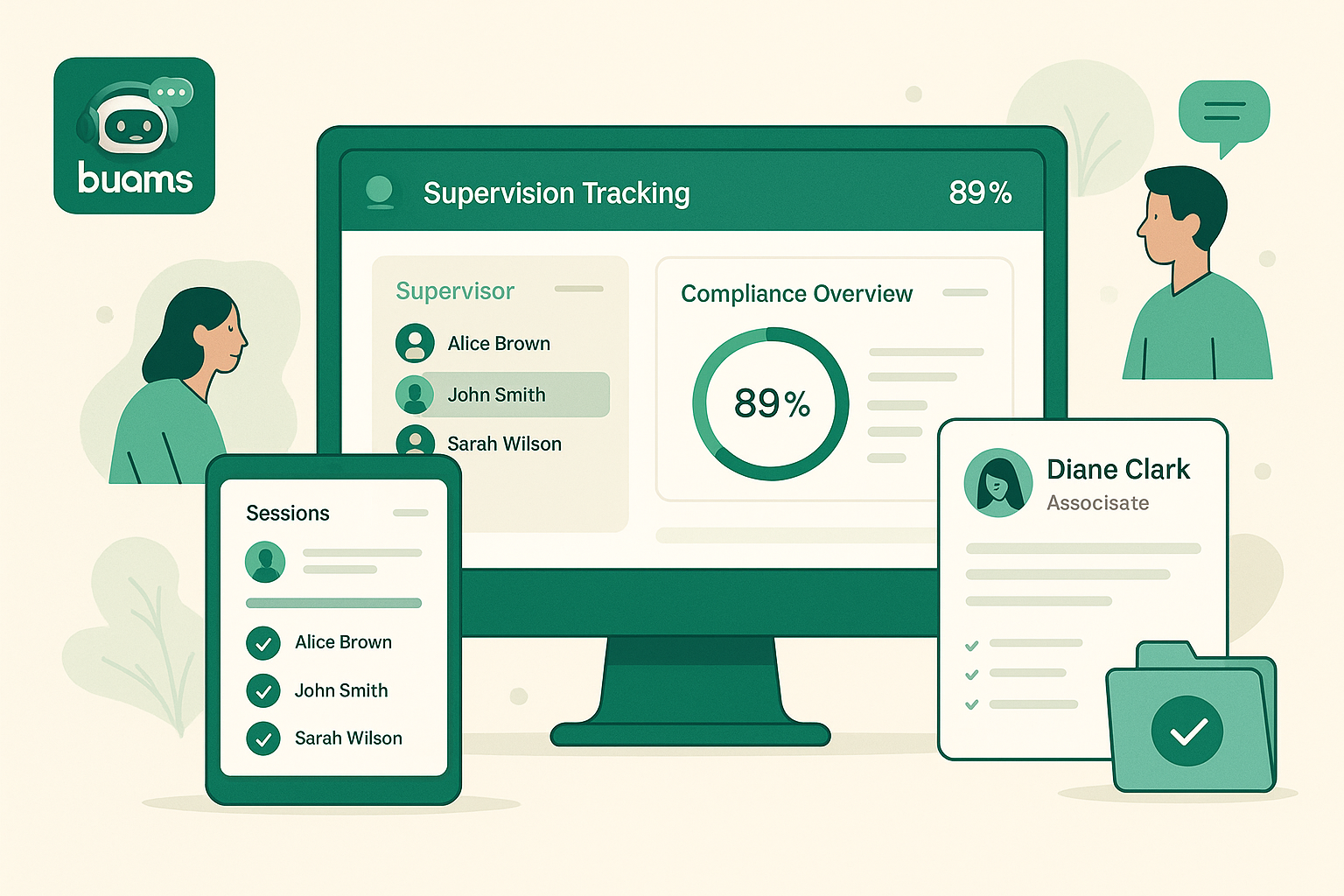
In behavioral health, staff supervision is not just a management best practice. It supports quality of care, strengthens compliance, and helps organizations reduce risk across clinical and administrative teams. When supervision records live in scattered spreadsheets, email threads, and paper notes, even well-run agencies can struggle to prove consistency.
That is why more providers are looking at staff supervision software as part of a broader behavioral health HR software strategy. A structured system makes it easier to track who needs supervision, when sessions are due, which documents are complete, and where follow-up is required.
What Is Staff Supervision Software?
Staff supervision software helps organizations manage recurring oversight activities for employees, supervisors, and compliance teams. In behavioral health settings, that can include clinical supervision, administrative check-ins, probationary reviews, documentation follow-up, and role-based oversight requirements.
Instead of relying on manual reminders and disconnected documents, the software creates a consistent process. Agencies can define expectations by role, assign responsible supervisors, track due dates, store supporting records, and monitor completion across the workforce.
Why Supervision Tracking Matters in Behavioral Health
Behavioral health organizations often operate with layered staffing models that include licensed clinicians, direct care staff, program managers, interns, and support teams. Each group may have different supervision expectations. If those requirements are not tracked consistently, small gaps can turn into bigger operational problems.
Missed or undocumented supervision can affect employee development, create confusion during internal reviews, and increase stress when an accreditor or funder requests supporting records. It can also make it harder for leadership to spot patterns, such as overloaded supervisors, repeated missed meetings, or teams that need more support.
When supervision is tracked in a central HR management software environment, agencies gain clearer visibility into what has been completed, what is overdue, and where attention is needed before issues escalate.
Common Signs Your Current Process Is Too Manual
These issues are common, especially in growing agencies. The risk is not only inefficiency. Inconsistent supervision workflows can weaken accountability and make compliance reporting more difficult than it needs to be.
What to Look for in Staff Supervision Software
Role-Based Tracking
Behavioral health providers need the ability to define supervision expectations by job type, license status, program, or location. A one-size-fits-all schedule rarely works in practice.
Centralized Documentation
Supervision records should be stored in a secure, organized employee file structure. That makes it easier to retrieve signed forms, meeting notes, acknowledgments, and related documents when needed.
Automated Reminders and Status Visibility
Good workforce management software helps supervisors and HR teams stay ahead of due dates with reminders, dashboards, and simple status tracking. This reduces last-minute scrambling and supports more consistent follow-through.
Compliance Alignment
Supervision should not be tracked in isolation. The best systems connect it with credential tracking, policy acknowledgments, onboarding steps, and document retention so agencies can support broader audit readiness.
Reporting for Managers and Leadership
Supervisors need an operational view, while leadership needs trend visibility. Strong reporting helps teams identify overdue tasks, monitor completion rates, and improve accountability without adding more manual work.
How BUAMS HR Helps Behavioral Health Providers Stay Organized
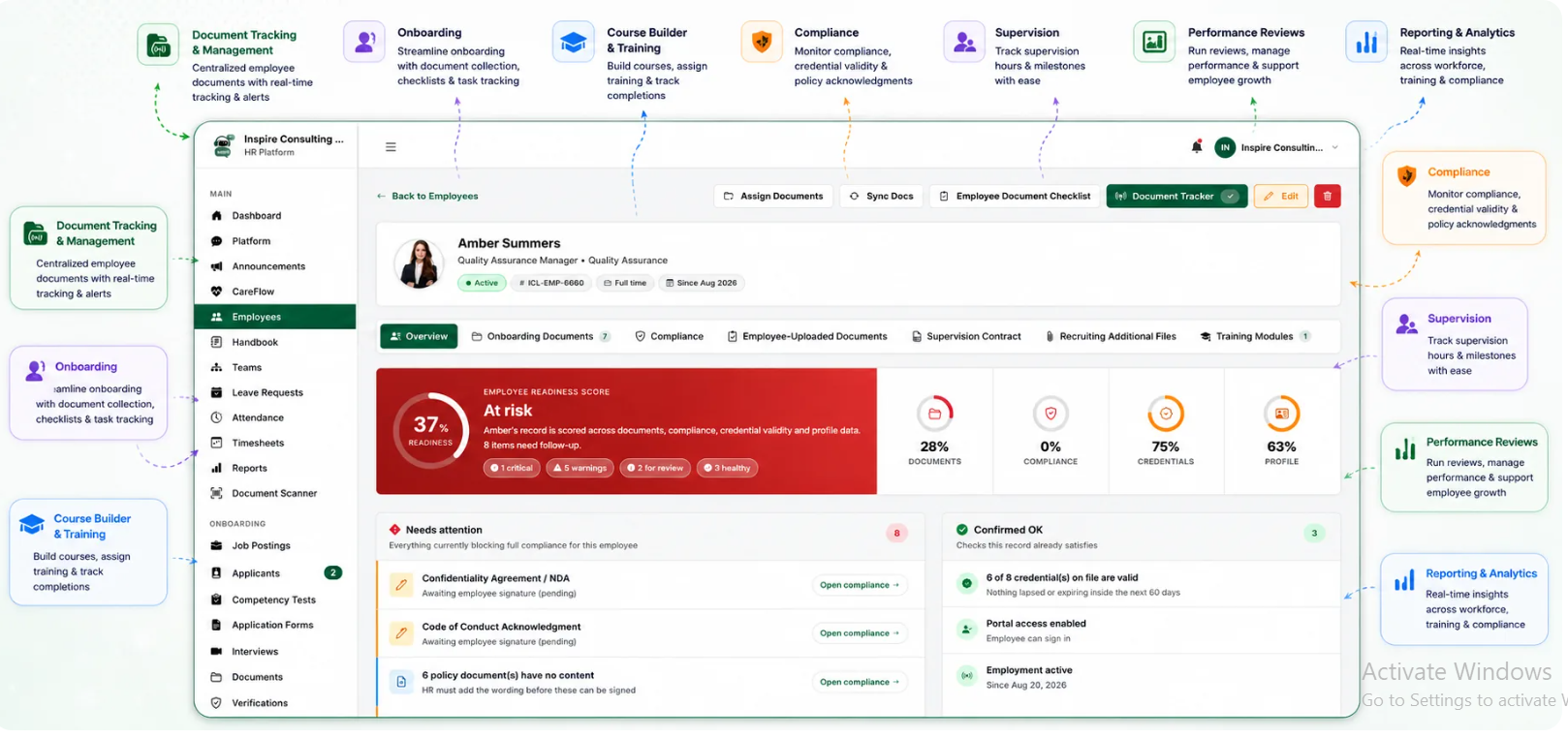
BUAMS HR gives behavioral health organizations a practical way to manage workforce processes in one place. Instead of separating supervision from employee files and compliance tracking, teams can use a connected human resources platform to keep records organized and easier to act on.
With BUAMS HR, agencies can support structured employee management workflows, maintain digital files, improve documentation consistency, and reduce the administrative burden that comes with manual follow-up. That is especially valuable for organizations managing multiple programs, locations, or supervisor relationships.
Because supervision often overlaps with onboarding, credential status, training requirements, and performance documentation, a centralized healthcare HR software approach helps teams work with better context and less duplication.
Final Thoughts
Staff supervision is too important to manage through scattered reminders and disconnected records. For behavioral health agencies, a stronger process improves accountability, supports staff development, and makes compliance easier to manage over time.
If your organization is still piecing supervision records together manually, this is a good moment to evaluate whether staff supervision software can simplify the work. A system like BUAMS HR can help turn supervision from a reactive admin task into a more reliable, audit-ready workflow.