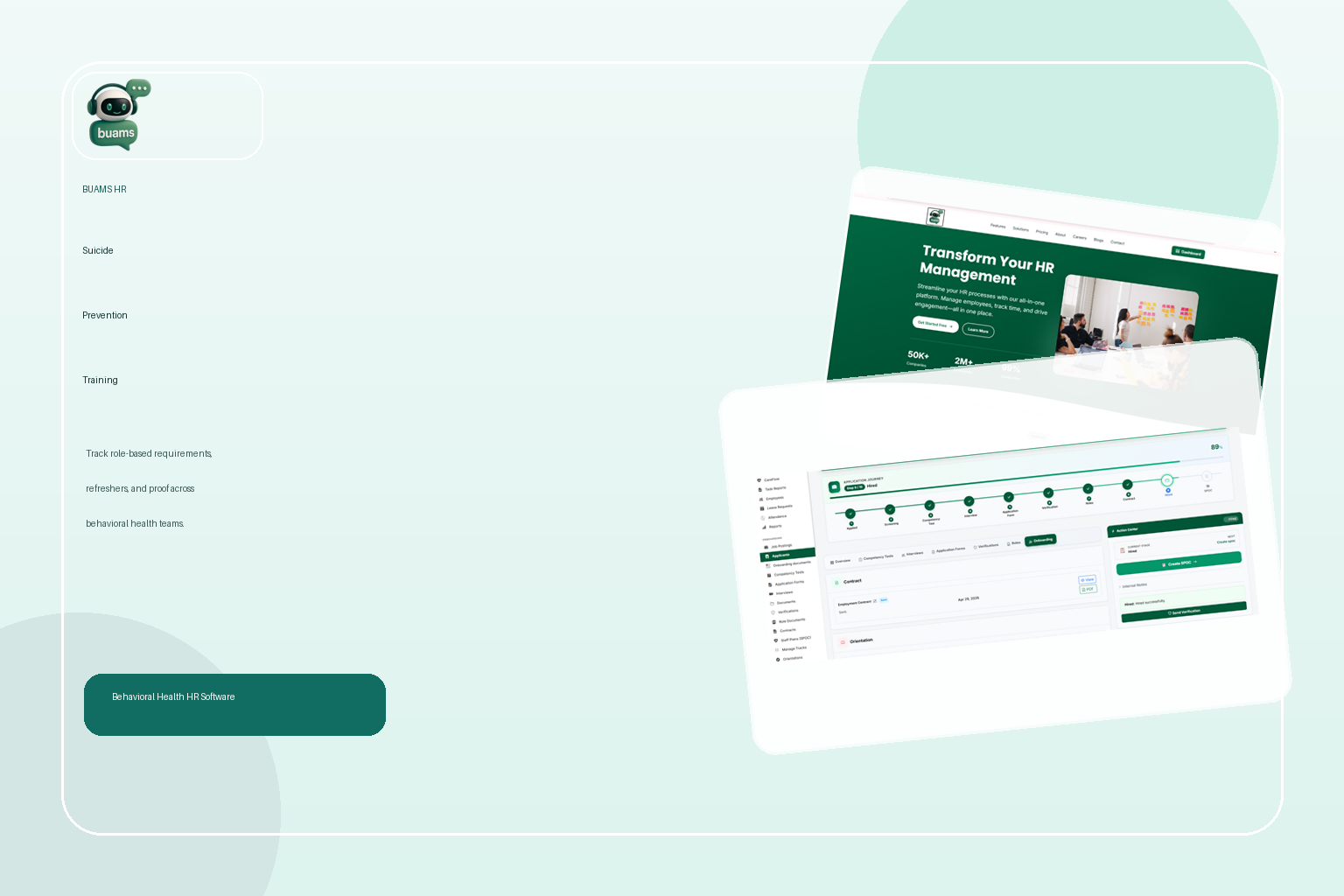
Behavioral health providers depend on staff who are prepared to recognize warning signs, respond appropriately, and document required training without gaps. Suicide prevention education often touches multiple roles, multiple refresh cycles, and multiple proof points across the organization. When HR teams manage those requirements with disconnected spreadsheets, inbox reminders, and shared folders, it becomes difficult to confirm who is current, what training version was completed, and whether the organization can prove readiness during an audit or program review. Suicide prevention training tracking software gives providers a more reliable way to manage one of the most important workforce readiness obligations in behavioral health.
The challenge is not just assigning a course. Behavioral health organizations need to track role-based requirements, due dates, completion evidence, supervisor follow-up, and retraining schedules across clinicians, peer staff, case managers, residential employees, and support teams. A structured system helps HR and operations leaders keep that work visible so training readiness does not depend on memory or last-minute manual checks.
Key Takeaways
What suicide prevention training tracking software solves
Training requirements become hard to manage when each program handles them differently. One site may track completions in a spreadsheet, another may save certificates in a local folder, and a third may rely on supervisors to remember refresher timing. Over time, that creates conflicting records and limited confidence in what is actually current. If a reviewer asks for proof by employee, by location, or by role, staff may spend hours pulling together information that should already be organized.
Suicide prevention training tracking software creates a single workflow for assigning required training, recording completions, storing proof, and monitoring upcoming refreshers. Instead of chasing disconnected records, HR teams can quickly see who is complete, who is due soon, and where follow-up is needed before readiness slips.
Why this matters so much in behavioral health
Behavioral health providers operate in environments where staff preparedness directly affects client safety, program quality, and regulatory confidence. Training expectations may vary by role, payer, location, program type, or internal policy. New hires may need training before independent client contact, while existing staff may need annual refreshers or updated modules after policy changes.
Because behavioral health teams often work across multiple shifts and service models, even a small documentation gap can create wider uncertainty. A better system turns training readiness into an active management process instead of a reactive cleanup project.
What to look for in suicide prevention training tracking software
Role-based requirement setup
Not every employee needs the same training pathway. Good software should let HR define requirements by role, program, site, or employee type so new assignments trigger the right expectations automatically. That reduces manual sorting and helps prevent under-training or over-assignment.
Refresher and expiration tracking
Initial completion is only part of the job. Behavioral health providers also need visibility into refresh cycles, overdue statuses, and approaching deadlines. Software should support date-based reminders that begin early enough for staff and supervisors to act before a requirement becomes urgent.
Certificate and proof storage
Training records are more useful when proof is stored with the employee file instead of scattered through email attachments or learning folders. A strong system makes it easy to attach certificates, sign-in sheets, attestations, or internal completion records so audit evidence is always connected to the person and the requirement.
Supervisor visibility and accountability
Supervisors should not have to wait for HR to send manual status updates. When leaders can see who is complete, who is overdue, and who needs follow-up, they can reinforce accountability without creating extra administrative back-and-forth.
Reporting across programs
Behavioral health organizations often need to answer questions by site, team, credential type, or service line. Dashboards and filtered reporting help leaders identify patterns such as one location falling behind, one role group with repeated overdue items, or a newly launched program with incomplete training readiness.
Best practices for a stronger training readiness process
Software works best when organizations define a clear operating model around it. Behavioral health providers should decide when suicide prevention training is required, what proof counts as complete, when supervisors are notified, and what escalation steps apply when deadlines are missed. Clear standards make reporting more trustworthy and reduce confusion across programs.
It also helps to connect suicide prevention training to the wider workforce readiness picture. HR should be able to review training status alongside licenses, supervision requirements, acknowledgments, health documents, and other assignment conditions. That broader view is what helps organizations make safe staffing decisions with confidence.
How BUAMS HR helps behavioral health organizations stay organized
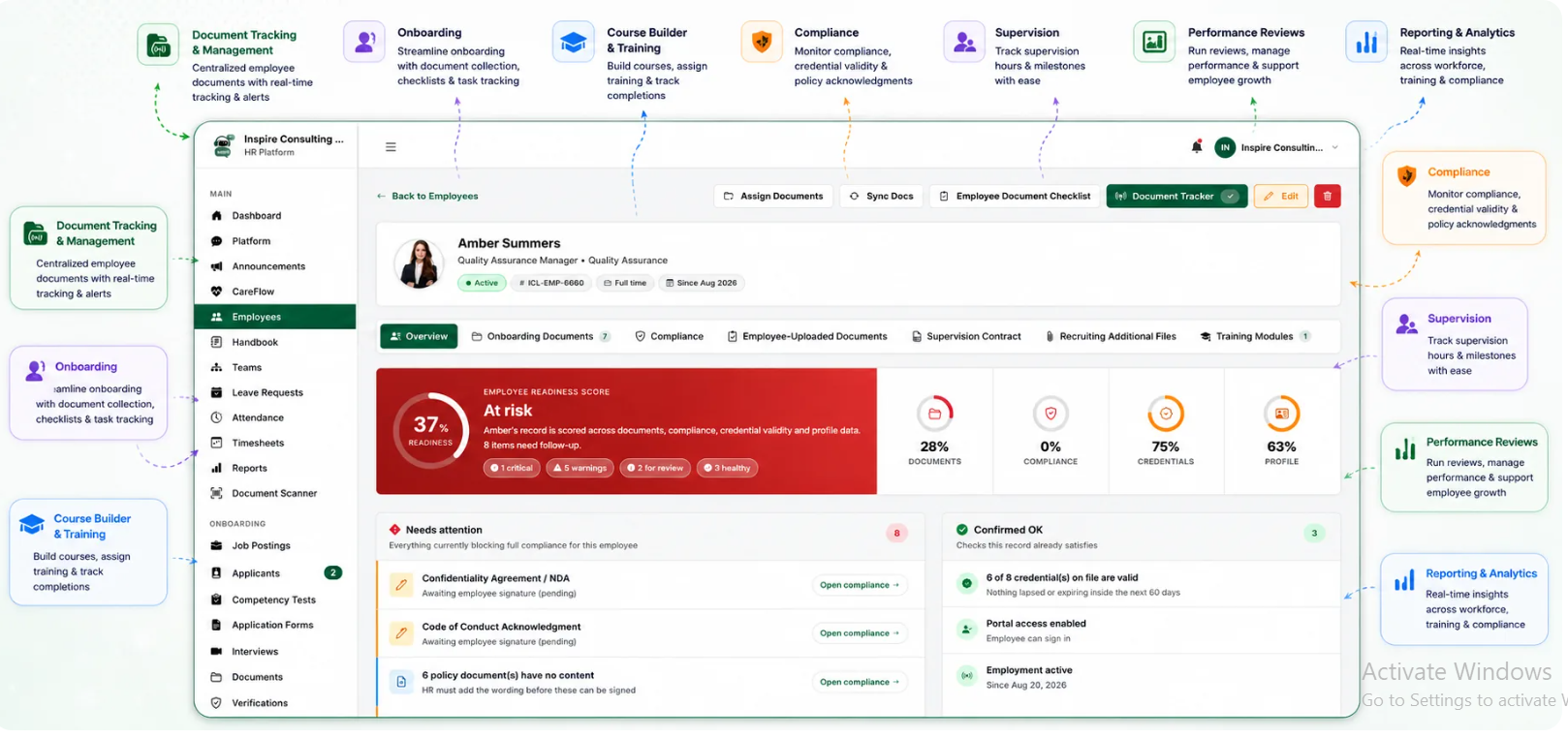
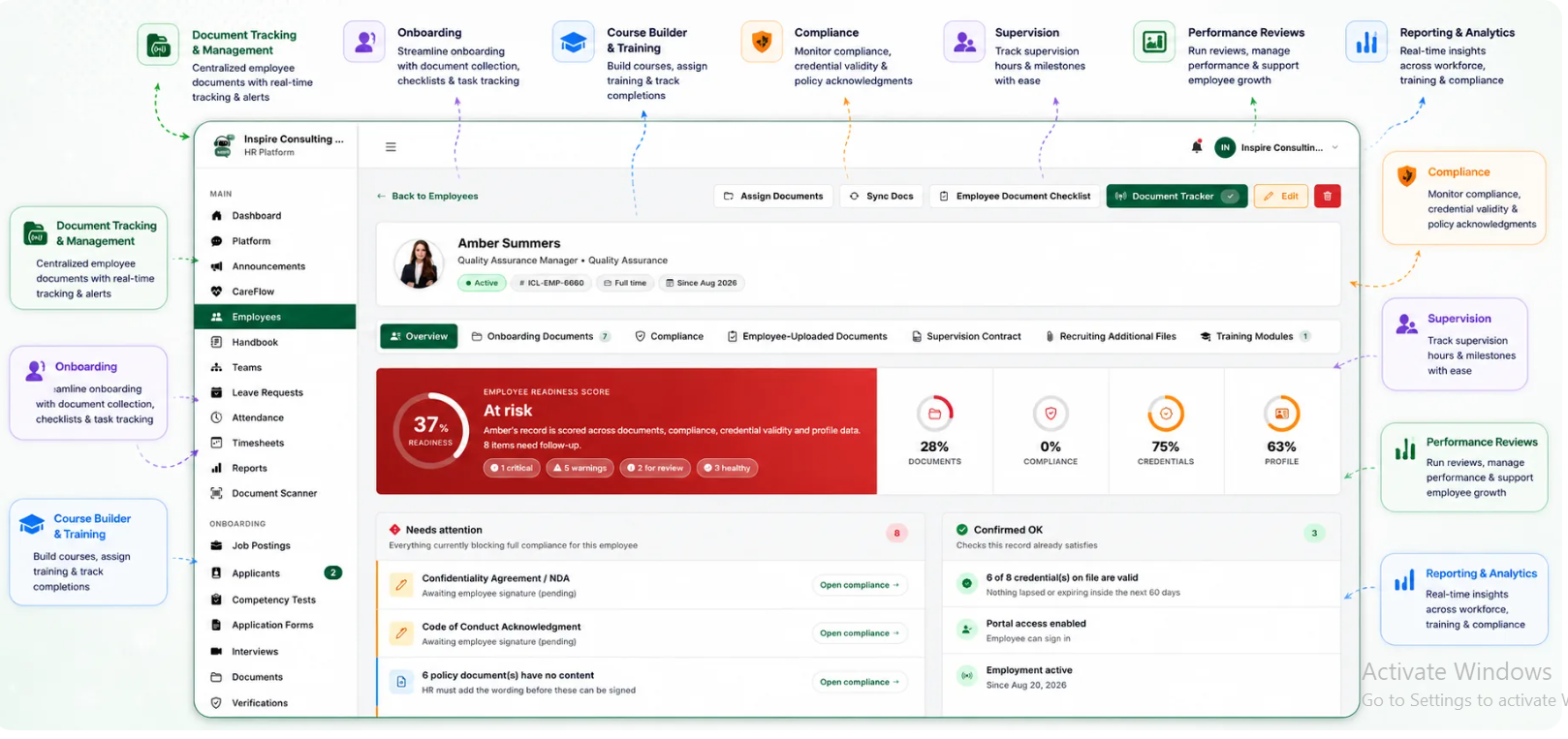
BUAMS HR helps behavioral health providers manage workforce readiness in one system instead of spreading critical requirements across separate tools. Teams can centralize employee records, maintain date-based compliance tracking, organize supporting documents, and create more consistent follow-up around important staff obligations like suicide prevention training.
With BUAMS HR, organizations can improve visibility into upcoming refreshers, keep documentation attached to the employee file, and support cleaner coordination between HR, supervisors, and compliance leaders. That means fewer surprises before audits, fewer last-minute training scrambles, and better confidence that staff readiness is being managed proactively across the workforce.
Final Thoughts
Suicide prevention training tracking software matters because it helps behavioral health providers manage a critical readiness obligation with more consistency and less manual risk. When organizations can see requirements clearly, prove completion quickly, and act before refreshers expire, they strengthen both compliance and operational confidence. BUAMS HR supports that kind of disciplined, practical approach by helping teams keep training, documentation, and employee readiness aligned in one place.