Behavioral health providers often depend on formal supervision agreements to support associate-level clinicians, provisional license holders, trainees, and other staff whose work must be tied to a documented oversight relationship. When those agreements live across email threads, shared drives, and paper folders, HR teams can lose track of who is supervising whom, when terms changed, and whether the employee’s current assignment still matches the conditions on file. Supervision agreement tracking software gives organizations a structured way to connect those details before a documentation gap turns into a compliance problem.
That matters because a supervision agreement is rarely just an administrative attachment. It can define required meeting frequency, approved duties, site limitations, escalation paths, and the supervisor responsible for reviewing work. If any of those elements change without clear tracking, the organization may keep scheduling a clinician based on assumptions that are no longer true. What looks like a small recordkeeping issue can quickly affect licensure compliance, service delivery, and audit readiness.
Key Takeaways
What Is Supervision Agreement Tracking Software?
Supervision agreement tracking software is a workflow used to organize the documents, dates, and responsibilities tied to required clinical or professional oversight. In behavioral health, that can include supervision agreements for associate counselors, LMSWs, LGPCs, trainees, interns, peer support roles, and other staff who cannot practice independently without a documented supervisory relationship.
The workflow should do more than store a signed PDF. It should show which employee is covered, which supervisor is assigned, when the agreement started, when it must be reviewed, what practice conditions apply, and whether supporting documentation is complete. It should also make it easy to update the record when a supervisor leaves, an employee transfers sites, caseload expectations change, or board requirements shift.
In practical terms, the goal is to keep supervision status operationally useful. Teams should be able to confirm that the agreement on file still supports the employee’s current work, not just prove that a form existed at some point in the past.
Why It Matters for Behavioral Health Providers
Behavioral health organizations operate in an environment where supervision requirements can affect hiring speed, assignment eligibility, billing readiness, and regulatory exposure at the same time. A provider may hire a promising clinician quickly, but that hire only becomes truly ready when the right oversight structure is documented and active. If the agreement is delayed, outdated, or disconnected from the employee’s role, the organization can face avoidable risk.
There are also everyday operational consequences. Supervisors change jobs, employees move between programs, and service lines expand into new settings. If the organization does not have a reliable way to review and refresh supervision agreements, yesterday’s paperwork may no longer match today’s staffing model. That creates confusion about who can sign off, who can oversee services, and whether the employee is still working within approved conditions.
For HR and compliance teams, the challenge is not just collecting one document at hire. It is maintaining a living oversight record that reflects how the employee is actually deployed. Better tracking supports cleaner audits, stronger internal accountability, and fewer last-minute escalations when questions come up.
What to Track in a Supervision Agreement Workflow
The strongest workflows treat supervision agreements as part of a broader employee readiness record. That means tracking the agreement itself, the people attached to it, and the operational conditions that depend on it. When those details stay linked, teams can review a staff member’s status with much more confidence.
For many behavioral health providers, the most useful improvement is connecting the agreement to role and site context. If an employee is approved for supervised work in one program but not another, that distinction should be visible. If a supervisor is responsible for several associate-level clinicians, the organization should be able to see coverage risk immediately when that supervisor goes on leave or exits the organization.
Common Failure Points to Avoid
One common mistake is storing the supervision agreement in the employee file but never building a process around it. The document may be technically present while still being functionally invisible. If no one reviews effective dates, confirms assignment fit, or updates the record when a supervisor changes, the organization is operating on stale information.
Another failure point is separating supervision records from staffing decisions. Operations leaders may assume a clinician is ready for a certain caseload or location because the person was cleared once before, while HR knows a required supervision change is still pending. Without a shared workflow, those teams can make conflicting decisions based on different versions of the truth.
Behavioral health providers should also watch for agreement changes that never make it back into the central record. Informal email approvals, verbal workarounds, and delayed signatures are especially risky when staff are covering urgent needs. Those workarounds may feel practical in the moment, but they can leave the organization without defensible documentation later.
Best Practices for Stronger Oversight Control
A strong process starts by standardizing when supervision agreements are created, reviewed, and updated. Instead of treating each case as a one-off, providers can define checkpoints at hire, assignment change, supervisor change, credential renewal, and periodic compliance review. That creates a repeatable path that reduces dependence on memory.
It also helps to create early alerts around supervision coverage risk. If one supervisor oversees multiple associate-level clinicians, a departure or leave event should trigger immediate review of every affected employee. The organization should not wait until an audit or scheduling conflict reveals that active oversight documentation is incomplete.
Finally, the workflow should be visible to the teams that make staffing decisions. HR may own the official record, but operations, compliance, and program leadership all need a reliable way to confirm whether supervision conditions still support the planned assignment.
How BUAMS HR Helps
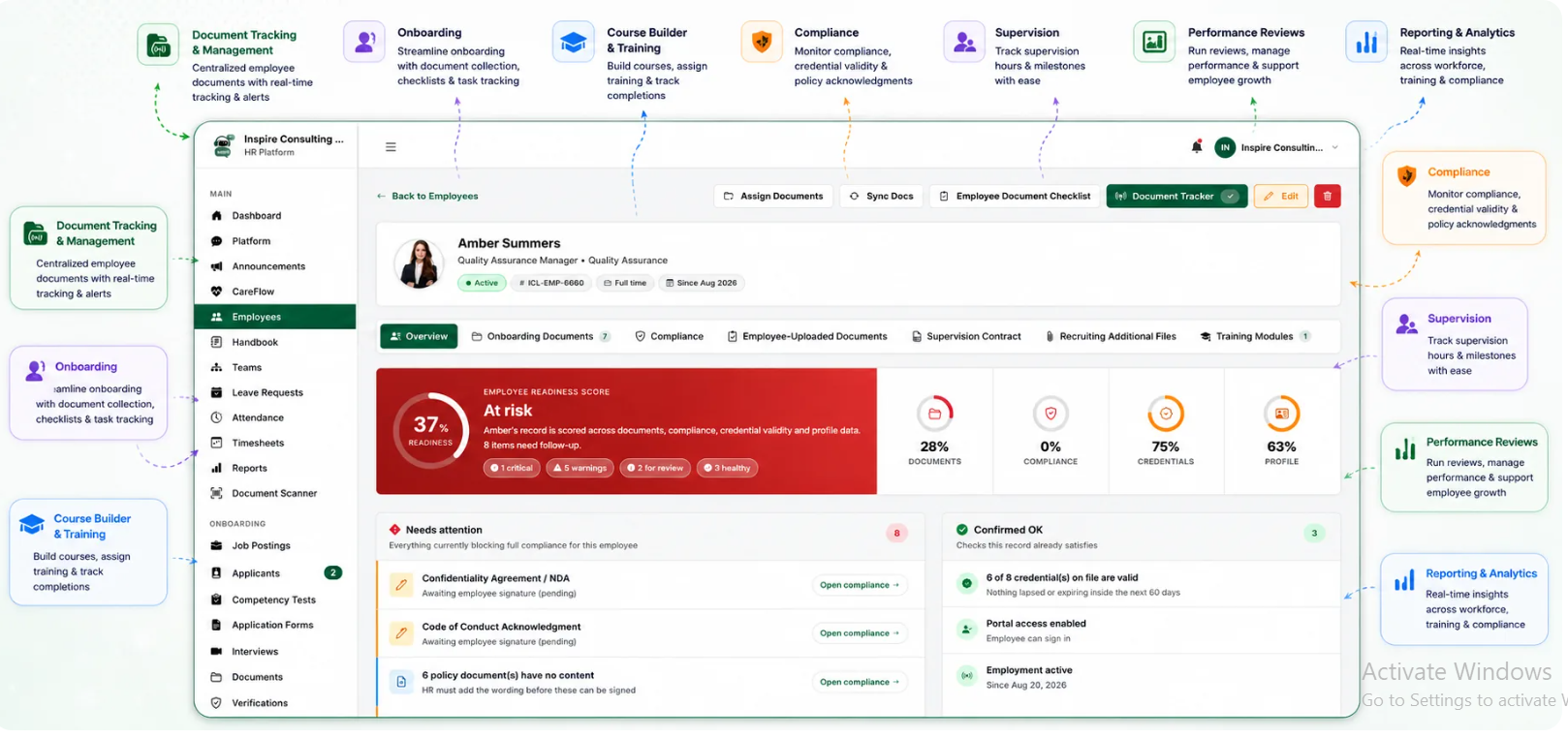
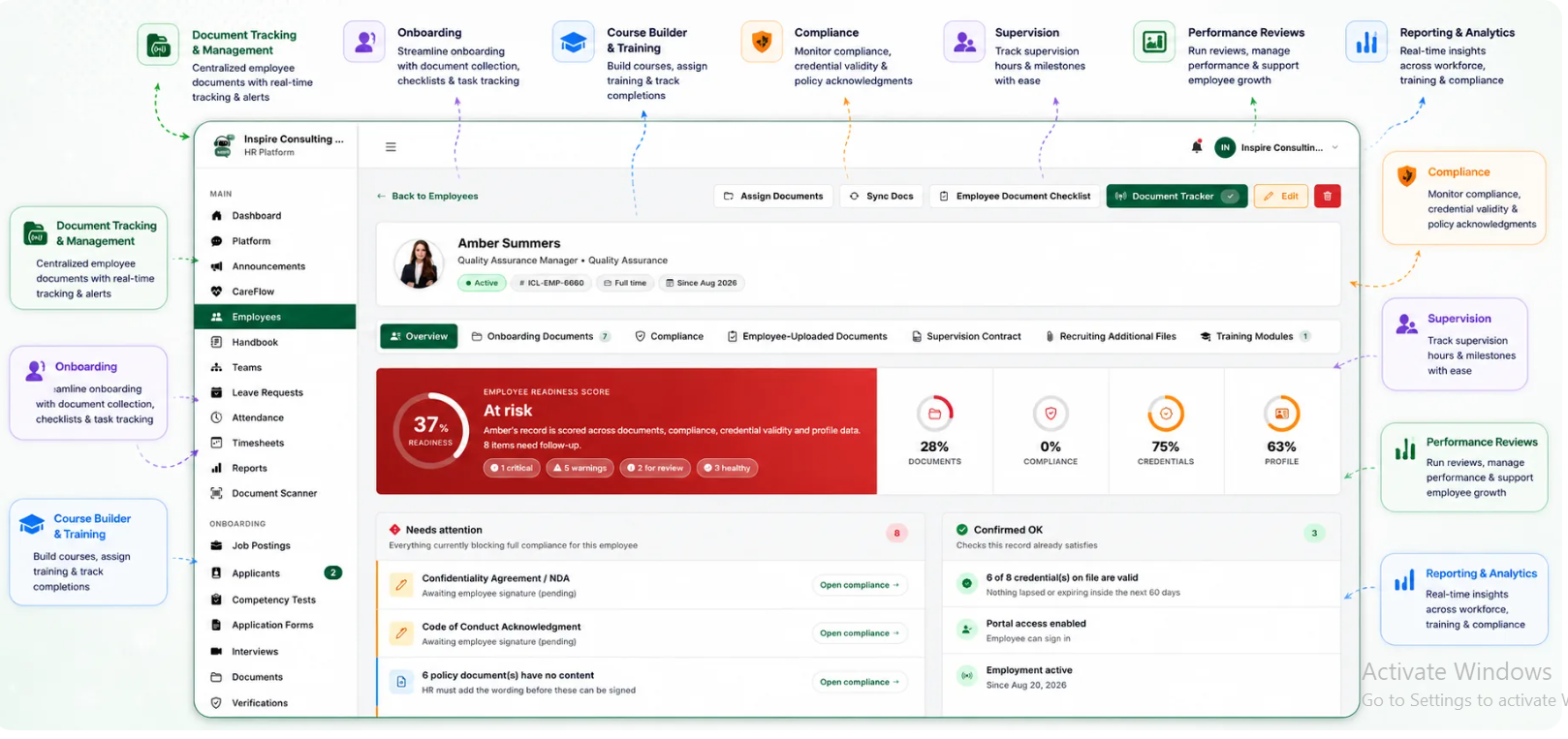
BUAMS HR helps behavioral health providers keep employee documents, compliance workflows, and role-based readiness records organized in one system. For teams managing supervised clinicians, that structure makes it easier to connect the supervision agreement to the employee file, the assigned supervisor, supporting documentation, and the follow-up tasks that keep oversight current.
Instead of relying on disconnected folders and reminder emails, organizations can maintain a cleaner process for reviewing effective dates, updating changes, and confirming that documented supervision still matches real staffing conditions. That improves internal coordination while reducing the risk that important oversight details are missed during growth, turnover, or program changes.
When supervision documentation is visible and current, behavioral health providers can make faster hiring and assignment decisions without losing compliance control. BUAMS HR supports that kind of disciplined workflow by helping teams keep the right records tied to the right employee status at the right time.
Final Thoughts
Supervision agreement tracking software gives behavioral health providers a more reliable way to manage one of the most important links between employee readiness and compliance. When oversight relationships, agreement dates, and role conditions stay aligned, organizations are better prepared to support clinicians and protect service continuity.
In a field where staffing flexibility often depends on documented supervision, better tracking is not just an administrative upgrade. It is a practical safeguard for audits, workforce planning, and safe day-to-day operations.