Behavioral health organizations rarely stop moving when a supervisor takes PTO, covers another program, or steps away unexpectedly. Hiring approvals still need signatures, employee questions still need decisions, and documentation still needs a clear owner. When delegation is handled through email threads, verbal handoffs, or sticky notes, small gaps can turn into delayed onboarding, missed follow-up, and compliance risk. Supervisor delegation tracking software gives HR teams a cleaner way to document who is covering what, for how long, and what approvals or oversight responsibilities move with that coverage.
For behavioral health providers, delegation matters because workforce decisions often affect patient-facing operations, supervision, access, and compliance at the same time. A simple coverage change may touch new-hire approvals, corrective action review, training sign-off, schedule decisions, and documentation responsibilities. The more sites, programs, and supervisors an organization manages, the harder it becomes to keep those temporary shifts visible without a reliable system.
Key Takeaways
What Is Supervisor Delegation Tracking Software?
Supervisor delegation tracking software is a structured way to record when a manager or clinical leader temporarily hands off specific responsibilities to another approved person. Instead of relying on scattered messages, the organization maintains a documented record of the delegated duties, the effective date range, the people involved, and the related actions that may require review.
In a behavioral health setting, delegation may include interview approvals, onboarding sign-off, timesheet review, employee coaching follow-up, file completion review, supervision coverage, or approval of role-related changes. The goal is not to remove accountability from the original supervisor. The goal is to make temporary coverage explicit so employees, HR, and leadership all know where decisions should go during the coverage window.
Why Delegation Breaks Down So Easily in Behavioral Health
Behavioral health providers often operate across multiple programs, service lines, and locations. Supervisors may oversee outpatient teams, community-based staff, residential programs, or mobile services with different documentation and readiness expectations. When one leader is out, coverage can become informal fast.
That creates several common problems. HR may not know who can sign off on a pending hire. Employees may route urgent requests to the wrong person. Temporary coverage may be understood by operations but never reflected in HR records. Follow-up items may remain open after the original supervisor returns because nobody can see what was handled during the absence.
These breakdowns are especially risky when delegation touches regulated activities such as supervision, training completion, credential follow-up, employee incidents, or access-related approvals. Even when the organization makes the right decision operationally, weak documentation can make later review difficult.
What to Look for in Supervisor Delegation Tracking Software
Defined delegation windows
A useful system should record when delegation starts and when it ends. This prevents open-ended coverage arrangements that stay in place longer than intended. Date-bound delegation also helps HR confirm whether a specific approval happened during an authorized coverage period.
Role-based responsibility mapping
Not every supervisory duty should transfer automatically. Some organizations need separate delegation rules for hiring, file review, performance follow-up, scheduling, or clinical oversight support. A strong workflow lets HR identify which responsibilities are covered and which still require escalation.
Clear employee and program visibility
Delegation is easier to manage when the system shows which employees, teams, or locations are affected. This matters for multi-site behavioral health providers where a supervisor may cover one program but not another. Visibility helps keep requests from being routed blindly.
Audit-friendly documentation
When questions come up later, HR should be able to confirm who approved a step, what authority they were given, and whether the delegation was active at the time. A searchable record reduces guesswork and protects the organization from conflicting narratives.
Connection to employee files and follow-up tasks
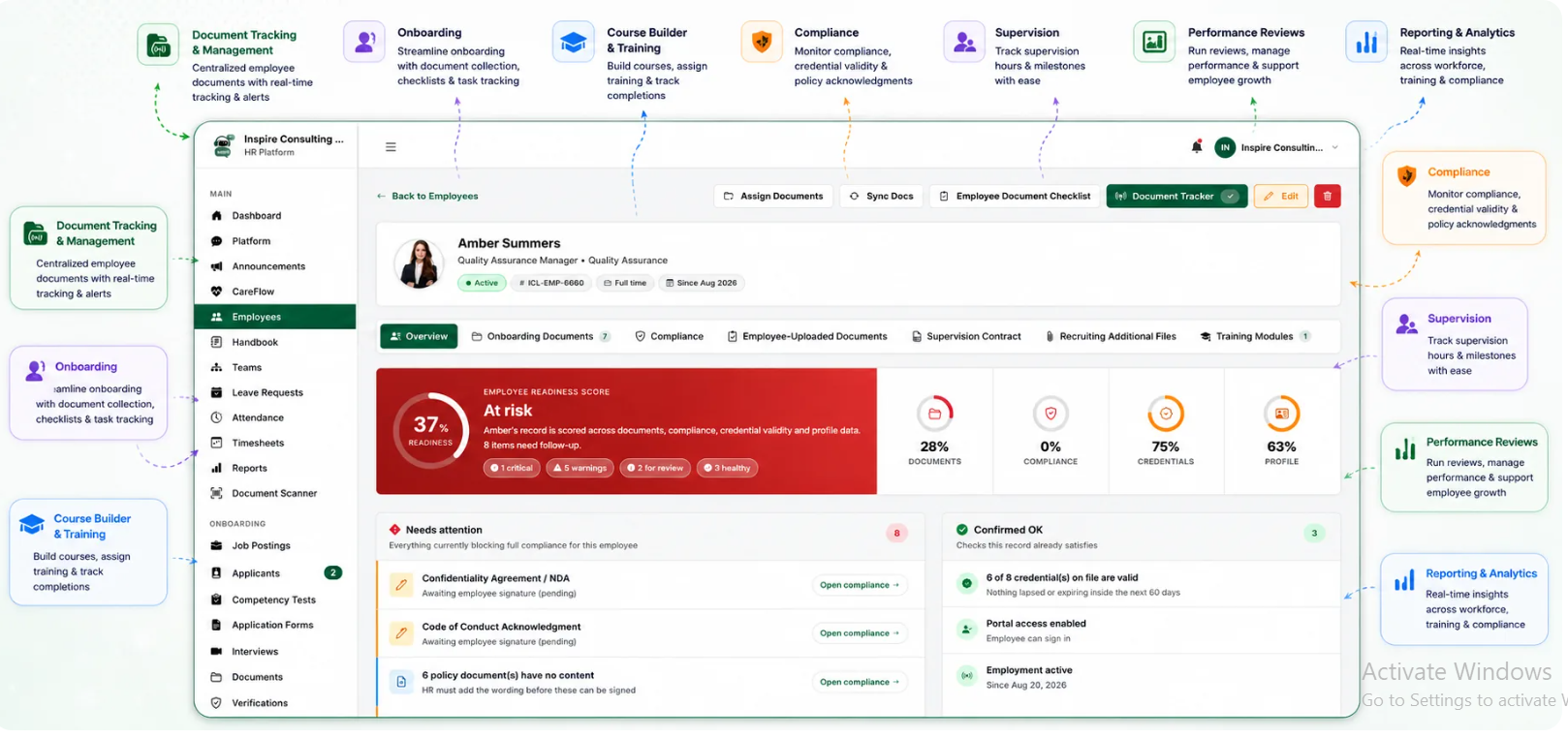
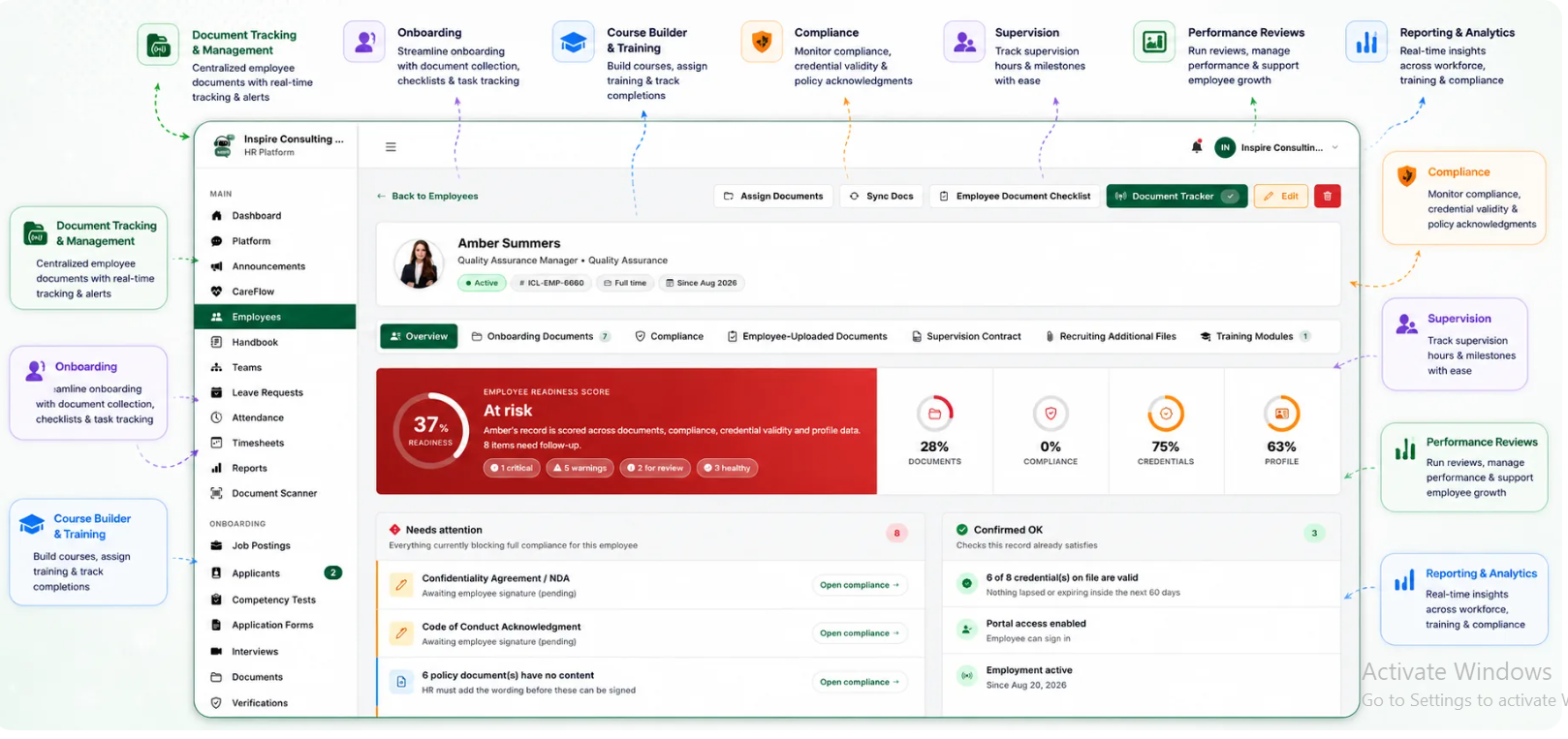
Delegation becomes more useful when it connects to the work that follows. For example, if a temporary supervisor approves an onboarding milestone or flags a missing document, that activity should be visible alongside the employee record and related tasks instead of sitting in someone's inbox.
Best Practices for Temporary Supervisor Coverage
Start by defining which delegation scenarios occur most often. PTO coverage, leadership transitions, program expansion, leave coverage, and urgent site-level absences are usually the highest-value starting points. Once those scenarios are clear, standardize a small set of required fields for each delegation record.
It also helps to separate decision rights from notification rights. Some people only need visibility into coverage, while others need actual approval authority. Keeping that distinction clear reduces accidental approvals and unnecessary bottlenecks.
Finally, close the loop when delegation ends. A good process should confirm whether open items were resolved, reassigned, or handed back. That step prevents temporary coverage from creating long-term ambiguity.
How BUAMS HR Helps Behavioral Health Providers Stay Organized
BUAMS HR helps behavioral health organizations manage workforce records, onboarding tasks, compliance documentation, and employee file activity in a more structured way. For teams dealing with supervisor coverage changes, that matters because temporary delegation often affects several HR workflows at once.
Instead of piecing together updates from email, spreadsheets, and disconnected file folders, HR teams can keep employee information, required documents, status updates, and follow-up items in one system. That makes it easier to see what still needs action during a supervisor absence and what happened while someone else was covering.
For Maryland and DC behavioral health providers, clearer delegation visibility can also support stronger internal controls. When responsibility shifts are documented well, organizations are better positioned to respond to audits, internal reviews, and leadership questions without reconstructing events by hand.
Final Thoughts
Supervisor absences are normal. Confusion around approvals and follow-up does not have to be. Supervisor delegation tracking software gives behavioral health providers a more dependable way to manage temporary coverage without losing accountability, speed, or documentation quality.
If your organization regularly juggles PTO coverage, interim leadership assignments, or cross-program supervision support, this is a workflow worth tightening. The right process can keep employee decisions moving while giving HR a clear record of who owned each step and when.