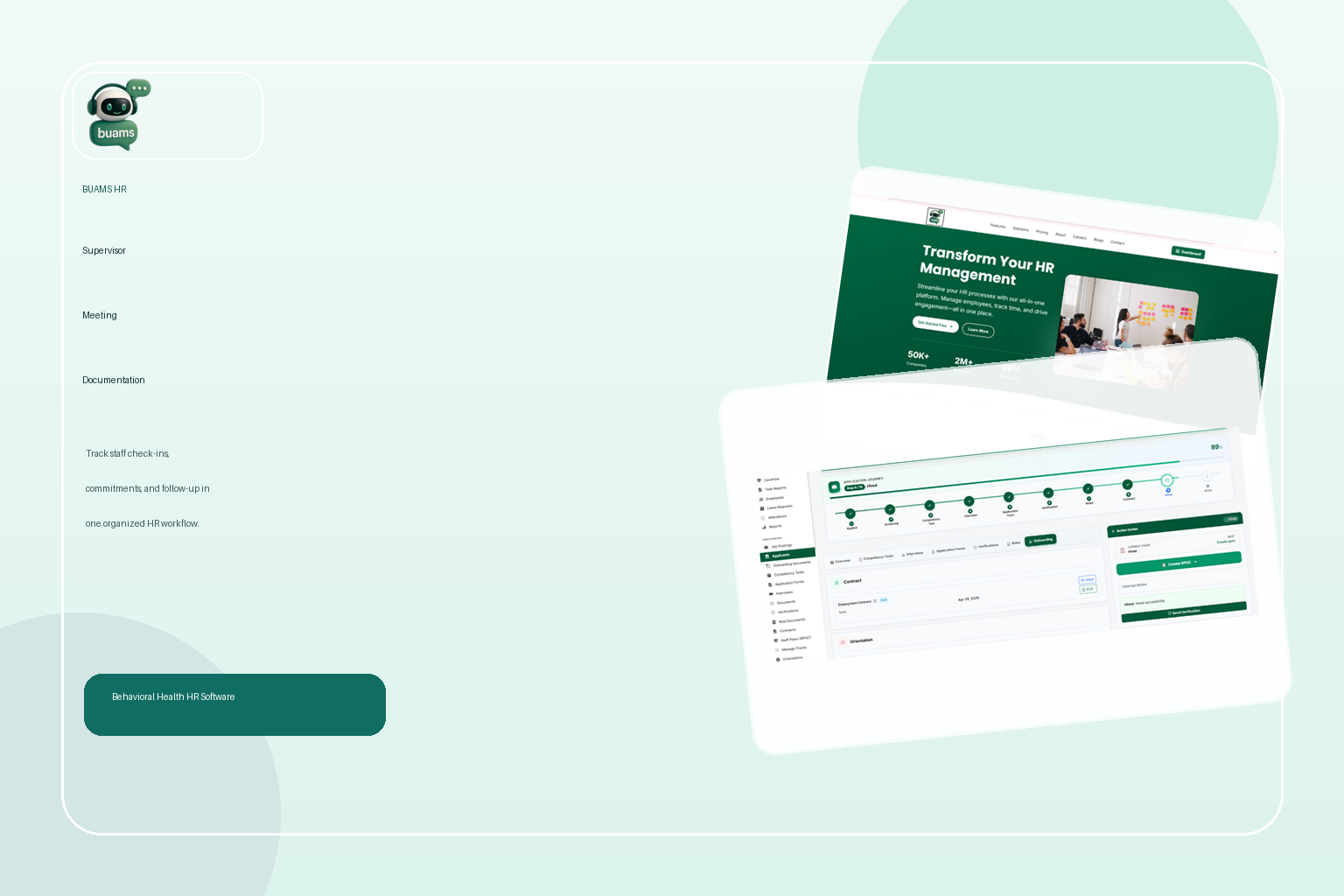
Behavioral health providers depend on regular supervisor check-ins to keep staff supported, aligned, and accountable. Those conversations cover more than morale. They often surface workload pressure, training needs, documentation issues, attendance concerns, policy questions, and follow-up tasks that directly affect service quality and workforce stability. The trouble is that many organizations still manage these meetings through scattered notes, inbox threads, paper notebooks, or verbal reminders that are easy to lose and hard to review later.
Supervisor meeting documentation software gives behavioral health organizations a more consistent way to capture recurring one-on-one conversations, assign follow-up actions, and preserve an organized history of workforce communication. Instead of relying on memory, leaders can create a structured record that supports coaching, HR coordination, and compliance-aware management without turning routine check-ins into administrative clutter.
Key Takeaways
What Is Supervisor Meeting Documentation Software?
Supervisor meeting documentation software is a system for recording employee check-ins, storing discussion summaries, tracking action items, and organizing follow-up deadlines. In a behavioral health setting, that might include weekly supervision conversations, probationary check-ins, monthly development meetings, or recurring operational reviews between a supervisor and direct reports.
A strong workflow typically captures the meeting date, participants, topics discussed, commitments made, and next steps. It can also preserve supporting context such as prior action items, policy reminders, training assignments, or patterns that may need HR review. That structure helps leaders move beyond informal notes and build a more reliable management process across programs and sites.
Why It Matters for Behavioral Health Providers
Behavioral health work is demanding. Staff may be balancing documentation deadlines, emotionally heavy caseloads, scheduling changes, safety expectations, licensure requirements, and frequent operational adjustments. Supervisors are often the first people to spot strain, inconsistency, or developing risk. If meeting details are not documented well, organizations lose valuable context that could have helped them support an employee earlier or respond more clearly when issues escalate.
This matters even more in multi-site or multi-program environments where employees may report through layered structures or work across outpatient, community-based, residential, and school-linked services. A supervisor may discuss the same challenge multiple times with a staff member, but if those conversations live in private notebooks or isolated files, no one can easily confirm what guidance was given, what commitments were made, or whether the issue improved over time. A structured documentation process reduces that ambiguity.
Common Problems With Informal Meeting Notes
Many organizations assume supervisor conversations are too routine to need a defined workflow. In practice, the opposite is often true. Repeated informal discussions create blind spots when teams need continuity, fairness, and accountability.
These breakdowns create operational friction, but they also introduce risk. When organizations cannot show what was discussed, what expectations were set, and what follow-up occurred, even well-intended management becomes harder to defend and harder to improve.
What to Look for in Supervisor Meeting Documentation Software
Standard meeting templates
Behavioral health providers benefit from a repeatable structure for regular check-ins. Templates should make it easy to capture attendance, agenda items, coaching points, barriers, employee questions, and agreed next steps without forcing every meeting into the same rigid script.
Action item tracking
Good notes are not enough if follow-up disappears after the meeting ends. Software should let supervisors assign action items, set due dates, and review open commitments during the next conversation. This is especially useful for training assignments, documentation improvement plans, scheduling adjustments, and support requests.
Secure employee-specific history
Supervisors and HR need a clean chronological record. A system that keeps meeting notes tied to the employee record helps organizations review patterns over time without searching personal folders or email archives.
Role-based visibility
Not every note should be broadly visible. Behavioral health organizations need appropriate access controls so sensitive content is shared only with the right supervisors, HR personnel, or leaders while still preserving organizational continuity.
Consistency across locations and programs
Multi-site providers often struggle when one team documents meetings carefully and another does not. The right tool should support common standards across programs while still allowing room for role-specific coaching needs.
Escalation context for HR
When a concern grows beyond routine coaching, HR should not have to start from zero. Software should make it easier to understand the timeline of conversations, prior guidance, employee responses, and pending follow-up before an issue becomes a formal intervention.
Best Practices for Stronger Supervisor Check-In Workflows
Software works best when organizations also set practical ground rules for how meetings are used. A few simple habits can dramatically improve consistency and usefulness.
For behavioral health providers, the goal is not to create surveillance. It is to make support, accountability, and follow-up more consistent so employees receive clearer guidance and organizations can respond earlier when problems repeat.
How BUAMS HR Helps
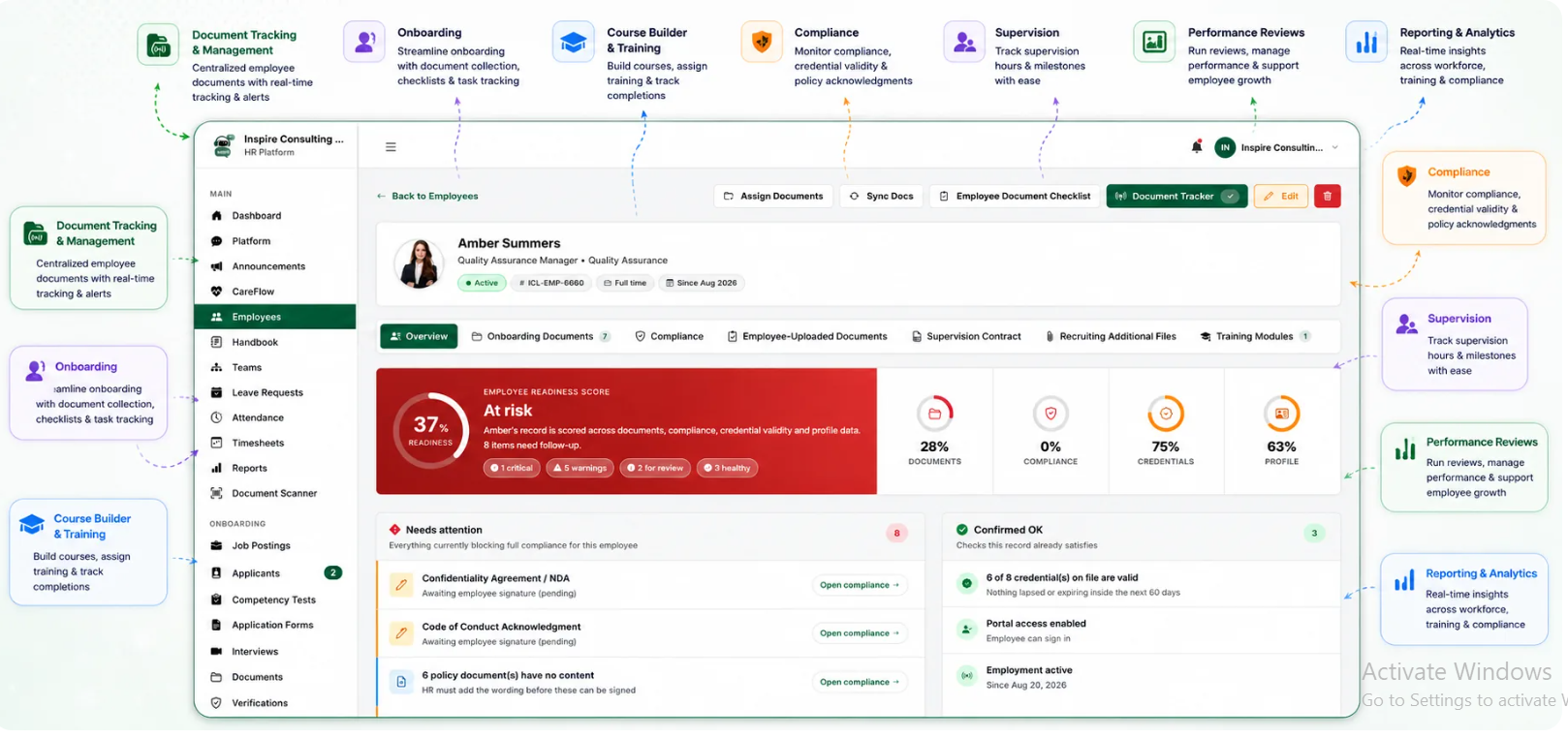
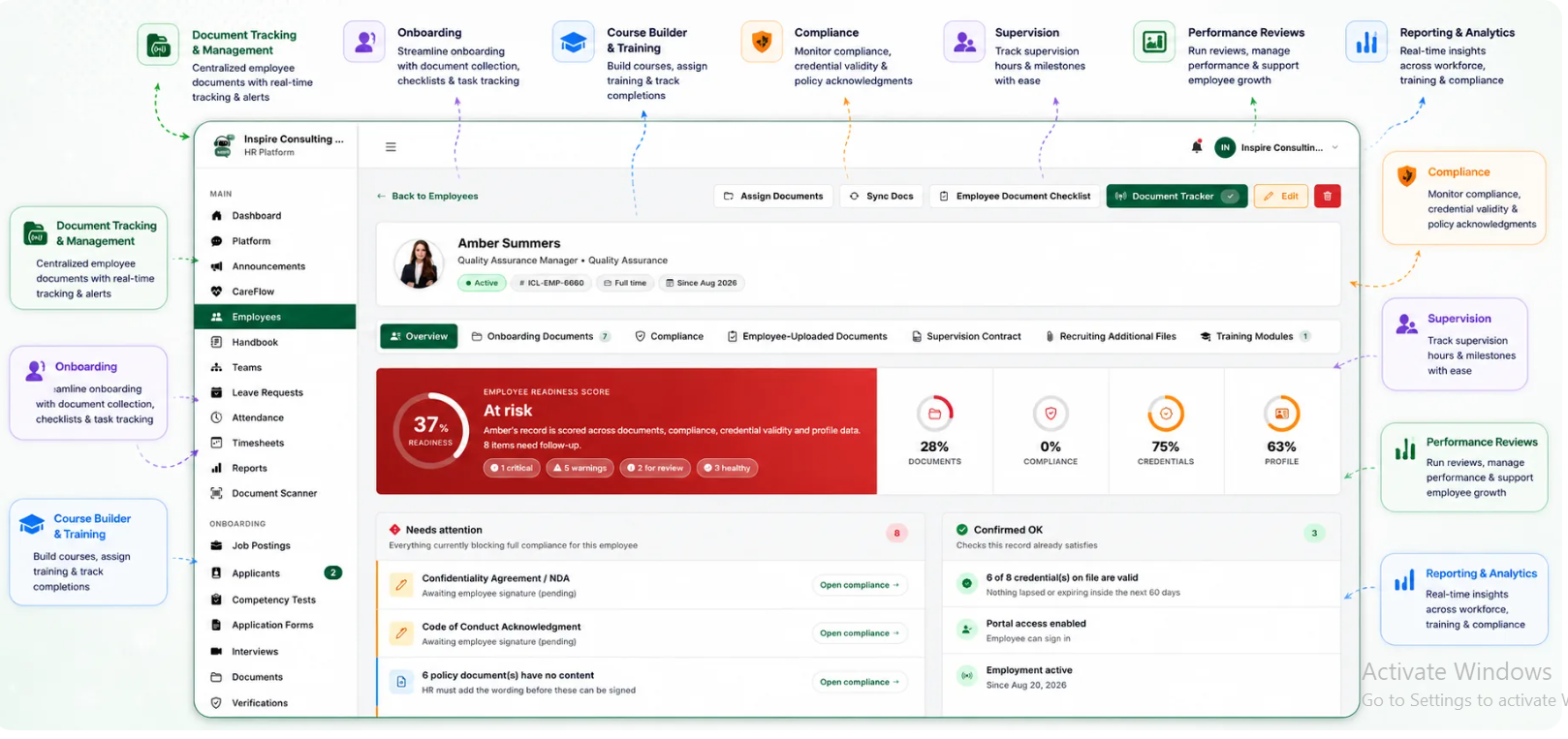
BUAMS HR gives behavioral health organizations a practical place to organize employee-related documentation, track follow-up, and maintain stronger workforce visibility across routine management processes. When supervisor meeting notes, employee files, and related HR workflows live in a connected system, teams can reduce the confusion that comes from disconnected notebooks, spreadsheets, and inbox chains.
Because BUAMS HR is built for mental and behavioral health operations, it fits naturally alongside onboarding, credential tracking, employee file management, and compliance-focused workforce processes. That makes it easier for organizations to connect coaching conversations with broader operational context such as training completion, role readiness, and workforce support needs.
With a more structured documentation approach, supervisors can spend less time reconstructing prior conversations and more time helping employees succeed.
Final Thoughts
Regular supervisor meetings are too important to be managed through scattered notes and memory alone. In behavioral health settings, those conversations often shape retention, performance, support planning, and early risk detection. Supervisor meeting documentation software helps organizations turn routine check-ins into a more reliable management process.
For providers that want clearer follow-up, better coaching continuity, and stronger HR context without adding unnecessary complexity, a structured meeting documentation workflow is a practical step forward.