Behavioral health organizations ask supervisors to do far more than approve timecards. They coach new hires, review documentation quality, track licensure and training follow-up, respond to incidents, support retention, and help keep services staffed safely. When one leader carries too many direct reports or too much scattered oversight responsibility, small delays start to multiply. Supervision notes get pushed back, corrective actions stay open longer than they should, onboarding follow-up becomes inconsistent, and high-risk issues are harder to spot early.
Supervisor span of control software gives HR and operations teams a clearer way to see whether leadership workload is realistically aligned with the number of employees, programs, shifts, and compliance obligations each supervisor is expected to manage. Instead of assuming every team structure is sustainable, providers can document oversight load, identify pressure points, and make staffing adjustments before weak supervision turns into compliance drift or employee frustration.
Key Takeaways
What Is Supervisor Span of Control Software?
Supervisor span of control software is a workforce management tool used to track and review how supervisory responsibility is distributed across an organization. In behavioral health, that includes more than counting direct reports. A realistic picture also considers factors such as shift coverage, service complexity, documentation review expectations, provisional-license oversight, training follow-up, location count, and the number of employees who need frequent coaching or performance support.
The goal is to help HR and leadership answer a practical question: does each supervisor have the time and structure needed to do the job well? In many organizations, the answer changes as programs grow, vacancies stay open, census shifts, or one manager quietly absorbs more responsibilities than anyone realizes. Software creates visibility into those changes so the organization can respond before oversight quality drops.
Why It Matters for Behavioral Health Providers
Behavioral health providers often operate with lean management structures while serving clients across outpatient clinics, residential settings, school-based programs, community services, and telehealth teams. Supervisors may oversee employees with different credentials, job duties, and documentation standards across multiple locations. That complexity means supervision capacity cannot be judged fairly by headcount alone.
For example, a supervisor with eight experienced staff in one stable program may be in a healthier position than a supervisor with five new employees split across several sites, each with onboarding issues, training gaps, and urgent scheduling changes. If HR only sees a flat reporting line and not the real oversight burden, support decisions will come too late.
This matters operationally and from a compliance standpoint. Delayed supervision can affect clinical quality, provisional-license support, annual review timing, incident follow-up, documentation correction, and readiness for external review. In Maryland and DC behavioral health environments, where providers may already be balancing multiple program requirements and workforce shortages, overloaded supervisors can become a hidden source of risk.
Common Warning Signs of an Unhealthy Span of Control
These problems usually surface gradually. No single missed check-in proves the structure is broken. The real signal is repeated delay across several people or programs, especially when the same managers are always operating in catch-up mode.
Where Manual Span-of-Control Tracking Breaks Down
Reporting lines look simple, but the work under them is not
An org chart may show that each supervisor has a manageable number of direct reports, while hiding the fact that one team includes multiple new hires, staff on improvement plans, or clinicians who require closer oversight. Without workload context, leadership can underestimate risk.
Coverage decisions keep shifting the burden
When vacancies, leave coverage, or rapid growth affect staffing, supervisors often inherit temporary oversight duties that never get formally reviewed. A short-term workaround can slowly become the normal structure, even when it is no longer sustainable.
HR, operations, and clinical leadership see different parts of the picture
HR may know who reports to whom, operations may know where coverage stress is happening, and clinical leaders may know which employees need more support. If those views are not connected, nobody can evaluate supervisor capacity with confidence.
Follow-up work is scattered across email and side notes
Supervisory load is not only about scheduled meetings. It includes reminders, escalations, coaching tasks, incident reviews, and document follow-up. When those responsibilities live in inboxes and personal notes, overloaded leaders are harder to identify early.
What to Look for in Supervisor Span of Control Software
Visibility beyond headcount
The software should help organizations review supervisory responsibility using more than a simple number of direct reports. Useful context includes site count, shift mix, employee tenure, open corrective actions, training gaps, onboarding stage, and supervision-sensitive roles.
Clear supervisor-to-employee mapping
HR should be able to see current reporting structures, temporary coverage assignments, and recent changes without relying on separate spreadsheets. Clean mapping matters when employees transfer, programs expand, or interim leaders step in.
Alerts for growing oversight pressure
A good system should make it easier to spot when one supervisor is accumulating too many high-touch responsibilities. That may include several new hires starting at once, multiple expiring credentials on one team, or a cluster of overdue reviews that point to limited capacity.
Connection to employee documentation and readiness data
Span of control is easier to manage when the organization can review supervisory structure alongside onboarding progress, required training, role readiness, and employee records. Otherwise, leaders may see a staffing issue only after documentation quality has already slipped.
Reporting that supports workforce planning
Behavioral health providers need reporting that helps them compare supervisory load across programs, identify uneven team structures, and justify leadership adjustments before service quality or retention suffers. Good reporting turns supervision capacity into an operational planning topic rather than a vague feeling.
Best Practices for a Stronger Oversight Model
Start by defining what effective supervision actually includes in your organization. If leaders are expected to complete documentation review, role coaching, probation check-ins, training follow-up, and incident escalation, those duties should be treated as real workload, not invisible extra work around the edges of the day.
Next, review span of control during workforce events that change supervisory pressure quickly. Open positions, new program launches, site expansions, provisional-license hires, and turnover spikes can all affect leadership capacity long before the org chart is updated. Regular review keeps those shifts from becoming normalized without discussion.
It also helps to distinguish between stable teams and high-support teams. Two supervisors may each have six direct reports, but one may be managing seasoned employees in a mature program while the other is onboarding several new staff across different service lines. Equal headcount does not mean equal oversight burden.
Finally, give HR a defined role in escalation. When supervisory strain becomes visible through overdue reviews, repeated onboarding delays, or uneven documentation follow-up, the answer should not depend on informal complaints. A structured review path helps leadership decide whether to rebalance reporting lines, add support, or change expectations.
How BUAMS HR Helps
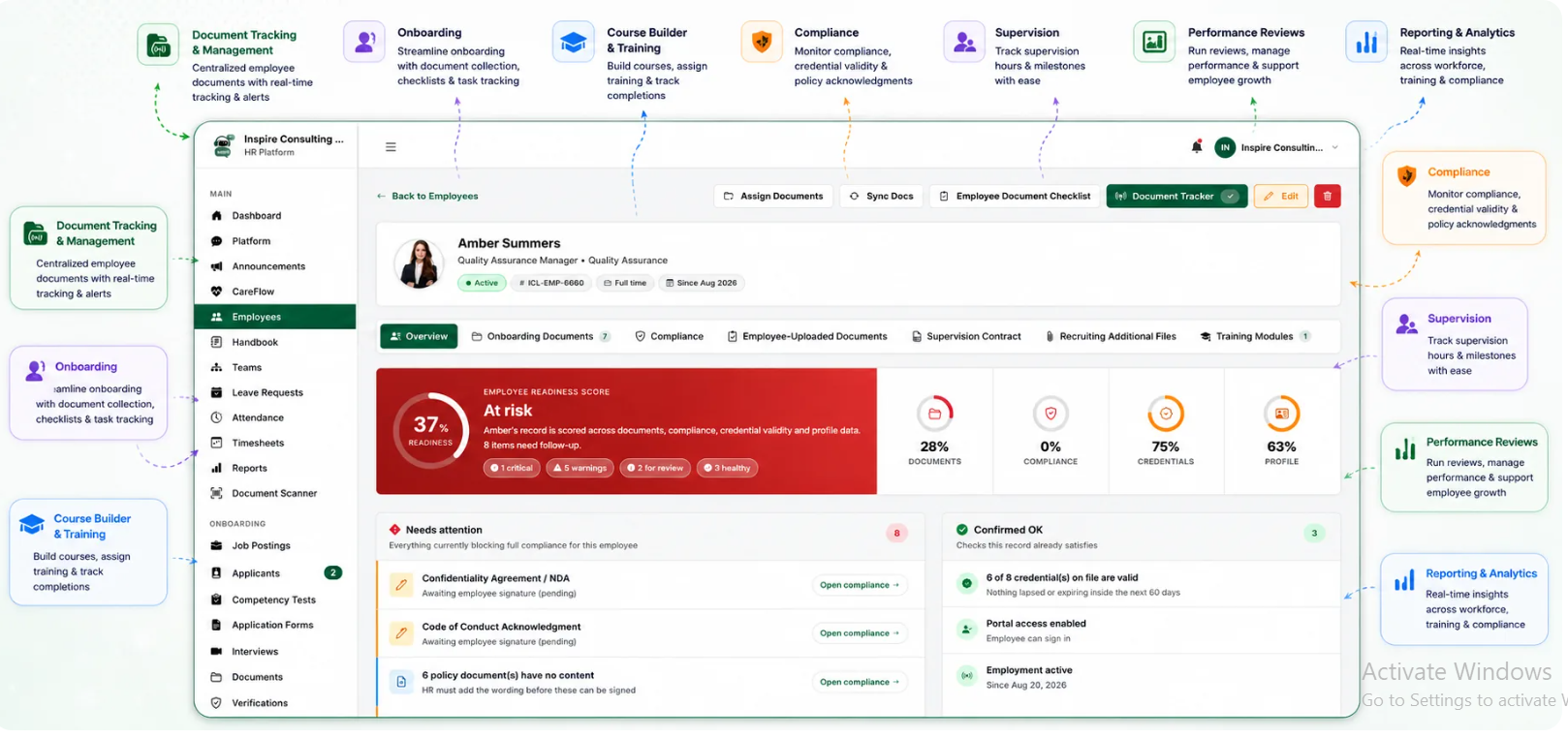
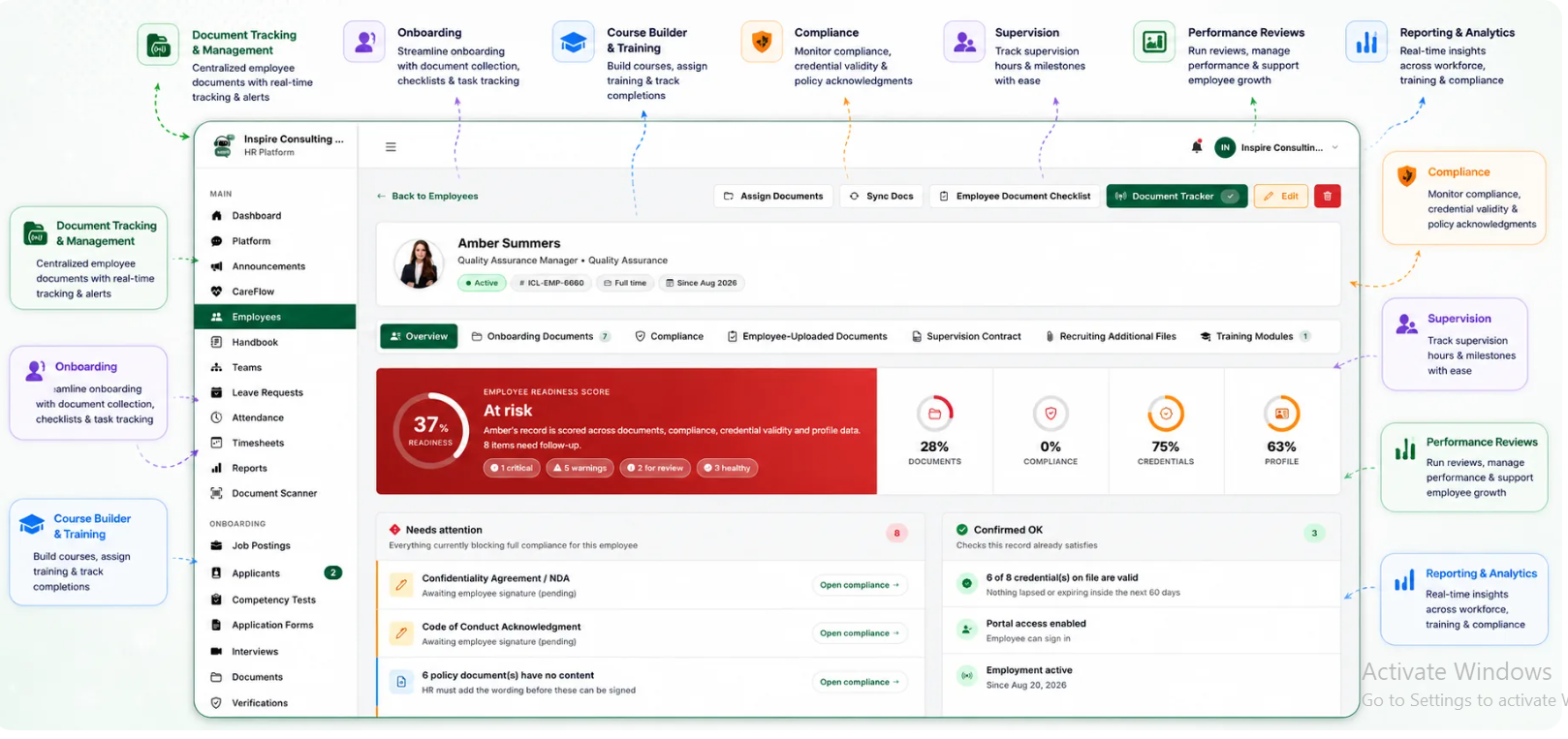
BUAMS HR helps behavioral health providers keep employee records, supervisor assignments, and compliance-related workforce documentation organized in one place. That makes it easier to see the context behind a reporting structure instead of reviewing headcount in isolation. HR teams can connect supervisory assignments with onboarding status, training follow-up, employee file completeness, and other signals that reveal where leadership bandwidth may be tightening.
For organizations operating across multiple programs or sites, centralized records support better visibility into who is supervising whom, what workforce obligations are still open, and where management workload may be uneven. That helps reduce the guesswork that often surrounds span-of-control discussions.
By improving workforce recordkeeping and oversight visibility, BUAMS HR gives providers a stronger foundation for protecting supervision quality as teams grow and change.
Final Thoughts
Supervisor span of control software helps behavioral health providers move beyond gut-feel management and review leadership capacity with better evidence. When organizations can see where oversight load is concentrated, they are better positioned to prevent delayed follow-up, inconsistent coaching, and compliance drift before those problems spread.
For providers that want healthier teams, steadier supervision, and more defensible workforce processes, BUAMS HR supports the kind of centralized visibility that makes supervisory planning more practical.