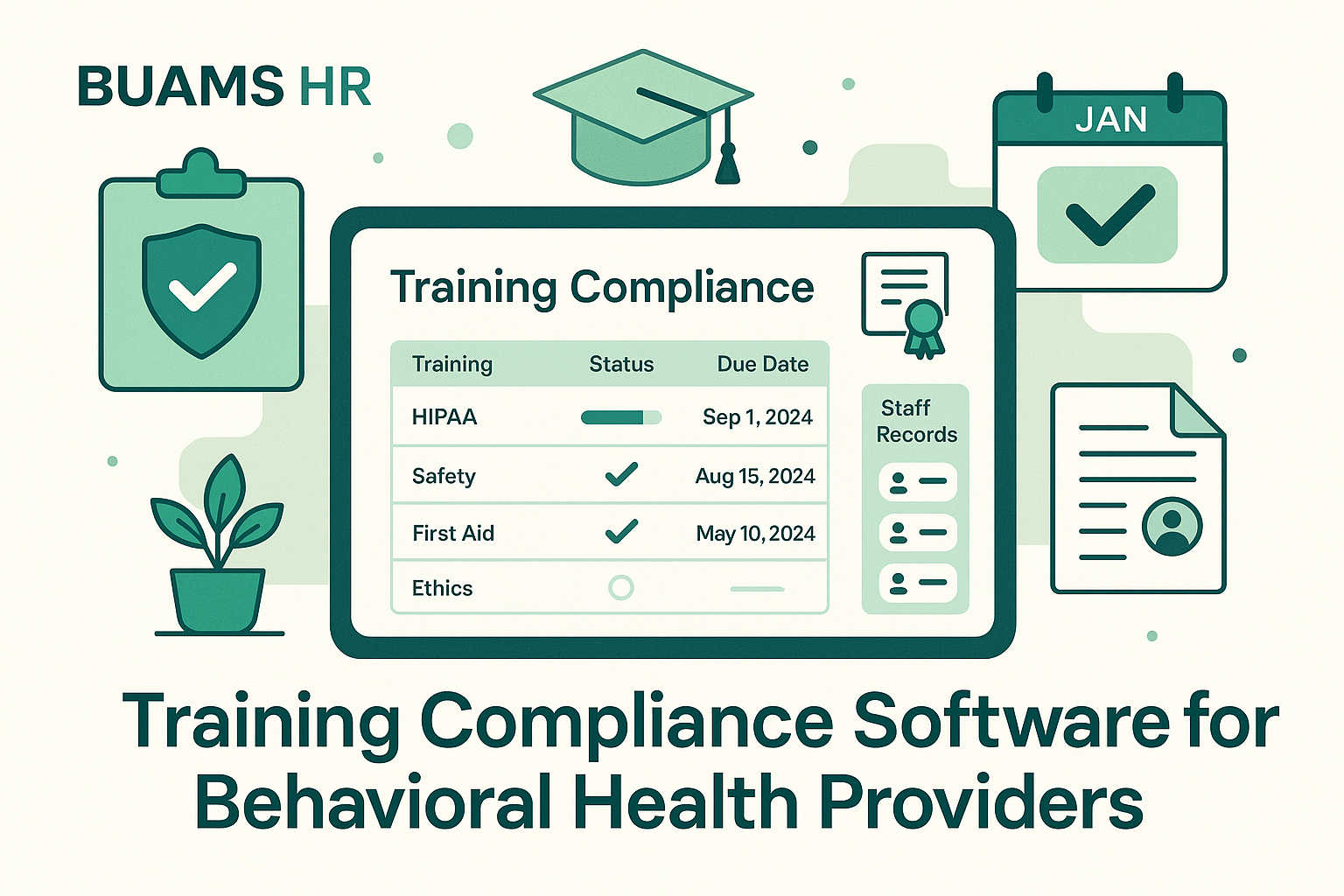
Behavioral health providers rely on a workforce that stays current on training requirements, role-based education, policy acknowledgments, and recurring compliance tasks. When those records live across email threads, spreadsheets, shared drives, and paper folders, HR teams lose time chasing proof instead of managing readiness. Training compliance software gives organizations a more reliable way to assign, track, document, and review workforce learning activity in one place.
For behavioral health agencies, this matters beyond administrative efficiency. Missed deadlines, incomplete acknowledgments, and hard-to-find certificates can create avoidable risk during audits, site visits, payer reviews, and internal leadership reviews. A structured process helps teams keep training evidence complete and available when it is needed.
Key Takeaways
What Is Training Compliance Software?
Training compliance software is a system used to manage required workforce education and related proof of completion. In a behavioral health setting, that can include orientation tasks, annual refreshers, program-specific instruction, safety education, supervisory training, policy sign-offs, and continuing education documents tied to staff roles.
The right approach does more than mark a course as complete. It should connect the requirement to the employee record, show due dates clearly, preserve documentation, and support reporting that leaders can trust. That allows HR, compliance, and operations teams to see where follow-up is needed before a gap becomes a problem.
Why Training Readiness Is Harder in Behavioral Health
Behavioral health organizations often manage multiple programs, credential types, work locations, and service models at once. A single agency may employ licensed clinicians, direct care staff, administrative personnel, supervisors, and support teams, all with different learning expectations. Some requirements repeat annually, some depend on role changes, and some vary by payer, contract, or accreditation standard.
That complexity makes manual tracking fragile. Spreadsheet owners change. Attachments get saved in the wrong folder. Managers assume someone else sent the reminder. By the time leadership asks for proof, the team may be reconstructing records from several systems. Training compliance software brings those moving parts into a more controlled process.
What Strong Training Compliance Workflows Should Include
Clear assignment of required training by role
Requirements should be mapped to job type, department, location, or program responsibility so new hires and existing employees receive the right tasks without guesswork. This is especially important when agencies grow quickly or move staff between services.
Visible due dates and recurring reminders
Staff and managers need a straightforward way to see what is coming due. Automated reminders reduce the burden on HR and help prevent the familiar last-week scramble before a review or renewal cycle.
Centralized proof of completion
Certificates, acknowledgments, sign-in records, and related documentation should be tied to the employee file. When evidence is centralized, teams can respond faster to internal checks and external requests.
Status reporting for managers and compliance leaders
Reporting should highlight overdue items, upcoming deadlines, and completion trends by team or location. That makes it easier to intervene early instead of discovering gaps during an audit.
Connection to broader HR documentation
Training records are more useful when they sit alongside employee documents, credentials, and other compliance records. A disconnected tracking system often creates duplicate work and conflicting versions of the truth.
Common Signs a Manual Process Is Breaking Down
These issues are usually not about effort. They are usually signs that the process depends too heavily on memory and manual coordination. Training compliance software helps shift that work into a repeatable structure.
How BUAMS HR Helps Behavioral Health Teams Stay Organized
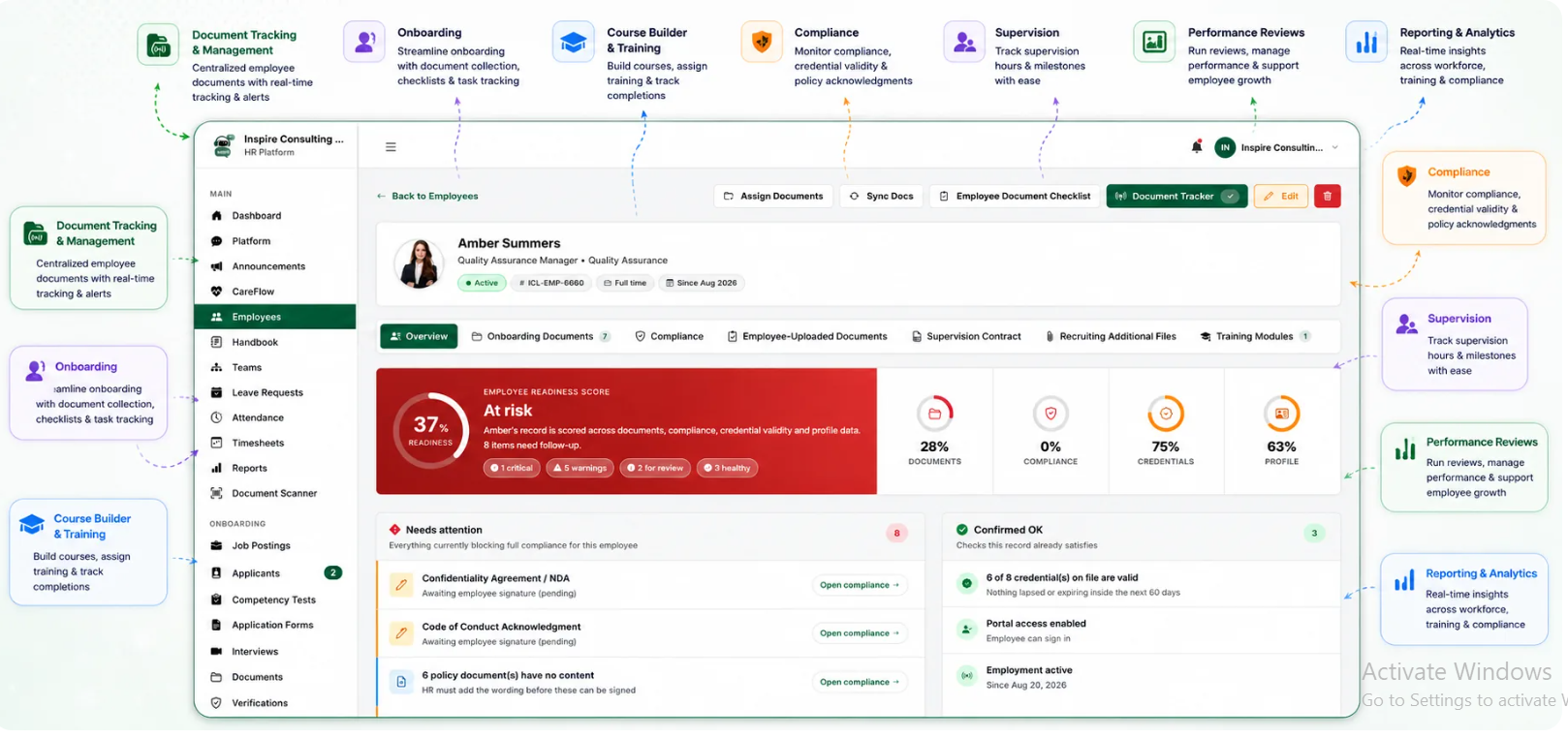
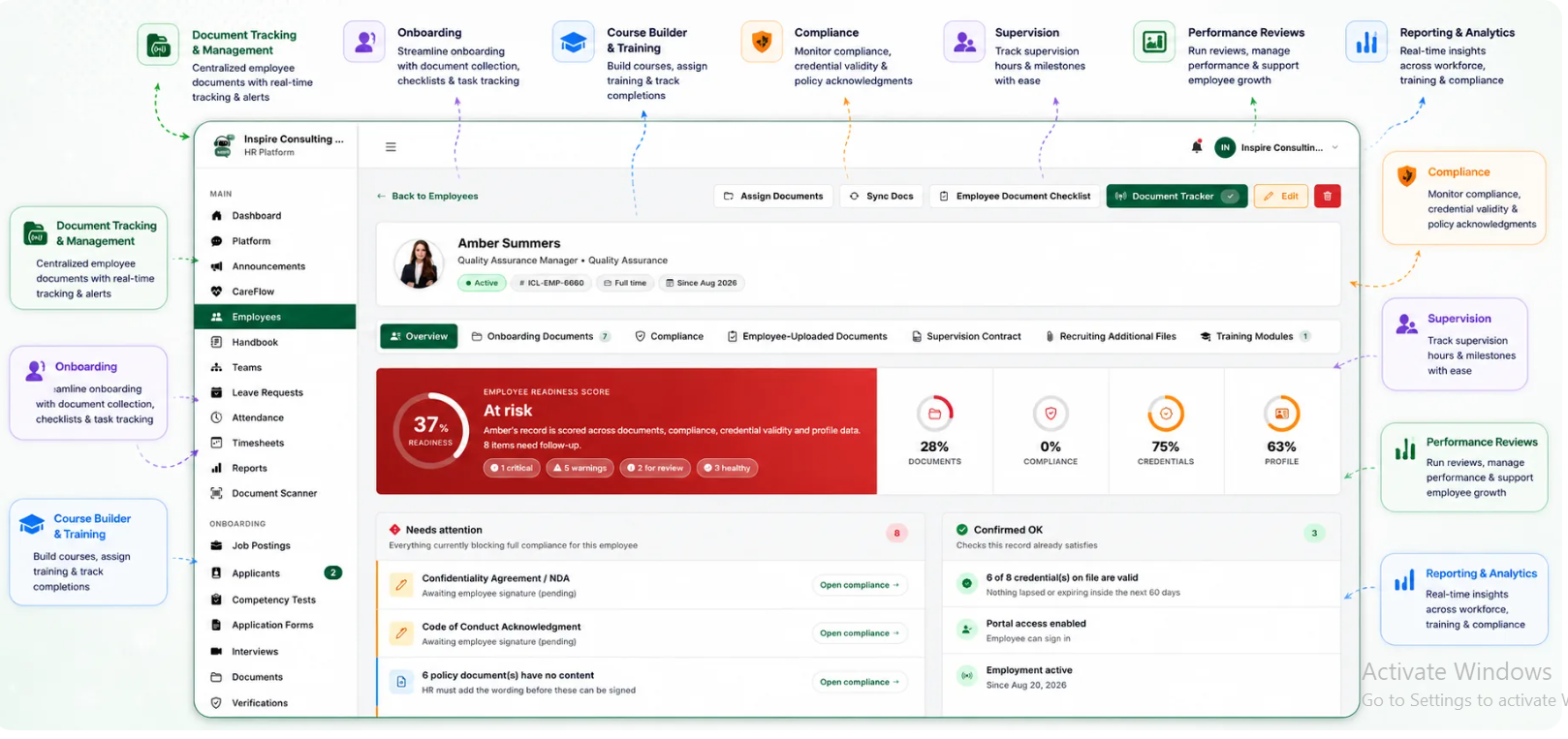
BUAMS HR helps behavioral health organizations centralize employee records and reduce administrative friction around compliance-related documentation. Instead of treating training proof as disconnected attachments, teams can keep critical workforce information organized in a system designed for HR operations in behavioral health environments.
That matters when an agency needs to confirm whether onboarding was completed, whether annual learning documentation is filed, or whether a supervisor can quickly review employee records before a site visit. With a more structured recordkeeping process, teams spend less time chasing documents and more time managing readiness proactively.
For agencies serving Maryland, DC, and similar regulated markets, a system that supports cleaner documentation and easier retrieval can strengthen day-to-day compliance habits, not just audit response. The goal is not simply to store files, but to create a workflow that helps deadlines, follow-up, and documentation stay aligned.
Final Thoughts
Training compliance software is most valuable when it reduces uncertainty. Behavioral health providers need to know which requirements apply, what is overdue, and where the proof lives. A centralized HR workflow makes that visibility easier to maintain across hiring, ongoing employment, and internal review cycles.
When agencies replace scattered tracking methods with a more organized process, they can reduce avoidable risk, support managers more effectively, and stay better prepared for the documentation demands that come with growth and oversight.