Behavioral health organizations talk often about trauma-informed care, but many HR and operations teams still manage related training with disconnected spreadsheets, inbox reminders, and supervisor memory. That creates a quiet risk. One program may complete refresher training on time, another may rely on outdated sign-in sheets, and a third may assume staff are ready simply because training was mentioned during onboarding. When documentation is inconsistent, leaders lose confidence that trauma-informed expectations are being reinforced in a measurable, repeatable way.
Trauma-informed care training tracking software gives providers a more reliable structure. Instead of treating this training as a one-time event or a scattered compliance task, organizations can track who completed the requirement, when refreshers are due, which roles need deeper instruction, and where follow-up is still missing. For behavioral health providers, that matters because trauma-informed care is not just a learning preference. It shapes staff interactions, de-escalation approaches, client trust, and the consistency of service delivery across programs.
Key Takeaways
What Is Trauma-Informed Care Training Tracking Software?
Trauma-informed care training tracking software is a system for managing the learning requirements, completion history, refresh cycles, and documentation tied to trauma-informed workforce development. In practice, it helps providers assign required training by role, record proof of completion, schedule follow-up sessions, and monitor gaps before they turn into performance or compliance problems.
For behavioral health providers, the value goes beyond keeping a roster of who attended a session. A stronger workflow makes it easier to define which programs need foundational training, which supervisors need advanced coaching support, and which employees may need remediation or refresher education after incidents, role changes, or updated care standards. It turns training from an informal expectation into an accountable operational process.
Why This Training Needs Better Tracking in Behavioral Health
Trauma-informed care is often expected across outpatient clinics, community programs, crisis services, residential settings, and support functions. Yet the workforce itself is rarely uniform. Some employees are brand new to behavioral health. Others are experienced clinicians who need program-specific refreshers. Support staff may need a different depth of training than direct care teams, and supervisors may need added guidance on coaching trauma-informed practice consistently.
Without structured tracking, organizations tend to run into the same problems repeatedly. A new hire may complete orientation but miss the role-specific trauma-informed module required by a program leader. A long-term employee may never receive a documented refresher because the team assumed prior experience was enough. Supervisors may not know whether a staff member has completed the latest training expectations before assigning them to higher-risk settings or client populations. These are not dramatic system failures at first. They usually appear as small documentation gaps, inconsistent follow-up, and uneven implementation across teams.
Those gaps matter because trauma-informed care influences day-to-day interactions. It affects how staff approach escalation, boundaries, communication, environmental triggers, and client engagement. If a provider cannot see training status clearly, it becomes harder to prove consistency, identify weak points, or support managers who need to reinforce expectations in real time.
Common Tracking Gaps Providers Should Fix
Behavioral health organizations usually benefit from addressing a few predictable breakdowns first.
One-Time Orientation Without Refresher Logic
Many providers introduce trauma-informed care during onboarding and then lose visibility after the employee's first month. A stronger system should support recurring reviews, annual refreshers, or targeted follow-up based on role, site, or service setting.
Different Training Standards Across Programs
When each location or supervisor manages training separately, expectations drift. One team may require documented completion before assignment, while another relies on verbal confirmation. Tracking software helps standardize what completion means and who is accountable for verifying it.
Training Records Stored Outside the Employee File
Certificates, attendance lists, and sign-off forms often live in separate drives or email attachments. That slows internal reviews and makes audit preparation harder. Centralized documentation gives HR and quality leaders a cleaner record of what was assigned, completed, and still overdue.
Little Visibility Into Role-Based Differences
Trauma-informed training needs are not identical across clinicians, case managers, supervisors, peer staff, front-desk teams, and residential personnel. Providers need a workflow that supports shared core expectations while still mapping additional requirements to the roles that need them.
What to Look for in Trauma-Informed Care Training Tracking Software
The best systems support workforce consistency without creating more manual administration.
Role-Based Assignment Rules
Software should let providers assign trauma-informed requirements by job title, department, site, or program. That helps HR avoid blanket assignments that create noise while still ensuring the right teams receive the right depth of training.
Recurring Deadlines and Refresher Tracking
Initial completion is not enough. Providers should be able to schedule future due dates, define renewal cycles, and flag overdue refreshers before they affect readiness or supervision confidence.
Proof of Completion and Audit History
Organizations need more than a completed checkbox. They often need certificates, attendance records, acknowledgments, dates, and sometimes notes about format or instructor. A durable audit trail makes training easier to defend during reviews and easier to reconcile when records are questioned later.
Supervisor Visibility Without Spreadsheet Dependence
Managers need to know whether their staff are current, especially when planning assignments, coaching follow-up, or responding to quality concerns. That visibility should come from the system, not from private spreadsheets that become outdated as soon as they are emailed.
Reporting That Highlights Program-Level Risk
Training tracking becomes much more useful when leaders can spot trends by site, department, or supervisor. If one residential team is consistently late on trauma-informed refreshers or one outpatient program has incomplete records for new hires, reporting should make that visible quickly.
Best Practices for a Stronger Trauma-Informed Training Workflow
Providers should start by defining a shared baseline. That means deciding which trauma-informed topics every employee should complete, which roles need expanded instruction, and what proof of completion is acceptable. When that baseline is vague, tracking tools cannot solve the underlying inconsistency.
It also helps to connect training follow-up to operational milestones. New-hire readiness reviews, probation checkpoints, supervisor meetings, and quality audits are all opportunities to confirm whether trauma-informed learning expectations are still current. Instead of treating the topic as separate from workforce management, providers can make it part of routine employee oversight.
Finally, organizations should use training data to improve the process itself. If a certain site repeatedly misses deadlines, the issue may be scheduling, staffing capacity, or unclear ownership. If supervisors are asking for the same follow-up records every quarter, the documentation structure may need to be simplified. Good tracking software supports these insights by making patterns easier to see.
How BUAMS HR Helps Behavioral Health Providers Stay Organized
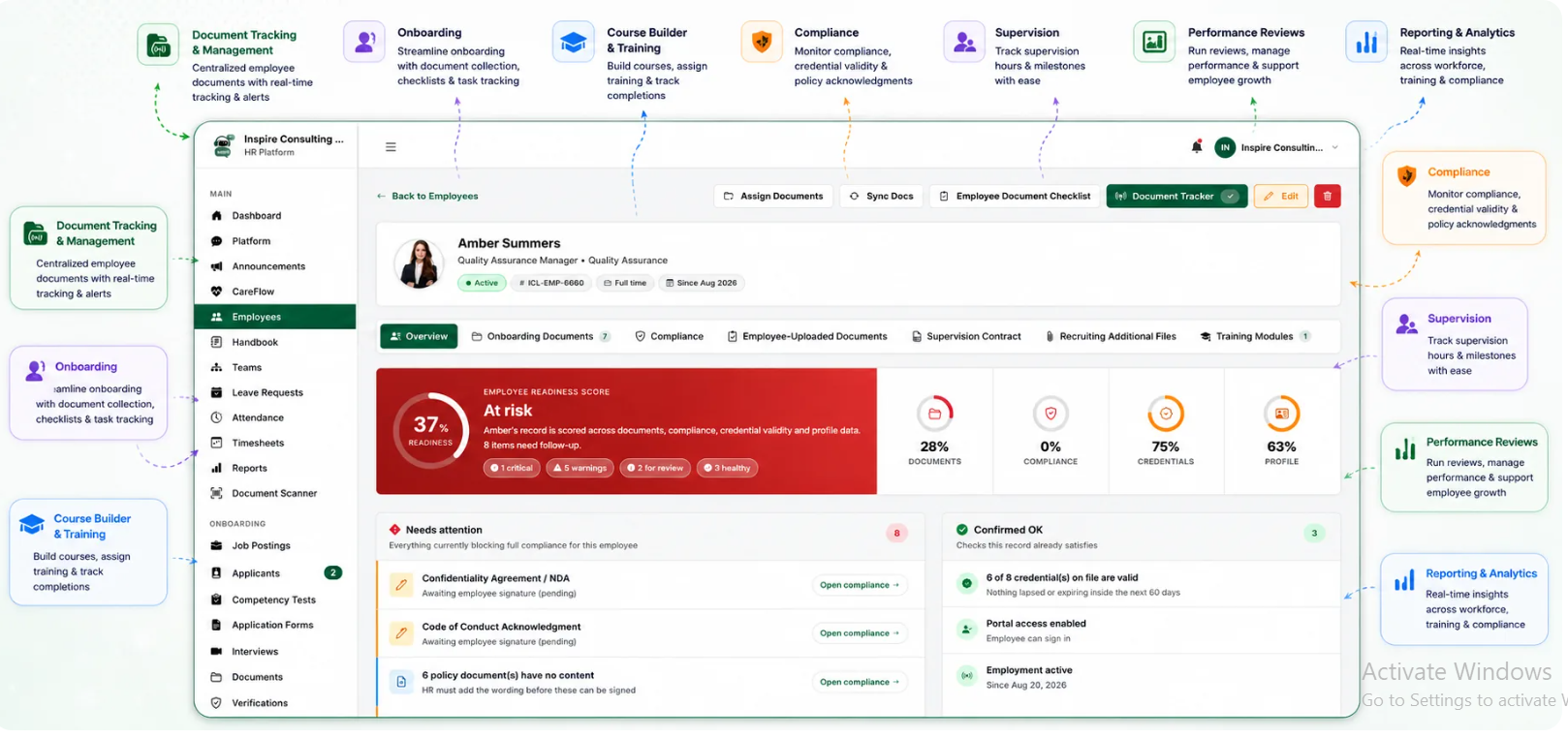
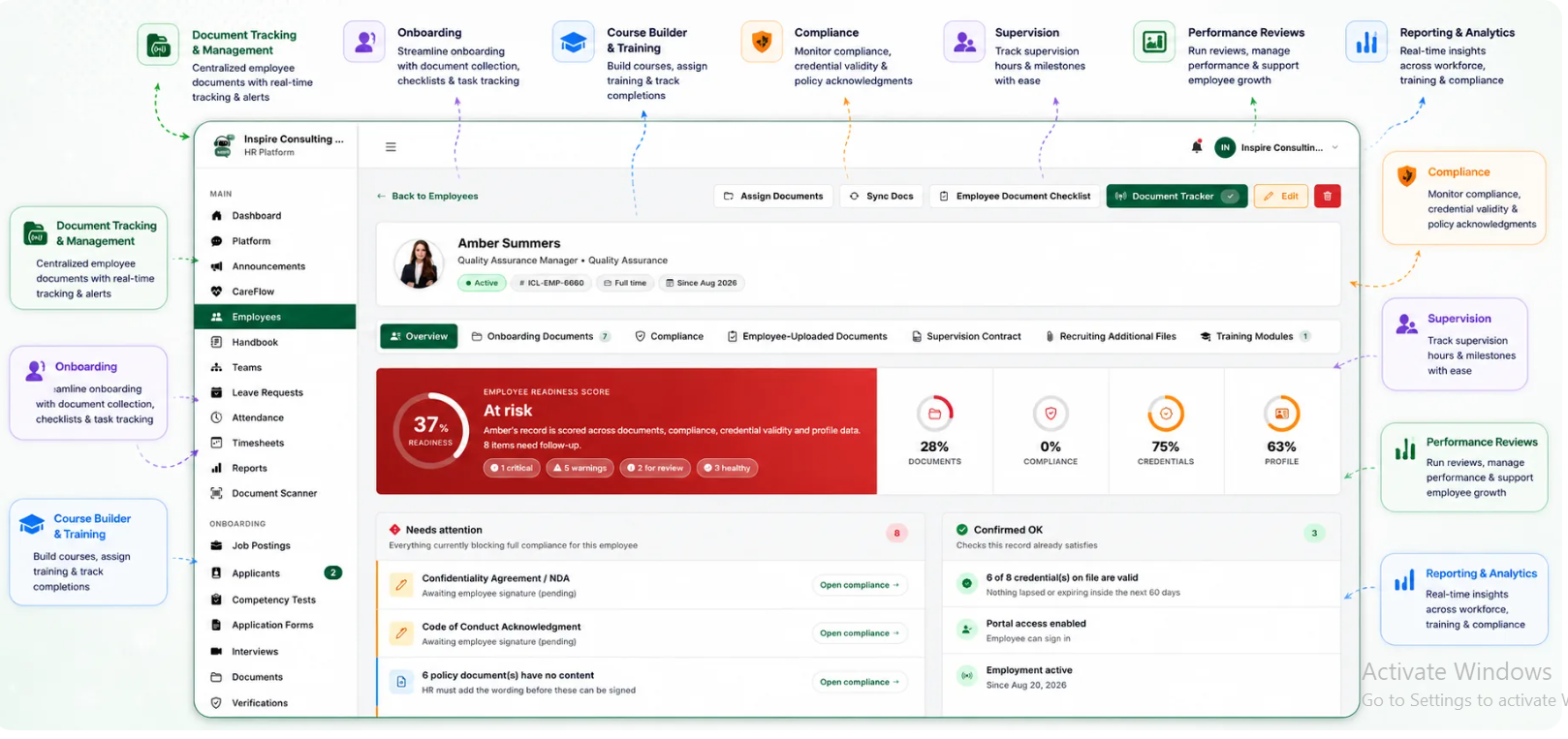
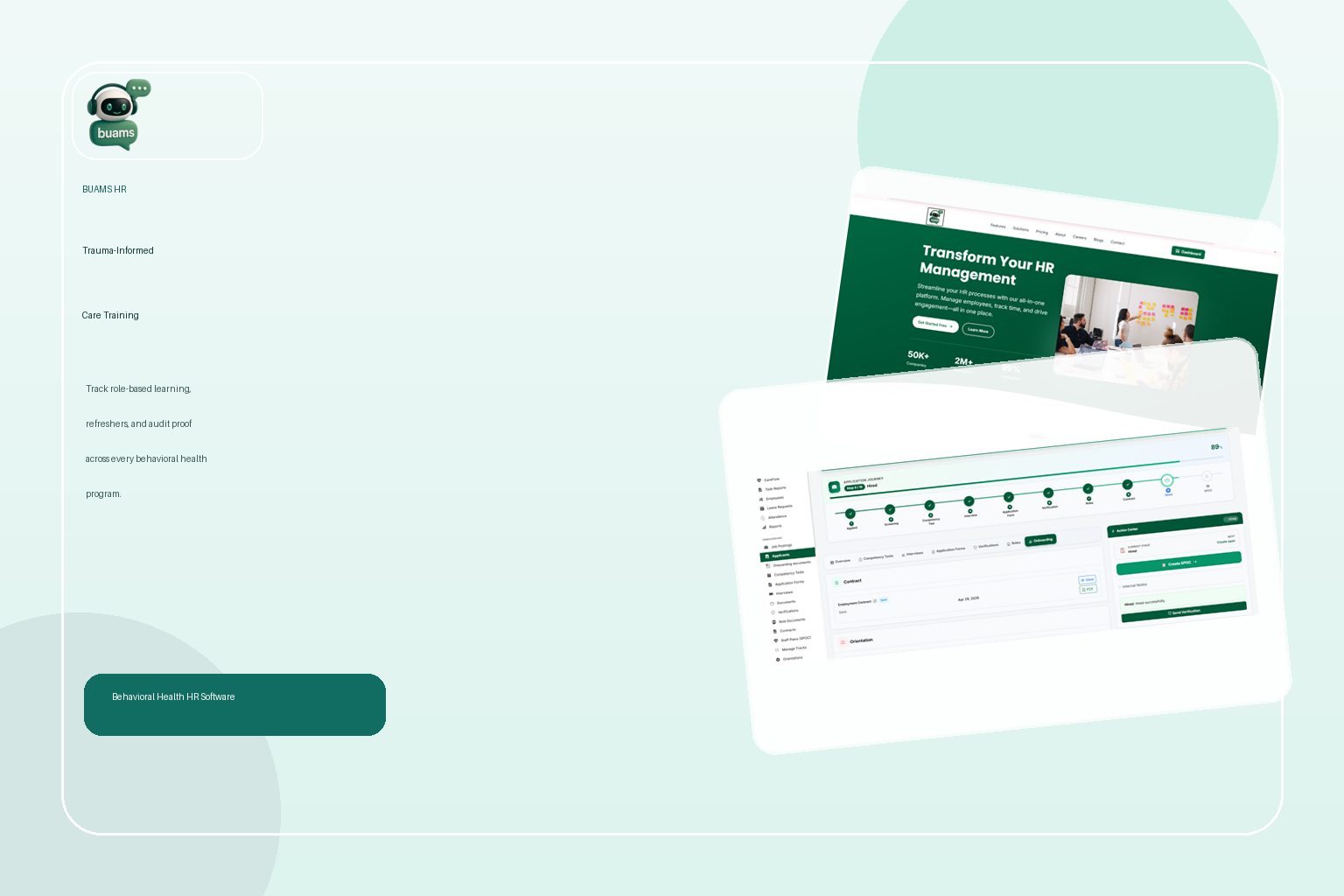
BUAMS HR helps behavioral health providers centralize employee records, workforce documentation, and compliance workflows in one place. For organizations managing trauma-informed care training, that kind of structure reduces the need to chase records across inboxes, local drives, and disconnected trackers. Training requirements, supporting documents, due dates, and employee context can stay closer together, making follow-up easier for HR and more visible for supervisors.
That matters when providers are growing across multiple programs or managing frequent onboarding. With a cleaner system, teams can map requirements by role, review completion status faster, and keep refresher expectations from disappearing into manual reminders. Instead of rebuilding the training picture during every audit or internal review, HR leaders can work from a more complete workforce record.
For behavioral health organizations trying to strengthen consistency, BUAMS HR supports the operational side of trauma-informed care by keeping training administration organized, reviewable, and easier to maintain over time.
Final Thoughts
Trauma-informed care training tracking software gives behavioral health providers a practical way to turn an important care principle into a sustainable workforce process. When assignments, refreshers, documentation, and follow-up are handled consistently, leaders gain better visibility into staff readiness and fewer surprises during audits or quality checks.
Just as important, better tracking supports more consistent expectations across programs and supervisors. In behavioral health, that kind of consistency can strengthen staff development, improve accountability, and help organizations reinforce trauma-informed practice as part of everyday operations rather than an occasional training event.