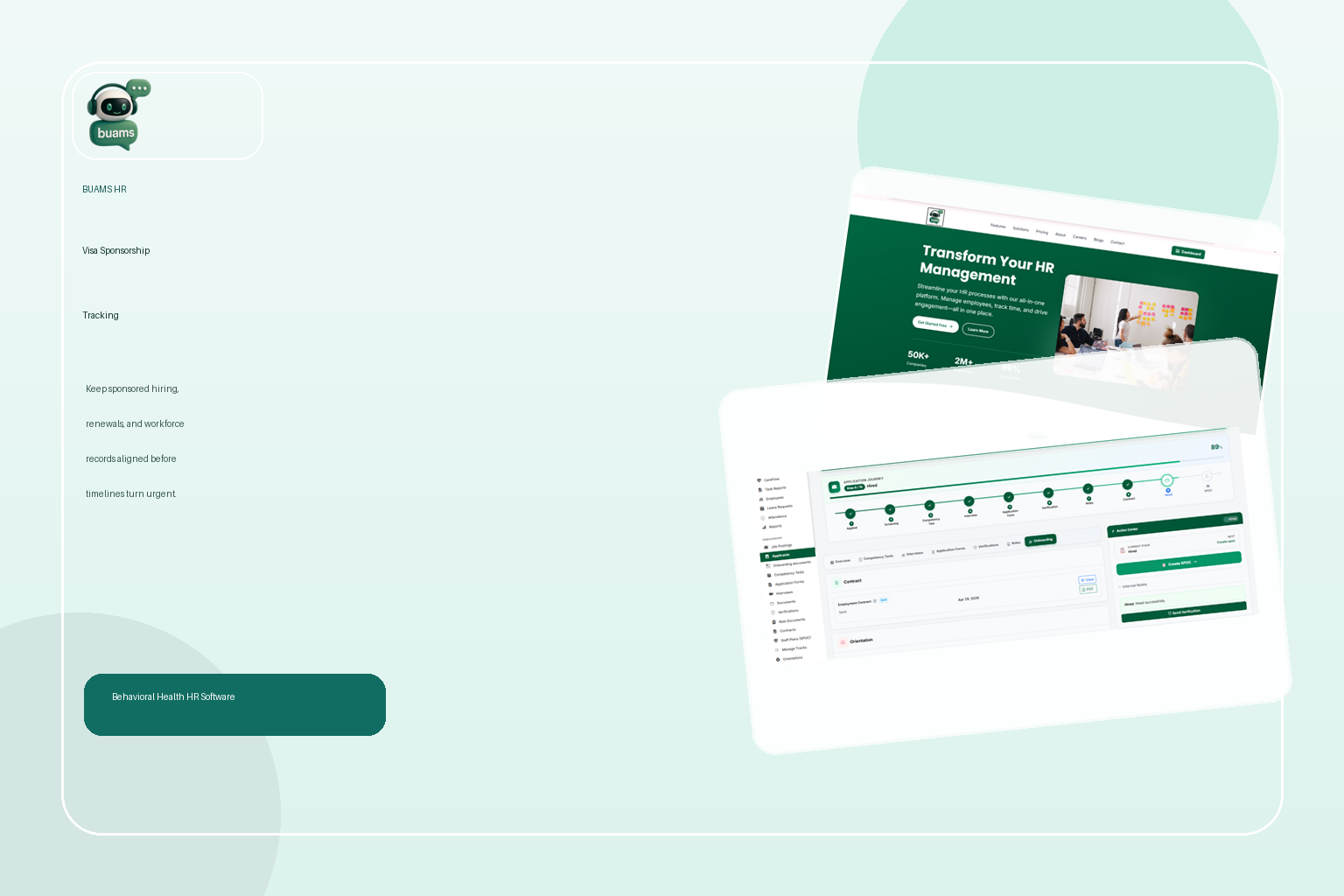
Behavioral health providers that rely on hard-to-fill clinical, technical, or specialized support roles cannot treat visa sponsorship as an isolated hiring event. Sponsorship timelines, renewals, document requests, role changes, and employee file updates all create downstream HR work that can easily become fragmented. When those tasks live across inboxes, law firm emails, spreadsheets, and supervisor notes, organizations lose visibility into what is pending, what is approved, and what could disrupt staffing next.
Visa sponsorship tracking software gives HR teams a structured way to manage sponsored employee milestones without turning every update into a manual chase. For behavioral health organizations, that means better coordination across recruiting, onboarding, document management, and ongoing workforce planning. Instead of reacting when a filing deadline gets close or a work arrangement changes, providers can keep the process visible and organized from the start.
Key Takeaways
What Is Visa Sponsorship Tracking Software?
Visa sponsorship tracking software is a workflow for managing employees whose hiring or continued employment depends on sponsorship-related milestones, documentation, and deadlines. It helps HR teams monitor what has been filed, what approvals are pending, which dates require follow-up, and where supporting records should be stored.
In a behavioral health setting, the value is not limited to immigration paperwork alone. Sponsorship status can influence start dates, onboarding timing, work location planning, supervisor expectations, and internal readiness. Software helps HR keep those connections visible so sponsored employees are managed with the same operational discipline as any other critical workforce process.
Why It Matters for Behavioral Health Providers
Behavioral health organizations often compete for talent in roles that are difficult to recruit and even harder to replace quickly. If a sponsored employee's timeline is unclear, the consequences can reach far beyond HR. A delayed start may affect caseload coverage. An unresolved renewal may create leadership anxiety around staffing continuity. A poorly documented role change may force HR to rebuild the record under pressure.
Manual sponsorship tracking also creates avoidable confusion between internal teams. Recruiting may know one date, HR may track another, and supervisors may only hear about the issue when it starts affecting scheduling. Without a shared process, leaders end up making workforce decisions with incomplete information.
For compliance-conscious providers, documentation discipline matters just as much as staffing continuity. Teams need to know where approval notices, supporting records, status dates, and related employee documents actually live. Centralized tracking makes it easier to respond when leadership, counsel, or internal reviewers need a clear picture of the employee's current status and history.
Common Breakdowns in Manual Sponsorship Tracking
Important dates are spread across too many systems
Some deadlines sit in legal emails, others in an HR spreadsheet, and others in calendar reminders. That fragmentation increases the chance that a key milestone gets noticed too late.
Role or location changes are not reflected cleanly
Sponsored employees may shift supervisors, programs, or sites over time. When those changes are not tied back to the sponsorship record, HR may lose context that matters for internal planning and documentation review.
Hiring and post-hire workflows stay disconnected
Organizations often treat sponsorship as a recruiting issue until the employee starts. After that, the process becomes harder to follow because ongoing tracking is no longer connected to the main employee record.
Leadership lacks clear staffing risk visibility
When there is no shared status view, leaders may not know whether an important hire is fully ready, awaiting a filing step, or approaching a deadline that could affect program coverage.
What to Look for in Visa Sponsorship Tracking Software
Milestone-based timeline management
The software should let HR track important dates, pending steps, and upcoming renewals in a way that is visible before a deadline becomes urgent. A sponsorship process is easier to manage when the next action is always clear.
Centralized document storage
Approval notices, correspondence, internal notes, and employee records should be easy to find in context. That keeps sponsorship data from becoming an isolated archive that no one can use operationally.
Status visibility for HR and authorized leaders
HR needs detailed control, but leadership also needs a high-level view of which sponsored hires are pending, active, or approaching a milestone that could affect staffing. Good visibility supports better planning without overexposing sensitive records.
Connection to employee records and role history
Sponsorship tracking is stronger when it sits alongside the employee file, supervisor history, and onboarding record. That helps teams manage changes without rebuilding context from scratch.
Reporting that supports workforce planning
Behavioral health providers should be able to see where sponsored employees are concentrated, which timelines need attention soon, and whether certain programs are relying heavily on a small number of hard-to-replace staff.
Best Practices for a Stronger Sponsorship Process
How BUAMS HR Helps
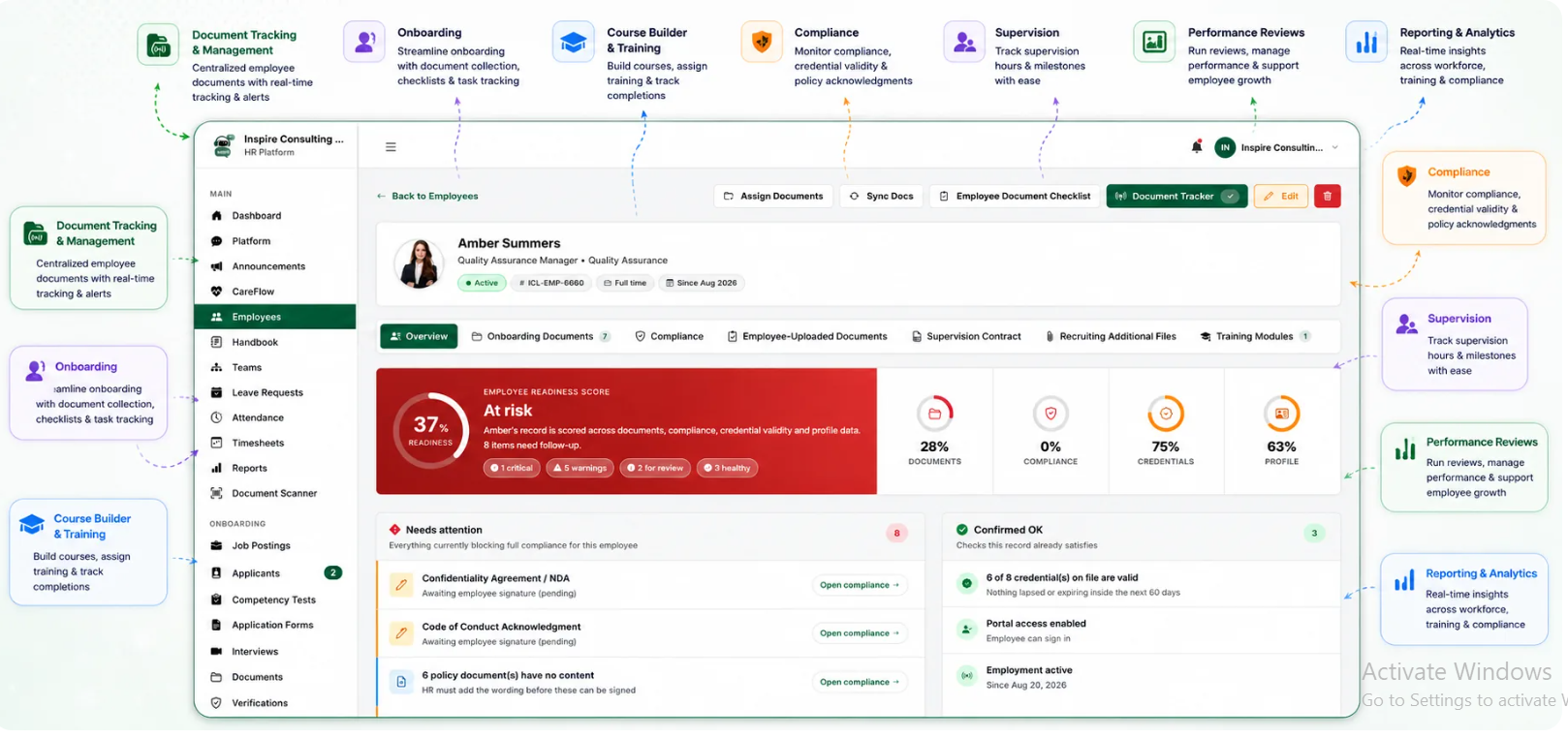
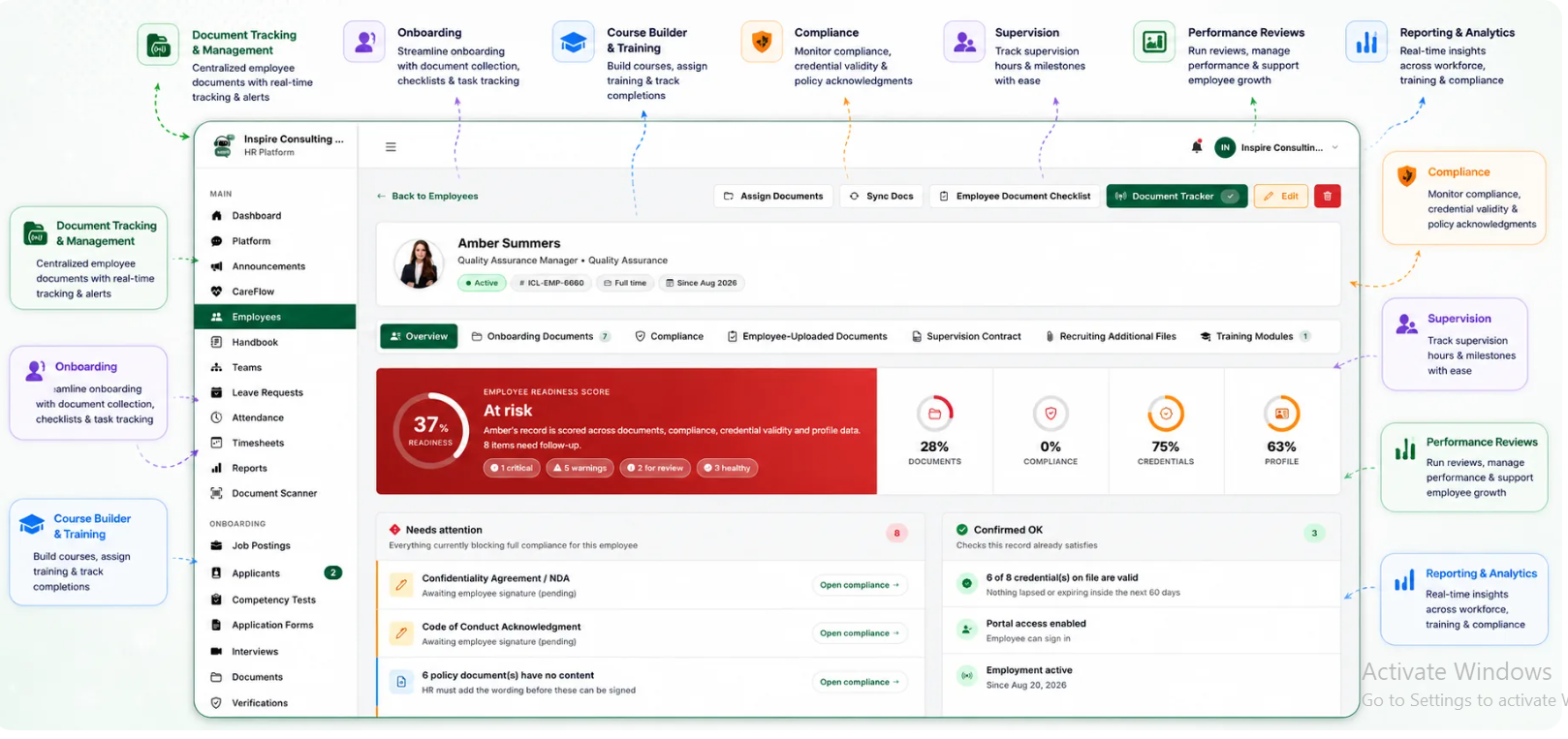
BUAMS HR helps behavioral health providers keep employee records, workflow ownership, and supporting documents more organized across the full workforce lifecycle. That makes sponsorship-related follow-up easier to manage because teams can connect key milestones to the broader employee record instead of splitting them across separate trackers.
For organizations managing growth, hard-to-fill roles, or multiple service locations, that structure supports better coordination between hiring, onboarding, and ongoing employee administration. HR can maintain clearer visibility into what documentation is on file, what still needs follow-up, and which staffing decisions may deserve earlier attention.
Because BUAMS HR is built around behavioral health workforce operations, it also helps providers manage sponsorship activity in context. Employee file organization, compliance-aware workflows, and operational visibility all matter when a staffing process depends on accurate timelines and dependable documentation.
Final Thoughts
Visa sponsorship tracking software gives behavioral health providers a more reliable way to manage sensitive workforce timelines without relying on scattered reminders and inbox archaeology. The biggest benefit is not simply storing dates. It is creating a shared process that protects staffing continuity, improves record accuracy, and gives leaders better confidence in the workforce behind critical programs.
For providers that want less manual follow-up and stronger visibility into sponsored employee milestones, BUAMS HR offers a practical foundation for keeping hiring, renewals, and employee records aligned.