Behavioral health providers operate in settings where employee safety training is not optional background paperwork. Teams may work in crisis response, residential programs, outpatient clinics, community visits, and intake environments where de-escalation skills, incident response expectations, and workplace violence prevention protocols need to be current, role-specific, and easy to prove. When those requirements are tracked through scattered spreadsheets, inbox reminders, and local folders, HR leaders can lose visibility into who is ready, which refreshers are coming due, and where documentation gaps could create risk.
Workplace violence prevention training tracking software gives behavioral health organizations a structured way to manage these obligations before they become urgent. Instead of reacting after an incident, during a site review, or when a supervisor discovers expired training, teams can monitor requirements in one place, connect proof to employee records, and keep safety readiness visible across roles and locations.
Key Takeaways
What workplace violence prevention training tracking software solves
Many providers know workplace violence prevention training matters, but the process around it often grows unevenly over time. One program may keep rosters in a spreadsheet, another may rely on certificates saved to shared drives, and another may depend on supervisors to remember when refreshers are due. That creates a familiar problem: training may be completed in practice, but the organization cannot quickly prove it or confirm that every affected employee is current.
Workplace violence prevention training tracking software solves that by creating one system for assignment, due dates, completion status, documentation storage, and follow-up. HR teams can see who still needs initial training, who is nearing a refresher deadline, and which programs are carrying the most risk. Instead of rebuilding status manually before each review, leaders can work from a current operational picture.
Why this matters in behavioral health settings
Behavioral health environments often involve elevated emotional intensity, unpredictable interactions, community-based services, and teams working across multiple shifts or sites. Safety preparation may need to differ by role, service line, population served, and physical setting. Front-desk staff, mobile crisis personnel, residential teams, supervisors, and program leaders may each require different combinations of policy acknowledgment, incident response education, and hands-on prevention training.
Without a reliable system, organizations may discover missing proof only after an incident review or external request. A stronger workflow makes safety readiness proactive instead of reactive.
What to look for in workplace violence prevention training tracking software
Role-based training assignment
Not every employee needs the same training path. Good software should let organizations define requirements by role, site, service type, or employee category so safety expectations are assigned consistently. That helps prevent both under-training and unnecessary duplicate work.
Refresher scheduling and deadline visibility
Initial completion is not enough. Providers need ongoing visibility into annual refreshers, policy updates, remedial follow-up, and any retraining triggered by role changes or incidents. A strong system should make approaching deadlines easy to see before they become overdue.
Documented proof of completion
Certificates, sign-in sheets, attestations, and internal completion records should stay attached to the employee record. When proof is scattered across email chains or shared folders, audit response slows down and confidence in the record drops.
Supervisor access without extra HR chasing
Supervisors should be able to see whether employees are current, due soon, or overdue without waiting for a custom report every time. Shared visibility improves accountability and keeps follow-up closer to the day-to-day work.
Reporting by site, program, and risk area
Behavioral health providers often need more than a single completion list. They may need to review safety readiness by location, team, shift, or service model. Better reporting helps leaders spot one program that is falling behind before the problem spreads across the organization.
Common problems with manual tracking
Spreadsheet-based processes usually start because they are familiar and easy to build. The problem is that they rarely stay clean once multiple people update them. Over time, teams run into issues such as duplicate employee rows, outdated due dates, missing attachments, and confusion over which version of the tracker is current.
These issues are not just administrative annoyances. In behavioral health, they can affect staffing decisions, supervisor confidence, and the organization’s ability to show that required safety preparation was managed consistently.
Best practices for a stronger safety training workflow
Software works best when the operating rules around it are clear. Behavioral health providers should define which roles require workplace violence prevention training, what evidence counts as complete, how often refreshers are required, and who is responsible for follow-up when deadlines are missed. That structure makes reports more trustworthy and helps leaders act sooner.
It also helps to connect safety training to the broader workforce readiness process. Training should not live in isolation from onboarding, policy acknowledgments, competency records, supervision assignments, and employee files. When those pieces are connected, organizations can make staffing decisions with a fuller picture of readiness.
How BUAMS HR helps behavioral health organizations stay organized
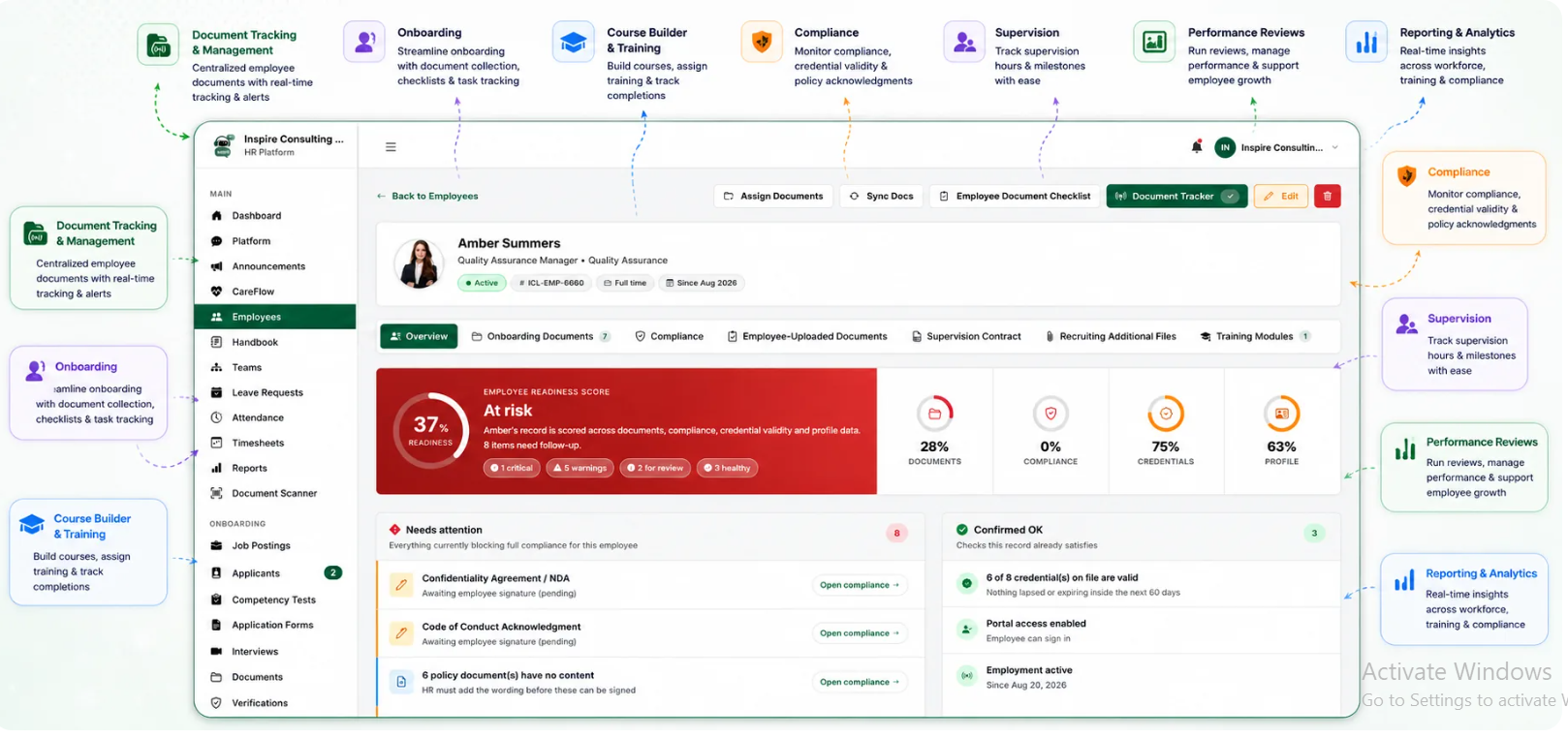
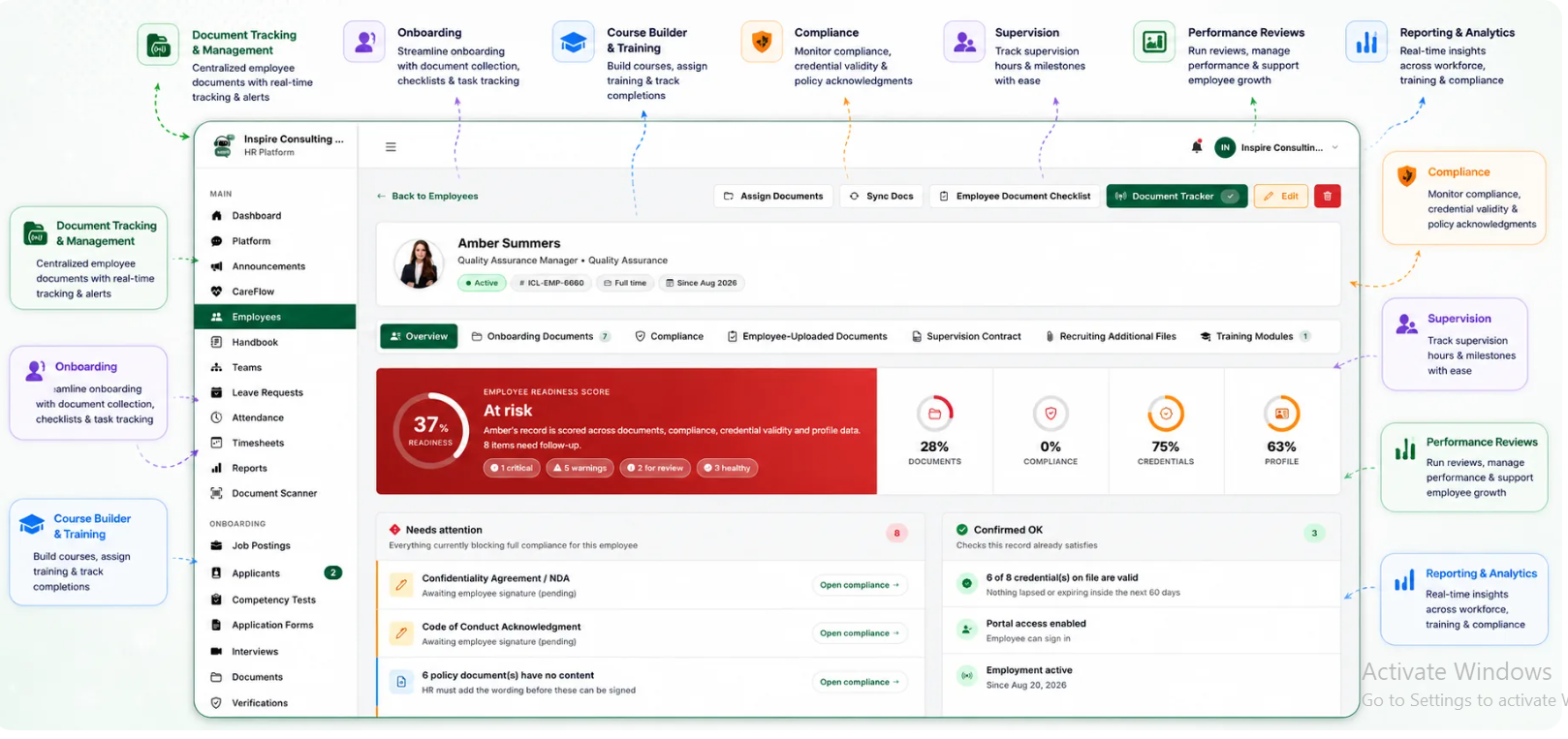
BUAMS HR helps behavioral health providers centralize workforce readiness information so critical requirements are easier to track and prove. Organizations can keep employee records, compliance dates, and supporting documents in one system instead of relying on disconnected trackers and scattered file storage.
For workplace violence prevention training, that means teams can monitor due dates, organize completion proof, and support cleaner coordination between HR, supervisors, and compliance leaders. BUAMS HR also helps providers connect training readiness to the larger employee record, which makes it easier to review assignment decisions, onboarding progress, and audit documentation together.
Final Thoughts
Workplace violence prevention training tracking software gives behavioral health providers a practical way to manage an important safety obligation with more consistency and less manual risk. When training requirements, proof, and deadline visibility are organized in one workflow, teams are better prepared to protect staff, support supervisors, and respond confidently when documentation is requested. BUAMS HR supports that kind of operational discipline by helping organizations keep training readiness, employee records, and compliance follow-up aligned in one place.