
Organizations in Washington DC operate in one of the most complex regulatory and workforce environments in the country. From behavioral health providers and nonprofits to government contractors and mission-driven enterprises, the need for flexibility, compliance, and operational stability is constant. In this environment, adaptive HR infrastructure is no longer optional. It is essential.
Adaptive HR infrastructure refers to HR systems designed to evolve with organizational needs, regulatory updates, workforce growth, and operational changes. For Washington DC organizations, this adaptability ensures continuity, resilience, and long-term success.
What Is Adaptive HR Infrastructure?
Adaptive HR infrastructure goes beyond traditional HR software. It is a flexible, scalable system that integrates workforce management, compliance tracking, reporting, analytics, and employee experience into a unified framework.
Instead of rigid processes that break under pressure, adaptive infrastructure adjusts to staffing changes, policy updates, and organizational expansion. It allows leadership to respond quickly without disrupting daily operations.
For Washington DC organizations operating in regulated sectors, this adaptability reduces risk and strengthens governance.
Why Washington DC Organizations Need Adaptability
Washington DC is home to organizations that must navigate local, federal, and industry-specific regulations. Workforce documentation, credential tracking, reporting standards, and audit requirements are part of daily operations.
Static HR systems struggle in such environments. When regulations change or teams expand, outdated systems require manual adjustments that increase errors and inefficiency.
Adaptive HR infrastructure ensures that compliance requirements can be updated seamlessly. Organizations remain aligned with regulatory expectations without rebuilding their systems from scratch.
Supporting Regulated and Behavioral Health Workforces
Behavioral health providers and other regulated organizations in Washington DC face unique workforce complexities. Staff credentials must be monitored. Supervision requirements must be documented. Training compliance must be verifiable.
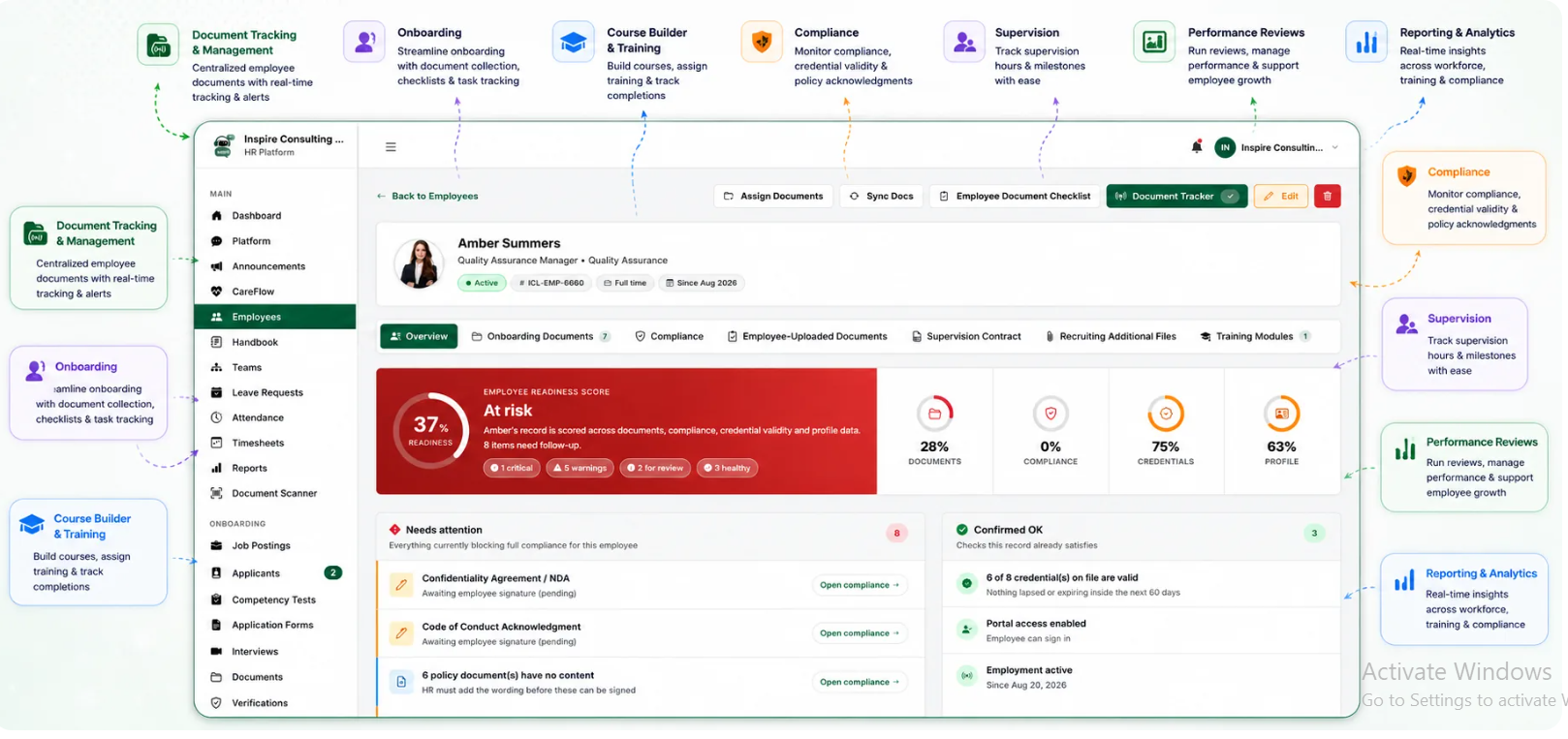
Adaptive HR infrastructure centralizes these processes. Credential expirations, supervision logs, and regulatory documentation are managed within a single system. This reduces administrative stress and strengthens audit readiness.
Instead of scrambling before inspections, organizations maintain continuous compliance.
Scaling With Organizational Growth
Growth introduces new workforce challenges. Additional locations, expanded services, and larger teams require systems that can handle increased complexity.
Adaptive HR infrastructure supports scalability. As Washington DC organizations grow, the
HR system grows with them. New roles, reporting structures, and compliance requirements can be integrated without disrupting operations.
This scalability protects organizations from operational instability during expansion.
Enhancing Workforce Visibility for Leadership
Executive leadership requires clear, real-time insight into workforce conditions. Without visibility, decision-making becomes reactive.
Adaptive HR infrastructure includes analytics dashboards that provide insight into staffing levels, compliance readiness, turnover trends, and workforce capacity.
Washington DC leaders gain the clarity needed to plan strategically rather than react to crises.
Reducing Administrative Burden
Manual HR processes consume valuable time and increase the likelihood of errors. Paper-based documentation and disconnected systems create inefficiencies.
Adaptive HR infrastructure automates routine tasks such as onboarding documentation, policy acknowledgments, performance tracking, and compliance reminders.
For Washington DC organizations, this automation reduces administrative burden while maintaining accountability.
Improving Employee Experience
An effective HR system should support employees, not frustrate them. Complicated workflows reduce engagement and increase confusion.
Adaptive HR infrastructure focuses on user-friendly interfaces and transparent processes. Employees can access information easily, complete tasks efficiently, and understand expectations clearly.
This improves trust, satisfaction, and retention across Washington DC organizations.
Strengthening Operational Continuity
Unexpected disruptions can threaten operational stability. Staff turnover, leadership transitions, regulatory changes, or external crises require resilient systems.
Adaptive HR infrastructure supports operational continuity by centralizing data and maintaining consistent workflows. Even during periods of change, workforce operations remain stable.
Washington DC organizations benefit from reduced risk and improved resilience.
Enabling Data-Driven Workforce Strategy
Strategic workforce planning depends on reliable data. Adaptive HR systems collect and organize workforce information into actionable insights.
Leadership teams can identify skill gaps, monitor performance trends, and evaluate staffing capacity. This intelligence supports long-term planning and sustainable growth.
In Washington DC’s competitive environment, data-driven strategy strengthens organizational positioning.
Preparing for Regulatory Evolution
Regulations evolve over time. Policies change. Reporting requirements shift. Organizations must adapt quickly to remain compliant.
Adaptive HR infrastructure allows updates to policies, workflows, and documentation requirements without disrupting the entire system.
This flexibility ensures Washington DC organizations stay ahead of regulatory changes rather than reacting under pressure.
Building Workforce Resilience
Resilience depends on strong systems. When HR processes are adaptable, organizations can manage workforce stress more effectively.
Adaptive infrastructure reduces uncertainty, improves communication, and supports consistent processes. Employees experience stability even when external conditions shift.
For regulated organizations in Washington DC, resilience is critical to maintaining service quality and mission impact.
Long-Term Value of Adaptive HR Infrastructure
Investing in adaptive HR infrastructure delivers long-term value. Organizations experience improved compliance, stronger workforce engagement, reduced administrative costs, and enhanced leadership clarity.
Rather than replacing systems every few years, organizations build a foundation that evolves alongside their needs.
This long-term approach supports sustainability and operational maturity.
Future-Ready Workforce Management
The future of work will continue to change. Hybrid environments, digital transformation, and evolving workforce expectations require adaptable systems.
Adaptive HR infrastructure prepares Washington DC organizations for future challenges. It enables innovation without sacrificing compliance or stability.
Organizations that prioritize adaptability today position themselves for long-term success tomorrow.
Final Thoughts on Adaptive HR Infrastructure for Washington DC Organizations
Adaptive HR infrastructure is a strategic necessity for organizations operating in Washington DC’s complex and regulated landscape. It aligns compliance with flexibility, supports growth without disruption, and empowers leadership with real-time workforce intelligence.
By investing in adaptable systems, organizations create a stable foundation that supports employees, strengthens resilience, and enables sustainable growth.
For Washington DC organizations seeking long-term operational strength, adaptive HR infrastructure is not simply an upgrade. It is a transformative investment in people, performance, and future readiness.