Behavioral health providers often rely on agency nurses, temporary clinicians, per diem staff, crisis coverage workers, and other vendor-supplied professionals to protect service continuity. The staffing help can be essential, but the HR and compliance process behind that coverage is rarely simple. Before an agency worker begins, organizations may need to review licenses, certifications, health clearances, onboarding acknowledgments, supervisor assignments, badge access, and site-specific requirements. When those steps live across email threads, spreadsheets, vendor portals, and last-minute phone calls, readiness gaps are easy to miss.
Agency staff clearance software gives behavioral health providers a cleaner way to organize those reviews before coverage begins. Instead of treating each temporary placement like a one-off exception, HR teams can use a structured workflow to document what was received, what still needs follow-up, who approved the worker, and whether the person is truly ready for the assignment. That matters for compliance, but it also matters for safer scheduling, smoother site launches, and less operational scrambling.
Key Takeaways
What is agency staff clearance software?
Agency staff clearance software is a workflow and documentation system used to review whether a temporary or vendor-supplied worker is eligible to begin work in a specific behavioral health setting. It helps HR teams organize credential checks, file collection, required acknowledgments, assignment approvals, and readiness status in one process instead of relying on scattered communication.
In behavioral health, that review often needs to go beyond a simple resume and license copy. A residential site may require proof of safety training, an outpatient clinic may need payer-specific qualifications, and a crisis program may require immediate confirmation that the worker meets role standards before shift coverage is finalized. Good software helps teams define those requirements clearly and track completion before the person is placed into the schedule.
Why temporary staffing oversight matters in behavioral health
Temporary coverage can solve a staffing problem quickly, but it can also introduce oversight risk if the organization treats agency workers as outside the normal HR process. Behavioral health providers still need confidence that temporary staff are qualified, documented, and matched appropriately to the assignment they are filling.
That challenge becomes more serious when organizations operate across multiple sites, programs, and service types. A worker who is acceptable for one environment may not be ready for another. For example, the documentation needed for an overnight residential assignment may differ from what is needed for outpatient therapy support, community outreach, or medication-adjacent coverage. If HR and operations do not have a shared clearance process, gaps may only become visible after the worker is already expected on site.
Agency staff clearance software helps providers create consistency in a part of the workforce that often moves quickly. Instead of reinventing the approval process every time coverage is needed, teams can follow a repeatable structure that supports both speed and defensibility.
Where manual agency clearance workflows break down
Many behavioral health providers handle temporary worker clearance manually because agency placements can feel occasional or urgent. The problem is that manual urgency usually creates repeatable failure points.
These breakdowns are not just administrative annoyances. They can affect assignment eligibility, audit readiness, supervisor confidence, and the organization’s ability to prove that temporary workers were reviewed appropriately before client-facing work began.
What to look for in agency staff clearance software
The best system should make temporary worker review feel like a controlled workflow rather than an emergency workaround. Behavioral health HR teams should look for a setup that supports the following capabilities.
Role- and site-based requirement rules
Different assignments should trigger different review criteria. Software should let teams define requirements by role, service setting, location, or program so staff are not approved using a generic checklist that misses site-specific risk.
Centralized file collection
Licenses, certifications, onboarding acknowledgments, background-related documents, health clearances, and vendor paperwork should live in one organized record. Centralized storage makes it easier to confirm completeness quickly and easier to retrieve evidence later.
Visible approval status
HR, staffing coordinators, and operational leaders should be able to see whether a worker is pending review, conditionally cleared, fully approved, expired, or blocked. Clear statuses reduce confusion and prevent premature scheduling decisions.
Expiration and recheck tracking
Temporary workers may return for multiple assignments over time. Software should help teams track items that expire, need re-verification, or must be re-approved when the worker changes site or role. Without that visibility, organizations can mistakenly rely on outdated documentation.
Notes and exception handling
Not every agency placement follows a perfect standard path. A strong system should support notes, reviewer comments, restricted approvals, and documented exceptions so unusual cases are handled transparently instead of through hallway conversations and memory.
Best practices for a stronger vendor worker clearance process
Software works best when it supports a simple operating model. Behavioral health providers can improve temporary worker readiness by pairing the platform with a few practical process standards.
These habits help organizations move faster during staffing pressure because the rules are already defined. The goal is not to add unnecessary friction. It is to remove avoidable uncertainty before the assignment begins.
How BUAMS HR helps behavioral health providers manage agency staff readiness
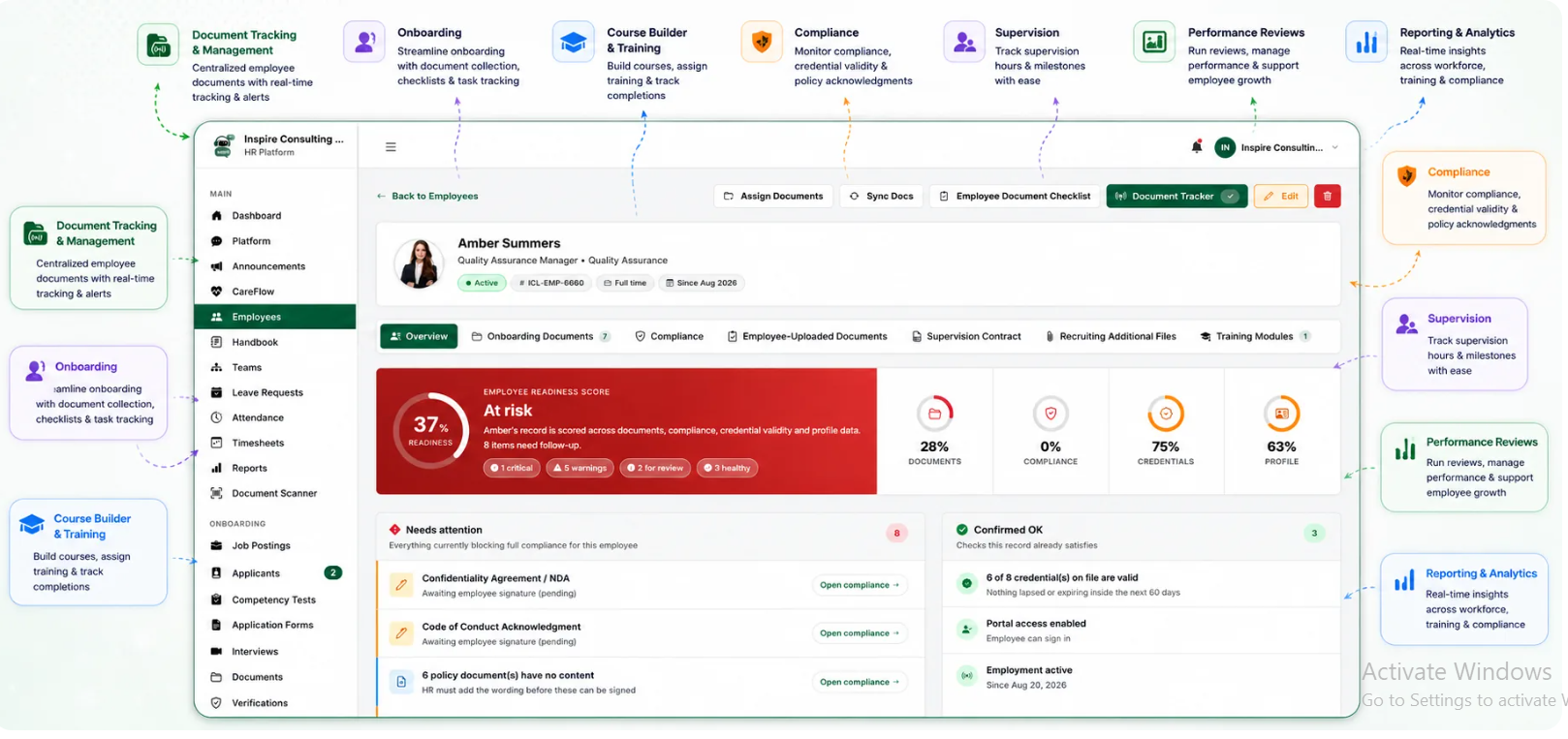
BUAMS HR helps behavioral health organizations bring temporary staffing oversight into a more organized HR workflow. Instead of treating vendor workers as disconnected from the rest of workforce operations, teams can use a centralized system to track documents, approvals, readiness status, and related compliance records in one place.
That structure is useful for providers managing multiple programs, urgent coverage requests, and mixed staffing models. HR can maintain clearer visibility into what has been received, what still needs action, and which workers are approved for which type of assignment. Supervisors and operations leaders can make coverage decisions with better information instead of relying on partial updates from email chains.
BUAMS HR also supports stronger documentation for audits and internal reviews by keeping workforce records easier to retrieve and easier to explain. When temporary staffing oversight is standardized, the organization is better positioned to protect client care, reduce assignment mistakes, and respond confidently when a file is questioned later.
Final Thoughts
Agency staff clearance software helps behavioral health providers turn a rushed, exception-heavy process into a more reliable workforce control. When temporary clinicians and support staff are reviewed through a documented workflow, organizations can protect coverage without sacrificing oversight.
For providers that depend on vendor staffing to fill gaps, open new shifts, or stabilize high-need programs, BUAMS HR offers a practical foundation for organizing records, approvals, and readiness decisions before coverage starts. The result is fewer last-minute surprises, stronger documentation, and a more defensible staffing process across every site.